James Comey charged third time: federal prosecutors in Washington unsealed a criminal information on Monday, October 26, 2026, accusing the former FBI director of transmitting national defense information and conspiring to transmit it in October 2016 — a case the Justice Department says it filed to stop a 10-year statute of limitations from expiring, and that Comey's lawyers say was already investigated twice and declined.
The Justice Department is attempting to prosecute former FBI Director James Comey for the third time in President Donald Trump's second term, this time over an alleged leak of classified information to a New York Times reporter in October 2016, according to court documents unsealed on Monday in the U.S. District Court for the District of Columbia. Comey, who has not been indicted in the new case, responded within hours: "I'm still innocent. I'm still not afraid of these people."
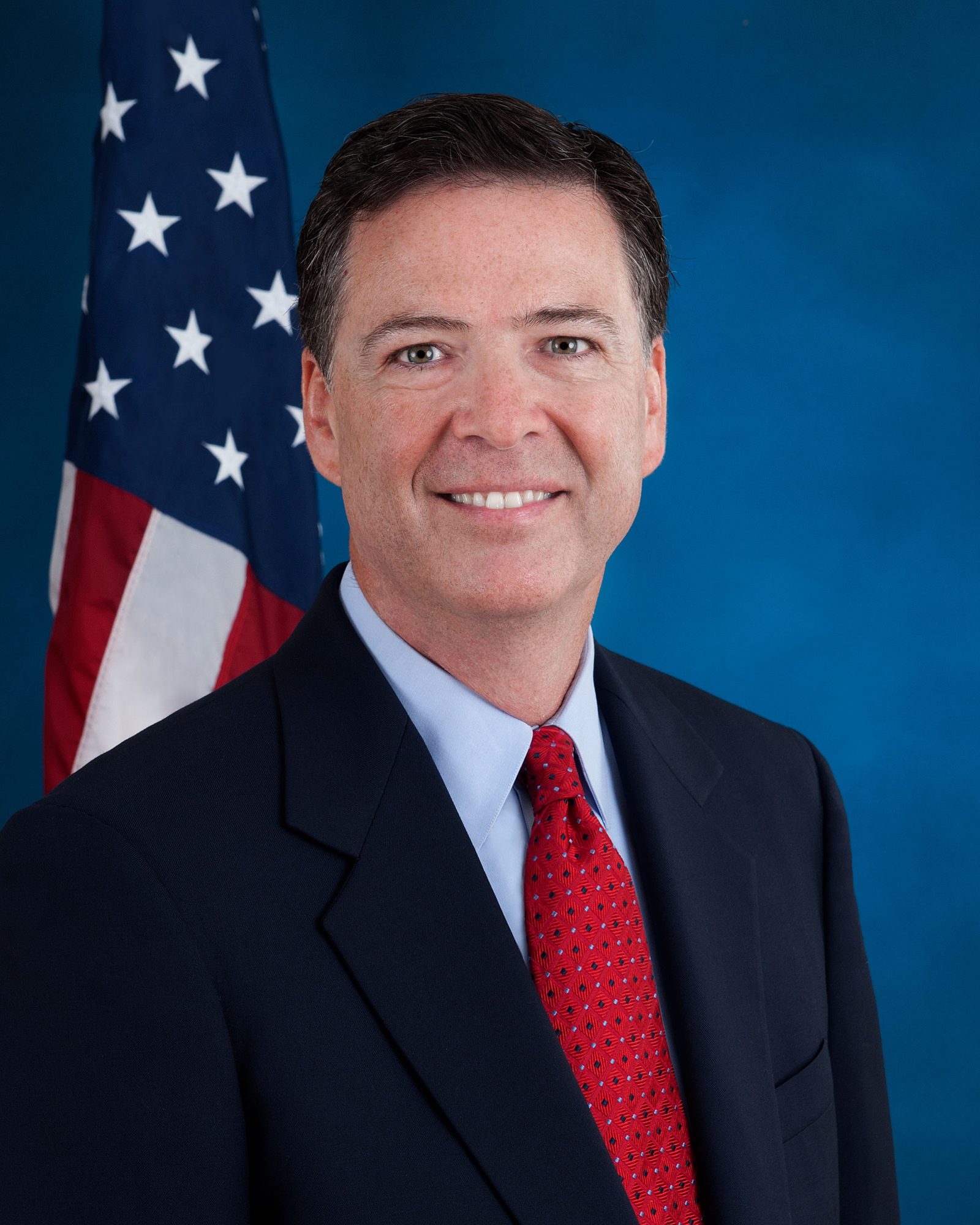
What the James Comey charged third time filing actually says
The charging document is a criminal information, not a grand jury indictment. It contains two counts under the Espionage Act framework: transmitting national defense information, and conspiring to transmit national defense information. Prosecutors allege that on or about October 5, 2016, Comey — then in lawful possession of information relating to the national defense — knowingly caused that information to be communicated to a person not entitled to receive it, and that, "through one or more co-conspirators," he directed an unnamed individual to disclose national defense information to a reporter for a national news publication.
The case had been moving in secret for three weeks. The information was filed under seal on October 5, 2026, and U.S. District Judge Trevor McFadden granted the government's request to keep it sealed, citing the risk to an ongoing investigation. Comey's lawyers, who were notified of the filing, asked the court to unseal it and moved earlier this month to dismiss the case outright. It became public on Monday at their request.
Comey has not been indicted. The Justice Department itself says the document is not enforceable on its own: it was filed, in the department's words, to toll — to pause — the 10-year statute of limitations for bringing Espionage Act charges, which expired earlier this month. A judge will now decide whether that maneuver is valid.
The Yahoo email surveillance story at the center of the case
Reporting by NBC News and the Wall Street Journal ties the allegation to a specific article: the New York Times story of October 5, 2016, headlined "Yahoo Said to Have Aided U.S. Email Surveillance by Adapting Spam Filter," written by reporter Charlie Savage. The story concerned a secret court order, issued by a judge of the Foreign Intelligence Surveillance Court, that required Yahoo to scan emails for material potentially linked to a foreign terrorist organization — an order Yahoo was barred from disclosing.
In a court filing described by NBC News, Special Assistant U.S. Attorney Dustin Farahnak wrote that the investigation "has uncovered evidence that former FBI Director, James B. Comey, sought to correct misinformation which had appeared in the press by way of Reuters the day before," and that Comey "directed staff to speak to Mr. Savage about specific accuracy concerns related to the Reuters article, and thereby illegally transferred classified information."
That framing matters. On the prosecution's own account, this is not alleged to be a leak offered to damage the government or aid a foreign power. It is alleged to be a director trying to correct a news story — and, in doing so, confirming classified information to a reporter who was not entitled to receive it. Whether that conduct, if proved, meets the Espionage Act's standard for national defense information is one of the questions the case will test.

Comey's answer: "They're back again"
Comey responded in a video posted on social media on Monday. "Well, they're back again," he said. "It would almost be funny if it were not such an appalling abuse of the Department of Justice, one we cannot become numb to. Nothing's changed with me, I'm still innocent, I'm still not afraid of these people, and I still believe in the independent federal judiciary."
His lawyer, Patrick Fitzgerald, said in a statement that the information "purports to charge Mr. Comey with crimes that he did not commit." Comey's defense team makes two arguments that could end the case before any jury hears it. First, timing: an Espionage Act prosecution must begin within 10 years, they argue, and that requires a grand jury indictment within the window — a prosecutor-filed information, filed without a defendant's waiver, does not suffice. Second, history: the same alleged disclosure, his lawyers say, was investigated by two separate U.S. attorneys over the past decade, and both declined to prosecute.
The Justice Department's public position is narrow. "Filing a criminal information to toll the statute of limitations is a widely recognized practice in federal court and has been approved by multiple Circuit Courts of Appeals," a department spokesperson said. "This is an ongoing criminal investigation, and we will not comment further." The charges are allegations; Comey is presumed innocent.
The two earlier cases
This is the third criminal case the Trump Justice Department has brought against Comey, the man who opened the FBI's investigation into Russian interference in the 2016 election and possible ties to Trump's campaign, and whom Trump fired in May 2017, months into his first term.
The first case, brought in 2025, accused Comey of lying to Congress about authorizing leaks to the news media. A judge dismissed it after finding that the U.S. attorney who secured the charges, Lindsey Halligan, had not been lawfully appointed. The second case, which remains pending, alleges that Comey threatened Trump by posting a social media photograph of seashells arranged to read "8647." Comey pleaded not guilty in that case and has described the photograph as political speech, not a threat.
The new filing also landed on an extraordinary day for the Comey family in the federal courts. Hours before the information was unsealed, U.S. District Judge Jesse Furman ruled that the Justice Department's 2025 firing of Comey's daughter, former Manhattan federal prosecutor Maurene Comey, was unlawful and ordered her retroactive reinstatement — a ruling the department is expected to appeal. By nightfall, a judge had handed the daughter her job back while prosecutors in another courthouse revived a criminal case against her father over events from a decade ago.

Why this matters
Strip away the personalities and the case poses a question American courts have rarely had to answer so directly: can the government keep a prosecution alive past its own deadline by filing a placeholder charge, when the event at issue is 10 years old, the witnesses' memories are a decade stale, and two previous sets of prosecutors looked at the same facts and walked away?
If Judge McFadden accepts the tolling theory, the practical statute of limitations for Espionage Act leak cases becomes something prosecutors can extend at their own initiative — a precedent that would outlast this defendant and this administration, and would hang over every official who ever speaks to a reporter about classified programs. If he rejects it, the case collapses on procedure without any court ever deciding whether the 2016 disclosure was a crime.
The timing adds a second layer. The unsealing came one week before the November 3 midterm elections, in the middle of a run of politically charged Justice Department actions — including the department's pre-emptive litigation over Senate certification in Alaska and its election-monitoring announcements — that have made the independence of federal prosecution a central campaign issue. Supporters of the prosecution argue that no one is above the law and that a former FBI director who confirms classified surveillance programs to the press should answer for it like anyone else. Critics, including Comey, argue that a case declined twice, revived at the deadline, against the president's most prominent law-enforcement foe, is the definition of selective prosecution. Both arguments will now be made to a judge, under oath-bound rules of evidence, rather than only on television.
There is also a quieter institutional stake. The alleged conduct — a director correcting what he believed was an inaccurate story about a surveillance program — sits in the gray zone where Washington actually runs: officials routinely confirm, deny and shape classified stories. A conviction here would not just punish one conversation in 2016; it would warn every future FBI director that a press correction can be re-read, a decade later, as a felony. A dismissal, equally, would tell prosecutors that the deadline in the statute book means what it says.
What happens next
The first fight is procedural, and it is already joined: Comey's motion to dismiss, arguing the case is time-barred and legally improper, is pending before Judge McFadden. If the motion fails, prosecutors would still need a grand jury indictment to proceed to trial — the information alone cannot carry the case. If it succeeds, the Justice Department could appeal, and the tolling question would head to the D.C. Circuit.
Three scenarios follow. In the first, the case dies on the calendar: the court holds that October 5, 2026 was too late, full stop. In the second, the court lets the tolling stand, a grand jury indicts, and the country gets a trial about a 2016 news story — with the Yahoo surveillance program, the Reuters article that preceded it, and the internal FBI deliberations of that autumn all dragged into open court. In the third, the case lingers in appeals for months, unresolved through the midterms and beyond, functioning less as a prosecution than as a standing argument about the Justice Department itself.
What is already certain is narrower and, for now, enough: a former FBI director stands accused — for the third time — by the Justice Department he once helped lead; he says he is innocent and unafraid; and the first ruling that matters will not be about what he said in 2016, but about whether the government waited too long to say anything back.
Sources
Reuters, "Ex-FBI director Comey charged again by US Justice Department" (October 26, 2026) and "Ex-FBI chief Comey faces third prosecution attempt by Trump Justice Department"; CNN, "Justice Department charges former FBI Director James Comey for third time" (October 26, 2026); NBC News, "James Comey charged for a third time by the Trump administration" (October 26, 2026); Associated Press via NPR, "Trump administration attempting to prosecute former FBI Director James Comey again" (October 26, 2026); USA Today, "Ex-FBI Director James Comey charged in third criminal case from Trump admin" (October 26, 2026); Wall Street Journal, "Justice Department Charges James Comey Again" (October 26, 2026). Court documents: criminal information and related filings, U.S. District Court for the District of Columbia, unsealed October 26, 2026. Related coverage: the Justice Department's election-certification fight.