Huawei Ascend 960DT chip 2027
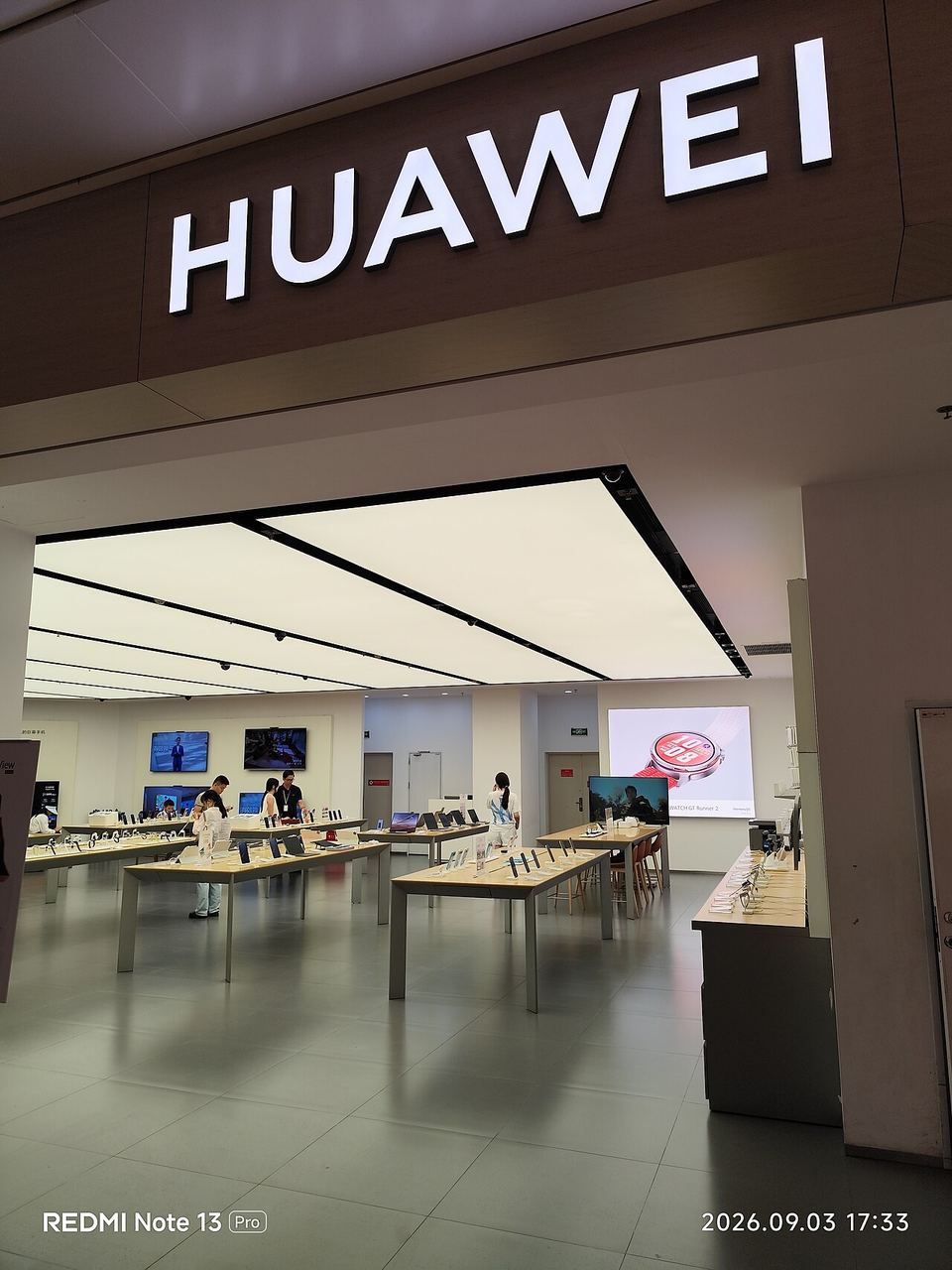
Huawei Ascend 960DT chip 2027 — that phrase just got nine months shorter. At Huawei Connect 2026 in Shanghai (September 17–19), rotating chairman David Wang announced that Huawei’s next-generation AI accelerator, the Ascend 960DT, will launch in the first quarter of 2027 — three quarters ahead of its original Q3 2027 target. The 960PR inference variant moves up a quarter too, to Q3 2027. The roadmap beyond is annual: Ascend 970 in 2028, 980 in 2029, one generation per year, each roughly doubling performance — a cadence Huawei calls “Tao’s Law.”
But the chip was only half the announcement. Huawei also unveiled the Peerium Computing Architecture and a new UnifiedBus interconnect designed to link processors, memory, storage, and networking so that hundreds of thousands — eventually up to one million — of chips operate as a single computer. If the chip is Huawei’s answer to Nvidia, Peerium is its answer to a harder question: what do you do when sanctions bar you from the lithography you’d need to win on silicon alone?
You stop trying to win in silicon. You win in systems.
Ascend 960DT: the Huawei AI chip launch moved up to Q1 2027
Pulling a flagship AI accelerator forward by three quarters is not a scheduling tweak — in semiconductor development, it is a statement. Tape-outs, validation, firmware, and supply-chain ramp are measured in quarters, and compressing them means either the program was running ahead all along or the company decided the market could not wait.
The likely reason is demand. Rotating chairman Eric Xu admitted at the same conference that domestic demand for Huawei’s AI chips outstrips manufacturing capacity — overseas shipments are restricted to small test batches, and allocation is China-first. When your own executives say they cannot make enough of the current generation, accelerating the next one is both a promise to waiting customers and a signal to investors that the pipeline is healthy.
The numbers Huawei is claiming for the new generation: the Ascend 960 delivers roughly 2 petaflops of compute, per reporting on the announcement. The honest comparison is Ascend 960 vs Nvidia Rubin — Nvidia’s upcoming accelerator is expected to deliver around 17 petaflops in the same format, a gap of roughly 8.5 to 1 per chip. Huawei does not dispute this. Its argument is that per-chip comparisons are the wrong contest.
Peerium and UnifiedBus: wiring up to a million chips as one computer
This is the genuinely interesting part of the announcement. The Peerium Computing Architecture plus UnifiedBus interconnect is Huawei’s attempt to make scale — not silicon — the unit of competition. The idea: fuse processors, high-bandwidth memory, storage, and networking into one fabric, so that a cluster of hundreds of thousands of individually weaker chips behaves like one giant machine.
There is real engineering logic here. In large AI training runs, roughly 40% of training time is typically lost to communication bottlenecks — chips waiting on data from other chips. Interconnect is the binding constraint on scale, and it is a domain where sanctions bite less: you do not need the world’s most advanced lithography to build a better network fabric. If UnifiedBus meaningfully cuts that communication tax, a cluster of Ascend chips can punch above its per-chip weight.
The flagship expression of the architecture is the Atlas 960 SuperPoD: up to 4,096 NPUs, 8 EFLOPS of FP8 compute, and up to 1 petabyte of HBM (high-bandwidth memory). A two-tier, four-plane Clos SuperCluster design scales that to 512,000 NPUs, with multi-rail topology pushing toward the one-million-chip vision.
Analyst Rui Ma flagged an important caveat: the new SuperPoD’s 4,096 chips is much smaller than the 15,488-chip system Huawei sketched a year earlier. Ambition scaled up in the keynote; the concrete system scaled down from last year’s plan. That tension — between the million-chip vision and the 4,096-chip product — is where the execution risk lives.
Sanctions, shortages, and the China-first queue
None of this happens outside geopolitics. US export controls bar Huawei from the advanced lithography equipment — primarily Dutch EUV machines — needed to manufacture cutting-edge chips at Taiwan’s TSMC or anywhere else in the Western supply chain. Huawei’s chips are instead produced domestically, widely reported to be via SMIC, on older process nodes that cannot match the transistor density of Nvidia’s parts. The per-chip gap is, in large part, a sanctions gap.
That makes the capacity admission from Eric Xu doubly significant. Huawei chips supply shortage is not a marketing line — it is the binding constraint on China’s AI buildout. Domestic model labs — the DeepSeek, Qwen, and Kimi ecosystems — are queuing for domestic accelerators because the alternative, Nvidia’s China-compliant parts, is capped by the same sanctions regime. Huawei is simultaneously China’s Nvidia and its TSMC-substitute, and it cannot print chips fast enough.
The timing sharpened the message. Huawei Connect landed days before the September 24 meeting in Washington between Donald Trump and Xi Jinping, where export controls and Taiwan were on the agenda. Announcing a nine-month acceleration and a million-chip architecture on the eve of that meeting was not a coincidence of scheduling — it was a negotiating exhibit: sanctions are accelerating, not arresting, Chinese capability.
The honest counterpoint: the CUDA software moat remains Nvidia’s deepest defense. Huawei can ship chips and fabric, but migrating the world’s AI developers off Nvidia’s software stack is a decade-long grind. Huawei is pushing China’s tech giants toward local suppliers, and sanctions give them no choice — but “no choice” is not the same as “parity.”
The roadmap: Ascend 970 in 2028, Ascend 980 in 2029
Huawei’s “Tao’s Law” cadence — a new Ascend generation every year, each roughly doubling performance — is the company’s bid to replace Moore’s Law with a systems-era successor. Ascend 970 in 2028 and 980 in 2029 are now on the public calendar, which means partners, cloud providers, and model labs can plan procurement around them.
Annual cadences are easy to announce and hard to keep, especially under a sanctions regime that constrains every process improvement. But the 960DT pull-in gives the claim credibility it would otherwise lack: a company that just shipped nine months early has earned the right to be taken seriously about next year. The question for 2028 is whether the doubling comes from better silicon, better interconnect, or — most likely — better systems engineering around roughly the same silicon.
Winners and losers in the systems-vs-silicon war
Winners. Huawei itself, obviously — the acceleration narrative strengthens its hand with every domestic customer. Chinese model labs get a credible domestic compute roadmap, which de-risks their training plans against further US restrictions. SMIC and the domestic fab toolchain gain volume and investment. And China’s AI self-reliance narrative gets its strongest exhibit yet.
Losers. Nvidia’s China revenue story — already sanction-capped — faces a future in which the domestic alternative improves yearly rather than stalling. Investors who bet that export controls would freeze Chinese AI capability in place are watching that thesis decay in real time. AMD and Intel’s datacenter share in China faces the same squeeze. And anyone long on the idea that lithography is the only moat that matters is learning, expensively, that interconnect is a moat too.
What happens next: three scenarios
Scenario one — systems engineering wins the decade. UnifiedBus delivers on its communication-efficiency promises, the SuperPoD scales as advertised, and Chinese labs train frontier-class models on domestic clusters by 2028. The industry concludes that the sanctions era accidentally taught China to build better systems — and Nvidia’s per-chip lead stops translating into per-cluster dominance.
Scenario two — the gap persists, but so does the market. The 8.5x per-chip deficit proves structural: no interconnect fully compensates for weaker silicon, and CUDA’s gravity keeps global developers on Nvidia. Huawei nonetheless owns the Chinese domestic market by default — a large, profitable, strategically vital consolation prize — while the frontier stays American. Two AI compute stacks, two ecosystems, permanently.
Scenario three — execution falters. The SuperPoD’s shrinkage from 15,488 to 4,096 chips turns out to be the tell: manufacturing yields, HBM supply, or interconnect complexity cap what Huawei can actually ship. The 960DT launches on time but in constrained volumes, the million-chip vision stays a keynote slide, and the acceleration narrative deflates. Watch Q1 2027 volume — not the launch date — as the real test.
Sources
- TechCrunch, “Huawei plans Q1 2027 launch of new AI chip as it takes on Nvidia” (Sept. 17, 2026) — Ascend 960DT Q1 2027 launch; David Wang announcement
- Associated Press, “Huawei launched new chip technologies at Shanghai conference challenging Nvidia” (Sept. 2026) — Peerium architecture; SuperPoD specifications
- Reuters (Sept. 2026) — Eric Xu on domestic demand outstripping manufacturing capacity; UnifiedBus framing
- Huawei official news release, “HC Wang keynote” (Sept. 2026) — Ascend 960PR Q3 2027; Ascend 970/980 roadmap; “Tao’s Law” cadence
- Analyst Rui Ma, on the SuperPoD scaling down from the 15,488-chip system planned a year earlier