Key topics: Qualcomm Snapdragon Summit 2026 | Snapdragon 8 Elite | Snapdragon Sound Elite Gen 2 | Snapdragon X2 Elite agentic PC | on-device AI chips | edge AI vs cloud AI | Qualcomm stock QCOM | Android XR audio glasses | Googlebook Gemini laptop
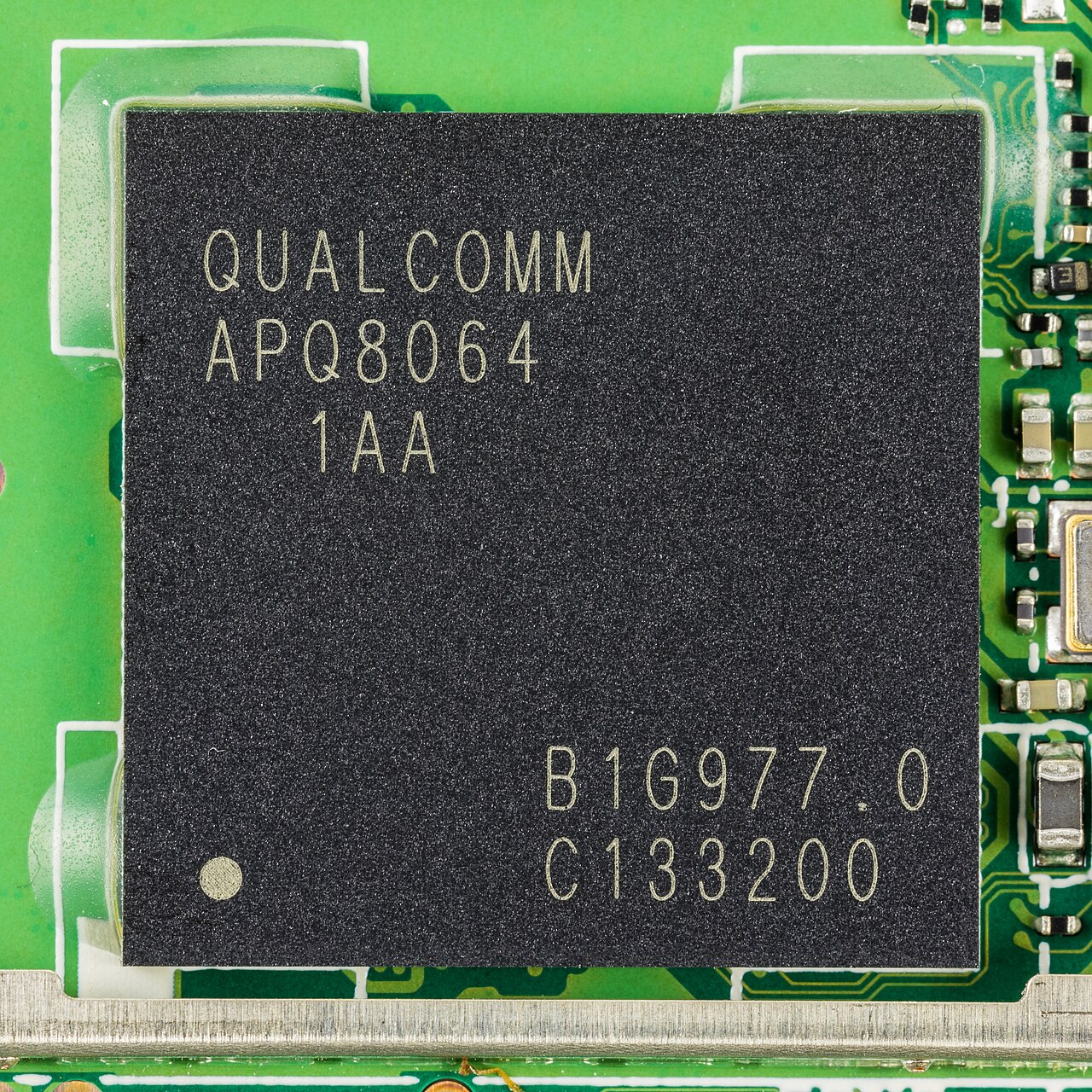
Qualcomm used its Snapdragon Summit 2026 in Maui, Hawaii, this week to make its biggest case yet that artificial intelligence belongs on devices, not just in data centers. On Tuesday the company introduced the Snapdragon 8 Elite system-on-chip for Android smartphones — CPU, GPU, neural processing unit, image processor, memory, wireless connectivity, sensing hub and security fused into a single chip — and said Chinese phone makers including Lenovo, Oppo and Xiaomi had signed on. A day later it announced the Snapdragon Sound Elite Gen 2, an audio-and-AI platform for wearables promising up to twice the on-device AI capability of its predecessor, at up to 40% lower power consumption and in an up to 30% smaller footprint. It also repositioned the Snapdragon X2 Elite as the processor of the “agentic AI PC.”
Snapdragon 8 Elite puts on-device AI chips at the center
The hardware list matters because Qualcomm is not pitching an isolated accelerator. It is arguing that the whole device — compute, graphics, imaging, connectivity, sensing and security — should be organized around AI workloads that happen locally. The Snapdragon 8 Elite is the phone-market expression of that strategy, and the early roster of Chinese manufacturers gives it scale beyond a keynote demonstration.
That scale is also defensive. The smartphone market is mature, replacement cycles are long and premium Android manufacturers have more alternatives than they once did. Qualcomm needs the new silicon to protect its flagship position, but it also needs PCs, wearables and XR to become meaningful growth engines. The summit's confidence therefore doubles as a confession: winning another phone cycle is not enough.
Edge AI vs cloud AI: the real argument of Qualcomm Snapdragon Summit 2026
The thesis of the summit is that the AI race's next phase is edge AI. Cloud AI is expensive to run, can be delayed by a network and forces sensitive information to leave the device. On-device AI can answer instantly, work offline and keep more data local. Neither side eliminates the other, but the balance between them determines who captures the economics.
If Qualcomm is right, part of the AI boom shifts away from whoever rents the most Nvidia GPUs and toward whoever can ship the most capable milliwatts. That is a fight Qualcomm is built for: efficiency is not a secondary specification in a phone or an earbud; it is the boundary between a useful feature and a battery-draining novelty.
Snapdragon Sound Elite Gen 2 makes the power equation concrete
Sound Elite Gen 2's promised twofold AI capability with 40% less power in a package up to 30% smaller is the kind of generational leap that matters in earbuds, where battery life is measured in hours rather than days. Real-time translation, contextual assistance and other always-ready functions only become credible when they can remain available without sending every request to the cloud or exhausting a tiny battery.
The claims still need independent testing in shipping products. But they explain why Qualcomm is emphasizing Android XR audio glasses and other screen-light wearables: local processing can make an assistant feel ambient while limiting the latency and connectivity penalties that undermine cloud-only experiences.
Snapdragon X2 Elite “agentic PC” claims deserve scrutiny
The Snapdragon X2 Elite's newly claimed “up to 85 TOPS” deserves a raised eyebrow. The chip launched last year with an 80-TOPS neural processing unit, and ITdaily's reporting describes the summit pitch as the same silicon with a new narrative: 18 Oryon cores, up to twice the tokens per second, 450 supported models, a 200,000-token context window and models up to 30 billion parameters running locally.
The technical capability is substantial. The marketing question is whether agent frameworks such as AnythingLLM, LLMWare and OpenClaw running locally constitute a platform shift or a polished demo reel. Rebranding last year's X2 Elite as an “agentic PC” processor does not itself create a reason for companies or consumers to replace machines. Useful software has to close that gap.
Microsoft is one of the clearest winners if it does. Its Surface lineup gives Snapdragon X2 processors a visible Windows showcase, while Windows 11 26H1 provides a software vehicle tailored to the new PCs. Intel and AMD, meanwhile, must defend an operating-system franchise they long treated as structurally theirs. Apple is the silent rival: every Qualcomm claim about local performance and efficiency is implicitly measured against Apple Silicon.
Qualcomm stock QCOM gave the summit a “sell the news” verdict
Wall Street was unmoved by the breadth of the pitch. Qualcomm shares fell 0.5% to close at $197.24 on Wednesday after gaining roughly 20% over the preceding month — a classic “sell the news” response to an event rich in vision but lighter on surprise. The reaction does not settle the strategy, but it shows investors want proof that edge AI can widen Qualcomm's markets rather than merely refresh its messaging.
The competitive map is mixed. Chinese phone makers locking in flagship silicon gain a common performance platform. Microsoft gets a stronger Arm-based Windows option. Google can extend Gemini into offline-capable hardware. Pressure falls on Intel and AMD in PCs and on MediaTek, which has challenged Qualcomm aggressively in the middle of the smartphone market. That midrange contest is moving into a smaller-process era as MediaTek and TSMC advance 2nm designs, while the supply chain is becoming more geographically distributed through projects such as TSMC's first Arizona chips for Apple, AMD and Nvidia.
Android XR audio glasses and the Googlebook Gemini laptop widen the field
Google's new “Googlebook” Gemini laptops built on Snapdragon X processors start at $899 from Acer, Asus, Dell, HP and Lenovo, putting the contest directly into the sub-$1,000 AI-laptop market. The machines matter less as a single product family than as evidence that Google wants Gemini to travel with hardware capable of local inference rather than live solely behind a network connection. That local-compute bet also contrasts with the enterprise-cloud race around Salesforce, Nvidia and Koa.
The same logic runs through Android XR audio glasses and earbuds with real-time translation. A useful wearable cannot wait for perfect connectivity, and a private conversation should not automatically become a cloud transaction. Qualcomm's advantage is the chance to supply the common layer beneath phones, PCs and new wearable forms. Its risk is that Google, Microsoft and device makers capture the user relationship while the chip becomes invisible.
Winners, losers and critics of the edge-AI push
The immediate winners include Chinese original-equipment manufacturers securing flagship silicon, Microsoft as it pushes X2 Elite into Surface hardware, and Google as Gemini gains a broader offline-capable device fleet. Qualcomm wins only if those partners turn specifications into demand.
The pressure lands on Intel and AMD in Windows, MediaTek in Android and wearables, and Apple across every premium comparison. Yet critics have a fair objection: “agentic” can become a label attached after the fact to hardware designed under an earlier cycle. The difference between a platform transition and a demo reel will be whether local agents perform reliable, repeated tasks that people choose to use after the novelty wears off.
What happens next in the chip wars
Devices using the new silicon are expected through late 2026 and 2027. The decisive test will be software: whether agentic features ship, remain dependable and solve problems more convincingly than familiar cloud services. Battery life, thermal behavior, privacy controls and the quality of offline models will matter more than keynote TOPS.
The timing is geopolitical, too. The announcements landed in the week of a Trump–Xi White House summit where AI dominance, chip export controls and Taiwan were on the agenda, and days after Huawei accelerated its Ascend 960DT AI chip toward the first quarter of 2027. The chip war is no longer only about raw performance. It is about where intelligence physically lives. Qualcomm has just bet that the most valuable answer is your pocket.
Reporting basis: Qualcomm product claims, market context and the summit's edge-AI strategy were checked against Investor's Business Daily, AI Weekly's September 24 AI news roundup, ITdaily's report on the X2 Elite “agentic PC” repositioning and Neowin's report on the 12th-generation Surface Pro with Snapdragon X2. Product figures are company claims unless otherwise noted; analysis is Signal Post News's own.