Prince of Wales sails north / One carrier, one escort — and NATO's Arctic test begins
Track it live: Live wars tracker — conflicts and military operations worldwide
The sailing: what left Portsmouth on Sunday
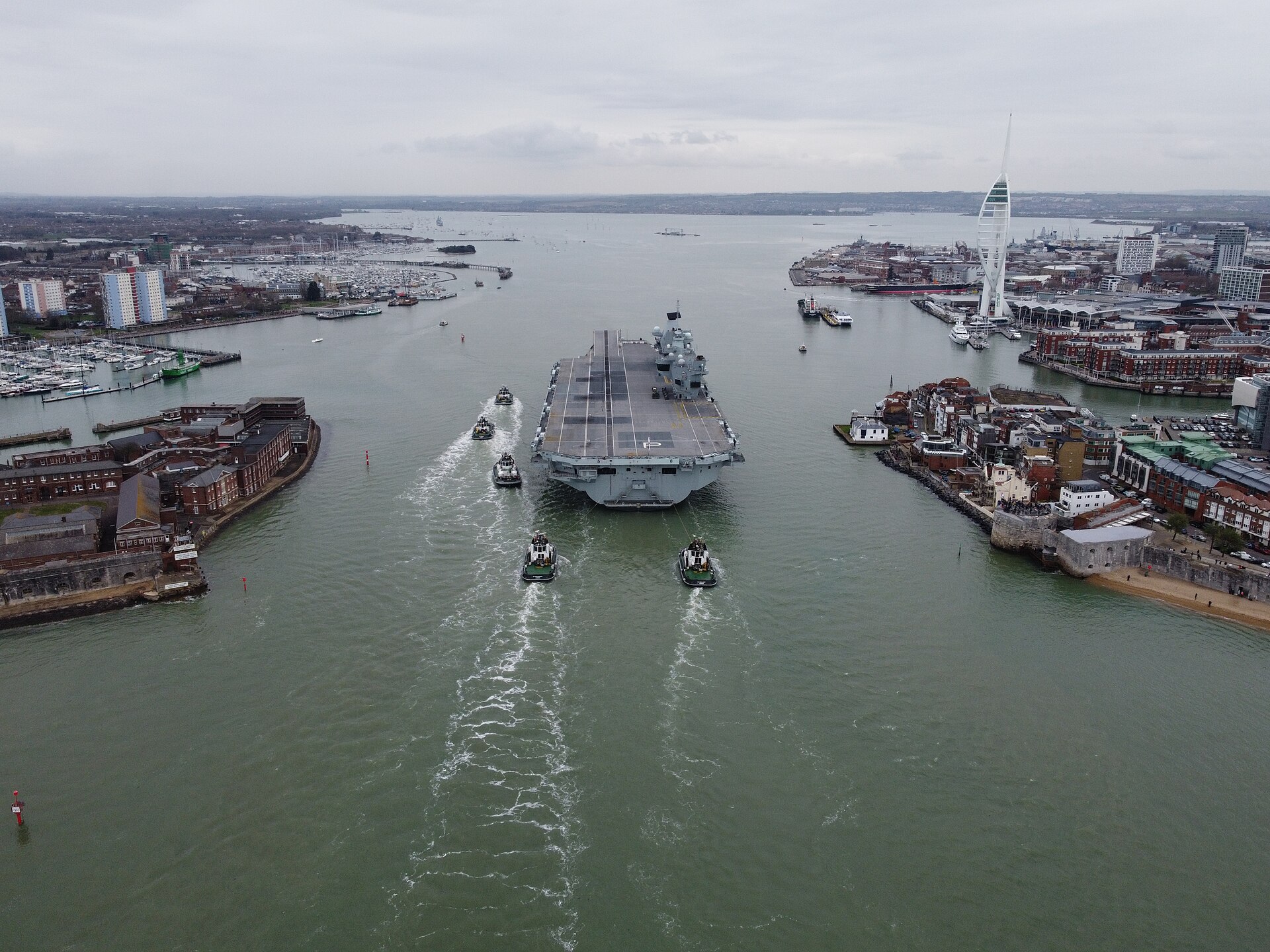
The facts of the departure are agreed across the Royal Navy's announcement and the specialist press that follows the fleet. HMS Prince of Wales sailed from Portsmouth on Sunday, October 18, at about 17:00, weather permitting in the advance notice and confirmed in the reporting that followed, to begin phase two of Operation Firecrest — a deployment focused, in Navy Lookout's preview, on operational readiness and strengthening NATO's ability to operate together on its northern flank. The group operates under NATO command and will work with allies including Norway, Denmark and Germany, including participation in the alliance's Neptune Strike activity, which tests coordination between allied land, sea and air forces across Europe and the North Atlantic.
The group's commander, Commodore Richard Hewitt, framed the sailing as a continuation: "I am delighted to return to the Arctic and North Atlantic as we build on the successes of the first phase of Operation Firecrest," he said, adding that the strike group would take every opportunity to train, operate and integrate with NATO allies and partners. Armed Forces Minister Louise Sandher-Jones gave the deployment its political sentence: "The deployment of the HMS Prince of Wales and her air wing to the High North and the North Atlantic, operating under NATO leadership, is a clear demonstration of the UK's commitment to the Alliance and contribution to the enduring security and stability of the North Atlantic," as Naval Today reported. The stated mission set is readiness, interoperability, and protecting the region's energy infrastructure, trade routes and communications links.
One escort, by name: HMS Dauntless — and the air group above her
The escort list is short enough to print in full: HMS Dauntless, a Type 45 destroyer whose job in any carrier group is air defence — holding the sky against aircraft and missiles so the carrier can work. Dauntless replaces HMS Duncan, which escorted the carrier through phase one alongside the tanker RFA Tidespring. Navy Lookout noted the arithmetic plainly: the carrier "will be accompanied by just a single Type 45 destroyer," although other allied escorts will participate as the deployment proceeds. Both halves of that sentence matter, and the argument between them runs through the analysis below.
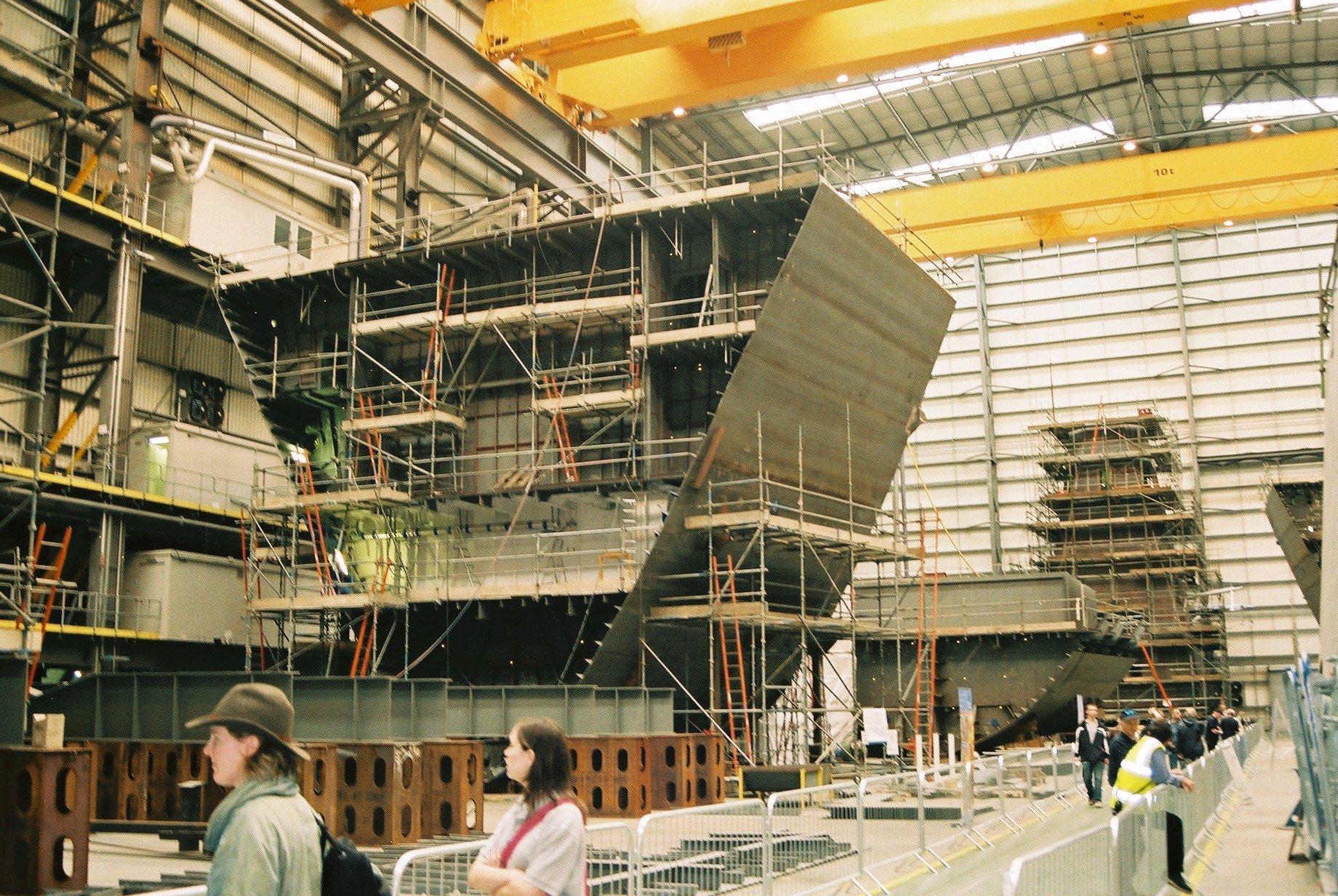
What the group lacks in hulls it is meant to make up in aircraft. The embarked air group combines fifth-generation F-35B jets — the short-take-off, vertical-landing variant that operates from the Queen Elizabeth-class ski jump — with Merlin Mk2 helicopters for anti-submarine work, Merlin Mk4 Commando helicopters for lift and support, Wildcat helicopters, and Malloy drones, the heavy-lift uncrewed aircraft the Royal Navy has been folding into carrier logistics and experimentation. The composition is a tell about the mission: two of its helicopter types exist principally to find, track and lift things in northern waters, and the anti-submarine emphasis reflects a High North problem set defined less by enemy air power than by what moves underneath the surface.
Phase one: what Firecrest already did — and who was watching
This is a return, not a debut. Phase one of Operation Firecrest ran from April to late July 2026, with Prince of Wales sailing alongside HMS Duncan and RFA Tidespring. During that phase, British F-35Bs flew NATO air-defence missions from the carrier off Iceland — carrier jets doing alliance air policing in the gap between North America and Europe — and the group conducted anti-submarine exercises in northern waters. It was watched while it worked: a Russian intelligence-collection ship, the AGI Yuriy Ivanov, shadowed the group during an anti-submarine exercise in phase one, a detail Navy Lookout recorded alongside its phase-two preview. Shadowing is not an incident; it is the normal grammar of northern seas. But it underlines that the audience for Firecrest includes Moscow, and that both sides know it.
Oslo in November: a carrier as a conference venue
The deployment's most unusual line item is diplomatic. From November 10 to 12, HMS Prince of Wales will host the International Sea Power Conference and the Atlantic Future Forum in Oslo, Norway — military leaders, policymakers and industry gathering aboard the flagship to discuss Euro-Atlantic security. A carrier alongside in an allied capital is a particular kind of statement: part warship, part venue, impossible to mistake for anything smaller. It also explains part of the deployment's design. Firecrest is simultaneously a readiness exercise, an alliance-integration programme and a piece of strategic theatre, and the Oslo stop is where the theatre is scheduled rather than implied.
Why this matters
The High North has moved, in a decade, from the edge of NATO's map to near its centre — and the reasons are physical before they are political. Melting ice is opening Arctic sea routes that shorten the Europe–Asia passage and bring commercial traffic into waters Russia's Northern Fleet has long treated as its home ground. The North Atlantic seabed carries the undersea cables and pipelines — communications and energy links — whose vulnerability has been demonstrated repeatedly in recent years and which the Firecrest mission statement names directly: energy, trade and communications. And the Greenland–Iceland–UK gap remains the maritime corridor through which Russian submarines must pass to reach the Atlantic, which is why an anti-submarine-heavy air group, Merlin Mk2s and allied cooperation with Norway, Denmark and Germany are the deployment's centre of gravity rather than decoration.
Against that, the honest argument about this deployment is the escort argument, and it deserves both sides stated plainly. Critics — including, in Navy Lookout's own wording, anyone counting hulls — note that Britain's biggest warship is deploying with a single named destroyer, no British frigate or tanker named alongside her at sailing, in a navy whose escort fleet and carrier availability have been debated for years; a strike group that depends on allies for its screen is, on this view, a capability with an asterisk. The Ministry of Defence answer is built into the mission design: the group operates under NATO command, allied escorts participate, Neptune Strike exists precisely to practise pooled operations, and a carrier whose jets flew alliance air-defence missions off Iceland in phase one is being used as an alliance asset, not a national solo act. Interoperability, on this view, is not a patch over thin numbers — it is the doctrine. Readers can weigh both; what is not really disputable is that the deployment tests the second theory in public, in winter seas, for the second time in six months.
The wider war gives the sailing its context. While Prince of Wales works the northern flank, the alliance's land war continues in the east — see our Ukraine War, Day 1699 briefing — and NATO's nuclear and air exercises continue elsewhere, as in our coverage of the NATO Steadfast Noon nuclear drill in Italy. Firecrest is the maritime northern piece of that same posture: presence, practised integration, and a signal — to allies first, and to the AGI that will likely be watching again — that the corridor stays covered.
What happens next
Three markers will show whether phase two delivers what phase one promised. First, Neptune Strike: how deeply the British air group integrates with Norwegian, Danish and German forces, and whether allied escorts visibly thicken the group as the MoD position predicts. Second, the air picture: whether F-35Bs repeat and extend phase one's NATO air-defence work off Iceland, and how the anti-submarine programme fares in autumn weather — the High North grades seamanship as harshly as strategy. Third, Oslo, November 10 to 12: who comes aboard, and what the Atlantic Future Forum and International Sea Power Conference agree about the region the carrier will have just spent a month patrolling. The ship, the escort debate and the alliance argument sail together; by the time she hosts her conferences, there will be evidence for all three.
Sources
Navy Lookout, October 17–18, 2026, "HMS Prince of Wales sails for second phase of NATO northern flank mission" — https://www.navylookout.com/hms-prince-of-wales-sails-tomorrow-for-second-phase-of-nato-northern-flank-mission/ (Sunday October 18 sailing at 17:00; single Type 45 escort HMS Dauntless replacing HMS Duncan; 1,200-plus personnel; air group composition; phase-one detail including F-35B air-defence missions off Iceland and the Russian AGI Yuriy Ivanov shadowing an anti-submarine exercise; Hewitt quote; Oslo conference dates). Naval Today, October 19, 2026, "UK's flagship aircraft carrier sets sail for North Atlantic" — https://www.navaltoday.com/2026/10/19/uks-flagship-aircraft-carrier-sets-sail-for-north-atlantic (Sandher-Jones quote; Norway, Denmark and Germany; Commodore Richard Hewitt commanding; phase-two focus on readiness and interoperability). Defence Industry Europe, October 18, 2026, "Royal Navy says F-35s aboard HMS Prince of Wales will join NATO-led operations in the Arctic and North Atlantic under Operation Firecrest" — https://defence-industry.eu/royal-navy-says-f-35s-aboard-hms-prince-of-wales-will-join-nato-led-operations-in-the-arctic-and-north-atlantic-under-operation-firecrest/ (NATO command; Neptune Strike; energy, trade and communications links; Hewitt and Sandher-Jones statements; Oslo forums). Ship particulars — 65,000 tonnes, pennant R09, Britain's biggest warship — as stated across the sources above.