Harvard funding appeal hearing
- Harvard funding appeal hearing
- Trump Harvard funding cuts
- 1st Circuit oral argument
- First Amendment retaliation
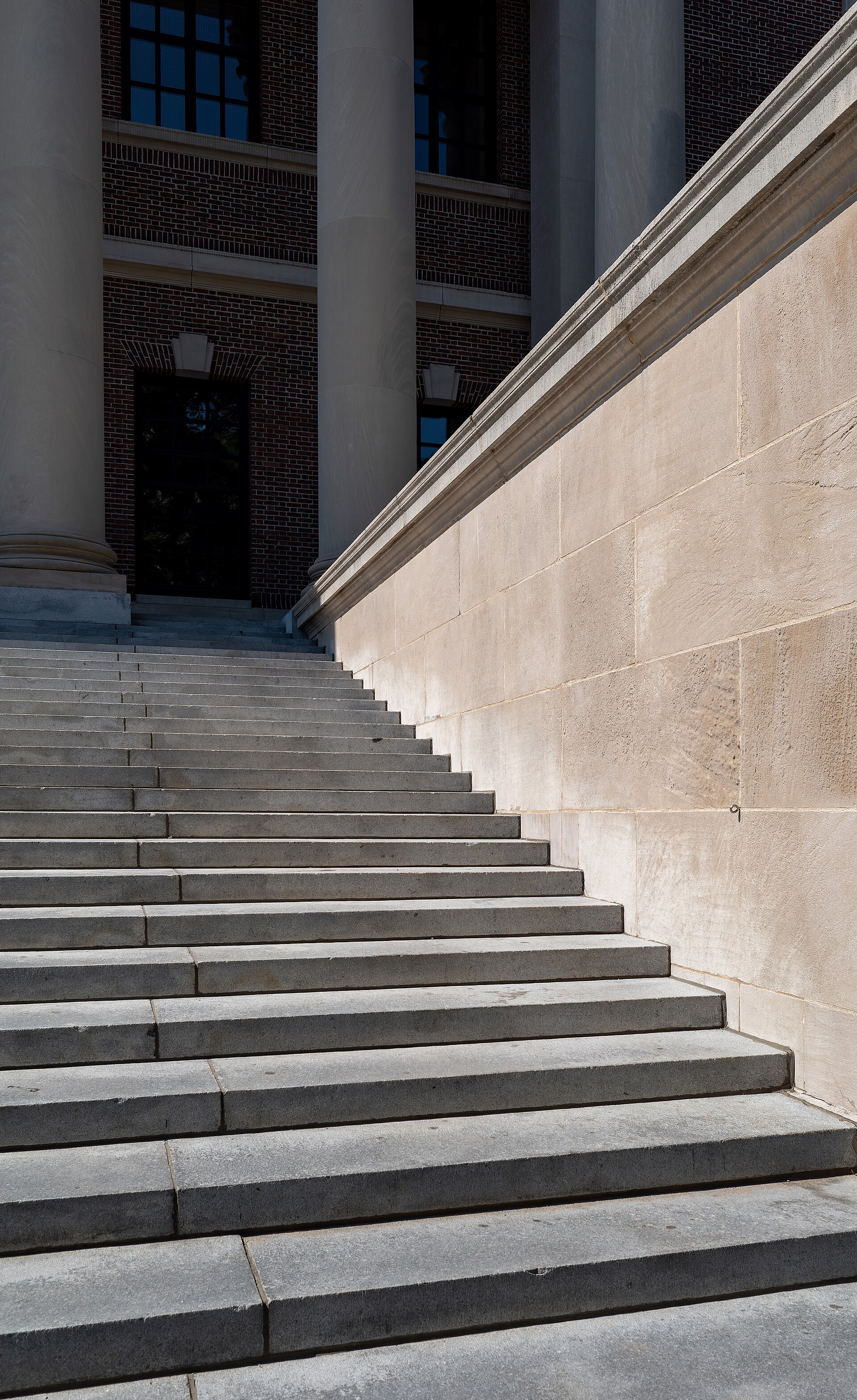
BOSTON — The Harvard funding appeal hearing opens Monday morning with a dispute about more than $2 billion in federal grants. Its real reach is larger. The Boston-based 1st U.S. Circuit Court of Appeals is being asked to decide how far a president may use the federal research budget to force political and institutional change at an American university.
Oral argument is set for 9:30 a.m. Eastern, or 1330 GMT. The Trump administration wants the court to revive its effort to terminate roughly $2.2 billion awarded to Harvard University, the oldest and richest university in the country and the most determined legal opponent of the administration's broader campaign against higher education.
The immediate stakes sit inside laboratories rather than campaign slogans. Funding cut by 11 federal agencies — including the Department of Health and Human Services, the National Science Foundation and the Department of Defense — supports scientific and medical research. The legal stakes sit in the Constitution: Harvard says the cutoff punished the university for refusing government demands about teaching, admissions, hiring and academic governance.
How ten demands became a $2.2 billion court fight
The confrontation accelerated in April 2025, when administration officials sent Harvard a list of ten demands. They included ending diversity, equity and inclusion programs and appointing third-party auditors to monitor academic departments for “viewpoint diversity.” The White House's position was that universities had been captured by “radical left” ideologies and that federal support gave the government a legitimate reason to insist on change.
Harvard President Alan Garber refused. His answer framed the dispute as one about control rather than compliance: “No government — regardless of which party is in power — should dictate what private universities can teach, whom they can admit and hire, and which areas of study and inquiry they can pursue.”
Within hours, the administration froze federal grants. It cited Harvard's alleged failure to address harassment of Jewish students during campus protests tied to the Israel-Hamas conflict. The freeze grew into the termination of about $2.2 billion. Harvard sued, arguing that the move was retaliation for speech protected by the First Amendment.
That sequence is crucial. The government can attach lawful conditions to federal money, police discrimination and investigate whether recipients meet civil-rights obligations. Harvard's case is that those powers cannot be used as a shortcut to impose unrelated political demands, especially without connecting each research award to a specific legal or contractual failure.
What Judge Burroughs found
U.S. District Judge Allison D. Burroughs ruled in September 2026 that the funding cuts were unconstitutional and ordered the money restored. Her opinion accepted one premise advanced by the administration while rejecting the legal connection it tried to draw from that premise.
Burroughs wrote that Harvard “has been plagued by antisemitism in recent years and could (and should) have done a better job of dealing with the issue.” That acknowledgment matters: the lower-court ruling did not dismiss the experience of Jewish students or declare the government's concern illegitimate.
But the judge found “little connection between the research affected by the grant terminations and antisemitism.” She said the government had “used antisemitism as a smokescreen for a targeted, ideologically-motivated assault on this country's premier universities.” The original freeze order, according to Harvard Magazine's account of the ruling, did not identify any specific instances of antisemitism on Harvard's campus.
That is the government's central problem on appeal. It must persuade the 1st Circuit either that Burroughs applied the wrong legal standard, gave too little weight to executive authority over federal grants, or went too far in ordering the funds restored. Harvard will argue that chronology, stated demands and procedure all point toward retaliation rather than neutral enforcement.
The strongest arguments on both sides
The administration's leverage argument
Supporters of the freeze start with the proposition that federal funding is not unconditional. Washington distributes research money and can require recipients to follow federal law. If an institution fails to protect students from prohibited harassment, they argue, the government should not be forced to continue business as usual while investigations and litigation drag on.
The administration also sees Harvard as a test of credibility. A warning without financial consequence would carry little force in a campaign that has also used civil-rights investigations, threats to accreditation and deportation measures involving non-citizen students. From that perspective, the grant cutoff is not incidental; it is the mechanism that gives the policy weight.
Harvard's retaliation and procedure argument
Harvard's response is that lawful enforcement requires a lawful path. The university says the government cannot bundle disagreements over DEI, hiring, admissions, curricula and “viewpoint diversity” into an antisemitism rationale, then cancel unrelated scientific grants without showing a connection between the alleged violation and the funded work.
That argument does not depend on Harvard being beyond criticism. It depends on whether the government followed required procedures and whether the funding decision was genuinely tied to a valid grant condition. Burroughs' finding that the initial order named no specific campus incidents gives Harvard a factual foundation for saying the stated justification came after the political demands, not before them.
The money is large, but its structure matters more
The administration's $2.2 billion action is often set against Harvard's immense endowment. That comparison can mislead. An endowment is not a single checking account that administrators can freely redirect to any interrupted project. Federal grants are part of a research pipeline: agencies select projects, laboratories hire staff, graduate students build work around awards and scientific programs make plans across years.
A sudden termination therefore travels beyond the balance sheet. Researchers can lose continuity. Laboratories can face gaps in staffing and equipment. Graduate students can be caught in the middle of awards around which their work was organized. Medical research delayed in one institution can affect patients who have no role in the political conflict.
The number of agencies also matters. This was not one disputed contract managed by one department. Eleven agencies cut funding. The breadth supports the administration's claim that the dispute concerned government-wide compliance, but it also supports Harvard's argument that a sweeping political decision displaced award-by-award analysis.
A personal and political fight now becomes appellate doctrine
Trump made clear that he expected an appeal. After the earlier district-court hearing, he attacked Burroughs on social media as “a TOTAL DISASTER,” suggested she was biased against him and vowed: “When she rules against us, we will IMMEDIATELY appeal, and WIN.”
That rhetoric raises the temperature but does not decide the case. Appellate judges review legal questions, the lower court's findings and the administrative record. They can affirm Burroughs, reverse her, or narrow the remedy without endorsing every argument advanced by either side.
An affirmance would preserve the restored funding and strengthen the proposition that the executive branch must demonstrate a real relationship between alleged misconduct and the grants it cancels. A reversal could return enormous negotiating power to the administration and encourage similar pressure on Columbia, Penn and other universities in its crosshairs. A narrower ruling might protect some funds, send other issues back to the district court, or focus on procedure rather than resolve the broadest First Amendment question.
Tuesday's international-student case widens the lens
The Harvard fight does not end with Monday's grants argument. On Tuesday, the appeals court is scheduled to review a separate ruling that barred the administration from preventing Harvard from hosting international students.
Taken together, the cases show why every elite university is watching. The government is not relying on one channel. Research money, civil-rights investigations, accreditation pressure, immigration authority and the status of non-citizen students all create separate points of leverage. Harvard has fought back aggressively in court and secured several victories, making it the most developed legal counterexample to the administration's strategy.
The outcomes need not move in lockstep. The 1st Circuit could conclude that the government has more authority in one context than another. But back-to-back arguments will give the judges — and eventually perhaps the Supreme Court — a broad view of whether several executive powers are being used for distinct lawful ends or assembled into one campaign to bend an institution's choices.
The Supreme Court endgame
Whatever the 1st Circuit decides, the losing side has powerful reasons to keep litigating. For the administration, defeat would limit the most immediate weapon in its university crackdown. For Harvard, defeat would threaten billions in research support and establish a precedent that could outlast this particular conflict.
That makes a Supreme Court petition close to inevitable. The justices could be asked to separate three questions that political debate tends to collapse: when the government may withdraw funding for noncompliance; what process it must use before doing so; and when a financial penalty becomes retaliation for protected speech.
A Trump victory would not automatically decide every future campus dispute. Each institution, grant and enforcement record would still matter. But it would hand the executive branch a much stronger negotiating position. Universities would know that resisting political demands could put broad portfolios of federal research at risk before a final court ruling.
A Harvard victory would not exempt universities from civil-rights law or shield them from scrutiny over antisemitism. It would instead cement a requirement that enforcement be specific, procedurally grounded and connected to the funds at issue. That distinction — accountability without political commandeering, or leverage without constitutional overreach — is the line the 1st Circuit begins drawing Monday.
Related Signal Post News coverage
Sources
- Reuters, October 5 — hearing schedule, administration position, grant amount and broader university campaign
- Harvard Magazine — Judge Allison D. Burroughs' September ruling and findings
- Harvard Magazine — district-court hearing background
- The Harvard Crimson — oral-argument background, agencies involved and Trump's reaction