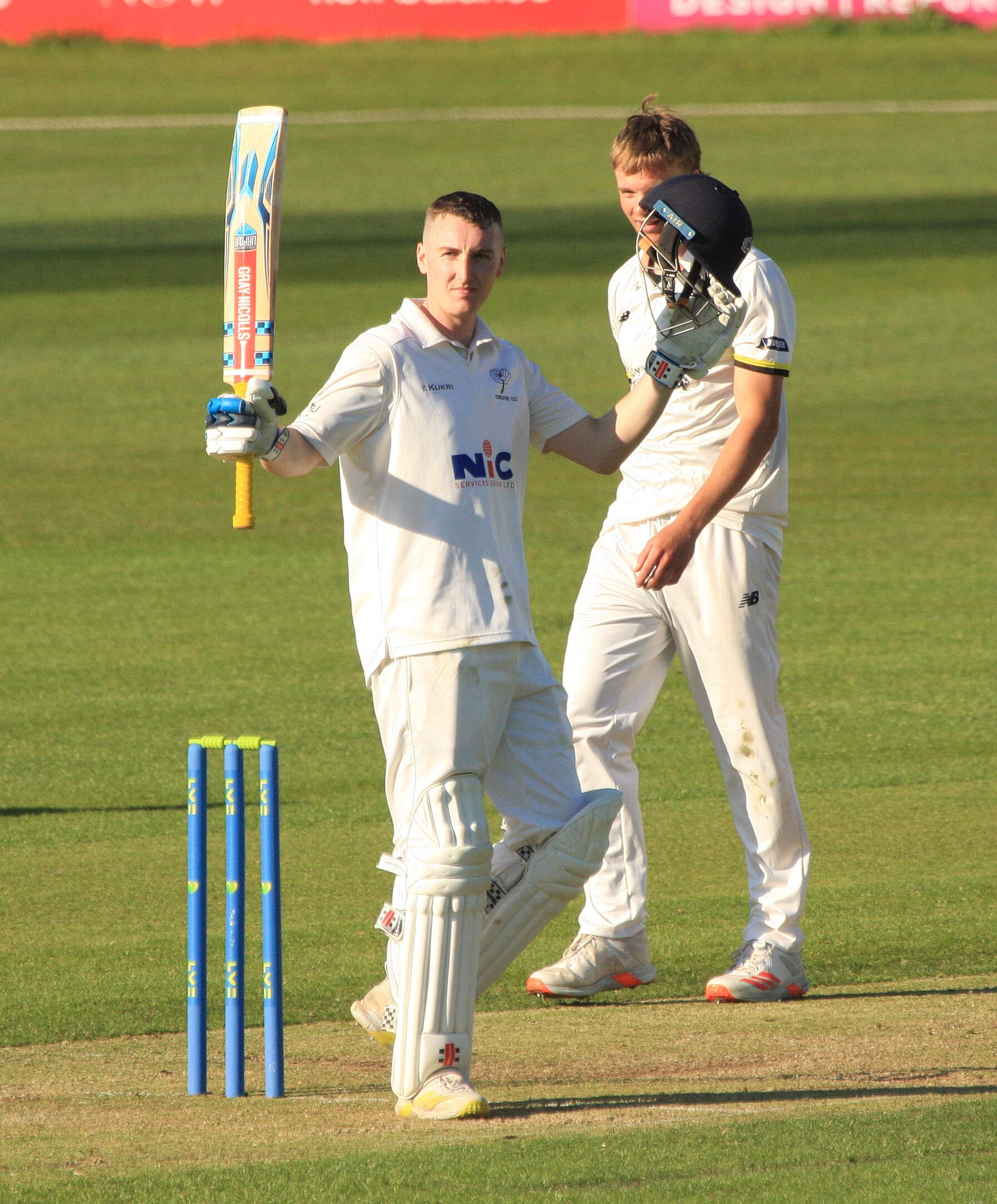
Sports / Cricket — The Harry Brook fastest ODI double century anyone has ever seen arrived on Thursday in Rawalpindi: 202 off 116 balls against Sri Lanka, the first double hundred by an England batter in one-day international history, and the fastest the format has ever produced.
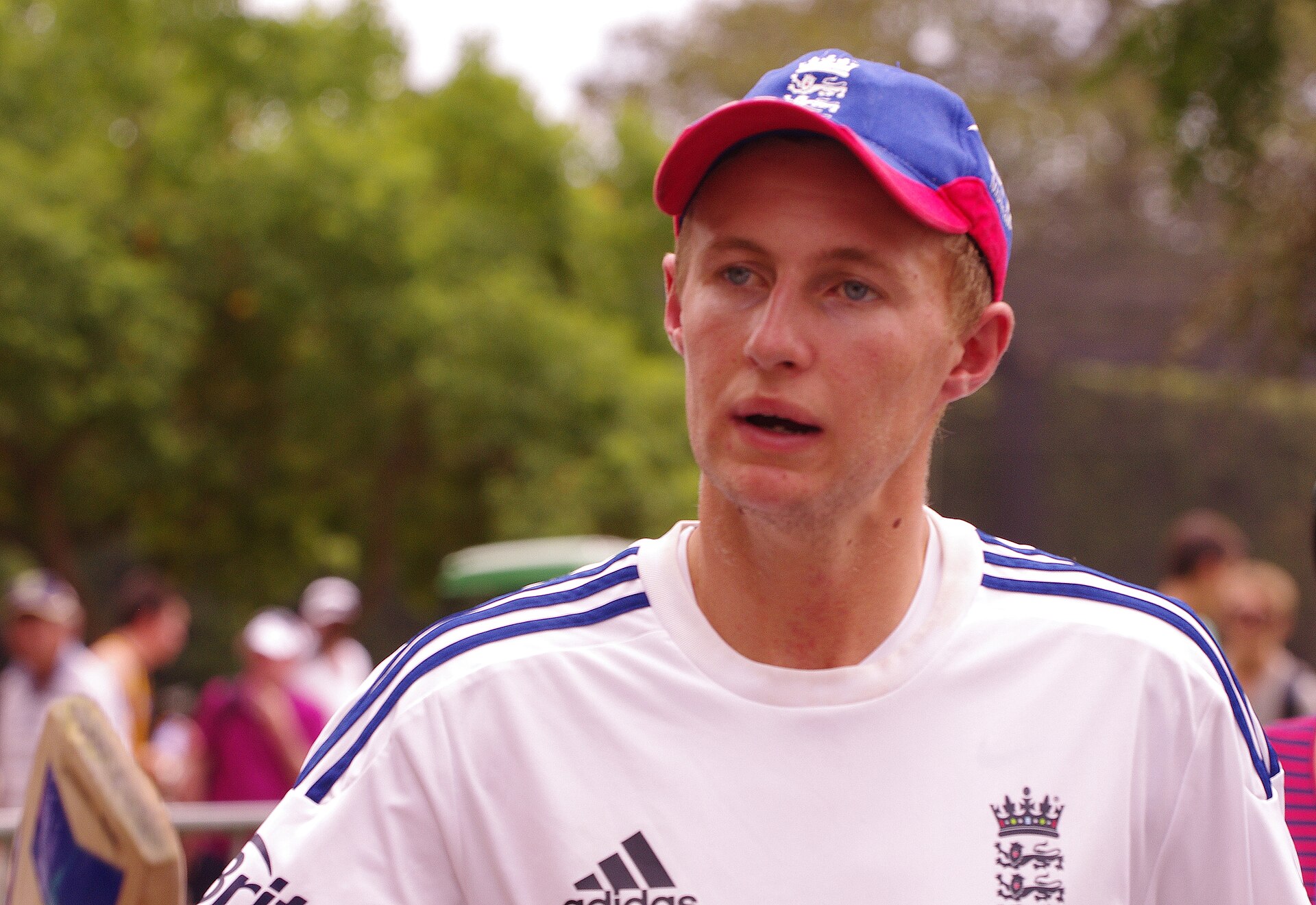
Harry Brook walked off the Rawalpindi Cricket Stadium on Thursday to a standing ovation, ESPNcricinfo reported, after producing an innings that rewrote several record books at once. The England captain, 27 years old, scored 202 from 116 balls against Sri Lanka in the third match of the Pakistan ODI Tri-Series — the first ODI double century ever made by an England batter, and, according to Reuters, the fastest double century in the history of the format. Brook reached 200 from just 114 balls, beating the previous record of 117 balls set by India's Shubman Gill, who made an unbeaten 223 against West Indies in Guwahati last month. He was caught off the very last ball of the innings, having batted for around two and a half hours in the afternoon heat, and England closed on 429 for 4. Sri Lanka's chase of 430 was still in progress as this article was published; the result of the match is not yet known, and everything that follows is about the innings, not the outcome.
The scale of it deserves a pause. In nearly five and a half decades of one-day international cricket, English batters had produced big hundreds, brutal hundreds, World Cup-winning hundreds — but never a double. The national record Brook demolished belonged to Ben Stokes, whose 182 against New Zealand at The Oval in 2023 had stood as the high-water mark of English ODI batting. Brook passed it, kept going, and then accelerated into territory only thirteen other men in history had ever reached: his was the 14th double century in men's ODI cricket. Stokes, watching somewhere, responded on social media with an image reading "I told ya so" — the reaction of a man who had publicly backed his successor and enjoyed being proved right within hours.
How the innings was built: slow kindling, then a detonation
The most startling thing about the fastest double century in ODI history is how slowly it began. Brook scored 13 runs from his first 24 balls — a start so measured that nobody in the stadium could have guessed what was coming. He reached fifty from 42 balls, solid rather than spectacular. His hundred came from 75 balls, brought up in signature fashion with a ramped four off Asitha Fernando — the audacious, premeditated scoop over the wicketkeeper that has become his calling card. By orthodox standards, a 75-ball hundred in a tri-series match in Rawalpindi is already a fine day's work. What followed was not orthodox at all.
From 100 to 200, Brook scored a hundred runs from 39 balls. Read that again: a century, in 39 deliveries, in the second half of an ODI innings, on a ground where England had been beaten by 87 runs two days earlier. He passed 150 from 97 balls with a reverse-ramp, a shot that requires both wrists and nerve to be working perfectly. He was dropped at mid-off on 185 — the one clear chance Sri Lanka created, and the moment the innings could have ended as merely a great one rather than a historic one. It did not end. Brook began the final over of the innings, bowled by Janith Liyanage, on 186. He hit a six over the covers. He scampered two twos. He played a paddle-sweep for four to bring up the double hundred — 200 from 114 balls, a world record. And then, with the last ball of the innings, he was caught by Sahan Arachchige at deep point, ESPNcricinfo reported, and walked off to the ovation his innings had earned.
The full statistical portrait, as reported by PA and Reuters, is worth setting out because numbers this extreme can blur together: 202 runs, 116 balls, a strike rate of 174.14, 21 fours and 10 sixes. That is 31 boundaries, which PA reported is itself an England ODI record for a single innings. Brook's previous highest ODI score had been an unbeaten 136 against Sri Lanka in Colombo earlier this year. In the space of one afternoon, he raised his personal best by 66 runs and moved past Stokes' 182, Jason Roy's 180 and Alex Hales' 171 on England's all-time list in a single innings.
The partnerships: Root the anchor, Jacks the accelerant
Double centuries are individual achievements built on collective foundations, and Brook's was no exception. His partnership with Joe Root produced 159 runs, Root contributing a characteristically smooth 69 from 66 balls — the kind of innings that allows a partner to take risks because the scoreboard never stalls. Then came the partnership that broke the match open as a contest of totals: Brook and Will Jacks added 185 runs from just 79 balls, a stand that took England from a strong position to a record one. Jacks finished unbeaten on 66 from 30 balls, having reached his fifty from only 25 deliveries. Tom Banton added 50 from 51 balls and Ben Duckett 29, and England's late surge was relentless: 156 runs arrived in the final ten overs of the innings alone.
Sri Lanka's bowlers were left with figures that tell their own story. Dunith Wellalage, with 2 for 56, was the only bowler to escape with both wickets and a measure of control. Asitha Fernando took 1 for 68. Beyond that, the numbers become punishing: Eshan Malinga conceded 91 without a wicket, Dilshan Madushanka 89 without a wicket, and Dasun Shanaka went for 74 from only six overs. When a bowling attack's most economical regular option is being scored at more than five an over and three bowlers are leaking between 89 and 91 runs, the attack has not merely had a bad day — it has run out of answers, plans and, eventually, fields to set.
The records, gathered in one place
Start with the team total, because it frames everything else. England's 429 for 4 is, ESPNcricinfo reported, the highest ODI total ever scored in Pakistan — the first time any side has passed 400 in the country, eclipsing Pakistan's own 375 for 3 against Zimbabwe in Lahore in 2015. It is also the highest total Sri Lanka have ever conceded in one-day internationals, and, per PA, England's highest overseas total against a Test-playing nation, passing the 418 for 6 made against West Indies in Grenada in 2019. It stands as England's fourth-highest ODI total of all time.
Then the individual marks. Brook's 202 is the highest ODI score by a middle-order batter in history — before Thursday, only Glenn Maxwell, with his astonishing unbeaten 201 against Afghanistan at the 2023 World Cup, had made a double hundred from the middle order. Among captains, Brook's score is the fourth-highest ever recorded, behind only Gill's 223 not out, Virender Sehwag's 219 and Rohit Sharma's 208 not out. And ESPNcricinfo noted the distinction that may age best of all: Brook became only the second cricketer in history, after Chris Gayle, to complete the all-format "3-2-1" — a Test triple-century, an ODI double-hundred and a T20 international century. Gayle was, for years, treated as a one-off freak of cricketing nature, a player whose record was a monument rather than a target. Brook has now joined him in a club of two.
The numbers in context: how fast is 114 balls?
Records for the fastest ODI double century have a habit of standing for years and then falling twice in a season. Gill's 117-ball mark, set only last month in Guwahati, lasted a matter of weeks. The progression now reads: Brook 200 from 114 balls; Gill 200 from 117; Ishan Kishan 200 from 126 balls, made against Bangladesh in 2022; Maxwell 200 from 128 balls during that World Cup epic in Mumbai; and Pathum Nissanka 200 from 136 balls. To put Brook's pace in plain terms, he scored his second hundred — the hundred that turned a big innings into a double — in 39 balls, at a rate that would produce a T20 hundred in under eight overs. His overall strike rate of 174.14 was sustained not for a cameo of 30 balls but for an innings of 116.
Set against England's own history, the list Brook now heads reads like a roll-call of the country's white-ball revolution: Brook 202; Stokes 182; Roy 180; Hales 171; and Robin Smith's unbeaten 167, which stood as the England record for more than two decades after he made it against Australia in 1993. Smith's mark survived a generation of increasingly aggressive English batting; Stokes broke it in 2023; Brook has now pushed the ceiling 20 runs higher in a single afternoon. The pattern of the record's movement — long plateaus, then sudden leaps — usually tracks changes in how the game is played: bigger bats, shorter boundaries, two new balls, and batters reared on T20 leagues. Brook's innings is a data point in that long argument, as well as an entry in the record book.
Why this matters
The first reason this matters is the captaincy transformation, because the statistics are startling enough to demand attention. The Times reported that Brook averages 56.04 across 25 matches as England's ODI captain, against 25.20 across 21 matches as a player without the captaincy. All four of his ODI centuries have come since he took the job. Conventional wisdom in cricket holds that the captaincy burdens a batter — the meetings, the media, the bowling changes to fret over — and there is a long line of great players whose averages sagged under the weight of it. Brook's numbers describe the opposite phenomenon: a player for whom responsibility appears to have removed doubt. Thursday's innings, made after he had publicly demanded more positivity from his own team, was a captain leading in the most literal way available to a batter: by going first, and going furthest.
That context — the demand, and what prompted it — is the second reason. Both England and Sri Lanka had lost their opening tri-series matches to Pakistan, and England's defeat on Tuesday, by 87 runs at this same ground, drew a blunt assessment from Brook that his batters had been too timid. Teams say such things after defeats all the time, and usually nothing changes until selection does. Here, the response came 48 hours later from the man who had issued the challenge, against an attack that had every reason to expect a cautious England. An innings that begins 13 from 24 balls and ends with a world record is, among other things, a worked example of the modern doctrine Brook was preaching: keep wickets, build a platform, and then trust the hitters to detonate. The 159 with Root was the platform. The 185 in 79 balls with Jacks was the detonation. Coaches will show this innings to young batters for years, not for the highlights — though the reverse-ramps will do nicely — but for the shape.
Third, there is what 429 in Pakistan signifies. Subcontinental ODI cricket has historically been a game of accumulation, where 300 was a winning score and 375 — Pakistan's Lahore mark from 2015 — was the outer edge of the possible on home soil. England passing 400 in Rawalpindi, in an afternoon game, with 156 runs in the last ten overs, is another marker of how completely the format's economics have changed. A total of 429 no longer merely wins most matches; it asks the chasing side to score at 8.6 an over from the first ball, a rate that forces risk into every partnership. Whether or not Sri Lanka get close, England have restated, on foreign soil and in a tournament where they had just been beaten, that their ceiling remains the highest in the world game when their batting fires in sequence.
And finally, the 3-2-1 club. Gayle's combination of a Test triple-hundred, an ODI double and a T20I century stood alone for so long because it requires three careers inside one: the patience to bat for two days, the power to clear ropes in the shortest format, and the sustained violence a double hundred demands. Brook, at 27, has completed the set with what should be his prime still ahead of him. Records of this kind do not make a player great on their own, but they tend to be set by the players history remembers. That is the company Brook joined on Thursday, and it was earned in the most demanding way: as captain, under tournament pressure, two days after a defeat he had taken personally.
The case for perspective
Balance requires the caveats, and there are honest ones. Rawalpindi offered a flat pitch, and afternoon conditions favoured the side batting first — Sri Lanka won the toss and chose to field, a decision that will be debated, but the surface plainly rewarded clean hitting all day. Brook was dropped at mid-off on 185; had that catch been taken, the story would be of a magnificent 185, the records for fastest double and first English double would still be waiting, and this article would be half its length. The Sri Lanka attack, missing its best plans and leaking runs at every change, was poor by international standards — three bowlers conceding 89 runs or more is a collective failure no single batter, however brilliant, fully explains. And the match itself is not decided: a record innings in a losing cause is remembered differently from one that wins a tournament match, which is precisely why the chase matters and why nobody should write Sri Lanka off while 430 remains, however improbably, a target rather than a verdict.
Against that, set the counterweight. Flat pitches are available to every batter who plays on them, and in 54 years of ODI cricket on good surfaces around the world, no Englishman had ever reached 200 and nobody at all had done it in 114 balls. Dropped catches feature in the biography of almost every great innings ever played; Maxwell's 201 not out, the closest comparison, survived chances too. Greatness in sport is usually the exploitation of fortune at a level nobody else on the field could reach — and on Thursday, twenty-one other international cricketers had the same pitch, the same outfield and the same conditions, and one of them scored 202 of the runs.
What is not known yet
The match result. Sri Lanka's chase of 430 was under way when this article was staged, and this report deliberately makes no claim about the winner. Readers should also note that some early secondary reporting has garbled the central numbers: a few outlets have misstated Gill's previous record as 116 balls, and at least one has described Brook's 202 as coming off 114 balls. The verified figures, per Reuters and ESPNcricinfo, are these: Brook reached 200 from 114 balls and was dismissed for 202 from 116. Gill's previous record was 200 from 117 balls. Those are the numbers that will stand in the record books, and they are the ones used throughout this article.
What happens next
First, the chase: Sri Lanka need 430, a total that would itself be one of the great ODI pursuits if achieved, against an England side that can now rotate its bowlers with the scoreboard doing half the work. The tri-series then continues with both teams still chasing the final — and with Pakistan watching a tournament they began by beating both of Thursday's sides. For Brook personally, the questions shift from whether he belongs among the format's elite to how long he can stay there: the England captain now owns the fastest double century ever made, the highest score by an Englishman, and a seat beside Gayle in the 3-2-1 club, all before his 28th birthday. Cricket on this site has seen records fall at speed this autumn — from India's gold-medal win over Pakistan in the Asian Games cricket final to the rain-hit drama of the India–Pakistan Asian Games semi-final — and England, as a sporting nation, is enjoying a season of superlatives, with the footballers' record 7-0 rout of Croatia still fresh in the memory. Brook's 202 may prove to be the most durable of all of them. Gill's record lasted weeks. This one, at 114 balls, could last years — unless Brook, or someone watching him on Thursday, decides it is there to be broken.
Sources
Reuters, "England's magnificent Brook hits fastest ODI double century" (Oct 22, 2026) — reuters.com; ESPNcricinfo match report by Matt Roller, England vs Sri Lanka, 3rd match, Pakistan ODI Tri-Series 2026/27 (Oct 22, 2026) — cricinfo.com; PA report via Glasgow Times, "Harry Brook becomes first England batter to record ODI double century" (Oct 22, 2026) — glasgowtimes.co.uk; The Times, Sri Lanka v England ODI report (Oct 22, 2026) — thetimes.com; BBC Sport reporting on the match and Brook's post-Pakistan comments (Oct 2026).