ghana heritage series cedi banknotes
World / Ghana / Economy
Ghana's Heritage Series Cedi: New Banknotes Launch November 3, 2026
Ghana heritage series cedi banknotes launch November 3 with stronger security and no rush to exchange: denominations, co-circulation and what changes.
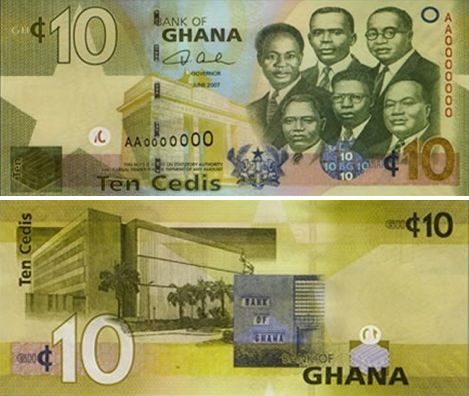
ACCRA — Ghana will introduce its Heritage Series of cedi banknotes on November 3, 2026, refreshing every note from GH¢1 through GH¢200 while keeping the current currency in circulation as legal tender, the Bank of Ghana says. Governor Dr Johnson Pandit Asiama announced the timetable at the central bank's 132nd Monetary Policy Committee press conference on September 24 at Bank Square in Accra.
The series carries the theme “The Cedi, Our Future: Secure, Designed to Last.” It covers GH¢1, GH¢2, GH¢5, GH¢10, GH¢20, GH¢50, GH¢100 and GH¢200. The central bank says there will be no denomination above GH¢200. Officials are emphasizing that this is a managed replacement and security upgrade, not a sudden cancellation of money already held by households and businesses.
Existing notes will continue to be accepted and will co-circulate with the Heritage Series. The Bank of Ghana has explicitly told the public not to rush to exchange cash. That instruction is central to a smooth launch: banks can introduce new notes through normal withdrawals and payments while worn older notes return gradually through the banking system.
Why it matters: confidence is part of the currency
A banknote redesign is a technical project with a public-trust test attached. Security features must frustrate counterfeiters, the material must survive daily use, cash machines and counting equipment must recognize the new notes, and millions of people must be able to tell genuine currency from a fake without confusion. Ghana's decision to let old and new notes circulate together reduces the risk that a security upgrade becomes a disruptive scramble.
The redesign also arrives after the core note designs have circulated for more than 20 years. Long service gives cash handlers familiarity, but it also gives counterfeiters time to study recognizable features and techniques. The Bank of Ghana's stated emphasis on enhanced anti-counterfeiting protection and durability addresses both sides of that aging problem: the notes need to be harder to copy and slower to wear out.
President John Mahama signaled the refresh during his August Resetting Ghana Tour. The launch now converts that political signal into an operational timetable. The credibility of the project will depend less on ceremony at Bank Square than on consistent public education, reliable distribution and the absence of hidden conversion costs for ordinary people.
What changes—and what does not
The visible change will be the Heritage Series itself, backed by updated security features and materials designed for longer life. The precise public-facing authentication guidance will matter: people need a small number of reliable checks they can perform quickly at a market stall, transport stop or bank counter. Too many features can overwhelm; too few can invite fraud. Clear illustrations and training are therefore as important as the technology embedded in each note.
What does not change is equally important. The denomination structure remains capped at GH¢200. The launch does not make current notes worthless on November 3. There is no reason for households to queue for an immediate swap, and merchants should continue accepting valid existing cedi notes. Co-circulation gives the central bank time to replace currency according to wear, demand and distribution capacity.
That choice distinguishes a note refresh from a redenomination. Ghana is not removing zeros or asking people to recalculate prices in a new unit. Account balances, contracts and prices remain in cedis. The project changes the physical instruments used in cash transactions rather than the unit of account itself.
The full denomination plan
The planned set begins with GH¢1 and GH¢2, continues through GH¢5, GH¢10, GH¢20 and GH¢50, and ends with GH¢100 and GH¢200. Retaining lower notes matters for everyday cash purchases and change-making. Keeping the upper limit at GH¢200 also answers speculation that the redesign might introduce a larger note.
A complete series requires coordination across the cash economy. Commercial banks must update tellers, cash centers, ATMs and note-sorting machines. Retailers and transport operators need visual guidance. Police and courts need a shared understanding of the new protections for counterfeiting cases. Businesses that handle large volumes of cash must train staff without rejecting legitimate older notes.
Durability has a fiscal dimension. A longer-lasting note can reduce how frequently the central bank must print, ship, sort and destroy replacements. But the claim will only be measurable over time. Production quality, climate, handling patterns and the mix between cash and digital payments will determine actual life in circulation.
Who wins and who carries the cost
Consumers benefit if the transition stays routine. Co-circulation protects people who hold cash outside the formal banking system from arbitrary deadlines and long journeys to exchange points. Public education should particularly reach rural communities, small traders and people who do not use banking apps.
Retailers and banks gain better fraud defenses if the new features are easy to verify. They also carry near-term training and equipment costs. A note that is secure in a laboratory but frequently rejected by machines would shift friction onto customers, so calibration before launch is essential.
The central bank can gain credibility through an orderly rollout. It bears the cost of printing, logistics and communication, and it will be judged on whether new notes are available across the country rather than concentrated in Accra. Counterfeiters lose some of the advantage accumulated over two decades of familiar designs, though experience elsewhere shows that fraud attempts often migrate toward confusion during a transition.
Cash-dependent households face the greatest risk from misinformation. False claims that old notes are expiring could produce panic selling, predatory exchange fees or refusals by merchants. The bank's no-rush message should therefore be repeated by banks, local radio, market associations and government offices.
Data context: a design change is not monetary policy
New banknotes can improve security and lower replacement costs, but they do not by themselves change inflation, interest rates, the exchange value of the cedi or the quantity of money in the economy. Those outcomes depend on fiscal policy, central-bank operations, trade, investment and public expectations. A visually new note should not be mistaken for a stronger currency in the macroeconomic sense.
The announcement came at an MPC press conference, which can blur that distinction for casual readers. The Heritage Series concerns the physical quality and integrity of cash. Monetary policy concerns the price and availability of credit and the broader conditions that shape inflation. Both affect confidence, but through different channels.
Regional comparison is useful. Signal Post News has tracked Nigeria's economic debate at 66 and a Nigerian central-bank rate cut. Those stories concern growth, prices and policy settings; Ghana's note launch is narrower, even though all three turn on confidence in economic institutions. The distinction prevents a redesign from carrying promises it cannot fulfill.
What happens next
Before November 3, the Bank of Ghana must publish practical authentication guidance, distribute notes and prepare the institutions that handle cash. The most useful signs of readiness will be training beyond Accra, tested cash machines, clear treatment of damaged notes and consistent statements that current bills remain legal tender.
After launch, watch the pace of circulation rather than expecting immediate replacement. New notes should appear gradually in withdrawals and change. Reports of merchant refusal, artificial exchange fees or machine rejection would be early warning signals. Counterfeit alerts will test whether the security message reached the public.
Longer term, the bank should report what “designed to last” means in practice: note life, replacement volumes, production costs and counterfeit detection. That evidence will show whether the Heritage Series produced operational savings as well as a new appearance.
Ghana's strongest transition message is also its simplest: November 3 is a launch date, not an expiration date. The success of the Heritage Series will be measured by how little disruption people experience while the cash in their hands becomes more secure.
Sources and reporting notes
World Desk analysis · Published October 1, 2026Back to all stories
Disclosure: Signal Post News may earn a commission from qualifying purchases made through links on this page, at no extra cost to you. Learn more.