Berlin bets on Nvidia / Physical AI for the factory floor
The agreement is expected to be unveiled next week, according to the government sources who spoke to Reuters. Partners beyond Nvidia are involved, the sources said, although the full list has not been published ahead of the announcement. What is already clear is the direction of travel: officials describe the package as a substantial step for industrial AI, not a research memorandum. The emphasis falls on tools factories can actually deploy — systems that train robots, support self-driving vehicles and run powerful AI models built for industrial use rather than for consumer chatbots.
What is in the Germany Nvidia industrial AI deal?
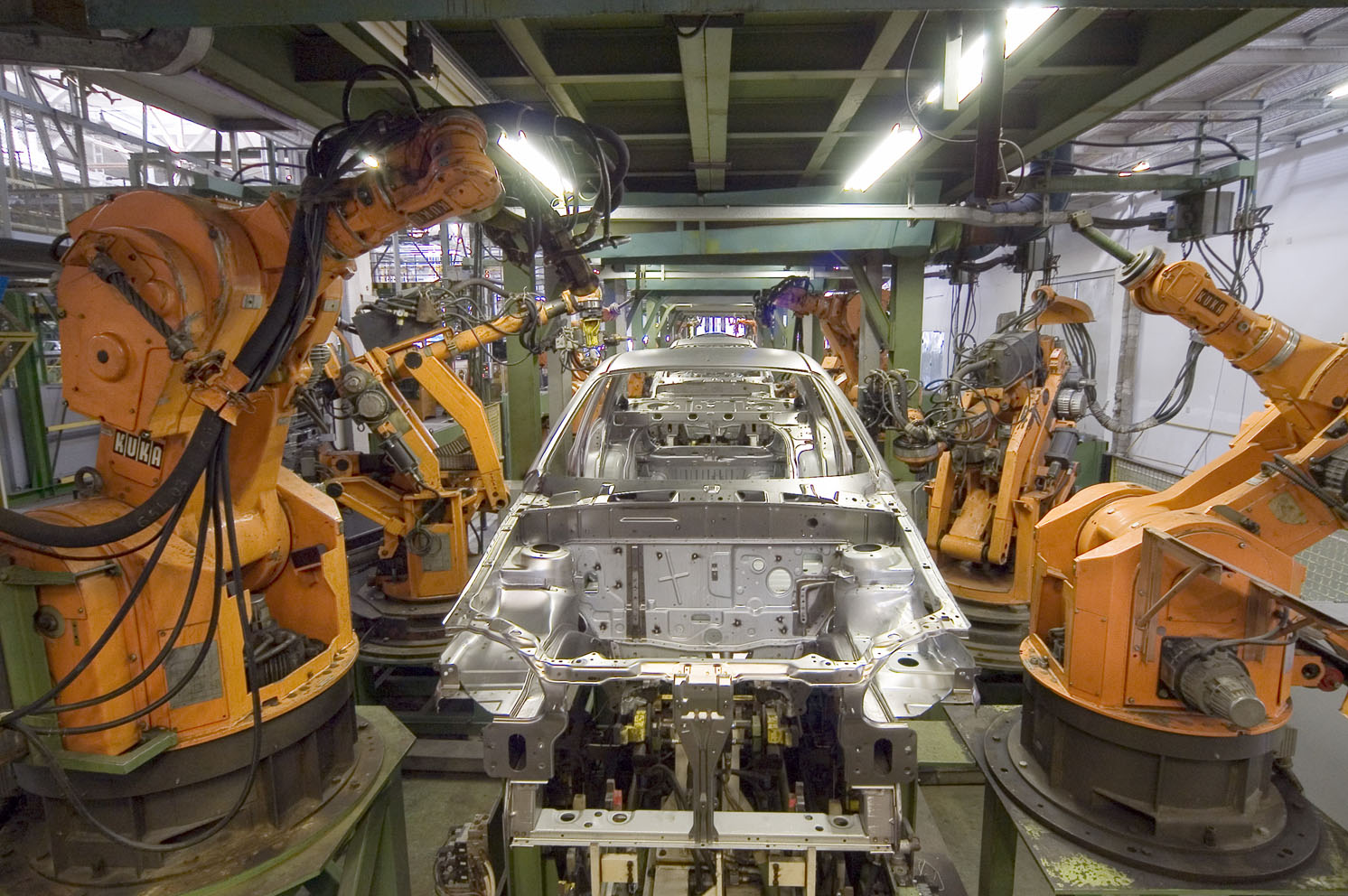
The plan supports what the industry calls physical AI: models that do not just generate text or images but perceive and act in the physical world. A physical AI system learns how objects move, collide and wear; it can be trained in a simulated factory before a real robot arm ever lifts a part, and the same underlying approach lets a vehicle practise millions of driving situations without leaving a data centre. For Germany, whose export strength rests on automobiles, machine tools, chemicals and precision engineering, that category matters more than another language model. A chatbot does not weld a car body. A robot that has rehearsed the weld ten thousand times in simulation might.
The second strand is model-building itself: developing powerful AI models for industrial use, trained on the kind of proprietary engineering data German firms hold in depth — tolerances, failure records, process recipes — and which they have historically been reluctant to hand to anyone. How the agreement handles that data, where the computing capacity sits and which German partners join Nvidia at the table are the details next week's announcement will have to supply. Government sources have framed the deal as one piece of a wider effort, with additional partners involved beyond the American chipmaker.
Why Germany needs an industrial AI catch-up plan
Germany's problem is not a lack of engineers; it is the gap between an industrial base built for the mechanical age and a software race being run from California and Shenzhen. The country's carmakers are restructuring under pressure from Chinese electric-vehicle rivals and from the cost of their own transitions. Its machinery makers remain world-class exporters but sell into factories that increasingly expect predictive maintenance, machine vision and autonomous material handling as standard, not as extras. Previous German and European AI strategies produced research excellence and pilot projects; they produced fewer scaled deployments on real factory floors, and German business surveys have repeatedly shown adoption lagging ambition, especially among the mid-sized Mittelstand firms that form the economy's backbone.
Seen against that record, partnering with the dominant supplier of AI computing is a pragmatic admission: the fastest route onto the factory floor runs through Nvidia's chips, its simulation software and its developer ecosystem, which most industrial AI teams already use. The alternative — waiting for a purely European stack of comparable maturity — risks another half-decade of pilots while competitors ship products. Berlin appears to have chosen speed. The cost of that choice is the subject of the argument now starting in earnest.
The sovereignty question: US chips, European factories
Every European technology deal of this kind now carries a second negotiation inside it, about dependence. Nvidia is an American company, subject to American export controls, in a period when Washington has repeatedly used chip policy as an instrument of statecraft — most recently in the expanding controls on advanced technology sales that Signal Post News covered in China's export controls on 40 technologies and the wider chip contest. Critics of deep reliance on a single US supplier ask what happens to a German factory strategy if licensing, pricing or export rules shift with an election. Supporters answer that sovereignty built on tools nobody deploys is sovereignty over nothing, and that European firms remain free to build their own models, data and applications on top of imported computing power — as they long have with American software.
Both arguments have evidence behind them. Europe's earlier attempts to legislate its way to technological autonomy moved slowly; its industrial champions, meanwhile, compete today, not in a decade. The honest reading of next week's agreement is that Berlin is buying time with Nvidia's stack while the longer European project — domestic chip capacity, sovereign cloud, home-grown models — continues in parallel. Whether the parallel project ever catches up will determine if this deal is remembered as a bridge or as a dependency.

Nvidia is not the only suitor for the factory floor
Germany's announcement lands in a crowded contest. Intel, rebuilding its position in AI computing, has been promoting its own physical AI agenda — its client computing leadership used this autumn's industry circuit to argue that robots and edge devices need open, lower-cost platforms rather than a single vendor's stack, a pitch it will carry to Web Summit in Lisbon on November 9–12. The contrast is instructive: where Intel courts the wider ecosystem, Nvidia sells the integrated system — chips, simulation, software and models — that large manufacturers can adopt fastest. The scale of the demand underpinning both pitches was visible this week in TSMC's record third-quarter profit on AI chip demand: the foundry that manufactures both companies' most advanced designs cannot build capacity fast enough. For German industry, the rivalry is useful. Two American giants competing to equip Europe's factories improves Berlin's negotiating position — on price, on local investment and on how much of the work, and the data, stays in Germany.
Why this matters
This agreement matters because it is Germany conceding, in policy form, where the centre of gravity in artificial intelligence currently sits — and deciding that its factories cannot wait for that to change. The world's third-largest economy is not buying chatbots; it is buying the ability to train robots, simulate production lines and put AI models inside the machines it exports. If the programme delivers deployed systems at scale, it strengthens the one durable advantage Germany still holds: deep industrial know-how that becomes more valuable, not less, when paired with modern AI. If it delivers another round of pilot projects and press releases, it will confirm the pattern its critics fear — announcements substituting for adoption while the computing layer, the standards and eventually the margins settle permanently elsewhere. The sovereignty debate, finally, cuts both ways: dependence on Nvidia is a real exposure, but so is the irrelevance that comes from refusing every foreign platform. Berlin has picked its exposure. Next week's partner list and data terms will show how carefully.
What happens next
The formal announcement is expected next week, and four details will decide how the deal is judged. First, the partner list: which German carmakers, machinery groups, robot makers and research institutes sign alongside Nvidia, and whether a German or European cloud and chip presence is built into the structure. Second, the money and the compute: how much investment is committed, and where the training capacity physically sits. Third, the data rules: whether industrial data used to train models remains under the contributing firms' control. Fourth, delivery: named factories, named robot and vehicle programmes, and dates. Signal Post News will report the full announcement when it is made, and will test the first deployments against the promises — because in German industrial policy, the distance between the two is the story.
Sources: Reuters, Oct. 16, 2026 (agreement to be announced next week; partners beyond Nvidia; physical AI scope); Handelsblatt, Oct. 2026 (first report of the planned cooperation); The Elec, Oct. 2026 (Intel physical AI positioning ahead of Web Summit). Related on Signal Post News: TSMC posts record Q3 profit on AI chip demand · China export controls on 40 technologies, AI chips and solar.