Freddie Jackson death
Entertainment / Music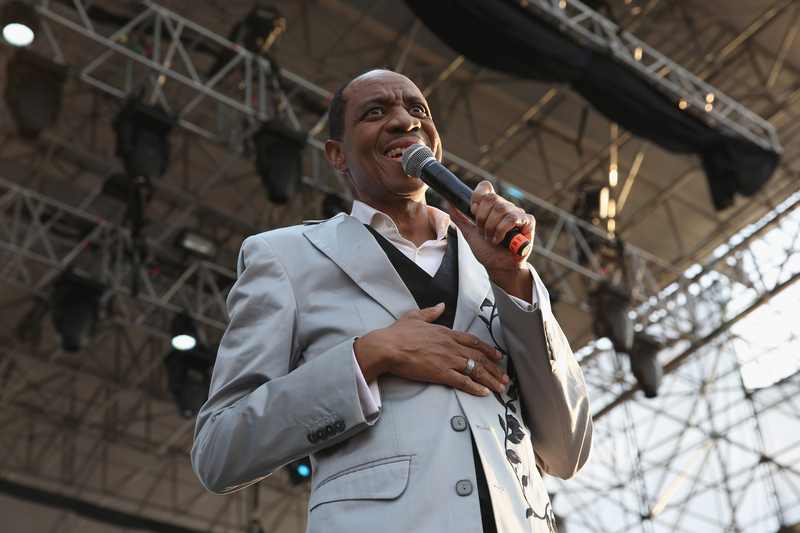
Freddie Jackson, the velvet-voiced R&B balladeer whose “Rock Me Tonight (For Old Times Sake)” and “You Are My Lady” defined the quiet-storm era of the 1980s, has died. He was 70. The singer's family announced his passing in a statement posted Tuesday, October 6, 2026, on his official social media accounts: “It is with profound sadness and heavy hearts that we share the passing of our beloved Freddie Jackson, who went home to rest last night.” Jackson died the night of Monday, October 5 — three days after his 70th birthday. No cause of death has been announced.
Why this matters
Jackson was the defining male voice of quiet storm — the polished, romantic, adult-oriented R&B radio format that carried Black radio through the 1980s. Where the decade's biggest stories were about spectacle and reinvention, Jackson built a career on the opposite wager: that grown people still wanted love songs sung beautifully and meant sincerely.
His death closes the book on the last great balladeer generation of that era. An entire audience heard its own weddings, anniversaries and late-night drives scored by his voice, and that is the measure of what the Freddie Jackson death means — not a chart entry lost, but a soundtrack ending.
What happened
The family statement
The announcement came Tuesday, October 6, 2026, through Jackson's official social media channels — the family's own words, posted directly, naming no cause and asking for privacy. The family's statement described his songs as “the soundtrack to our love stories,” a line that captures better than any chart figure what he meant to his audience. Public tributes from across R&B followed within hours as the news spread from the family statement to outlets including USA Today, The Source, SoulTracks and JustJared.
The dates and the age, stated carefully
Jackson was born Frederick Anthony Jackson on October 2, 1956, in Harlem, New York City, and died October 5, 2026 — three days after his 70th birthday. Readers may see the age reported differently: USA Today's headline said 69 while The Source and JustJared reported 70. Both are understandable — he crossed the threshold only days before he died. Three days past his 70th birthday is the factual anchor.
What is known about his health — and what is not
Roughly two years before his death, Jackson disclosed a kidney disease diagnosis, as reported by SoulTracks. That is the full extent of what is publicly known about his health. No cause of death has been announced, and it is not known whether the kidney condition played any role. The family has asked for privacy; nothing further should be assumed.
The voice and the numbers
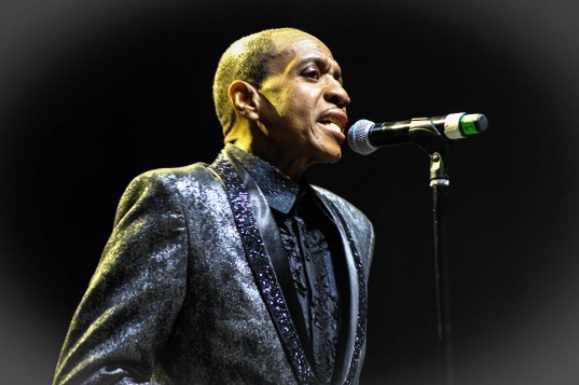
Jackson's chart run, concentrated in 1985 and 1986, was one of the most efficient demolitions of an R&B chart by a debut act in the decade. His 1985 debut album Rock Me Tonight, built with producer and songwriting partner Paul Laurence, produced a title track that spent six weeks at No. 1 on the R&B chart — a run that signaled not just a hit but a format shift.
“You Are My Lady” followed to No. 1 on the R&B chart and crossed over to the pop Top 15, reaching No. 12–13 on the Billboard Hot 100, his biggest pop crossover. Two more singles from the album, “He'll Never Love You (Like I Do)” and “Love Is Just a Touch Away,” reached the R&B top 10. The album itself topped the R&B albums chart, went platinum and earned Jackson Grammy nominations for Best New Artist and Best R&B Vocal Performance, Male, for “You Are My Lady.”
The follow-up, 1986's Just Like the First Time, was also platinum — proof the debut was no fluke. “Tasty Love,” “Have You Ever Loved Somebody” and “Jam Tonight” all reached No. 1 on the R&B chart; “I Don't Want to Lose Your Love” climbed to No. 2. His duet with Melba Moore, “A Little Bit More,” also topped the R&B chart. Over a career active from 1979 to 2026, Jackson amassed 10 No. 1 R&B hits, a total reported by Apple Music and cited by JustJared.
Put those numbers in context. The mid-1980s male-R&B lane was crowded with giants — Luther Vandross, whose debut Never Too Much had reset the bar in 1981, and Peabo Bryson, whose duets owned the romantic middle ground. Jackson did not outsell or outlast either, but for two consecutive years he matched them hit for hit on the R&B chart. Six weeks at No. 1 for a debut single is a statement, and ten chart-toppers puts him among the most consistent male hitmakers of the decade, not a one-era wonder.
How we got here
Jackson's path was the classic apprenticeship, and it explains the confidence of that 1985 debut. He trained as a gospel singer from an early age at Harlem's White Rock Baptist Church, where he met Paul Laurence — the producer and songwriting partner who would shape his signature sound. He sang in Laurence's group LJE, the Laurence Jones Ensemble, and worked the New York nightclub circuit, the proving ground for a generation of soul singers.
In the late 1970s he moved to the West Coast as lead singer of the California funk band Mystic Merlin, which cut three studio albums between 1980 and 1982 — a funk education that gave his later ballads their rhythmic ease. Returning to New York, he was singing in clubs in 1981 when Melba Moore caught his act and hired him as a backing vocalist. Demo tapes cut with Laurence landed him a Capitol Records deal in 1984. He was 28 — not a prodigy discovery but a finished professional, which is why the debut sounded like an arrival.
The timing was everything. The 1985 R&B landscape sat between two eras: disco's commercial collapse had cleared the dance floor, and new jack swing had not yet redrawn the map. Radio had an opening for exactly what Jackson offered — a romantic balladeer singing adult songs for adult listeners, produced with Laurence's velvet sheen. “Rock Me Tonight” did not chase a trend; it filled a vacuum.
The quiet storm itself
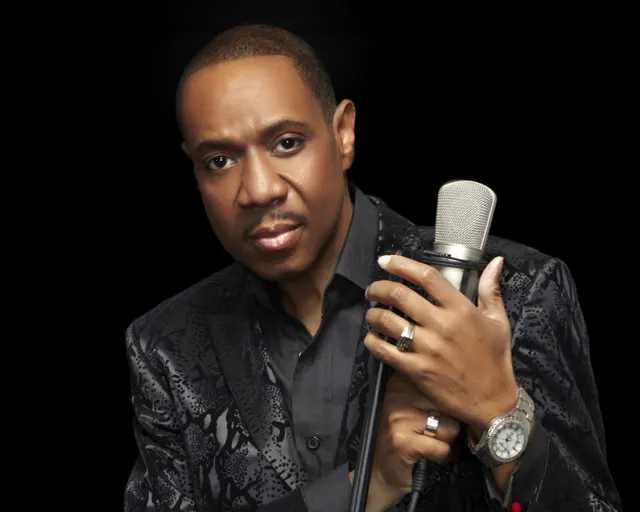
Quiet storm was a radio format before it was a genre — named for Smokey Robinson's 1975 album, pioneered by late-night DJs like Melvin Lindsey on Washington's WHUR and built for the hours after the party ended: slow, intimate, grown. Jackson fit it better than anyone.
The combination of vulnerability and confidence in his delivery, wrapped around an instantly recognizable vibrato, made him the format's signature male balladeer of the mid-to-late 1980s. Where hip-hop's rise told one story about Black music in the decade and teen-pop machinery told another, quiet storm held the center for the audience that wanted romance without irony — and Jackson was its most reliable voice.
The afterlife of a voice
The industry angle — catalog economics
Deaths move catalogs. It is one of the music business's most documented patterns: an obituary cycle sends streams and downloads of a late artist's work surging as fans revisit and new listeners discover. Jackson's masters — the Capitol-era recordings that hold “Rock Me Tonight,” “You Are My Lady” and the rest of the ten chart-toppers — now sit at the center of an estate whose commercial value will be renegotiated in public.
Expect reissue campaigns, deluxe editions and sync placements in the months ahead; the catalog of a singer whose songs scored a generation's love stories is evergreen inventory.
The cultural angle — the songs that stayed
The family's own phrase — the songs “that became the soundtrack to our love stories” — is the right frame. Quiet storm was never music for the charts first; it was music for occasions. Jackson's ballads played at weddings, anniversaries and late-night slow dances for four decades, which means his audience's grief is personal in a way that transcends fandom. An entire generation is about to hear “You Are My Lady” differently.
The craft angle — the Laurence partnership and the ballad as a discipline
The Jackson–Paul Laurence partnership deserves its own line in the obituary. Laurence wrote the debut's defining songs and produced the velvet frame around Jackson's vibrato; the ballad, in their hands, was not a soft option but a discipline — phrasing, restraint and a voice that could carry tenderness without tipping into sentimentality. That craft is why the records still work on the radio forty years on.
What happens next
Expect a wave of tributes from across R&B and soul in the coming days, televised memorial performances and — the pattern is well established — a Grammy memorial tribute when awards season arrives. Catalog reissues are likely, and the estate's next moves will determine how the music is licensed and presented going forward.
What should not be expected is speculation: the family has shared no cause of death, and the respectful course is to let the era be the closing note. The quiet storm had many voices. For three decades of slow dances, its defining male voice was Freddie Jackson — and now it falls silent.
Sources
- USA Today — family announcement via official Instagram and career summary
- The Source — family statement and 70th-birthday timing
- SoulTracks — career context and kidney disease disclosure
- JustJared — family tribute and Apple Music's count of 10 No. 1 R&B songs
- Eric Alper — White Rock Baptist Church, Mystic Merlin, the Laurence partnership, Grammy nominations and album history
Reporting note: No cause of death has been announced. The age is anchored to Jackson's October 2, 1956 birth date and October 5, 2026 death, while acknowledging the conflicting 69 and 70 figures in early coverage.