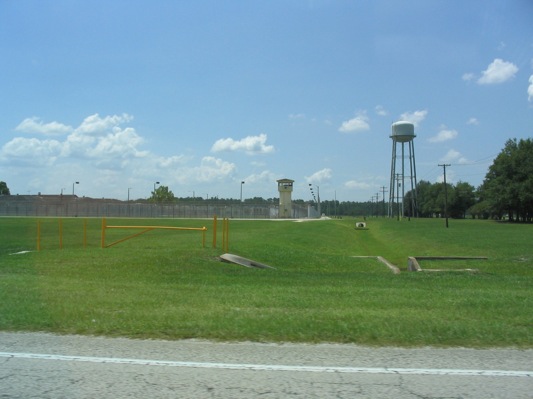
The William Reaves Florida execution was carried out at Florida State Prison near Starke on Tuesday, October 20, 2026, and William Reaves Jr., 77, was pronounced dead at 6:12 p.m. Eastern — Florida's 18th execution of 2026 and the 32nd in the United States this year. By Tuesday afternoon every court that could stop it had declined: the U.S. Supreme Court denied Reaves's requests for a stay and for review, according to Treasure Coast Newspapers, leaving only clemency from Gov. Ron DeSantis between Reaves and the death chamber — and clemency did not come. Reaves declined to say any last words.
What happened on Tuesday: every door closed, in order
STARKE, Florida — William Reaves Jr., 77, received Florida's three-drug lethal injection at 6 p.m. Eastern at Florida State Prison near Starke and was pronounced dead at 6:12 p.m., the Florida Department of Corrections said, as reported by USA Today and Treasure Coast Newspapers. He was the state's 18th execution of 2026 and its eighth prisoner over the age of 70 put to death this year — a detail the AP noted has highlighted the nation's aging death-row population and how far Florida has outpaced every other state.
The final legal steps fell through the day in sequence. The Florida Supreme Court had rejected Reaves's last state appeals on October 14, declining to stay the execution and refusing rehearing, Treasure Coast Newspapers reported. His attorneys — Brittney N. Lacy and Yiitsodirah Final of the Capital Collateral Regional Counsel — then asked the U.S. Supreme Court to stay the execution and to review the case, challenging Florida's treatment of mitigating evidence and a clemency process they said denied him meaningful participation, according to Floridians for Alternatives to the Death Penalty (FADP). Early Tuesday afternoon, the Supreme Court denied both requests, the SCOTUS Public Information Office confirmed to Treasure Coast Newspapers. A refurbished patrol vehicle belonging to the slain deputy was brought to Florida State Prison ahead of the execution, the same newspaper reported.
Reaves had woken at 5 a.m. and was compliant through the day, Florida Department of Corrections spokesman Jordan Kirkland said. His last meal was crackers and juice. He received four visitors — his sister, his nephew, his brother and a friend — and met a spiritual adviser, according to Treasure Coast Newspapers' live account of the execution. Afterward, the victim's brother, Marc Raczkoski, said: “Richard finally has justice.” Indian River County Sheriff Eric Flowers thanked the Raczkoski family for their patience and the governor for allowing the execution to proceed, and presented a badge to Marc Raczkoski. Laurence Reisman, a Treasure Coast Newspapers columnist who witnessed the execution as a media representative, described it as appearing “very peaceful.” Gov. DeSantis's office did not respond to USA Today's request for comment.
One hundred military veterans had written to DeSantis on Monday asking him to stop it. “As veterans, we know that service carries obligations in both directions,” their letter said. “We ask service members to risk their lives for this country; in return, our country assumes a solemn duty not to abandon them when they come home carrying wounds we cannot see.” Florida's Catholic bishops had written on October 13 asking the governor to stay the execution and commute the sentence to life without parole. Clemency did not come. DeSantis — who signed Reaves's death warrant on September 18 and has said his goal is to bring justice to victims' families who have waited decades — let the execution proceed. DeSantis had denied Reaves clemency in 2023, court records cited by Treasure Coast Newspapers show.
The night in Vero Beach: September 23, 1986
The crime at the centre of this case has never been in factual dispute — Reaves confessed within days and has accepted responsibility for decades, his advocates say. What has been disputed for 40 years is what the shooting meant, and what a jury needed to know before sentencing the man who did it.
Around 3 a.m. on September 23, 1986, Reaves — then 37, recently released from prison, and by his own taped account hoping to get a cab — used a pay phone outside a Zippy Mart convenience store on State Road 60, west of Vero Beach, to call for a ride, ran out of change, and called 911 hoping dispatchers would summon the cab for him, according to court records summarised by Treasure Coast Newspapers. He hung up without speaking. Dispatchers sent Deputy Richard Raczkoski, 29, to investigate the silent call. (The deputy's surname is spelled Raczkoski in court records, the family's memorial usage and most Florida reporting; some national outlets, including the AP and USA Today, spell it Raczkowski. This article follows the court and memorial spelling.)
Raczkoski — known to friends and family as “Raz” — found Reaves by the phone booth. He called in a warrant check, learned there were no warrants, and tried to arrange a cab to pick Reaves up, according to archived reports cited by USA Today. Then a .38-calibre pistol fell from Reaves's waistband. The two men struggled over the gun. Reaves regained it, and as the deputy turned and moved away, Reaves fired seven times, striking Raczkoski four times — once in the arm and three times in the back, according to the court record. Raczkoski died at a hospital later that morning. He was the first Indian River County sheriff's deputy killed in the line of duty, and he left behind a son, Matthew, who was born after his death; a stretch of State Road 60 in Vero Beach now carries his name, and he was posthumously awarded the Medal of Valor by the International Police Association.
Reaves fled, told a friend he had shot a police officer, and was arrested in Georgia two days later. He admitted emptying the pistol at the deputy and told interviewers he was “wired on cocaine” at the time, court records show. Prosecutors stressed that the .38 was not automatic — each shot required its own pull of the trigger — and the jury convicted him of premeditated first-degree murder and recommended death.
The veteran: the war, the rating, and the flashback claim
Reaves's advocates do not ask anyone to excuse the shooting. Their argument, pressed in court for decades and in public this week, is narrower: that the jury which recommended his death never heard the evidence that might have explained it, and that Florida executed a man for a decision made by jurors working with half a file.
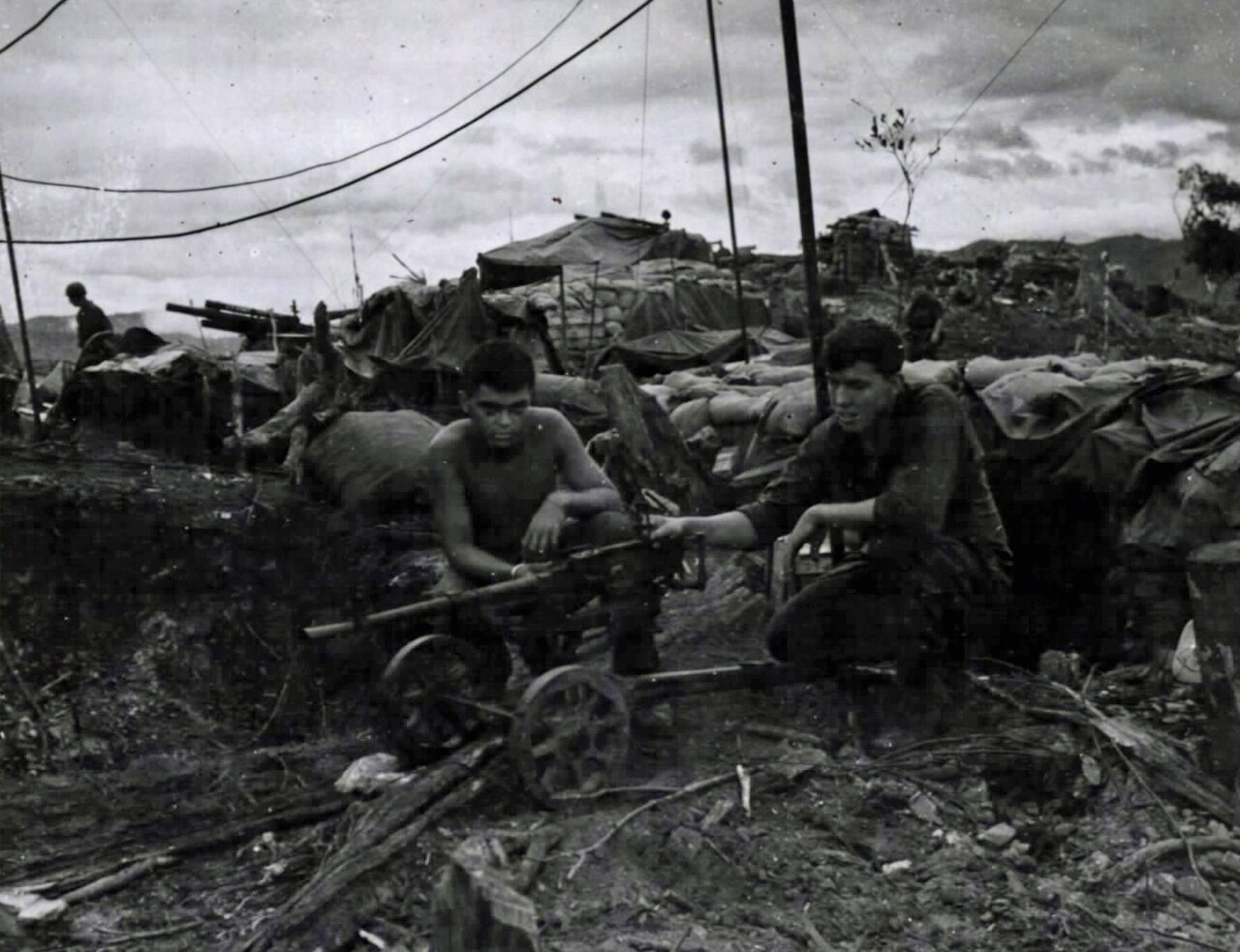
The biographical facts are documented by FADP and the Death Penalty Information Center (DPIC). Reaves asked for a transfer from an assignment in Panama to Vietnam, arriving in November 1969 at age 20. He served as an infantry machine gunner in the Central Highlands and Cambodia, enduring ambushes, sniper fire and the deaths of fellow soldiers; within a week of arriving, a friend died in his arms. He earned the Combat Infantryman Badge and the Air Medal and was honourably discharged. He came home, by the veterans' letter's account, with combat trauma and a severe substance-use disorder, sought help he did not adequately receive, and cycled in and out of prison from the early 1970s onward. Years after his conviction, the U.S. Department of Veterans Affairs determined that he was 100 percent disabled by post-traumatic stress disorder connected to his service. His sentencing jury never heard that determination, or the expert evidence developed later about how his trauma bore on that night.
Chance Meyer, one of Reaves's former attorneys, laid out the defence account in a Slate op-ed this month, summarised by DPIC: experts who evaluated Reaves concluded he was in the grip of a flashback during the shooting — that he believed he was again in a firefight in Vietnam and, in Meyer's words, “could not — not did not, but could not — govern his impulses,” with flashbacks triggered by men in uniform and the sight of guns. The state's answer, in court filings this month reported by USA Today, is that the execution is long overdue and the victim's family's wait is itself the injustice: it would be “a perverse view of justice and fairness,” the state argued, to grant a stay of a 34-year-old sentence now.
The procedural history shows how close the mitigation argument once came. Reaves's trial attorney had never tried a capital case and was denied co-counsel, according to FADP; even on the limited presentation the jury did hear, two jurors voted for life. In 2015, a federal judge ordered a new sentencing proceeding after finding his representation constitutionally inadequate. In 2017, the 11th Circuit Court of Appeals reversed that relief on a procedural ground — that the federal court could not consider evidence that had not been presented in state court. The evidence existed. The door it needed to pass through did not.
Two trials, four decades of appeals
Reaves was first convicted and sentenced to death in 1987, about a year after the shooting. The Florida Supreme Court reversed that conviction because the prosecutor at trial, then-State Attorney Bruce Colton, had previously worked as a public defender and had represented Reaves on an armed-robbery charge in 1973 — a conflict of interest the court could not let stand. Reaves was convicted and sentenced to death a second time in 1992, and spent more than 26 years pursuing post-conviction appeals in state and federal court, which concluded in 2018, according to Treasure Coast Newspapers.
His final round of challenges, rejected by the Florida Supreme Court on October 14 and by the U.S. Supreme Court on Tuesday, attacked two things: Florida's lethal-injection protocol — a sedative, a paralytic and a drug that stops the heart, per the Department of Corrections — and the clemency process itself, including claims about his hearing loss during the clemency hearing. The state courts found the method claim untimely and the clemency claims meritless, in the Florida Supreme Court's own published reasoning. The protocol question carries fresh weight this autumn because of what happened in Tennessee about three weeks ago, where the state botched Christa Pike's execution with the single drug pentobarbital; Florida's three-drug sequence is legally and mechanically distinct, a distinction both the AP and USA Today took care to note — and one our own coverage of the Pike case examined in the Tennessee botched execution and its aftermath.
Why this matters
Strip away the particulars and Tuesday's execution poses a question the American death penalty keeps meeting and keeps answering differently depending on the state: what does a justice system owe a defendant whose worst act is inseparable — on evidence a jury never saw — from an injury the state itself gave him?
Reaves is not a sympathetic abstraction. He killed a young deputy who was, on the record, trying to help him get a cab home, and he did it as the man turned away. The Raczkoski family's position is not a debating point; it is forty years of Christmases without decorations, in his brother Marc's telling to WPTV — “No more Christmas trees in the house. Mom didn't decorate” — and of feeling that everyone forgot his brother. Sheriff Eric Flowers told reporters he wanted the last thing Reaves sees to be an Indian River County sheriff's uniform: “I want to make sure he knows we never forget.” When the state argues that justice delayed is justice denied, it is arguing on behalf of people whose loss is real, permanent and was entirely unchosen.
And yet the mitigation gap in this case is not a technicality invented last week. A federal judge found the sentencing representation constitutionally inadequate. The VA's own disability determination — the considered judgment of the government's medical system that this man's mind was wholly disabled by his service — was never placed before the people asked to choose between life and death. Two of those people, hearing even the thinner version, chose life. The veterans' letter to DeSantis, himself a Navy veteran, frames the execution as the final entry in a longer ledger of institutional failure: the war that wounded him, the treatment that did not reach him, the trial that did not hear him. Whether or not one accepts that framing, it identifies the decision's true location. The courts have finished with this case. What remained on Tuesday was a governor's discretion — the one part of the system explicitly designed to weigh the things courts cannot.
What the numbers imply: Florida's execution pace, in context
Beyond the death chamber, Tuesday is also a data point in the most aggressive execution programme in modern American state history. Florida carried out 19 executions in 2025, a state record — nearly two and a half times the previous record of eight — accounting for almost half of the 47 executions in the entire United States that year, according to the AP. Before 2025, DeSantis had signed six death warrants in his governorship; the pace since is a deliberate policy, defended by the governor in exactly those terms.
The 2026 figures extend the pattern. Florida has carried out more than half of the 31 executions in the United States so far this year, the AP reported, and in July it executed two prisoners in one day — the first state in nearly a decade to do so. Reaves was the 18th of the year, a number that itself required bookkeeping to establish: he would have been the 19th, but DeSantis withdrew the October 13 warrant for William Lee Thompson after three psychiatrists evaluated the 74-year-old's mental capacity and his attorneys said he had dementia and did not understand his situation — a reminder that even this programme has an off-switch it has used when the prisoner's competence, rather than his culpability, was in question. The next warrant after Reaves is already signed: Jesse Guardado, convicted of the 2004 killing of 75-year-old community activist Jackie Malone, is scheduled for November 5. If Guardado's execution proceeds, Florida will tie its own record of 19 in a single year — set just last year.
Two further counts frame Reaves within the programme. He was the eighth person over 70 executed by Florida this year alone — the aging of death row is a national phenomenon, as sentences from the 1980s and 1990s reach their ends on men who have grown old inside, a pattern visible in our coverage of Florida's execution of Curtis Beasley, also 77, last month. And according to DPIC, he was at least the 235th military veteran executed in the United States in the modern era, and the 14th veteran executed under a warrant signed by DeSantis. The veteran count is the one that gives Tuesday its particular charge: the argument is not that veterans are above the law, but that this subset of the condemned arrives on death row carrying a documented, service-connected injury at a rate no other group matches — and that in this case the document proving it never reached the jury.
What we know, and what we do not
Known: the shooting, the confession, the two convictions, the VA's 100 percent PTSD disability rating, the 2015 federal order and its 2017 reversal, the October 14 state-court rejection, the U.S. Supreme Court's Tuesday denial of a stay and of certiorari, the 100-veteran letter, the bishops' letter, the 6 p.m. execution, the 6:12 p.m. pronouncement of death, the declined last words and the last meal of crackers and juice — all documented above from court records, the Department of Corrections and named sources. Not established: what DeSantis weighed in declining to intervene — his office did not respond to USA Today's request for comment.
Also unresolved, and likely to outlive this case: whether the flashback account is true in the clinical sense. It is expert-supported defence evidence, credited by a federal judge as constitutionally significant, and never tested before a sentencing jury. Readers should hold it exactly there — as a serious, documented claim that the system declined to hear, not as a proven fact about a night in 1986 that only two men witnessed, one of whom did not survive it.
What happens next
Attention now shifts to Guardado's November 5 warrant and to whether Florida's record-tying 19th execution of 2026 proceeds under the same scrutiny — and to DeSantis's final weeks in office, since he leaves in January and the warrant pace he set will become a question for his successor. FADP and partner groups held vigils and protests across Florida as the execution went forward. For the Raczkoski family, Marc Raczkoski's words to WPTV describe what the family hopes the evening brings: “It's finally over.” For Reaves's advocates, the case now becomes precedent-by-example — the file they will cite the next time a veteran's unseen mitigation evidence meets a governor's unsigned clemency form. Both of those futures were always going to arrive together. That, more than any single number, is what Tuesday in Starke was about.
Related coverage
Florida executes Curtis Beasley, 77: the elderly death row question · Tennessee's botched Christa Pike execution · Tennessee corrections chief resigns after the Pike botch
Sources
Associated Press (David Fischer), “Florida is set to carry out 18th execution this year and moving closer to tying record,” October 20, 2026 — 18th execution of the year, eighth prisoner over 70, 6 p.m. three-drug injection at Florida State Prison near Starke, 1992 second conviction, VA rating argument, 2025 record context (19 executions; 47 U.S. total; Florida more than half of 31 U.S. executions so far in 2026; two-in-one-day in July), Guardado November 5. USA Today (Amanda Lee Myers), “Vietnam vet faces execution for cop killing. Was it PTSD or murder?,” October 19, 2026 — crime reconstruction, warrant check and cab detail, seven shots/four hits, veterans' letter text, state “perverse view of justice” argument, family and Sheriff Flowers accounts, DeSantis warrant pace and quote. Treasure Coast Newspapers / TCPalm live coverage, October 20, 2026 — U.S. Supreme Court denied stay and certiorari early Tuesday afternoon; Florida Supreme Court rejected the stay October 14; Thompson warrant withdrawn (Reaves is the 18th, Guardado the likely record-tying 19th); confession and pay-phone reconstruction; refurbished patrol vehicle at the prison. Floridians for Alternatives to the Death Penalty, October 19, 2026 — service record (Panama-to-Vietnam transfer, November 1969, machine gunner, Combat Infantryman Badge, Air Medal, honourable discharge), VA 100 percent rating, first-capital-case counsel, two life votes, 2015 federal order and 2017 reversal, Maria DeLiberato statement. Death Penalty Information Center case account — flashback expert account via Chance Meyer's Slate op-ed; at least the 235th veteran executed in the modern era and the 14th under DeSantis warrants. Florida Conference of Catholic Bishops letter to Gov. DeSantis, October 13, 2026 — stay and commutation request. Fox 13 Tampa Bay, October 20, 2026 — corroboration of schedule, warrant history and final-appeals status. Analysis, comparisons and framing are original to Signal Post News; the deputy's surname follows court/memorial spelling (Raczkoski) with the national-wire variant noted in the body. USA Today, October 20, 2026 (updated) — execution carried out at Florida State Prison, pronounced dead at 6:12 p.m. ET; Florida's 18th execution of 2026 and the 32nd in the United States; DeSantis's office did not respond to a request for comment. Treasure Coast Newspapers / TCPalm live file, October 20, 2026 (Olivia Franklin and Kim Luciani, 18:24 ET entry) — Reaves declined last words; last meal of crackers and juice, per DOC spokesman Jordan Kirkland; woke at 5 a.m., compliant, four visitors and a spiritual adviser; Sheriff Eric Flowers presented a badge to Marc Raczkoski (“Richard finally has justice”); media witness Laurence Reisman described the execution as appearing “very peaceful.”
<