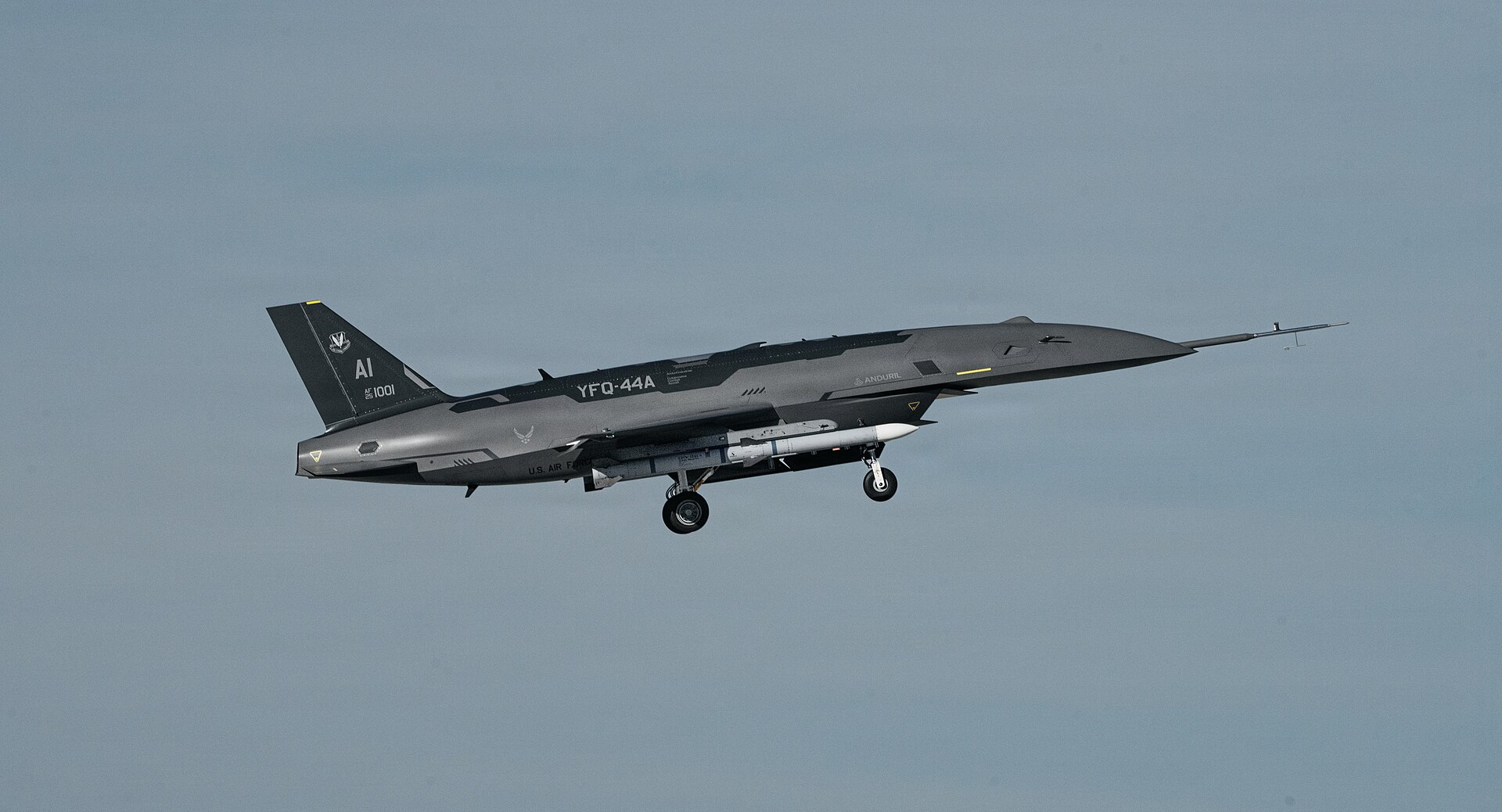
A U.S. Air Force F-22 Raptor pilot has commanded an Anduril YFQ-44A Fury Collaborative Combat Aircraft in flight for the first time, sending the jet-powered drone an updated mission plan over a tactical data link while both aircraft were airborne from Edwards Air Force Base, California. The Air Force, which announced the test on October 16, 2026, described the pilot as an airborne "quarterback" whose high-level directives were interpreted and executed in real time by the Fury's onboard autonomy software.
Technology / Defence — An F-22 pilot just quarterbacked a jet-powered combat drone in mid-air, and the Air Force wants 500 of them by 2032
Track it live: Live Global Trackers — Wars and armed conflicts
What happened over Edwards
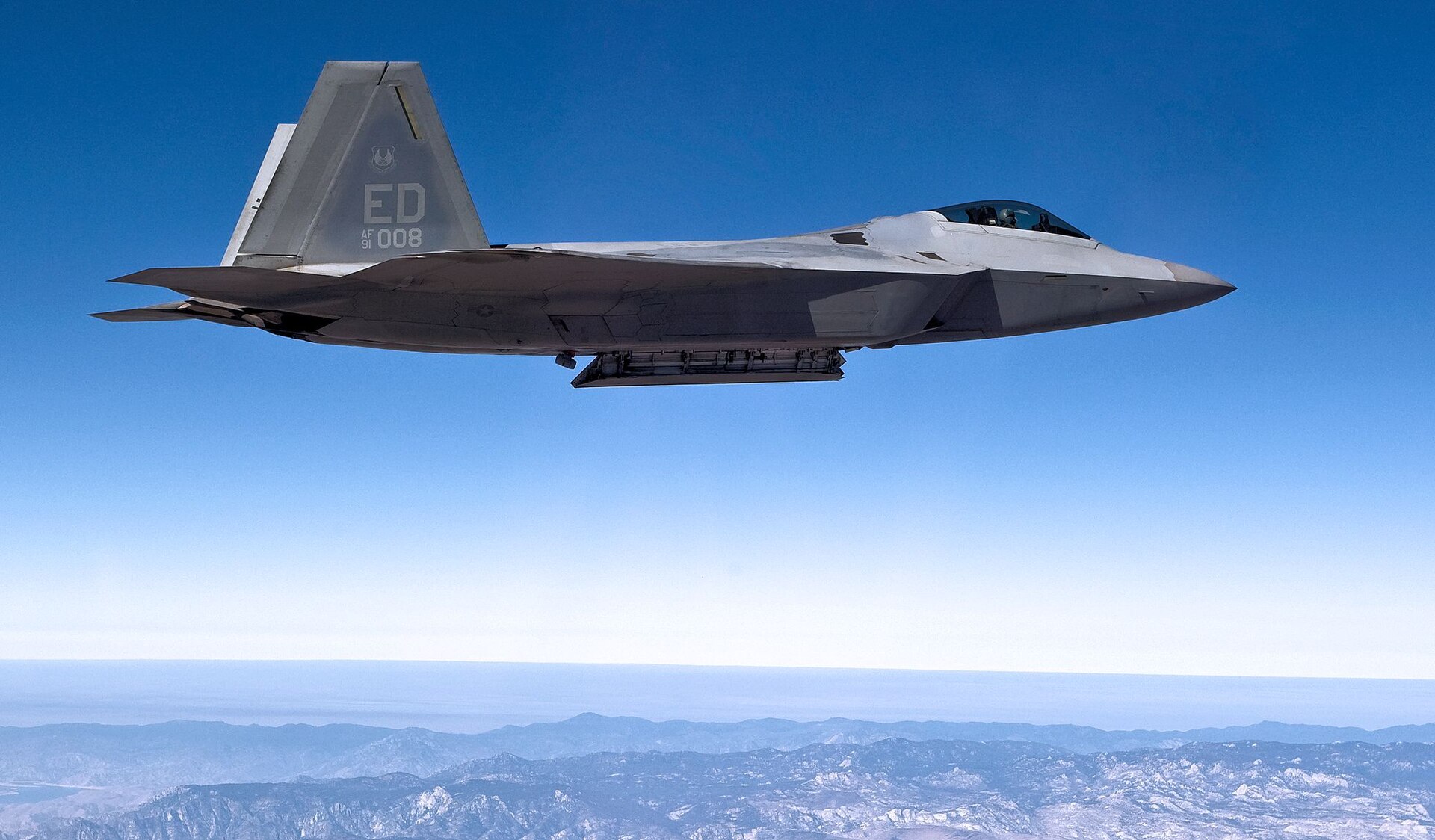
The flight took place during the week of October 5, 2026, out of Edwards Air Force Base in California, and was announced by the Air Force on October 16. The Fury and an F-22 both took off from Edwards and joined up in mid-air, according to Anduril, the Fury's manufacturer. While in flight, the Raptor pilot sent an updated mission plan to the Fury using a tactical data link, "commanding Fury through operationally relevant maneuvers from the cockpit of the crewed quarterback," in Anduril's words.
The crucial detail is what the pilot did not do. He did not remotely fly the drone stick-and-rudder. "During the demonstration, an F-22 pilot served as an airborne 'quarterback,' issuing high-level tactical directives to a single YFQ-44A," the Air Force said in its release. "The aircraft's onboard autonomy software interpreted and executed those directives in real time, conducting dynamic flight maneuvers and simulated combat tasks." The mission lasted multiple hours and was a success, according to Mark Shushnar, Anduril's vice president of autonomous airpower. The test brought together personnel from the 412th Test Wing, the 422nd Test and Evaluation Squadron, the 309th Software Engineering Group, the Experimental Operations Unit, the F-22 System Program Office and the CCA Software Autonomy and Teaming Branch.
Air Force leaders were explicit about why they are moving fast. "This flight shows the power of crewed-uncrewed teaming and the advantage it provides our warfighters," said Air Force Chief of Staff Gen. Kenneth S. Wilsbach. "We must test often, learn fast, and give commanders what they need, when they need it." Secretary of the Air Force Troy Meink said the achievement showed what was possible "when we are aligned with industry on a shared imperative: delivering capability to the warfighter at unprecedented speed."
Why this matters
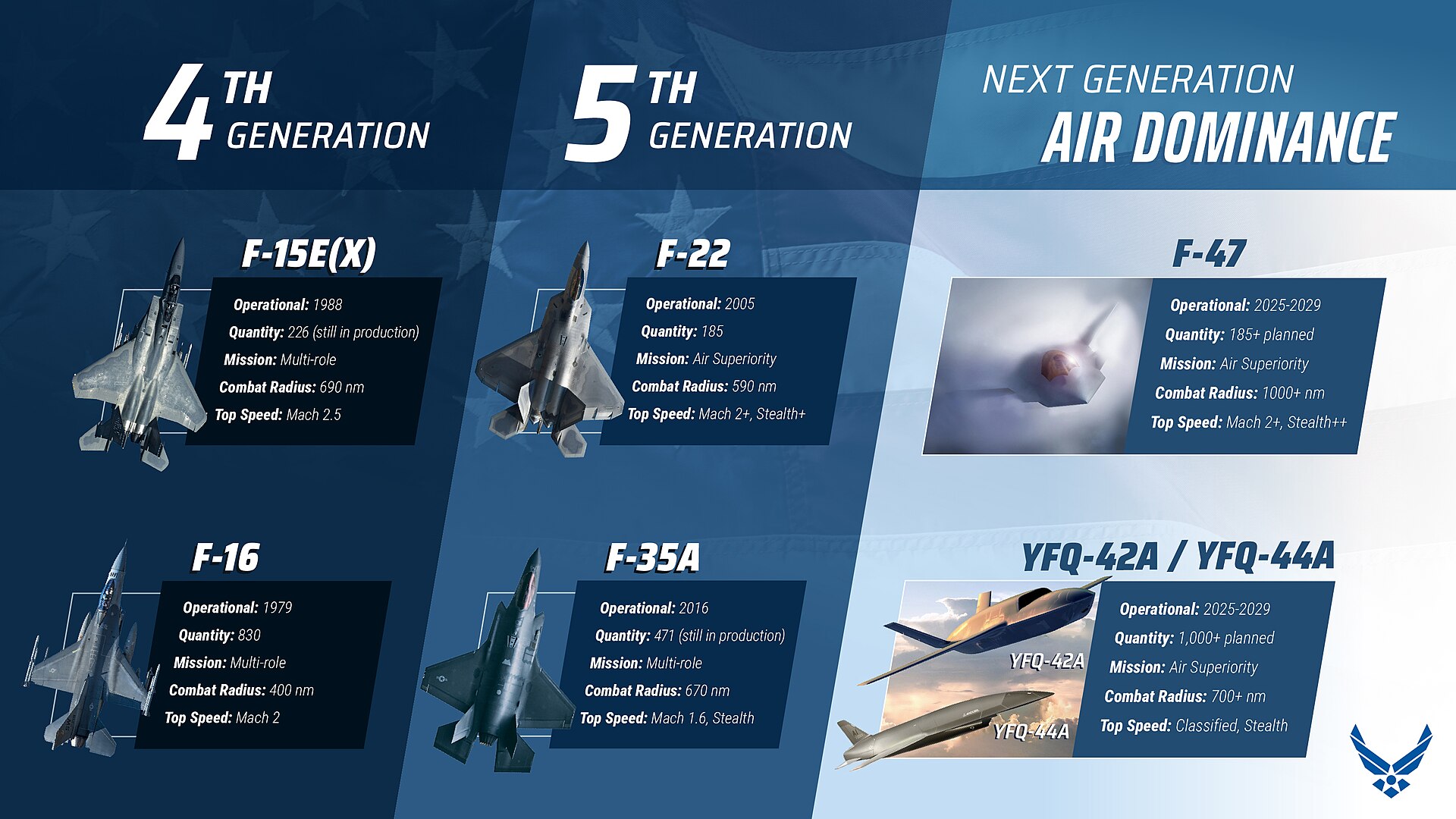
The F-22 controls drone first time headline sounds like a technology demonstration. It is actually a force-structure decision being made in public. The Air Force wants at least 500 Increment 1 Collaborative Combat Aircraft in the field by 2032, and eventually a fleet of 1,000 or more. The first iteration — Anduril's FQ-44 Fury alongside General Atomics' FQ-42 Vengeance — is focused on the air-to-air mission, with later aircraft expected to take on air-to-ground strike, intelligence, surveillance and reconnaissance, and electronic warfare. The service wants each air vehicle to cost no more than $20 million, excluding sensors and weapons — a fraction of a crewed fighter's price, and, just as importantly, an aircraft that can be risked in ways a pilot cannot.
That arithmetic is the real story. A single F-22 is irreplaceable in any practical sense: the production line closed years ago, and every Raptor lost is lost for good. A $20 million drone directed by that Raptor multiplies the formation's missiles, sensors and presence without multiplying its risk to human life. In this test the F-22 controlled a single Fury. The Air Force's plan is for each fighter pilot to control several CCAs as a formation — extending, in the service's phrase, its combat mass and reach. If that works at scale, the limiting factor in air combat stops being how many pilots a country can train and starts being how much trustworthy autonomy it can build.
How we got here
This flight did not come out of nowhere, and the Air Force has been careful to build the staircase one step at a time. Earlier tests used a stand-in: General Atomics' MQ-20 Avenger acting as a CCA surrogate. In February, an airborne F-22 controlled an MQ-20; in May, an F-35 on the ground controlled an Avenger in the air. Last month, Anduril disclosed Fury flying in formation with F-35 fighters — but stressed the crewed jets were not yet issuing commands. A Fury has also launched an AIM-120 AMRAAM air-to-air missile for the first time earlier this year. What changed this month is the combination: a production-design CCA, a crewed fighter in the air, and real tactical command passing between them.
The Y in YFQ-44A marks it as a prototype; production aircraft will drop it and become FQ-44As. The Air Force put 150 Increment 1 aircraft into production in June, and on September 14 named the two designs — Fury and Vengeance. The F-22 is the programme's threshold platform, meaning the first operational drones will be paired with Raptors, with types such as the F-35A and F-15E expected to follow.
Who benefits, who should worry
Anduril is the obvious near-term winner. A defence start-up that did not exist a decade ago now has its aircraft at the centre of what Shushnar called "the fastest moving, most mature CCA program anywhere in the world," one he said "will be the first to field operational aircraft." General Atomics, whose Vengeance is the other Increment 1 design and whose Avenger did the surrogate work, shares the programme — but no date has been announced for an F-22 directing an FQ-42 in flight, and firsts matter in defence procurement.
The harder questions belong to the concept itself, and honest coverage has to name them. Neither the Air Force nor Anduril disclosed how the F-22 was configured for the test; past budget documents mention integrating "tablets, cables, and associated materials" into the Raptor for this purpose, and critics have long questioned whether a single-seat fighter pilot — already flying his own jet in contested airspace — can absorb the workload of quarterbacking several semi-autonomous aircraft at once. Trust is the other unresolved variable: commanders have to believe the drone will interpret a directive the way a human wingman would, every time, including when communications are jammed and the plan falls apart. The Air Force itself acknowledges that deploying, launching, recovering and supporting CCAs will require entirely new policies and procedures, distinct from crewed operations.
What happens next
The next milestone is already on the calendar. Fury and Vengeance are due to take part in Exercise Emerald Flag in December 2026 — the first large-force exercise with the drones, according to Lt. Col. Lyndon Bartlett, the Experimental Operations Unit's director of operations, who described it in September as the first real test of force integration. Testing will also move from controlling one drone to controlling several, which is where the concept either becomes a revolution or runs into the workload and trust walls its critics predict.
The Air Force says data from the October flight will shape software integration, developmental testing and future CCA concepts, with an initial tranche of operational aircraft expected around the end of the decade. Related coverage on this site: South Korea's first hypersonic missile test and Google's SynthID detector launch — two other stories this month about military and AI technology crossing from experiment to deployment.
For now, the cleanest way to understand the Edwards flight is as a sentence the Air Force has been trying to say for years, finally spoken in full: a pilot gave an order, and a robot wingman carried it out. Everything after — the 500 aircraft, the December exercise, the doctrine still unwritten — is the argument about what that sentence means.
Sources: U.S. Air Force release, October 16, 2026 (via af.mil); Anduril Industries statements; Air & Space Forces Magazine, "F-22 Pilot Directs CCA in Flight as 'Airborne QB'," October 16, 2026; The War Zone (TWZ), "F-22 Pilot Controls FQ-44 Fighter Drone From The Cockpit For The First Time," October 16, 2026.