Europe · Defence · Ukraine
Europe / Defence — The European Commission on Thursday opened the €21.3 billion left unclaimed in the EU SAFE defence fund — the bloc’s €150 billion joint-borrowing scheme for weapons — to every member state, and told capitals to build their new spending plans around joint procurement with Ukraine: air and missile defence first, then drones, counter-drone systems, ammunition and missiles.
Track it live: Ukraine war map tracker
Track it live: Wars tracker
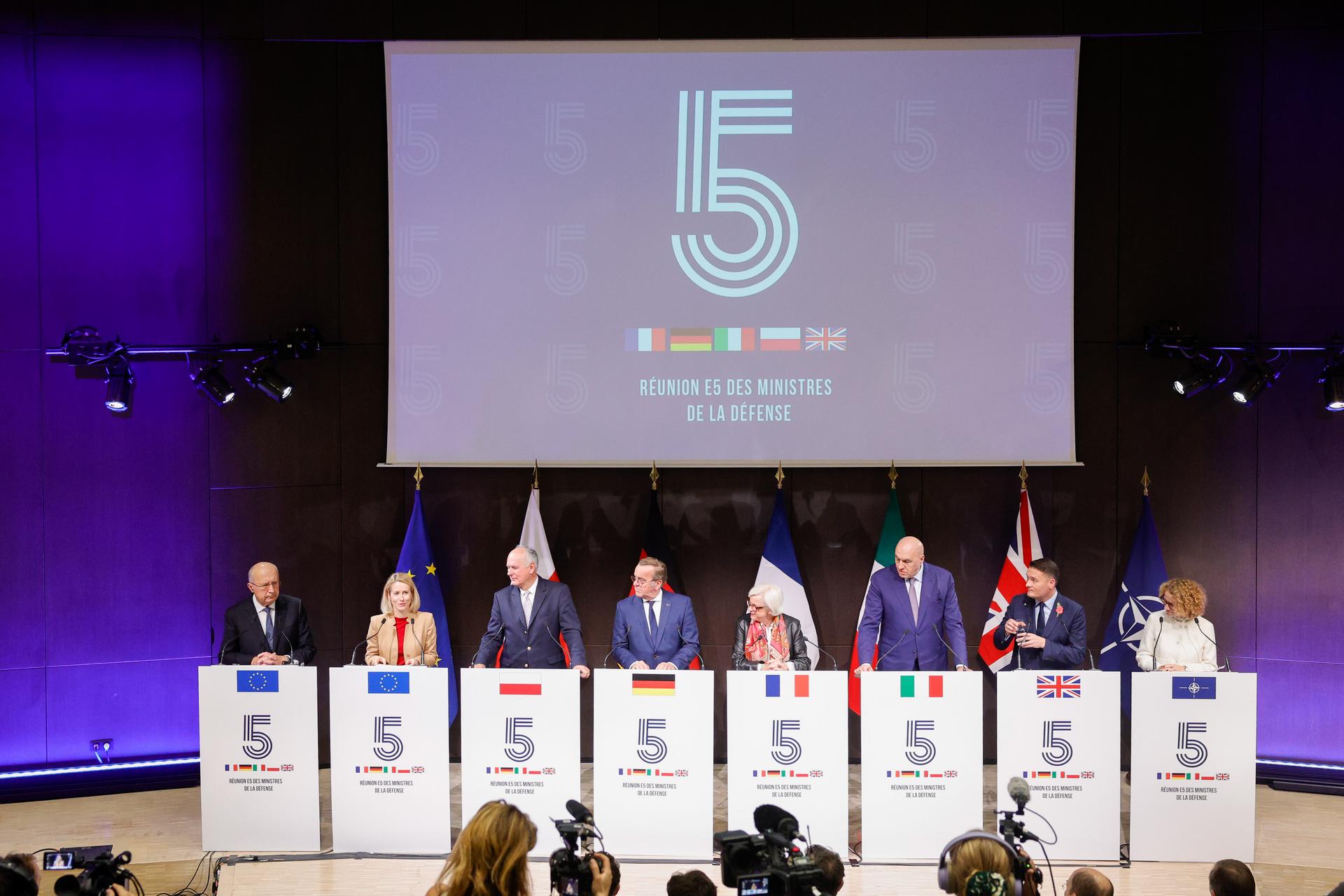
The EU SAFE defence fund is, at its core, a borrowing machine: the European Union raises money jointly, backed by the EU budget, and lends it on to member states on long maturities so they can buy weapons and build defence capacity faster and more cheaply than most could alone. On Thursday, October 29, the European Commission opened the machine’s second round. Every member state — not only the 19 already inside the scheme — was invited to claim a share of the €21.3 billion (about $23.74 billion) in loan capacity left over from the first round, and the Commission left little doubt about how it wants the money used: in joint, common procurement with Ukraine, aimed at the shortages the war exposes every week — air and missile defence, drones and counter-drone systems, ammunition and missiles.
Two precisions belong at the top, because both will be lost in most retellings. First, the €21.3 billion is not new money. It is unclaimed headroom inside the €150 billion ceiling the bloc set when it adopted SAFE in May 2025 — capacity that freed up because the national plans submitted last November came in below the amounts initially allocated. Second, SAFE provides loans, not grants. Every euro a capital draws is debt that capital must repay, and every euro of Ukraine-facing production financed this way is, in the end, financed with borrowing. Brussels is not writing Kyiv a cheque; it is offering member states cheaper credit and asking them to spend it in ways that arm Ukraine’s forces and Europe’s at the same time.
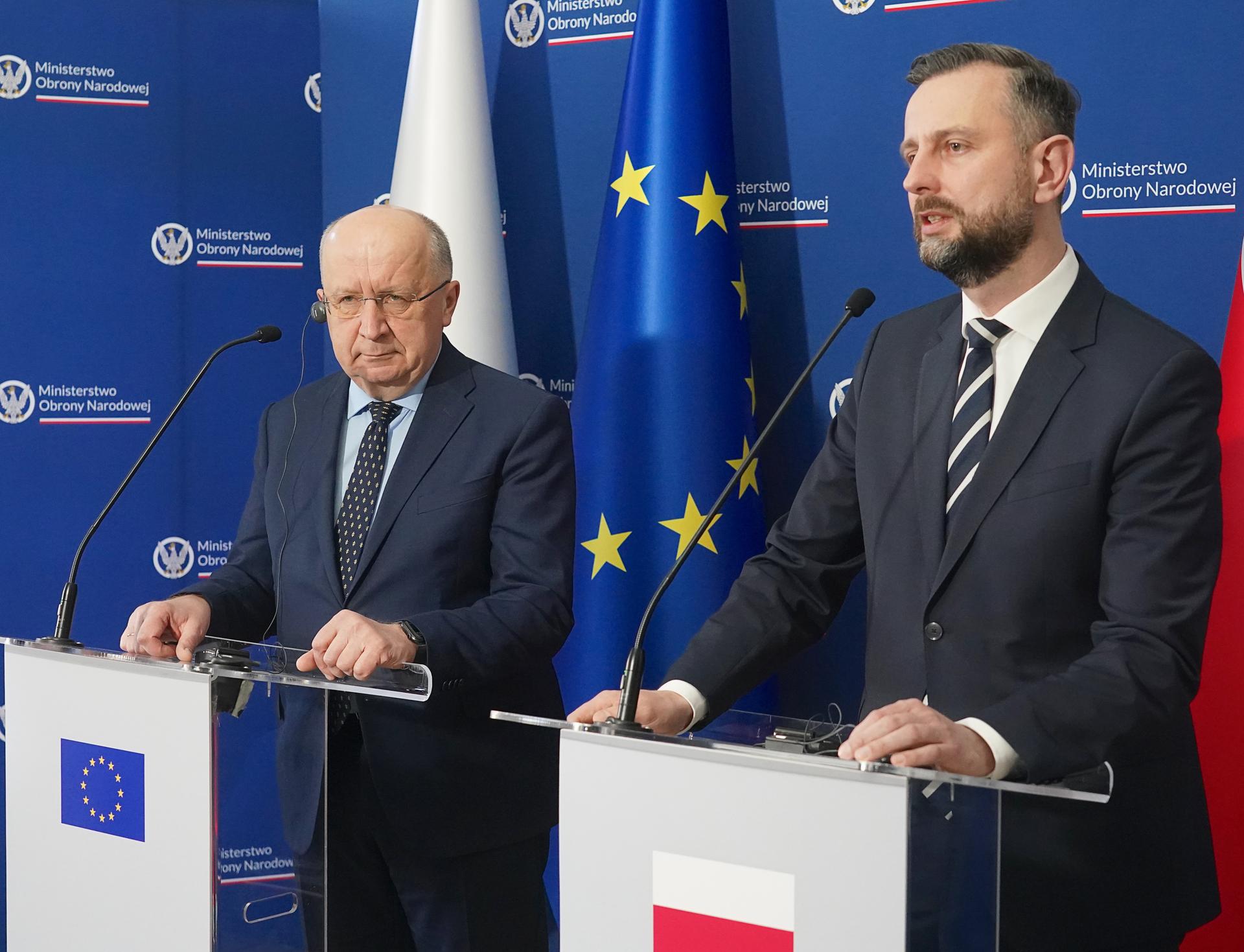
Defence Commissioner Andrius Kubilius wrote to capitals on Thursday encouraging joint ventures in exactly the priority areas — missile defence, drones and ammunition among them — and Commission spokesperson Thomas Regnier set out the pitch in one sentence: “These leftovers can definitely benefit national defence industries, but also Ukraine in the current context. We can align both interests.” Whether capitals respond the way Brussels hopes is a different question, and the first round’s history gives reasons for doubt as well as hope. This article works through what was opened, why the money was left over, what the Ukraine instruction actually commits anyone to, and where the scheme can still fall short.
What the Commission opened on Thursday
The mechanics are deliberately simple. Member states submit investment plans setting out the target amounts they want to draw in this second round. Once those target amounts are received, the Commission will set tentative allocations — expected within two weeks after the submission deadline — and the plans then move through the same approval track the first round used. The invitation went to all member states, which matters: the first round’s 19 participants were the countries that chose to come in during 2025, and the second round is a chance both for them to top up and for the remaining capitals to enter a scheme they previously sat out.
The steering, though, is the story. In the first round, national plans were largely national: each government listed the capabilities it wanted for its own forces. This time the Commission has used the invitation itself to push a design principle — that new plans should feature joint or common procurement with Ukraine, structured so that a single production run or purchase serves Ukrainian units and member-state forces together, and weighted toward the most urgent needs on both sides: air and missile defence, drones and counter-drone systems, ammunition and missiles. It is guidance, not a legal condition, and the distinction will matter when the plans come in. But guidance from the institution that approves the plans and controls the disbursements is not nothing, and Kubilius’s letter to capitals was written to make sure no finance ministry could claim it had missed the point.
What SAFE is — and what it is not
SAFE — the name is routinely expanded in Brussels usage as Security Action for Europe — is the financial core of Readiness 2030, the Commission’s plan to close Europe’s capability gaps this decade. Adopted in May 2025, it lets the Union borrow on capital markets against the EU budget and on-lend up to €150 billion to member states on long maturities. For governments whose own borrowing costs are high, the EU’s credit rating makes the loans cheaper than issuing national debt; for all of them, the joint-procurement design is meant to fix the fragmentation that has plagued European defence for decades — dozens of national programmes buying small quantities of incompatible equipment at premium prices. The scheme also underwrites the politics of the moment: it is the EU-level instrument that helps member states reach the higher NATO spending targets they have committed to, converting summit pledges into financed orders.
What SAFE is not is a defence budget, a grant programme or a Ukraine aid fund. The money is lent to member states, for their plans, and it stays on their balance sheets as debt. Ukraine does not borrow under SAFE and receives no SAFE disbursements; Ukrainian forces benefit only insofar as member states choose to design procurement jointly with Ukrainian partners and route the output to the front. That structure is precisely what Thursday’s announcement tries to bend. The Commission cannot order a capital to co-produce drones with a Ukrainian firm. It can — and did — tell every capital, in writing, on the day the window opened, that joint projects with Ukraine are what the remaining money is for.
Why €21.3 billion was left over
Leftovers on this scale are not an accounting accident; they are the residue of choices. When member states filed their national plans in November 2025, several asked for less than the Commission had initially pencilled in for them. Italy and Hungary scaled their requests down significantly, and the aggregate of those decisions is the €21.3 billion now back on the table. Hungary’s plan carries a small piece of procedural history of its own: it was the last of the 19 first-round plans to be approved, cleared only on Wednesday, October 28 — the day before the second round opened.
The state of play as the window opens is therefore this. Nineteen member states are in the scheme; loan agreements have been approved for all 19 and signed by 16; and about €13.5 billion has already gone out to 11 countries as prefinancing — the early tranches that let governments place orders before full disbursement schedules run. Read those numbers together and the shape of the challenge is clear. The scheme works, money is moving, and yet a seventh of the total envelope sat unclaimed after round one. The second round is Brussels’ attempt to stop that capacity expiring unused while a war the loans were designed for is still being fought a few hundred kilometres from the EU’s eastern border.
The Ukraine instruction
The Ukraine steer did not begin on Thursday. In her State of the Union address last month, Commission President Ursula von der Leyen announced a new programme for joint projects with Ukrainian companies to be built from the remaining SAFE funds, and Thursday’s invitation is that announcement taking administrative form. Nor is the idea starting from zero. Bulgaria’s national plan already includes co-producing drones with Ukraine. An EU–Ukraine drone alliance is operating. Five pan-European defence projects already have Ukraine embedded in them. The Commission’s argument to capitals is, in effect, that the template exists and has been tested at small scale — what is being asked for now is volume.
The logic of joint procurement with Ukraine is industrial as much as military. Ukraine’s defence sector is the most combat-experienced in Europe: its drone makers iterate designs in weeks under live fire, its ammunition and air-defence needs are quantified by daily use, and its factories can produce at costs Western European primes rarely match. A member state that co-produces with a Ukrainian partner is not doing Kyiv a favour at its own expense; it is buying into the one European production base that has already solved, under fire, problems its own industry is still modelling. That is the alignment Regnier described — national defence industries and Ukraine’s war effort pulling on the same contracts — and it is why the priority list reads like a Ukrainian general staff request: interceptors and air defence to blunt missile and drone strikes, drones and counter-drone systems for the front’s dominant weapon, and ammunition and missiles in the volumes modern artillery and strike warfare consume.
Why this matters
The urgency behind the priority list was visible the same day, in the same news cycle, hundreds of kilometres east. Signal Post News’ coverage of the daylight strikes that killed at least 19 people across Ukraine, 14 of them at Dnipro’s train station, set out the interceptor arithmetic that now drives European air-defence policy: Ukraine receives roughly 12 high-end Patriot interceptors a month while facing a volume of ballistic-missile attack that would require on the order of 150 a month to counter comprehensively. No single programme closes a gap of that shape. But the gap is the argument for doing jointly, at EU borrowing scale, what no member state’s annual budget line has managed alone — and for treating Ukrainian co-production, with its shorter iteration cycles, as part of the answer rather than a recipient of it.
Kyiv’s finances sharpen the point. Ukraine faces a budget shortfall of roughly €70 billion next year. Set the two numbers side by side and the honest conclusion is double-edged. On one side, €21.3 billion is real capacity: fully drawn and genuinely joint, it could underwrite production lines — drones, ammunition, air-defence components — whose output flows to Ukrainian units for years. On the other, even a fully subscribed second round covers, at most, a fraction of Kyiv’s gap, and it does so indirectly, as loans on member states’ books rather than budget support Ukraine can spend. Anyone presenting Thursday’s opening as Europe “funding Ukraine’s shortfall” is overstating it by a wide margin; anyone dismissing it as a rounding error is ignoring what financed production capacity, once built, keeps producing after the loan is booked.
Loans, not grants: the criticism
The sharpest criticism of SAFE has never really been about the weapons list. It is about the instrument. Europe’s response to its largest land war since 1945 is being substantially financed with debt — jointly issued debt, cheap debt, long-dated debt, but debt that lands on the balance sheets of member states, several of which are already among the most indebted governments in the developed world. Critics make two versions of the argument. The fiscal version asks what it means for capitals that scaled back their first-round requests — Italy most prominently — to be invited to borrow more, and notes that the undersubscription itself may have been a quiet verdict on the instrument: some treasuries looked at even cheap EU loans and preferred to spend less. The solidarity version asks why support adjacent to Ukraine’s survival is structured as credit at all, when the political rhetoric around it is the language of grants, gifts and historic commitments.
Both criticisms have force, and the Commission’s defenders have an answer that is also true: loans were the instrument that could actually be agreed. Joint borrowing for defence, unthinkable in the EU five years ago, passed because it is borrowing — because the money returns, because national parliaments could be told their taxpayers were lenders rather than donors. The practical risk that follows, though, is the one Thursday’s announcement cannot dispel: undersubscription, again. If the same fiscal caution that left €21.3 billion unclaimed in round one operates in round two, the pot will not empty, the tentative allocations will come in low, and the Ukraine steer will have been applied to a smaller flow of money than the headline implies. The measure of this announcement is not the invitation. It is the target amounts capitals actually submit.
The Black Sea underlines why Brussels is pressing anyway. Bulgaria sits inside both stories at once: it is the member state whose SAFE plan already pairs it with Ukrainian drone production, and it is the coastline where, as Signal Post News reported, sea drones struck the container ship Contship Jet off Bulgaria while Turkey warned both sides to stop attacking civilian vessels. A war that reaches EU-adjacent shipping lanes and EU member states’ industrial plans simultaneously is the Readiness 2030 argument in miniature — and a reminder that the capabilities SAFE finances, from counter-drone systems to maritime surveillance, are not abstractions for the states on the Union’s south-eastern edge either.
What happens next
Three scenarios cover most of the plausible range. In the strongest, frontline and high-spending states move first and big — Poland and the Baltic and Nordic capitals topping up, Bulgaria-style drone co-production replicated across several plans, air-defence consortia formed around Ukrainian designs and European interceptors — and the €21.3 billion is fully or nearly fully claimed, converting a leftover into the scheme’s most Ukraine-facing tranche. In the middle scenario, uptake is real but concentrated: a handful of states draw most of the pot, joint-with-Ukraine projects feature prominently in their plans, and the remainder lapses quietly, leaving the scheme successful on its own terms but smaller than its ceiling for a second time. In the weakest, fiscal caution wins again, target amounts arrive low, and the second round becomes evidence for the critics’ claim that loan-based instruments have a natural ceiling well below Europe’s stated ambitions.
What to watch is concrete and near-term: the target amounts themselves when capitals submit them; the tentative allocations the Commission publishes within two weeks of the deadline’s passing; how many plans name Ukrainian partners explicitly rather than gesturing at joint procurement in general; and whether any of the eight member states that stayed out of round one now come in. Von der Leyen’s joint-projects programme, announced last month and built from these same remaining funds, will be judged against the same test. Europe has now twice built the financing for a wartime industrial mobilisation and twice had to ask its governments to use it. Thursday’s letter from Kubilius is the clearest statement yet of what Brussels wants the money to become. The capitals’ spreadsheets, over the coming weeks, will say what it actually becomes.
Related coverage: Dnipro Train Station Attack Toll Rises to 14 as Daylight Strikes Kill at Least 19 Across Ukraine · Sea Drones Hit Container Ship Contship Jet Off Bulgaria as Turkey Warns Both Sides to Stop Attacking Civilian Vessels
Sources
- Reuters (October 29, 2026) — the Commission’s invitation to all member states to join the SAFE second round, the €21.3 billion in leftover loan capacity (about $23.74 billion), the encouragement of joint procurement with Ukraine and its priority areas, the undersubscription of the first round including Italy’s and Hungary’s scaled-down plans, and the status of the 19 first-round agreements.
- European Commission press release (October 29, 2026) — the formal opening of the second round under the SAFE instrument, the investment-plan process and tentative allocations, Defence Commissioner Andrius Kubilius’s letter to capitals, and Commission spokesperson Thomas Regnier’s statement that the leftover funds can benefit national defence industries and Ukraine alike.
- Rapporteur (October 2026) — coverage of the SAFE second round, the programme for joint projects with Ukrainian companies announced in President von der Leyen’s State of the Union address, and existing joint EU–Ukraine defence work including Bulgaria’s drone co-production plan and the EU–Ukraine drone alliance.