Elena Kagan gerrymandering democracy warning: speaking to law students in Washington on Tuesday, the Supreme Court justice said her own court’s election rulings have fuelled a partisan redistricting “race to the bottom” and a campaign-money “nightmare.”
US / Supreme Court — a sitting justice used a law-school stage to accuse her own court’s 6–3 majority of blinding itself to what its election decisions have done to American politics
What she said: three rulings, one charge
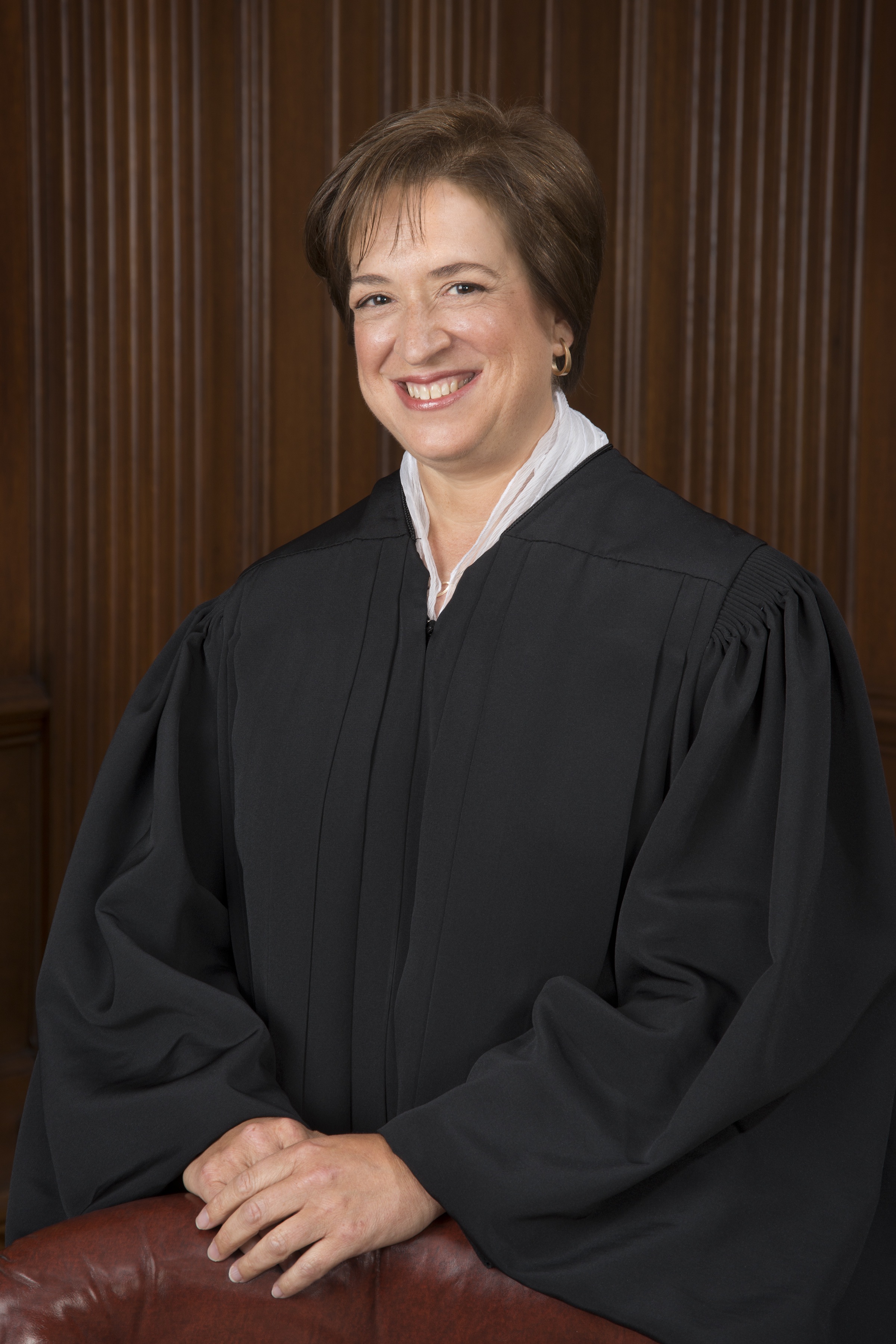
Kagan’s remarks, delivered in a conversation with Professor Joel Alicea at the law school, were not a stray aside. As Bloomberg Law reported, she took aim at three distinct lines of decisions: the rulings that threw out campaign finance restrictions, the decisions that sharply limited the Voting Rights Act, and the line of cases that let states freely redraw election districts to maximise partisan gain. Her charge across all three was the same — a court that decides election law as abstract doctrine and refuses to look at what its decisions do in the real world.
“In all these areas, the court has kind of blinded itself to the very deleterious effect of their rulings,” Kagan said. On redistricting, her language was at its sharpest: “Both political parties have been engaged in a race to the bottom in terms of doing these partisan gerrymanders, effectively depriving masses of citizens of their rights to voting equality.” The result, she argued, is a politics pulled apart at the seams: gerrymandering is driving candidates “toward the extremes, because the only thing anybody has to worry about anymore is being primaried.”
“It is making what I think is unfortunately a too polarised country even more so,” she said. “In this election, and the next election, we are seeing large states with substantial numbers of people who vote for Republicans and who vote for Democrats, and the states are going to be tried to turn all red or all blue in a way that I think is very destructive to our democracy.” Neither Reuters nor Bloomberg Law carried a response from any of the justices in the majority.
The Voting Rights Act decision, and the Southern map rush that followed
The most concrete of Kagan’s targets was the court’s April decision — dated April 29 by Bloomberg Law’s account — which, in Reuters’ summary, “gutted a pillar of the Voting Rights Act,” the landmark 1965 civil rights law aimed at preventing racial discrimination in voting. The ruling limited the use of the Act as a justification for drawing majority-Black or majority-Hispanic districts. Kagan’s point was about sequence and speed: “I think what you saw, like literally in the few weeks after that decision was announced, was that a large number of Southern states decided to redistrict in order to get rid of Black districts,” she said.
Reuters reported the same sequence from the other direction: the ruling prompted a frenzied round of redistricting across the South to eliminate US House districts where Black voters make up a majority or near-majority, as Republican-led states moved to take advantage of the decision. With the court holding a 6–3 conservative majority and President Donald Trump’s Republican Party seeking to retain control of Congress in the November midterm elections, every redrawn district is a seat that may not have to be won at the ballot box so much as drawn in a statehouse. We have followed the map fights state by state, including the court’s earlier intervention over Missouri’s map (the Supreme Court and the Missouri map fight).
The money ruling: “a nightmare — and they’re right”
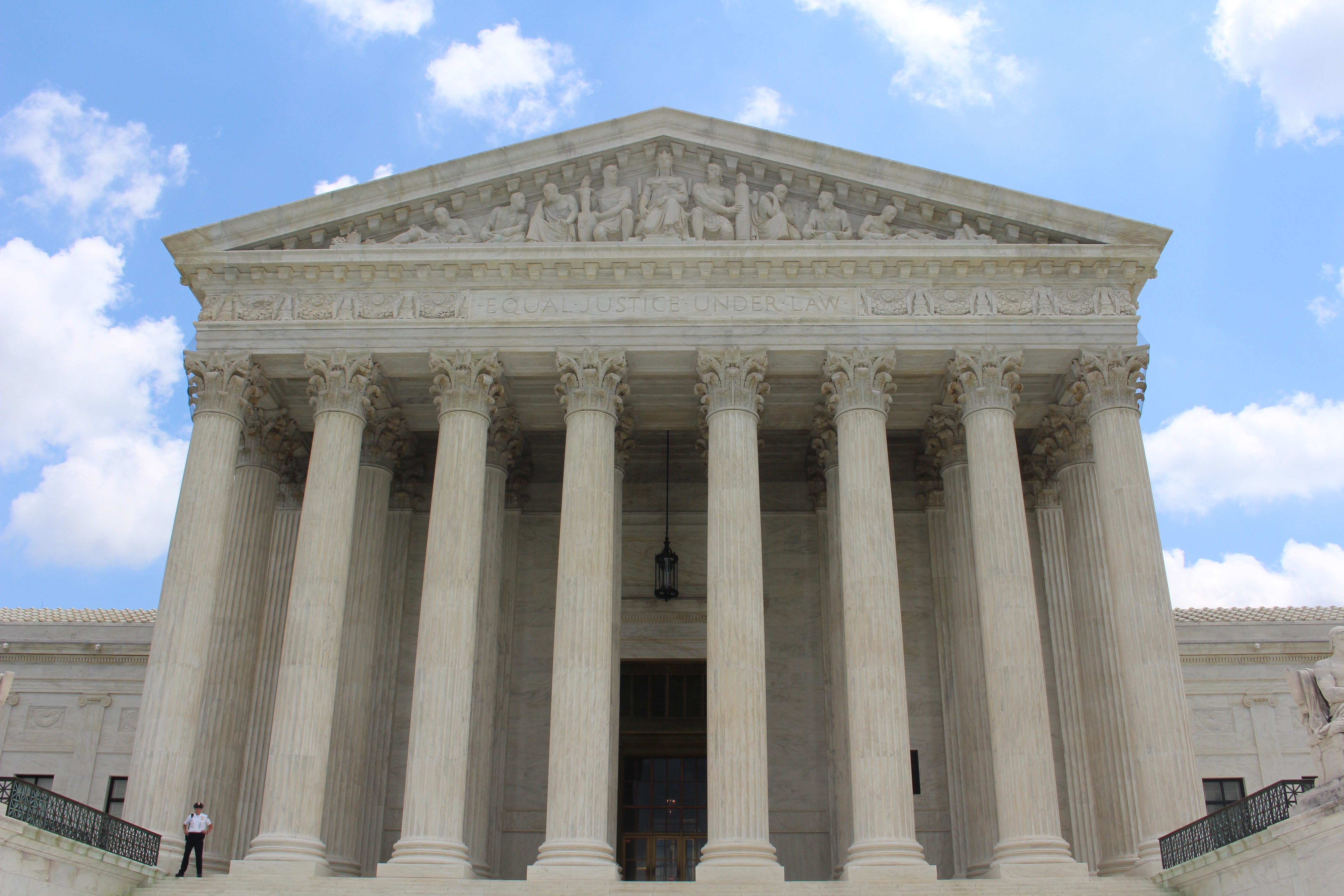
Kagan was equally direct about campaign finance. She blamed the court’s June decision striking down a cap on the amount of money political parties can spend on campaigns in coordination with candidates, and the broader line of rulings that threw out campaign finance restrictions, for creating opportunities for donors to corrupt candidates. The court’s own stated exception, she noted, has always been preventing quid pro quo corruption — money for favours — yet, as Reuters quoted her, “the court never seems to see the opportunities for doing exactly that.”
“The people of America look around this political system and think that all this money chasing all these political candidates is a nightmare,” she said, “and they’re right.” The remark lands in a midterm cycle already defined by record-scale spending — we reported this month on the scale of a single donor’s midterm outlay alone (the $366 million midterm spending story) — and it follows weeks of election-law litigation reaching the court on an emergency basis, including the fight over discounted political advertising rates (the court’s campaign ad-rates ruling).
How we got here: the door closed in 2019
None of this began in April. The legal foundation, as Bloomberg Law noted, was laid in 2019, when the court ruled that federal judges cannot throw out congressional maps for being too partisan — holding, in effect, that partisan gerrymandering claims present a political question beyond the reach of the federal courts. The majority’s reasoning in that era of cases was institutional: line-drawing is assigned to state legislatures and Congress, courts have no manageable standard for deciding how much partisanship is too much, and judges who police maps become political actors themselves. Defenders of the rulings add that gerrymandering is practised by both parties wherever each controls the pen — a point Kagan herself conceded in the very sentence at the centre of Tuesday’s remarks: “both political parties have been engaged in a race to the bottom.”
The difference between the two positions is what follows from that concession. For the majority, bipartisan abuse is a reason courts cannot fix it. For Kagan, it is the proof that nobody else will: state legislatures will not disarm unilaterally, so the race runs until the maps are exhausted. The textbook illustration arrived last year and she did not need to invent it: at Trump’s urging, Republican-governed Texas redrew its electoral map in an effort to flip Democratic-held House seats, and Democratic-led California then reconfigured its own map to target Republican-held seats. Two of America’s largest states, redrawing mid-decade, in the open, as retaliation for each other. Kagan’s phrase for the dynamic — states with large numbers of voters from both parties being made “all red or all blue” — is a description of that tit-for-tat, not a prediction.
Why this matters
Sitting justices criticise their own court in public rarely, and almost never in language this unguarded weeks before a national election. Dissents are the normal channel: a losing justice writes for the record, for law reviews, and for a future court. A speech like Tuesday’s does something different — it addresses voters, students and the political branches directly, and it says plainly what a dissent usually leaves in footnotes: that in the speaker’s judgement the institution has damaged the democratic system it exists inside of.
That is also why the remarks matter beyond one justice’s frustration. Kagan, an appointee of former President Barack Obama, told her audience she believed part of the reason the court “got it wrong” was “a lack of the appropriate concern or understanding of the consequences of their decisions.” Strip away the civility and that is an argument about judicial method: whether a court deciding election law should weigh the predictable real-world effects of its rulings — the Southern map rush, the money flood — or treat those effects as somebody else’s department. The 6–3 majority has mostly chosen the second view. Tuesday’s speech was the first view, delivered at full volume, by one of the nine people who lost those votes.
What the numbers say
The arithmetic underneath the rhetoric is stark. The court’s majority is 6–3, which means election law in the United States is currently made by a bloc that can lose one vote and still win. All 435 House seats are contested in the November midterms, and control of the chamber — and with it the second half of Trump’s term — will be decided inside district lines that, in state after state, were drawn this year and last under the legal regime Kagan described. A map drawn to convert a competitive state delegation into a safe one does not need to move many voters to move history: in a closely divided House, a handful of engineered seats in Texas, California and the post-April Southern redraws can exceed the entire national margin.
Kagan’s polarisation mechanism also has a simple numerical logic. A candidate in a district drawn to be safe for their party faces exactly one realistic threat: a primary challenger from their own flank. The median voter of the general election stops being the audience; the median voter of the primary becomes it. Multiply that incentive across hundreds of safe seats and the centre of both parties empties — which is precisely her phrase, candidates for whom “the only thing anybody has to worry about anymore is being primaried.”
Who gains, who loses — and the case on the other side
The immediate gainers from the current regime are whichever party holds the pen in each statehouse, and the incumbents whose seats the new maps make safe. The losers, on Kagan’s account, are voters in drawn-out districts — above all the Black voters whose majority districts were eliminated in the Southern redraws after the April ruling — and candidates of the centre in both parties. The majority’s defenders answer that the alternative has losers too: unelected judges choosing between competing maps, federal courts supervising state election law in perpetuity, and a Voting Rights Act jurisprudence they argue had itself become a racial-districting mandate rather than an anti-discrimination shield. Those arguments carried the day in the courtroom. What Tuesday showed is that they have not carried it in the country’s law schools, or among the three justices who will be writing the dissents for the foreseeable future.
Balance requires one further note: nothing Kagan said changes a single map, ruling or race. A justice’s speech has no legal force, the majority does not answer speeches, and no mechanism exists by which Tuesday’s remarks reopen the 2019, April or June decisions. Their force is political and historical — which, three weeks before a midterm election held on the maps in question, is not nothing.
What happens next
The first test is November’s midterm elections themselves, run on the redrawn maps in Texas, California and the Southern states, with House control in the balance. The second is the litigation already moving behind those maps: challenges to the post-April districts will work through lower courts on timelines measured in years, and the justices who heard Kagan’s warning will, in all likelihood, be the ones to decide them. The third is the court’s own calendar: every election case that arrives from here on will be read against Tuesday’s speech, and every majority opinion on maps or money will be measured — by critics, at least — against her test of whether the court has considered the consequences of its decisions.
Kagan closed none of those questions on Tuesday. What she did was rarer: she told the country, in plain words and on the record, that a member of its highest court believes that court is making American democracy work worse. Whether the voters filing into polling stations next month agree with her is, fittingly enough, a question the maps themselves will help decide.
Sources
Reuters, “US high court rulings have been ‘destructive to democracy,’ Justice Kagan says” (October 20–21, 2026) — https://www.reuters.com/world/us/us-high-court-rulings-have-been-destructive-democracy-justice-kagan-says-2026-10-21/; Bloomberg Law, “Supreme Court’s Kagan Says Election Rulings Creating ‘Nightmare’” (October 20, 2026) — https://news.bloomberglaw.com/us-law-week/supreme-courts-kagan-says-election-rulings-creating-nightmare. Quotations are as reported by Reuters and Bloomberg Law from Kagan’s October 20 conversation at Catholic University’s Columbus School of Law; neither report carried a response from the justices in the majority.