Sports / College Football — Duke beat Virginia 19-16 at Scott Stadium on Friday night, Oct. 23, when running back Nate Sheppard took a lateral and threw a 28-yard touchdown pass to a wide-open Brody Keefe with about a minute and a half left. The win snaps Duke’s two-game losing streak, ends a Charlottesville drought dating to 2013, and came on a night when the Blue Devils lost — then got back — their starting quarterback.
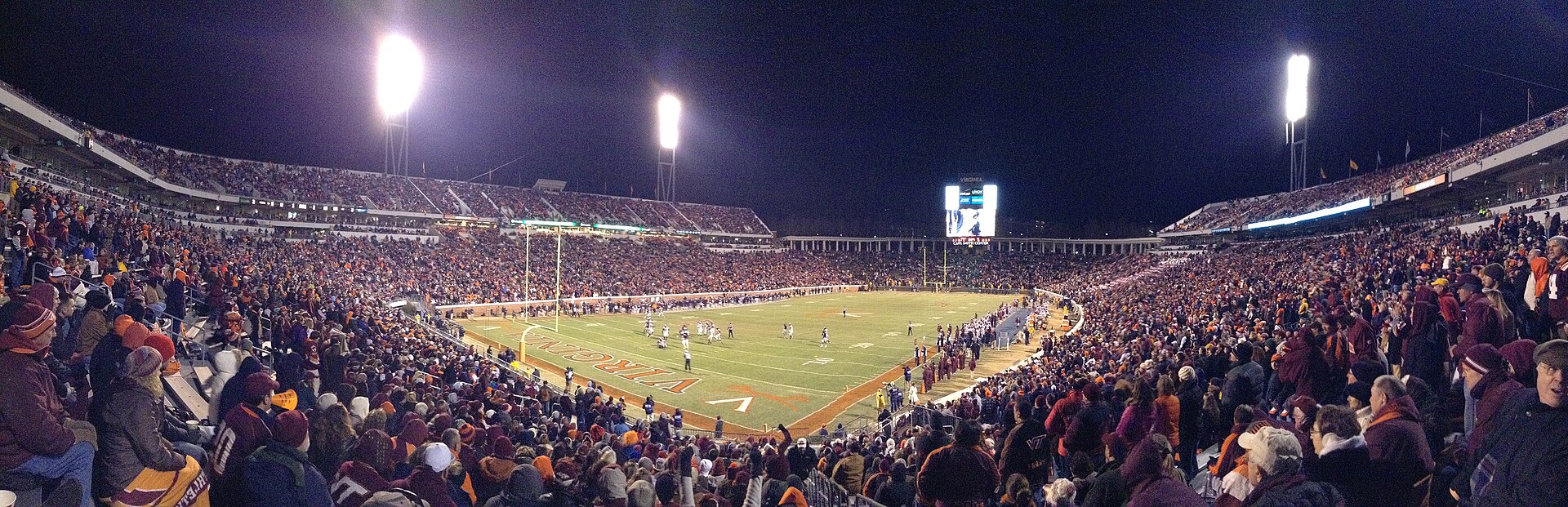
CHARLOTTESVILLE, Va. — The Duke beats Virginia 19-16 scoreline will be remembered for one play. With Duke trailing 16-13 and three minutes of football left, quarterback Walker Eget — playing the second half with an injured throwing hand — drove the Blue Devils across midfield, then handed the season’s strangest moment to his running back. Sheppard caught a lateral from Eget and, instead of running, threw to freshman receiver Brody Keefe, who was standing alone in the end zone for a 28-yard touchdown. The extra point was missed, but it did not matter: Patrick Smith-Young intercepted Virginia quarterback Beau Pribula in the final minute, sealing a 19-16 Duke win that snapped a two-game losing streak and moved the Blue Devils to 5-2 overall and 2-2 in the ACC. Virginia fell to 4-4 and 2-3 in the conference. The final score and sequence were confirmed by the Fayetteville Observer’s on-site live report from Scott Stadium, by On3’s Devils Illustrated account, and by Sports Illustrated’s postgame takeaways from both sidelines.
How the Duke-Virginia game turned in the last three minutes
Virginia had just taken the lead back the hard way. Duke’s defence, which bent all night without breaking, forced another red-zone stop, and the Cavaliers settled for Will Bettridge’s 30-yard field goal and a 16-13 lead with three minutes remaining. It was Virginia’s only points of the second half — Duke outscored the Cavaliers 12-3 after halftime — and it looked, for about ninety seconds, like enough.
Then Eget, who had already been intercepted once in the second half on a checkdown that popped off Sheppard into Kam Robinson’s hands, threw back-to-back completions of 12 yards to Jaivon Solomon and Jonah Burton to cross midfield. Two plays later came the call that decided the night: Eget threw backwards to Sheppard, Virginia’s defence flowed toward the run, and Sheppard — held to 55 yards on 15 carries, his quietest rushing night of the season — pulled up and threw the go-ahead touchdown to Keefe with roughly 1:14 to 1:28 left (game accounts differ by seconds on the clock reading). Virginia got one first down on its final drive before Smith-Young’s interception on Pribula’s desperation throw ended it.
A quarterback injury, a backup’s long half, and a starter’s return
The trick play was only possible because Eget was still in the game at all. Duke’s opening drive was a statement — 78 yards in four plays and 1:42, finished by Sheppard’s 32-yard touchdown run one snap after Eget hit Burton for 35 yards. But Eget’s hand struck a Virginia defender’s helmet on that 35-yard throw. He did not play again in the first half, and head coach Manny Diaz told ESPN at halftime: “Hit a helmet on the big pass. We had planned on getting Mahan in anyway… We’ll reevaluate now and see what’s best going forward.”
With backup Dan Mahan at quarterback, Duke’s offence produced two first downs in four possessions and 13 total yards in the second quarter. Virginia, meanwhile, scored 13 unanswered points: Jekail Middlebrook’s one-yard touchdown run on fourth-and-1 tied the game in the first quarter, and two field goals — a 21-yarder at the end of a 13-play, 69-yard, seven-minute drive, then a 32-yarder before the break — sent the Cavaliers in ahead 13-7. Eget returned for the first drive of the second half and never left again, finishing 14-of-25 for 211 yards in the accounts published postgame. Duke’s scoring after halftime was workmanlike until it wasn’t: Gavin Strange field goals of 39 yards in the third quarter and 39 yards again with 8:50 left — the second set up by Jake Taylor’s 43-yard catch and run — tied the game at 13-13 and set the stage for the finish.
Why this matters: Duke’s season bends on one call in Charlottesville
Context is everything here. These two programmes split two meetings last season, and the second one was enormous: Duke beat Virginia 27-20 in overtime in the ACC championship game for the school’s first conference title since 1989. Friday was Virginia’s chance at revenge at home, where Duke had not won since 2013, and where the Cavaliers — favoured by two points — led for most of the night. Virginia still leads the all-time series 42-35 and has won eight of the last ten meetings. A Duke loss would have meant three straight defeats, a 1-3 start in the ACC, and a season quietly sliding toward a minor bowl. Instead the Blue Devils are 5-2, one win from bowl eligibility, with the defining play of their season on film.
There is a second story, and it is Virginia’s offence. The Cavaliers forced six Duke punts, held Sheppard — described in Sports Illustrated’s Virginia takeaways as the best running back in college football this season — under 60 rushing yards, and still lost, because their own offence managed one touchdown drive, settled for field goals on two other long marches, and turned the ball over twice in the second half: Pribula’s fumble, forced by Will Felder and recovered by Tyshon Reed in the third quarter, and the closing interception. Pribula finished with two turnovers and no touchdown passes. When a defence plays that well at home and loses 19-16, the questions land on the quarterback position — and Virginia’s own postgame coverage was already asking them on Friday night.
What the numbers say
Strip the trick play away and this was a defensive game that Duke’s defence marginally won. Virginia ran the night’s defining possession in raw terms — 13 plays, 69 yards, 7:15 off the clock — and came away with three points. The Cavaliers kicked three field goals in total and scored one touchdown; Duke’s defence forced two red-zone field goals in the first half alone, sacked Pribula at the moments that mattered (Tyshon Reed early, Che Ojarikre’s third-down sack that pushed Virginia into a missed 47-yard attempt in the third quarter), and produced both second-half takeaways. Duke’s own yardage tells the injury story in one column: 176-to-114 in Virginia’s favour at halftime, with a 13-yard second quarter, then a functional second half once Eget returned. Sheppard crossed 2,000 career yards in the game even on his quietest rushing night — which is precisely why the trick play worked. Virginia had spent three hours proving it could stop Sheppard the runner. Nobody had budgeted for Sheppard the passer.
What happens next
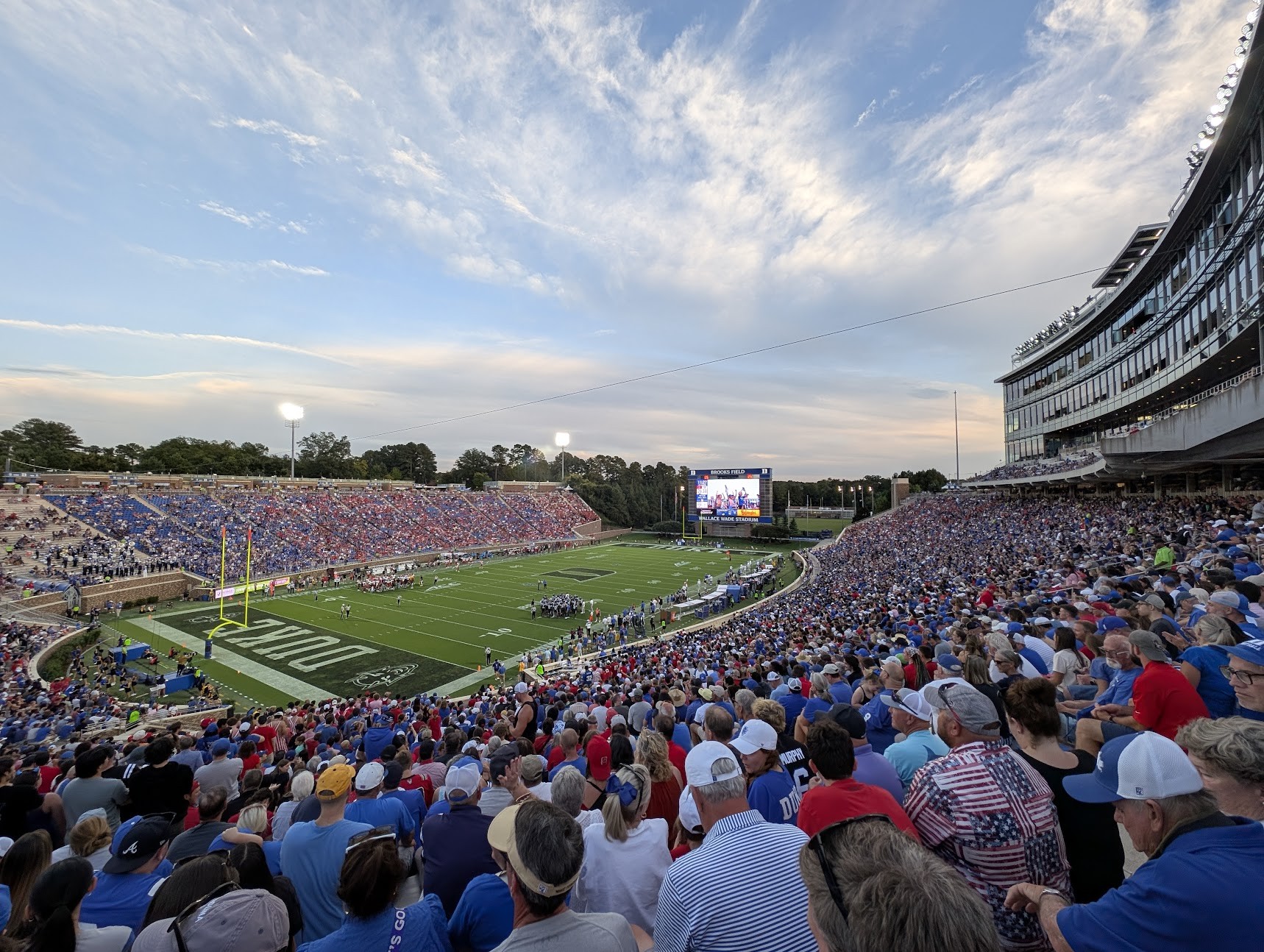
Duke returns home to Wallace Wade Stadium to host Boston College on Saturday, Oct. 31, one win short of bowl eligibility and suddenly back in the ACC’s crowded second tier. The open question is Eget’s hand: he finished the game and made the throws that mattered, but Duke has offered no prognosis beyond Diaz’s halftime re-evaluation comment, and Mahan’s difficult first half showed how thin the margin behind him is. Virginia, at 4-4, has now lost a home game its defence deserved to win, with the quarterback debate its own fans were having on Friday night unlikely to quiet down. For one night in Charlottesville, though, the story is simpler: a running back threw the pass, a freshman caught it, and a thirteen-year drought ended on a trick play. Readers following the rest of the weekend’s sports can start with our recent college and pro football coverage, including the Packers’ 23-13 win over the Cowboys and the Bills’ 37-34 overtime win over the Rams.
Sources
Reporting drawn from the Fayetteville Observer’s on-site live report and report-card from Scott Stadium (Anna Snyder, Oct. 23, 2026), On3 / Devils Illustrated (“Nate Sheppard throws Duke into win”), Sports Illustrated’s Duke and Virginia postgame takeaways, and the Sportradar final score record (Duke 19, Virginia 16; quarters 7-7, 0-6, 3-0, 9-3). All scorelines, the trick-play sequence, the Eget injury timeline and the Diaz halftime quote are stated consistently across those accounts; the winning touchdown’s clock reading is reported as 1:28 in the Observer’s lead account and approximately 1:11-1:14 in On3/SI accounts, and is described as “about a minute and a half left” in this article’s deck for that reason.