Business
Business / Markets — The DoorDash buys Instacart deal is signed. DoorDash announced on Thursday, October 29, 2026, alongside its third-quarter results, that it has reached a definitive agreement to acquire Instacart — formally Maplebear Inc. — for about $17 billion, or $65.00 a share in cash and stock. The deal ends Instacart’s run as an independent company three years after its stock-market debut, hands DoorDash the grocery technology it has spent years trying to build, and sets up a regulatory review that is not expected to conclude until late 2027 or the first half of 2028.
Track it live: https://signalpostnews.com/tracker/markets
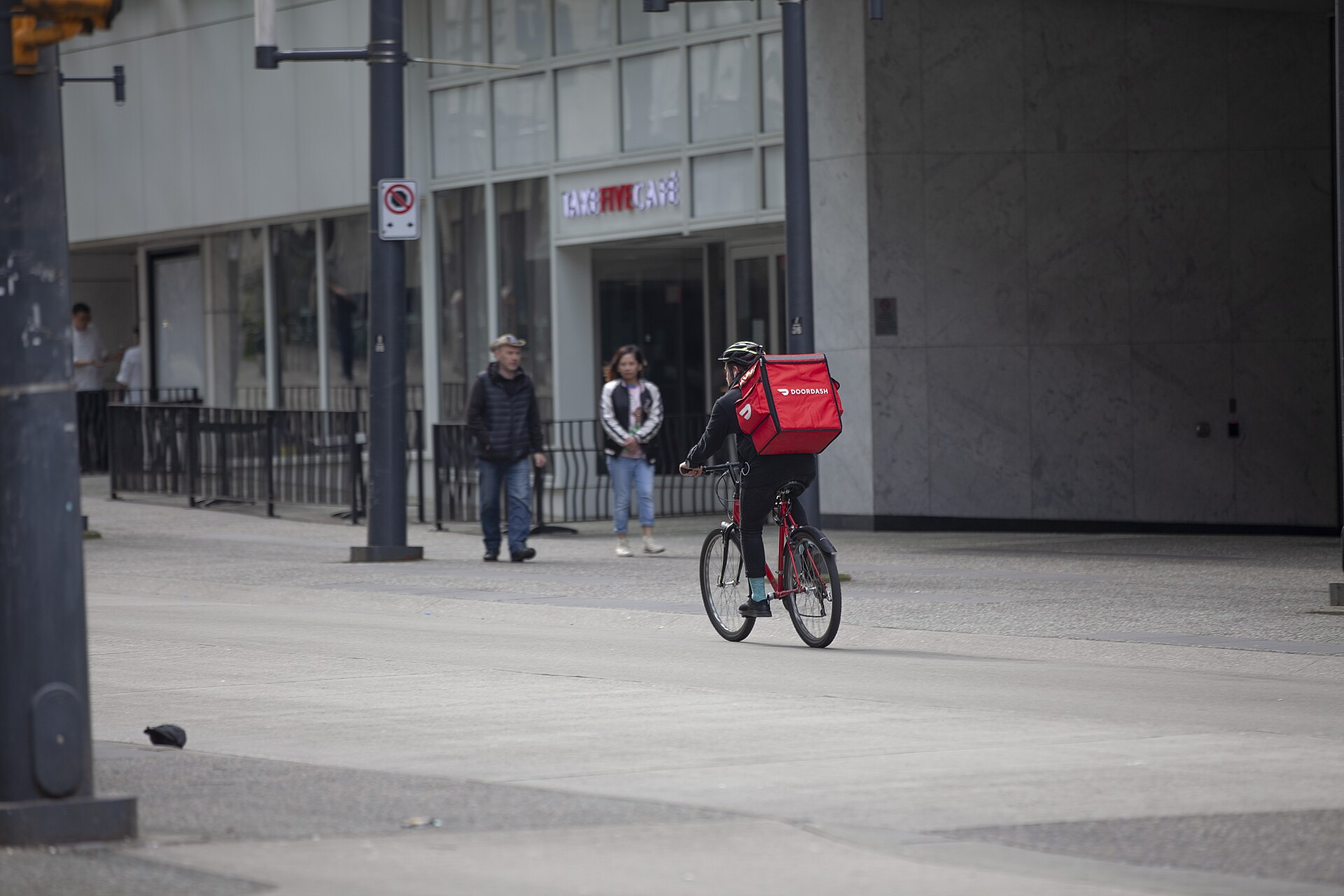
The rumour is now a contract. Six days ago, this newsroom reported that Instacart was exploring a sale and had held preliminary talks with Uber and DoorDash — reports every company involved declined to confirm. On Thursday, the talks ended in a definitive agreement: DoorDash, the largest food-delivery company in the United States, will acquire Instacart, the grocery-delivery specialist that trades as Maplebear, in a cash-and-stock transaction valuing Instacart at about $17 billion. It is the biggest deal in DoorDash’s history, the biggest in the delivery industry anywhere this year, and the end of Instacart as an independent public company.
The announcement was deliberately paired with both companies’ third-quarter results, and the pairing is the pitch. DoorDash is buying from strength: a quarter of nearly a billion orders and record profitability, set out below. Instacart is selling from deceleration: still growing, still profitable in its core business, but expanding at a pace that public markets had stopped rewarding. Thursday’s agreement converts last week’s question — whether Instacart would sell, and to whom — into a longer one: whether regulators will let the two most recognisable names in American app delivery become one company, and what that company looks like if they do.
The terms: $65 a share, at least 75 percent in cash
Start with the mechanics, because the headline number hides the structure. DoorDash will pay $65.00 for each Instacart share, an equity value of approximately $17 billion. That price is a premium of about 26 percent to Instacart’s closing price of $51.68 on October 22, the last trading day before reports of a possible sale, and about 11 percent above Wednesday’s close of $58.42 — a gap that narrowed because the stock had already run to a record $62 on Monday, when the Wall Street Journal reported the two companies were in advanced talks. Before those reports, Instacart’s market value stood at roughly $13 billion.
Instacart shareholders will be able to elect cash, DoorDash stock, or a combination of the two, subject to proration so that at least 75 percent of the total consideration is paid in cash. DoorDash said it will fund the cash portion with cash on hand and debt financing, backed by a bridge loan commitment from JPMorgan Chase, and that it is targeting a capital structure that maintains its investment-grade credit ratings. Instacart’s board approved the agreement unanimously. The deal still requires approval from Instacart’s shareholders and from regulators, and the companies expect it to close in late 2027 or the first half of 2028 — a timeline that is itself one of the most informative numbers in the announcement, discussed below.
One commitment will be tested more than any other after closing: DoorDash said it will keep Instacart’s brand, its app and its enterprise technology products — the software Instacart sells to grocers to run their own online storefronts, fulfilment and advertising. That enterprise business is a large part of what DoorDash is actually buying. Instacart is not only a consumer app; it is the digital plumbing inside hundreds of grocery chains, and plumbing is much harder to rip out than an app is to delete.
Tony Xu’s pitch: the ripe avocado problem
DoorDash co-founder and chief executive Tony Xu framed the deal as an admission about what his company could not easily build. “Grocery is one of the hardest things to get right online,” Xu said. “Someone has to pick a ripe avocado, find a substitute you’d choose yourself, and get the ice cream to you before it melts… Together, we could give stores of every size more of those tools and unlock the potential of grocery delivery.” The combined company, DoorDash said, will offer grocers and retailers of every size DoorDash’s delivery network together with Instacart’s grocery and fulfilment technology, in both apps and on stores’ own websites.
Read the quote as strategy rather than colour. Restaurant delivery is a logistics problem: one bag, one address, one deadline. Grocery is a judgement problem multiplied by sixty items a basket, each with ripeness, substitution and temperature decisions a restaurant order never asks for. DoorDash has spent years bolting grocery onto a network designed for the first problem. Instacart spent a decade on the second. The $17 billion is, in large part, the price of not spending another decade learning the difference — and of denying the same shortcut to Uber, the other suitor in last week’s talks.
Two earnings reports in one morning: DoorDash Q3 earnings 2026
The results published alongside the deal explain both sides of the negotiating table. DoorDash reported 993 million orders in the third quarter, up 28 percent, with about $34 billion in total order value, revenue of $4.6 billion, up 34 percent, and adjusted EBITDA of $1.06 billion, up 41 percent. Instacart, in the same quarter, handled 90.3 million orders and about $10.4 billion in gross transaction value, with revenue of roughly $1 billion, up 17 percent. On a combined basis, the two companies processed more than 1.08 billion orders and about $44 billion of order value in a single quarter.
The asymmetry is the story. DoorDash is roughly ten times Instacart’s order volume and is compounding at nearly twice the rate, while Instacart’s growth has throttled back since the pandemic — its annual revenue growth slowed to about 11 percent in 2025. A buyer growing at 34 percent can pay a 26 percent premium for a target growing at 11 percent and still tell a plausible story about acceleration, because the asset it lacks — grocery technology and grocer relationships — is worth more inside its network than standing alone. That, at least, is the argument DoorDash took to its own shareholders on Thursday.
The market’s split verdict
Investors had a week to price this deal in, and Thursday’s trading reflected it. Anyone checking the Instacart stock price today found a stock that had already banked most of its takeover premium: Instacart rose 4.8 percent in premarket trading to $61.25, then slipped about 1 to 2 percent in morning trade as the remaining gap to the $65 offer price narrowed to the market’s estimate of regulatory risk. The DoorDash stock price today told the rarer story: acquirers usually fall on deal news, but DoorDash jumped 9.7 percent premarket to $185.96 and held a gain of roughly 6 to 10 percent through the morning, according to reports of the session. DoorDash’s market value is about $73 billion; its stock is still down about 25 percent in 2026, which is precisely the backdrop against which a growth-hungry acquisition becomes easier to sell.
How Instacart got here
Instacart went public in 2023, carried there by the pandemic grocery boom, when locked-down households made app-ordered groceries a habit almost overnight. The boom faded; the competition did not. Amazon has expanded same-day grocery delivery to some 2,300 locations. Walmart offers delivery in as little as 30 minutes in places. Uber, already a delivery rival, has been adding grocery partnerships, most recently with Costco. Against competitors that can treat grocery delivery as one feature of a much larger machine, Instacart’s standalone economics — thin margins, heavy reliance on advertising revenue, a shopper workforce it does not employ — looked increasingly exposed.
The company was already rearranging itself before Thursday. On Monday, Instacart disclosed that it will wind down its Caper Cart smart-cart business by the end of the second quarter of 2027, taking pre-tax charges of $55 million to $80 million. It has also spent this month in less welcome headlines, including our coverage of Instacart’s $5 million Justice Department settlement over allegations it hired workers not authorised to work in the United States. None of that made a sale inevitable. All of it made the board’s unanimous yes easier to reach.
A grocery delivery merger at the crest of a consolidation wave
Thursday’s agreement is the largest entry in a consolidation wave that has redrawn the global delivery map in under two years, as Reuters’ tally of the industry’s deals shows: Uber’s $14.8 billion agreement for Germany’s Delivery Hero in July 2026; DoorDash’s $3.85 billion purchase of Deliveroo in 2025; Prosus’s $4.3 billion acquisition of Just Eat Takeaway the same year; Wonder’s $650 million deal for Grubhub, also in 2025; and DoorDash’s $3.5 billion purchase of Finland’s Wolt back in 2022. The pattern is consistent: subscale national champions are being absorbed into a handful of continental platforms, and the remaining independents are running out of dance partners.
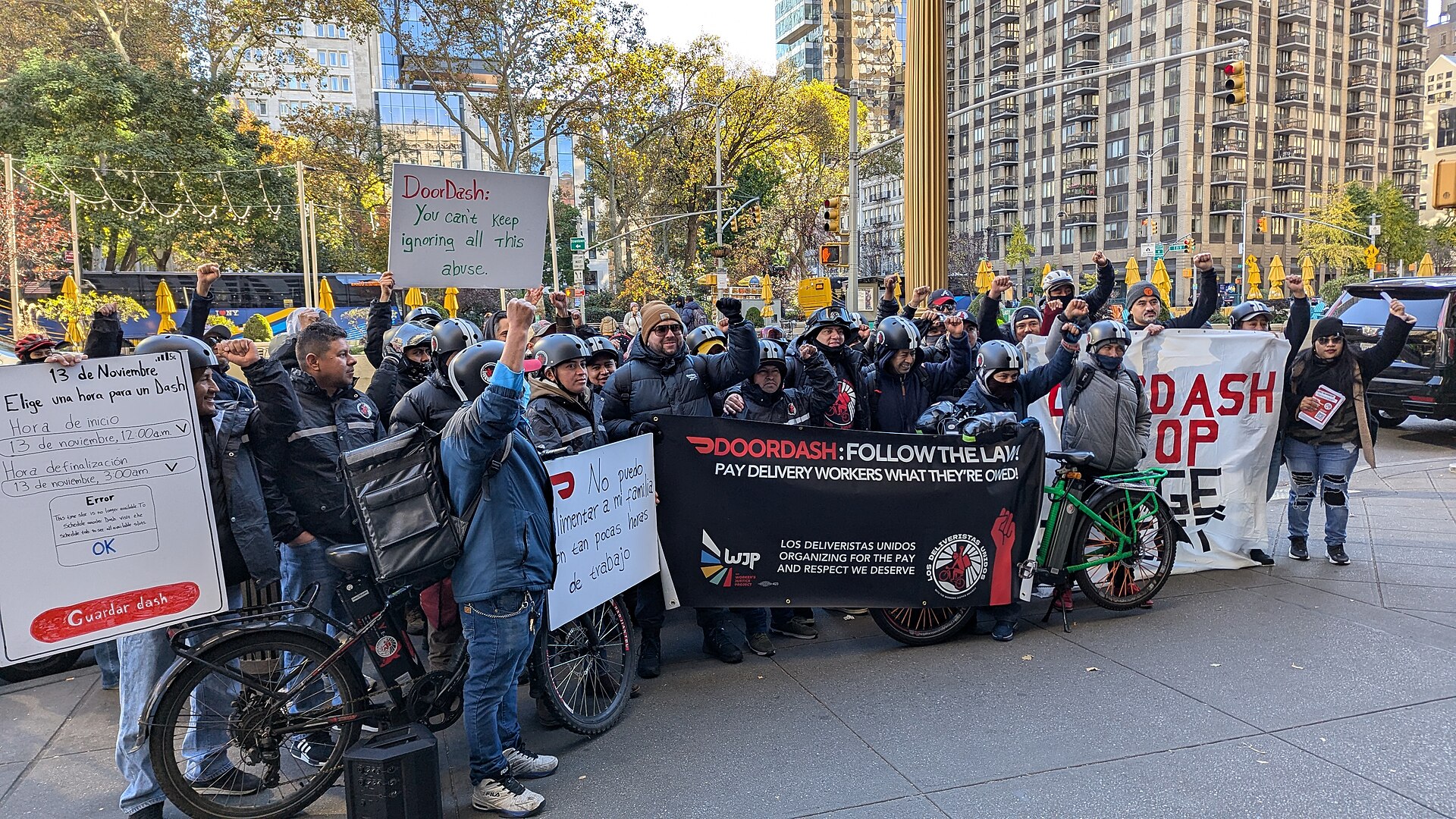
DoorDash has been the wave’s most persistent buyer, and its hometown economics show why the model keeps tightening: the company’s delivery workforce has already been the subject of the city’s $131 million settlement with New York City delivery workers this autumn. Scale spreads those regulatory and labour costs across more orders; it also concentrates them in fewer hands, which is where Thursday’s deal collides with the week’s other news.
The FTC’s pricing study hangs over the merger
One day before the deal was announced, on October 28, the Federal Trade Commission issued orders under Section 6(b) of the FTC Act to nine companies — Delta, United and JetBlue; Lyft and Uber; Target and Walmart; and both DoorDash and Instacart — requiring detailed information on how they use personal data to set the prices consumers pay and, for the delivery and ride-hailing platforms, the compensation workers receive. The companies have 45 days to respond. Precision matters here: the 6(b) orders launch a study. They are not an enforcement case, they allege no violation of law by any of the nine companies, and the FTC has accused neither DoorDash nor Instacart of wrongdoing in connection with them. Instacart’s response was categorical: “We do not use personal information to set prices, and we never will.” Delta issued a similar denial.
The merger will nonetheless be reviewed against that backdrop. A DoorDash–Instacart combination is exactly the kind of transaction the FTC traditionally examines in grocery and retail, and Reuters reported on Thursday that the deal is likely to draw close scrutiny from the agency, whose leadership has made the cost of everyday essentials a stated priority. The study and the merger review are separate processes with separate legal tests; but politically and institutionally, the same agency will soon hold a fresh, detailed account of how both companies price and pay, while deciding whether they may become one company. Neither company addressed the study in Thursday’s announcement.
Why this matters
The battleground moves from restaurants to the supermarket aisle
The two biggest independent names in American delivery are merging, but the combined company’s real opponents are not other apps. DoorDash already leads restaurant delivery; Instacart already leads third-party grocery. What neither has is a defence against Walmart and Amazon, for whom delivery is a retention tool for memberships and marketplaces rather than a business that must pay for itself order by order. Thursday’s deal is best understood as the app-delivery industry conceding that point: the survivors intend to fight the giants as a combined grocery-and-restaurant platform, with Instacart’s advertising business and grocer software as the margin engine and DoorDash’s courier network as the moat. If the deal closes, the question in American delivery stops being “which app wins?” and becomes “can any app stand between Walmart, Amazon and the grocery store?”
Who benefits from the DoorDash Instacart merger
DoorDash benefits first and most: it acquires in one signature the grocery technology, shopper workforce model and retailer relationships it could not have built at comparable speed, and removes the partner Uber most wanted. Instacart’s shareholders benefit second: a 26 percent premium to the pre-rumour price is a full exit from a stock whose growth story had stalled, paid mostly in cash. Local and regional grocers get something real as well — a single counterparty offering delivery reach, storefront software, fulfilment tools and advertising in one contract, from a company whose survival no longer depends on grocery alone. And shoppers, at least in the companies’ telling, get more stores, more choice and faster delivery on both apps.
Who loses: a counterweight for grocers, and a second bidder for workers
The losses are quieter but structural. Independent grocers lose a counterweight: today a chain can play Instacart against DoorDash and Uber for better fees and terms; after this deal, two of those three chairs are occupied by the same company. Rival platforms lose oxygen — Uber keeps its Costco partnership and its own network, but the grocery technology it courted last week now belongs to its largest competitor. The sharpest exposure belongs to the people who do the delivering and the shopping. Where DoorDash couriers and Instacart shoppers once had two large platforms bidding for their hours, a merged company sets pay for both fleets. That is not an abstraction in the very week the FTC asked both companies to explain, in detail, whether personal data shapes what workers earn — a study that, to repeat, alleges no violation by either. It is simply the arithmetic of consolidation: every argument for this deal is an argument about the power of scale, and scale over workers’ options is the same fact viewed from the other side.
The data in context
Three comparisons carry the deal’s meaning. First, price: $17 billion against a pre-rumour market value of about $13 billion means DoorDash is paying roughly $4 billion over what public markets thought Instacart was worth a week ago — the premium is the cost of certainty and of keeping Uber out. Second, scale: combined third-quarter volume of more than 1.08 billion orders and about $44.4 billion in order value would make the merged platform the largest app-delivery intermediary in the United States by throughput, though still small beside Walmart’s grocery machine. Third, time: a closing window of late 2027 to mid-2028 — fourteen to eighteen months — is roughly double a routine deal’s timetable, and it is the companies’ own estimate of the antitrust scrutiny ahead. When parties price a merger, they price its risks; the calendar is where this one shows.
When will the DoorDash Instacart deal close — and what happens next
The sequence from here is procedural but not predictable. Instacart’s shareholders must approve the sale; regulators in the United States and abroad must clear it, with the FTC’s review the central uncertainty and the agency’s pricing study running in parallel on its own 45-day clock. The Caper Cart wind-down proceeds on its own schedule to mid-2027 either way. The open questions are the ones this newsroom will track: whether the review ends in clearance, conditions, or a court challenge; whether grocers use the long interim to renegotiate or defect; and whether the promise to preserve Instacart’s brand, app and enterprise products survives integration. DoorDash’s own precedents cut both ways — Wolt still trades under its own name years after acquisition, while Deliveroo has been folded steadily closer to the parent since 2025. For now, the deal is what Thursday made it: signed, priced, unanimously board-approved — and fourteen months from becoming real.
Sources
- Reuters, October 29, 2026 — the definitive agreement, the $65.00-a-share terms, the premiums to the October 22 and Wednesday closes, the JPMorgan bridge financing, the third-quarter figures and the expected closing window.
- Reuters, October 29, 2026 — the consolidation table: Uber–Delivery Hero ($14.8 billion), DoorDash–Deliveroo ($3.85 billion), Prosus–Just Eat Takeaway ($4.3 billion), Wonder–Grubhub ($650 million) and DoorDash–Wolt ($3.5 billion).
- Reuters, October 29, 2026 — the likelihood of FTC scrutiny of the merger amid cost-of-living concerns, and the agency’s focus on delivery platforms’ pricing practices.
- CNN, October 29, 2026 — the announcement, Tony Xu’s “ripe avocado” statement, Amazon’s 2,300 same-day grocery locations, Walmart’s 30-minute delivery and Uber’s Costco deal.
- Wall Street Journal, October 29, 2026 — the $65-a-share valuation against the $58.42 and $51.68 closes, premarket moves in both stocks, Instacart’s roughly $13 billion pre-talks market value and DoorDash’s roughly $73 billion.
- PYMNTS, reporting the FTC announcement of October 28, 2026 — the Section 6(b) study orders to nine companies including DoorDash and Instacart, the 45-day response window, and the companies’ denials that personal data sets their prices. The orders are a study, not an enforcement action, and allege no violation.