U.S. · Labor · Civil Rights
Dolores Huerta, the Stockton teacher who became the negotiating engine of the farmworker movement, co-founded the United Farm Workers with Cesar Chavez and gave American politics three of its most durable words — “Sí, se puede” — died of cancer on Wednesday at her home in Bakersfield. She was 96. California ordered its flags to half-staff, and a former president who borrowed her slogan called her a hero of his.
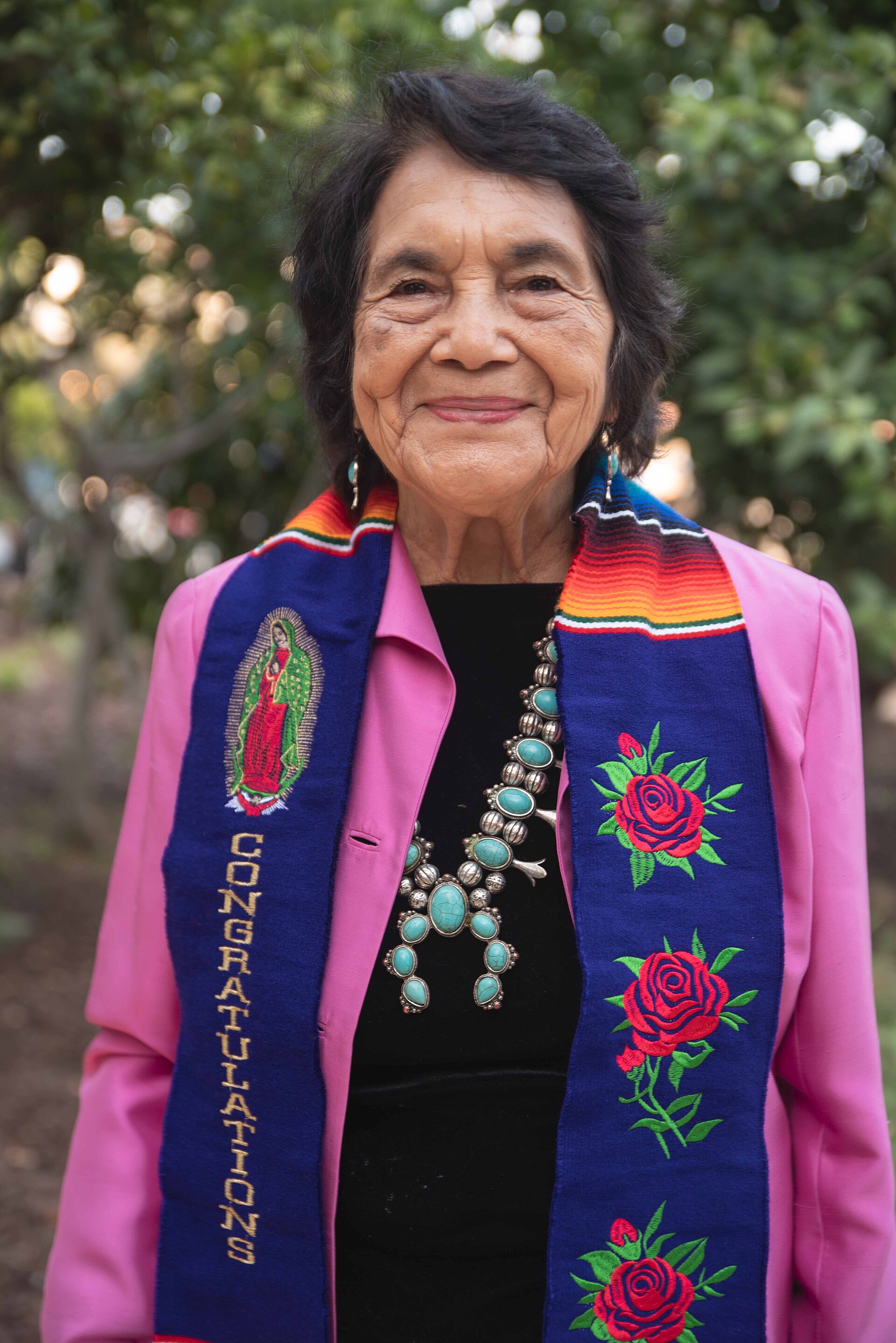
Dolores Huerta dies at 96, and with her passing the United States loses the last of the founders who built its first successful farmworker union out of the grape fields of the San Joaquin Valley. Her family announced her death on Wednesday, October 28, in a statement shared by the Dolores Huerta Foundation. A family spokesman, Erik Olvera, said she died of cancer at her home in Bakersfield, surrounded by family. “We are deeply saddened to announce that our beloved mother, Dolores Huerta, has passed away today,” the family wrote, asking for privacy and promising to follow up with plans to recognize and celebrate her life.
The negotiator behind the movement
Huerta was born on April 10, 1930, in Dawson, New Mexico, the daughter of a coal miner, and grew up in Stockton, California, in the heart of the state’s farm country. She began her working life as a teacher, and it was in the classroom — watching the children of farmworkers arrive hungry and shoeless — that she concluded the parents needed a union more than the children needed another lesson. In 1962 she joined Cesar Chavez and Gilbert Padilla in founding the National Farm Workers Association, the organization that would become the United Farm Workers. Chavez became the movement’s face: the fasting, marching, soft-spoken prophet. Huerta became its engine. For nearly four decades she served as the union’s vice president and chief negotiator, sitting across the table from growers and their lawyers and signing the contracts that, for the first time in American history, gave farmworkers job security, health care, retirement plans, guaranteed rest periods, toilets and clean drinking water in the fields, and protection from pesticides.
Delano, the boycott and a law that changed California
The movement’s defining fight began in 1965, when Filipino grape workers in Delano struck and their leader, Larry Itliong, asked Huerta and Chavez to join them. The Delano grape strike and the national grape boycott that Huerta helped direct lasted five years, turned dinner tables across America into a battleground over labor rights, and ended with the first table-grape contracts in 1970. Five years later the movement won its most durable legal victory: the California Agricultural Labor Relations Act of 1975, the first law in the continental United States to grant farmworkers collective-bargaining rights. None of it came gently. Huerta was arrested 22 times in labor demonstrations, and in one protest she was beaten so badly by a police officer that she was left with broken ribs and a ruptured spleen. She organized anyway — in the San Joaquin and Coachella valleys, in Sacramento’s hearing rooms, and on college campuses she was still visiting in her nineties.
Three words that outgrew the fields
How ‘Sí, se puede’ was born
In 1972, in Arizona, Huerta and Chavez were fighting a state law designed to ban farmworker strikes and boycotts at harvest time. A supporter, hearing her lay out what the union intended to do, told her pityingly that in Arizona “no se puede” — it can’t be done. She shot back: “Sí, se puede.” Yes, it can be done. Repeated to a room of farmworkers that night, the phrase became a chant, then the union’s slogan, then a fixture of American political life. Barack Obama carried its English form — “Yes, we can” — through his 2008 presidential campaign, and when he presented Huerta with the Presidential Medal of Freedom, the nation’s highest civilian honor, at the White House in 2012, he joked that she had been gracious when he told her he had stolen her slogan. On Wednesday, Obama wrote on X that Huerta was “a hero of mine,” adding: “As usual, Dolores got there first.”
Why this matters
Huerta’s death matters far beyond an obituary page, for three reasons. First, she is a reminder that the rights now treated as background conditions of American farm work — a contract, a toilet in the field, a break from the sun, a limit on poison sprayed overhead — were not granted; they were extracted, by a woman whom growers’ lawyers reportedly nicknamed for her refusal to yield. Second, she reshaped who gets to be called a founder. For decades the farmworker movement was told as Chavez’s story, with Huerta as his lieutenant. The record her death now forces newspapers to write is more accurate: he was the symbol, she was the negotiator, and movements run on negotiators. Third, she was still working. Through the Dolores Huerta Foundation, which she founded in Bakersfield in 2002, she trained new organizers, registered voters and marched well into her nineties — and in June her foundation celebrated her 96th birthday with a sold-out event in Los Angeles. As recently as August she told The Associated Press: “It seems like history continues to repeat itself. You see what’s happening right now in our country, and we know that people have to stand up.” The arena has widened since 1962 — California is now fighting over automated management and AI-driven discipline in the workplace as well as over conditions in the fields — but the question she spent her life on is unchanged: who holds power at work, and how the people without it take some back. In the middle of a national fight over immigration enforcement and the treatment of the largely immigrant workforce that harvests America’s food, the woman who organized that workforce’s first union has died still arguing that organizing is the answer.
A final, painful reckoning
Any honest account of Huerta’s life must include the revelation that shook the movement she built, because she insisted on it herself. Earlier this year, Huerta told The New York Times that during a work trip in 1960 Chavez pressured her into having sex with him, and that in 1966, at the height of the grape boycott, he drove her to a secluded grape field in Delano and raped her. She said both encounters resulted in pregnancies, that she arranged for the babies to be raised by others, and that she kept the secret for some sixty years — because, as she explained, of police attitudes toward the movement at the time and because she feared no one in their union would believe her. The Times investigation also reported accounts from other women who said Chavez groomed and abused girls, including minors. Chavez died in 1993 and cannot answer those accounts, which have never been tested in court; they are presented here as Huerta and the other women described them to the Times, and as Reuters and CNN reported her account on Wednesday. “I have kept this secret long enough,” Huerta said when her account was published. “My silence ends here.” That she chose to spend part of her tenth decade forcing her own movement to look at its founder’s conduct — rather than protecting the legend that had also protected her place in history — may in time be remembered as one of the bravest organizing acts of her life.
California lowers its flags
Tributes arrived within hours. Governor Gavin Newsom ordered flags in California flown at half-staff in her honor, and in a joint statement with First Partner Jennifer Siebel Newsom he said Huerta “changed the course of history against all odds” and that “her legacy lies not just in the accomplishments she achieved, but in the people who follow in her footsteps, who take up the mantle and keep creating a better world.” Former House Speaker Nancy Pelosi called her “a dear friend” whose rallying cry “inspired generations of Americans to believe in the power of collective action.” United Farm Workers President Teresa Romero said Huerta “left farm workers and the entire Latino community stronger and more organized than she found it,” and that “the greatest possible tribute to her life is for her work of organizing to continue.” Huerta, a mother of 11, was the first Latina inducted into the National Women’s Hall of Fame, and April 10 — her birthday — is Dolores Huerta Day in California and Washington state.
What happens next
Her family said plans to recognize and celebrate her life will be announced in the coming days; no memorial arrangements had been released on Wednesday night. The larger succession question belongs to the movement. The United Farm Workers she co-founded is a smaller organization than the one that filled America’s streets in 1970, and the farm workforce of 2026 — heavily immigrant, working through record heat, and at the center of the Trump administration’s immigration crackdown, whose mandatory-detention policy is now being litigated before the Supreme Court — faces fights Huerta would have recognized instantly. Her foundation says its work of training community organizers continues. The test of her legacy will not be the flags at half-staff or the tributes from presidents. It will be whether the people now working the rows in Delano, Coachella and Stockton still believe the three words she threw back at a doubter in Arizona more than half a century ago: sí, se puede — it can be done.
Sources: Reporting based on the family’s statement via the Dolores Huerta Foundation; Associated Press, Reuters, CNN, USA Today and Wall Street Journal obituaries published October 28, 2026; the California Governor’s Office statement of October 28, 2026; and The New York Times investigation as reported by Reuters and CNN.