ghost student fraud
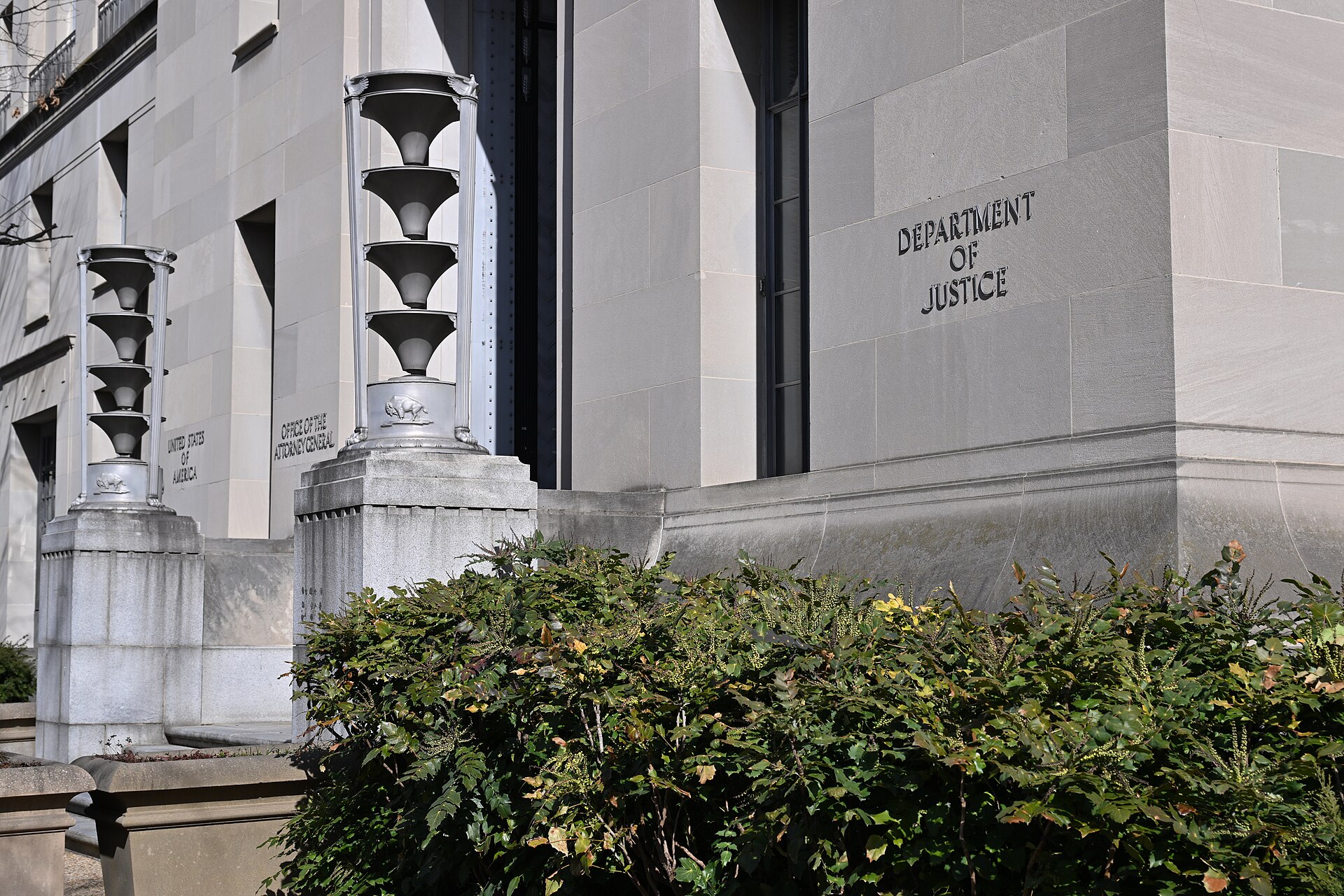
Ghost student fraud moved from a campus bookkeeping problem to a national criminal case on Thursday, October 29, 2026, when the Justice Department unveiled the first indictments of Operation Ghostbusters — a nationwide investigation into what prosecutors describe as a large-scale scheme to steal federal student aid using the stolen identities of U.S. citizens. Five defendants were charged across three federal districts. Investigators seized more than $750,000 in cryptocurrency from an account of a Kenyan national, with help from Kenyan law enforcement — the first international seizure of its kind in the history of the department’s National Fraud Enforcement Division. And in September and October, investigators identified 830,840 potentially fraudulent Federal Student Aid IDs relating to nearly $130 million, and recommended that the Department of Education disable them.
The announcement was made by the Fraud Division together with the U.S. Attorney’s Offices for the Eastern District of Virginia, Nebraska and New Jersey. Prosecutors allege that conspirators created fraudulent Federal Student Aid (FAFSA) accounts using stolen identities, enrolled “ghost students” who never attended classes, and, once loans and grants were disbursed, diverted the refunds to bank accounts controlled by foreign actors — moved with the help of U.S.-based money mules, including Kenyan nationals. An indictment and a criminal complaint are merely allegations, and all five defendants are presumed innocent until proven guilty beyond a reasonable doubt.
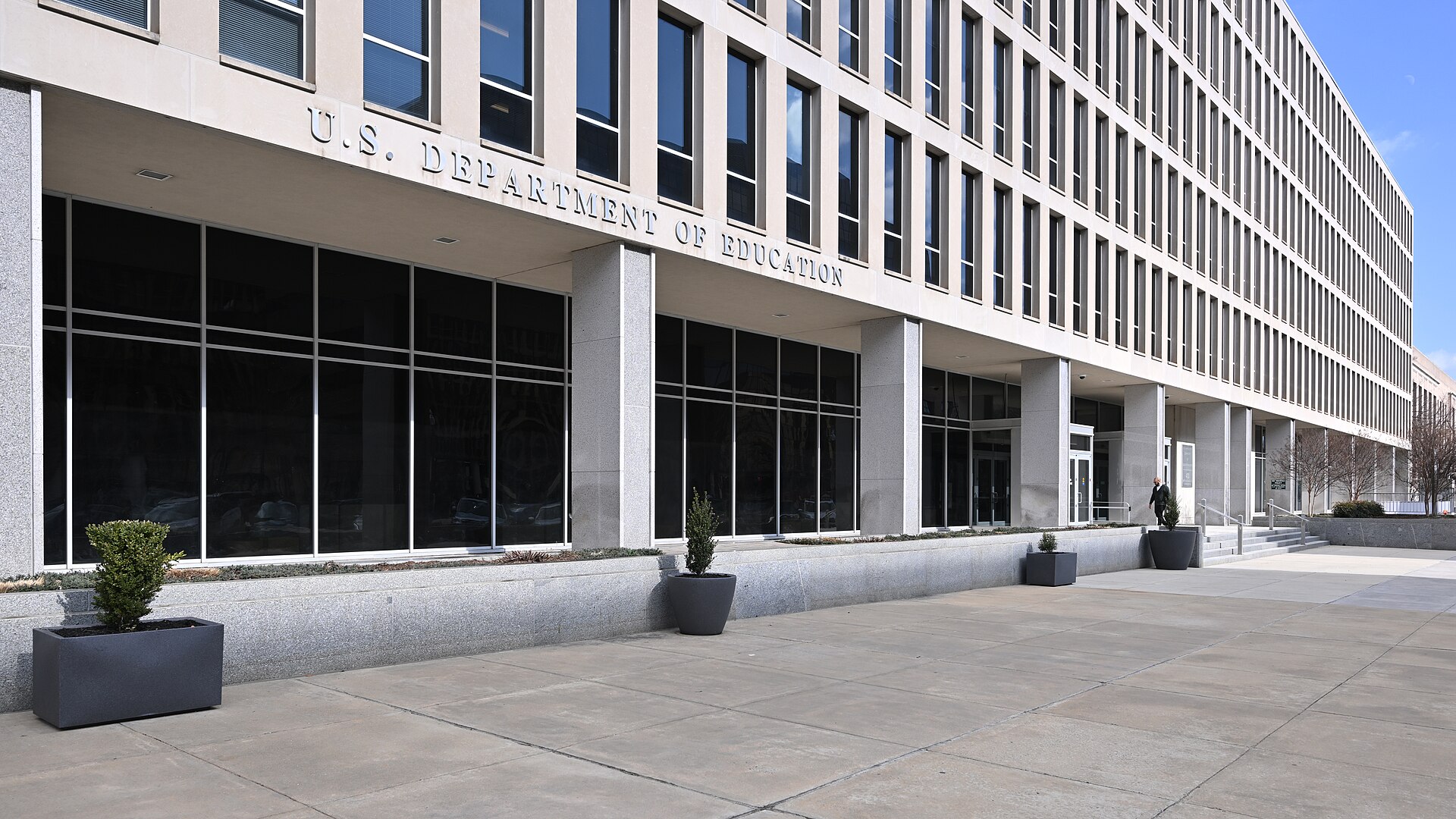
“If you steal American identities, if you steal taxpayer dollars, if you exploit programs meant to help students build a future — we will find you,” said Assistant Attorney General Colin M. McDonald, who heads the National Fraud Enforcement Division created on April 7, 2026. “Whether you are in Nebraska, New Jersey, Virginia, or Nairobi, we will pursue you.” FBI Assistant Director Heith Janke said the perpetrators “used stolen personal data belonging to U.S. citizens to fuel their criminal enterprise.” At the Education Department, Under Secretary Nicholas Kent said the department has saved taxpayers more than $2 billion in attempted student aid theft under President Donald Trump and Secretary Linda McMahon, adding: “Every dollar that falls into the hands of a fraudster is a dollar that will not go to a student in need.”
How a ghost student works
The mechanics, as the Justice Department lays them out, are industrial in their simplicity. Start with a stolen identity — a real American’s name and personal data. Use it to open a Federal Student Aid account and file a FAFSA application. Enroll the invented student at a real college or university. When the aid is disbursed, the school deducts tuition and fees and refunds the balance — and that refund, prosecutors say, was paid into bank and financial accounts opened in names other than the actual applicants, controlled by the network. A U.S.-based money mule takes a cut for receiving and forwarding the money, and the rest moves overseas, in these cases to co-conspirators in Kenya.
Colleges saw the pattern first. Beginning around 2021, community colleges and universities across the United States identified fraudulent FAFSA applications that ended in exactly that kind of mismatched refund, the department said. Community colleges were a natural target: open enrollment, low tuition and large numbers of first-time, online applicants make identity checks harder to run at scale, and a small refund multiplied across thousands of fake enrollments becomes a large theft. The ghost students, by definition, never attend the classes the funds were awarded for.
The twist that kept the money flowing, prosecutors say, is automation. According to the Justice Department, fraudsters used automated and AI-driven tools — the release’s own phrase is “super intelligence” — to place fake students in classrooms and even complete required coursework, so the enrollments looked alive long enough for disbursements to continue. The victims, meanwhile, are often Americans who never attended college at all. Many hold only high school diplomas, and learn they were supposedly “enrolled” at institutions hundreds of miles away only when the paperwork surfaces — a detail that also helps explain why Education Department cross-checks, which look for people enrolled at multiple schools, did not catch the scheme sooner.
An investigation that started in Richmond
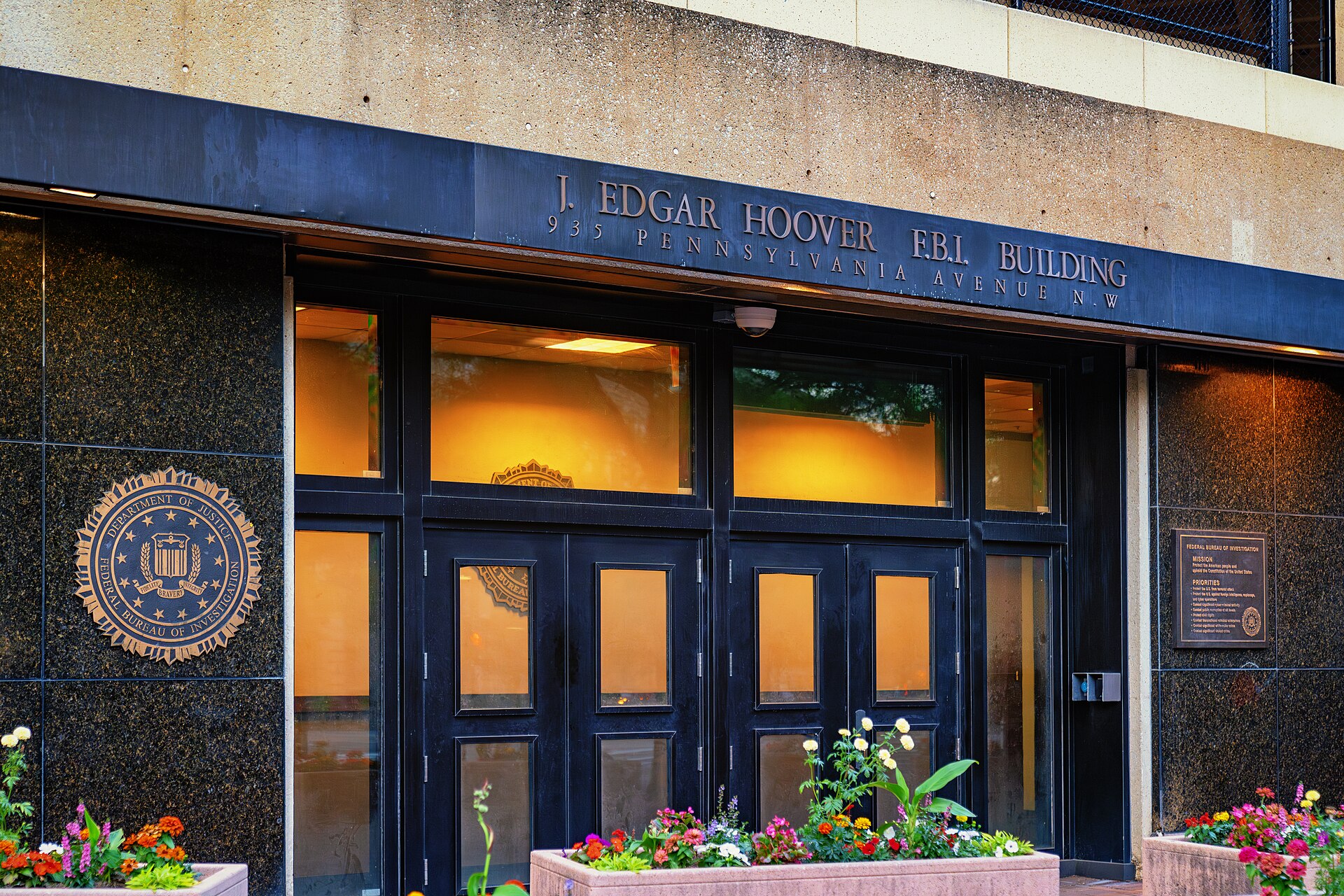
The case began with a referral from the Department of Education’s Office of Inspector General to the FBI’s Richmond Field Office, which opened the probe. First Assistant U.S. Attorney Theophani K. Stamos of the Eastern District of Virginia said the FBI Richmond cyber squad and the Education Department’s inspector general “uncovered hundreds of participants and hundreds of millions of dollars in stolen funds,” sending roughly 50 referrals to 26 FBI field offices — “and we are just getting started,” she added, because “student aid belongs to real students, the data always leaves a trail.” The FBI puts identified losses in similar ghost-student schemes at more than $32 million, with millions more suspected, and total estimates for the wider fraud at well over $200 million since at least 2021. More than 40 cases are now open across 26 FBI field offices and more than 20 U.S. Attorneys’ Offices.
The three cases
New Jersey: the money mules and the safari company
In the District of New Jersey, a criminal complaint (No. 26-16210) charges Mabed Patricia Utate-Alberto, also known as Mabed Alberto Utate, Patricia Arisleydi Perez and George Arturo Alfau Mendez, also known as George Alfau. Prosecutors allege the three conspired from about March 2021 through at least January 2026 with persons in Kenya to obtain more than $1 million in Federal Student Aid funds, against an intended loss of about $1.5 million. They are charged as witting U.S.-based money mules: aid obtained through false FAFSA applications using stolen identities landed in accounts they controlled, they allegedly took a cut, and they transferred the rest overseas to co-conspirators in Kenya associated with a purported Kenyan safari company. All three have been arrested. Two further co-conspirators are in Kenya, and the government says it will seek to charge them. The case is being prosecuted by Assistant U.S. Attorney Francesca Liquori.
Virginia: 700 refund deposits, $1.44 million
In the Eastern District of Virginia, an indictment returned on October 21 and held under seal charges a Kenyan national — unnamed in the Justice Department’s release — with conspiracy to commit wire fraud and student aid fraud. Prosecutors allege he received more than 700 fraudulently obtained federal student aid refund deposits, totaling approximately $1,439,548, into multiple bank accounts, and then moved at least $1.3 million to accounts in the United States and Kenya through thousands of wire and money-service transactions. The case, worth roughly $1.4 million on the indictment’s figures, is being prosecuted by Assistant U.S. Attorney Brian Hood.
Nebraska: Francis Mogambi and the 30 percent cut
In the District of Nebraska, an indictment returned on October 19 (case No. 4:26CR3089) charges Francis Mogambi, a Kenyan citizen, with five counts of theft of government money and five counts of aggravated identity theft — the identity-theft counts alone carry 10 years in mandatory minimum sentences if he is convicted. The intended loss alleged in his individual case is $20,000. Prosecutors allege that from November 2025 through May 2026, Mogambi worked with associates in Kenya to steal U.S. citizens’ identities, fraudulently enroll victims in educational institutions and redirect aid checks to himself, keeping 30 percent and sending the rest to Kenya. Court documents say he tried to recruit another person into the scheme, said he received $2,000 a week, and wanted a business that would let him cash larger checks and not pay taxes. Mogambi arrived in the United States on May 15, 2024, on a Diversity Visa (DV1) and received a Permanent Resident Card shortly afterward. He was arrested promptly after the indictment and is detained pending trial, prosecutors say, because of flight risk and public-threat concerns. The case is being prosecuted by Assistant U.S. Attorney Daniel Packard.
Separately from the three cases, investigators seized more than $750,000 in cryptocurrency from an account of a Kenyan national, working with Kenyan law enforcement. And in September, the Fraud Division and its partners traveled to Kenya to promote extradition, prosecution and the return of stolen assets, meeting counterparts that include Kenya’s Directorate of Criminal Investigations, its Asset Recovery Agency and its Office of the Director of Public Prosecutions, alongside Justice Department Criminal Division offices, the State Department and the department’s Resident Legal Advisor in Nairobi.
Why this matters
Three numbers, three different things
The headline figures in this case are easy to conflate, and they should not be. The 830,840 flagged IDs are potentially fraudulent accounts identified in a two-month sweep — an investigative lead count, not a proven loss. The nearly $130 million is the aid associated with those flagged IDs, not money adjudicated as stolen. The FBI’s more than $32 million is identified losses in similar ghost-student schemes — money investigators say they can already tie to fraud. And the “well over $200 million” figure is an estimate of the wider fraud since at least 2021, built from suspected cases that have not all been charged. Each number answers a different question: how wide the net was cast, how much aid touched the suspect accounts, how much loss is documented, and how big officials believe the whole problem is. Reporting any one of them as “the” size of the fraud would misstate the record.
The real-student risk in a mass disablement
Scale cuts both ways. Recommending that the Education Department disable 830,840 aid IDs is a fraud-control measure aimed at accounts investigators believe are fake — but a sweep of that size carries an obvious risk of catching legitimate students whose records share data points with fraudulent ones: a reused address, a flagged device, a mismatched name. Supporters of the crackdown argue that data-led screening is precisely how industrial-scale aid fraud gets stopped, and that flagged accounts can be reviewed and restored. The caution from past aid-fraud crackdowns is that real students have been swept up before, and that a wrongly disabled aid ID is not an abstraction for the student whose rent and tuition depend on a disbursement arriving on time. How the department sequences the disablements — and how fast wrongly flagged students can prove they are real — will decide whether the sweep reads as precision enforcement or as a second injury.
Identity theft’s second injury
For the identity-theft victims, the harm does not end with a stolen name. A person who never attended college can now carry a fake enrollment history and, potentially, loan records attached to their identity at institutions hundreds of miles away — records that can surface years later in credit checks, tax questions or aid applications of their own. The FBI has sent letters to many identified victims, and the Justice Department directs anyone who suspects their identity was used to the Education Department inspector general’s hotline complaint form. Cleaning up a fabricated student record is slower and less visible work than announcing an indictment, and it is where the victims’ experience of this case will actually be decided.
A showcase case for a brand-new division
The institutional timing is not incidental. The National Fraud Enforcement Division was created on April 7, 2026, and Operation Ghostbusters is its flagship early case, arriving alongside a White House Task Force to Eliminate Fraud chaired by Vice President JD Vance. For the administration, the case demonstrates the argument that fraud in federal benefit programs is industrial in scale and catchable with data. The questions that follow are just as real, and they are asked in good faith on the other side: the charges announced Thursday are allegations, not verdicts; colleges themselves were flagging suspicious FAFSA refunds as early as 2021, which raises the question of why detection took five years to become a national operation; and the gap between the $32 million in identified losses and the $200 million-plus estimate is a measure of how much of the alleged scheme remains unproven. Both readings can be true at once: an enforcement apparatus that finally matched the scale of the fraud, and a system that let it run for half a decade first.
The cross-border turn
The most consequential element may be the one with the smallest dollar figure. Seizing more than $750,000 in cryptocurrency from a Kenyan national’s account, with Kenyan investigators’ help, is described by the department as the first international seizure of its kind in Fraud Division history — proof, if it holds up, that the money trail can be followed into the jurisdiction where prosecutors say it ends. The September trip to Nairobi, and the stated intention to charge two Kenya-based co-conspirators, set up the real test: extradition. Fraud cases built on U.S. money mules are straightforward to prosecute; cases against organizers abroad depend on foreign courts, treaties and politics, and they move at a pace indictments in Virginia do not control.
What happens next
Three court tracks now run in parallel: arraignments and detention proceedings in New Jersey, where the three arrested defendants will answer the complaint; the Virginia case, unsealed from an October 21 indictment; and Mogambi’s trial track in Nebraska, where he is detained pending trial. In Washington, the Education Department must decide what to do with the recommendation to disable 830,840 flagged IDs — how many, how fast, and with what review process for real students caught in the sweep. Abroad, the government says it will seek charges against the two Kenya-based co-conspirators, a step that would test the extradition cooperation discussed in Nairobi in September. And with more than 40 cases still open across 26 FBI field offices, Thursday’s five defendants are unlikely to be the last: every money mule who cooperates, and every seized account that maps another refund chain, points at further indictments. For victims, the practical channel is already open — the FBI’s letters, and the Education Department inspector general’s hotline for anyone who discovers a student record in their name that they never created.
Sources
- U.S. Department of Justice — “Justice Department Unveils Indictments in Nationwide ‘Ghost Student’ Fraud Scam Linked to Kenyan Network,” October 29, 2026
- ABC News — report of the five Operation Ghostbusters charges, October 29, 2026
- BBC News — reporting on the $130 million ghost student scam and the Nebraska indictment of Francis Mogambi, October 2026