The DOJ Minnesota judges recusal fight escalated on Tuesday, October 20, when the Justice Department asked two federal judges in Minnesota to step aside from two separate cases because of what they told The New York Times about the Trump administration’s immigration surge in their state — turning a dispute about judicial speech into a direct challenge over who gets to hear the government’s immigration cases.
Politics / Courts — the government is no longer just complaining about the judges’ interviews; it is asking courts to remove them, case by case
What the Justice Department filed on Tuesday
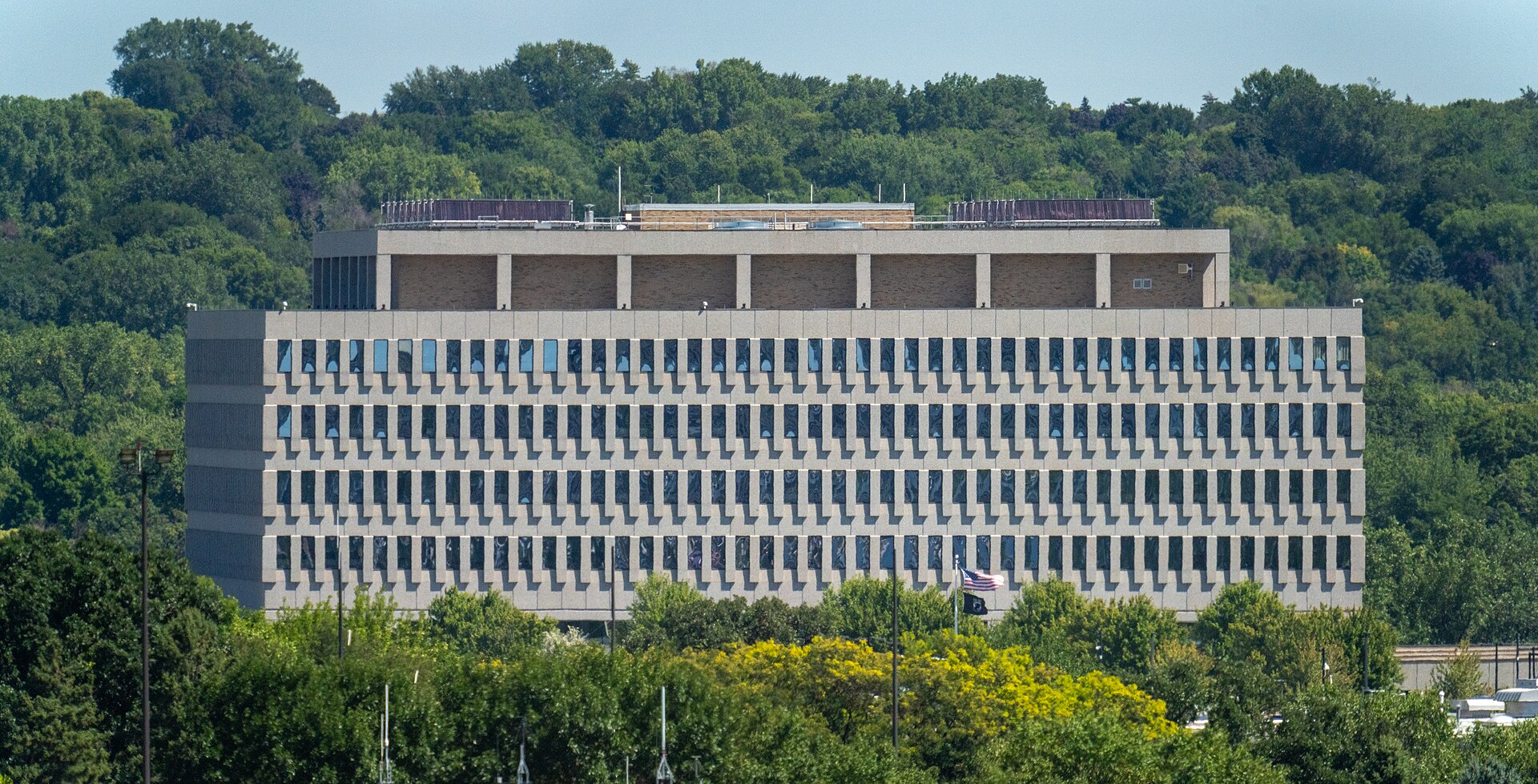
The two motions, filed Tuesday and announced Wednesday in a Justice Department post on X, ask each judge to disqualify himself from a single pending case. “Impartiality is imperative to ensuring public trust in our Nation’s judiciary,” the department said in the post, which carried screenshots of both motions, Bloomberg Law reported. Woodward’s argument, as Reuters summarised it, is that federal law “compels recusal when a judge’s partiality might reasonably be questioned” — and that a judge who has spoken publicly about the enforcement campaign at the centre of these cases has created exactly that reasonable question.
In Schiltz’s case, Woodward cited the judge’s January order and his later Times interview together, arguing Schiltz had engaged in “a partisan critique of the Trump Administration’s immigration enforcement.” The motion asks Schiltz to step aside from a civil case the department filed in May seeking to revoke the U.S. citizenship of Salah Osman Ahmed, who pleaded guilty in 2009 to providing material support to terrorists by supporting the militant group al-Shabaab. “A judge who has publicly taken sides on the political issue of immigration enforcement cannot then preside over a case concerning one of the Justice Department’s key immigration initiatives: pursuing the largest denaturalization effort in Department history to restore trust and integrity in US citizenship,” Woodward wrote, according to Reuters. A hearing on the motion before Schiltz himself is scheduled for November 23. The case is U.S. v. Ahmed, No. 26-cv-02536.
In Tunheim’s case, the motion asks the Clinton appointee to recuse from a criminal prosecution of a South African woman charged with voting illegally and making a false claim of U.S. citizenship in order to vote. Woodward quoted Tunheim’s Times remark about who was being arrested during the surge and answered it directly: “That is not the law (or even about the law),” he wrote. “But the law prohibits voting illegally. It also compels recusal when a judge’s partiality might reasonably be questioned.” That case is U.S. v. Weihmann, No. 26-cr-175. Neither judge can comment on the motions: court spokesperson Rebecca Parks declined to comment because the matters are pending, while noting last month that the court’s position was that the judges had acted “well within the ethical rules that apply to federal judges in speaking to the New York Times,” Reuters reported.

How we got here: a surge, a flooded docket, and an extraordinary interview
Operation Metro Surge, the administration’s immigration enforcement campaign in Minnesota last winter, produced hundreds of arrests and a flood of habeas and detention cases in the District of Minnesota. Schiltz, then the district’s chief judge, issued an order in January taking Immigration and Customs Enforcement to task for violating nearly 100 court orders as his court grappled with petitions from people who said they were unlawfully detained. On September 17, the Times published its account of that winter, quoting Schiltz — an appointee of Republican President George W. Bush — explaining the order and saying what happened in his court “created a grave threat to the rule of law.” Tunheim, an appointee of Democratic President Bill Clinton, questioned in the same article whether the surge had actually targeted dangerous criminals.
The department answered first with process, then with escalation. On September 30 it filed a judicial misconduct complaint with the Eighth Circuit against seven Minnesota judges who had spoken to the Times, asking that Schiltz and Tunheim be ordered off Department of Homeland Security cases altogether. This week’s motions are narrower in form and sharper in effect: rather than waiting for the circuit’s judicial council, the department is asking the two judges, inside two live cases, to remove themselves now. Over the weekend Woodward also moved to disqualify U.S. District Judge Ana Reyes in Washington from a case involving President Trump’s plans for a historic public golf course; Reyes rejected that motion on Sunday and accused the department of weaponising selective quotations, the Associated Press reported — an early sign of how judges may receive this week’s filings.
Why this matters
Recusal is normally a litigant’s safety valve, not a strategy. Any party may ask a judge to step aside, and judges grant such requests quietly every week. Three things make this fight different. First, the movant is the United States, the most frequent litigant in the district, and the ground is not a financial interest or a family tie but the judges’ public description of the government’s own conduct in their courtrooms. If describing an agency’s pattern of violating court orders can disqualify the judge who documented it, the incentive for judges to stay silent about non-compliance grows — and so does the agency’s room to resist orders it dislikes. Second, the department has paired these case-specific motions with a misconduct complaint against seven judges at once, close to the district’s entire active bench; a review of federal court records cited this month found at least 50 DHS-related cases pending before the judges named in the Times story, so broad recusals would reshuffle a large share of Minnesota’s immigration docket at a stroke. Third, the two test cases are not random: a denaturalization the department itself calls part of the largest such effort in its history, and a noncitizen-voting prosecution of the kind the administration has made a centrepiece of its election-integrity agenda. Winning recusal in either would hand the department a precedent usable in the others.
The counter-argument deserves equal weight. The appearance standard the department invokes is real law, not invention: a judge’s impartiality is judged by what a reasonable observer might question, not by proof of actual bias, and judges are bound by ethics rules against public comment on pending matters and against conduct that undermines confidence in the judiciary. The judges spoke, on the record, about a politically charged enforcement campaign while related litigation sat on their dockets, and the defendants in the Ahmed and Weihmann cases — whatever one thinks of the charges — are entitled to a judge no reasonable observer would suspect of having pre-judged the government’s credibility. The court’s answer so far is procedural and institutional: the judges declined to discuss pending cases, and the district’s stated position is that the interviews stayed within the ethics rules, which permit judges to speak about the law, the legal system and the administration of justice. Legal-ethics supporters of the judges, including the advocacy group Justice Connection, have called the department’s campaign a stunt that punishes judges for unfavourable rulings; the department replies that it seeks only what every litigant is owed — a fair and impartial judge. Both claims can be partly true, and the November hearing is where they collide.

What the numbers say
The scale is best read in the department’s own sequence: one January order documenting nearly 100 violated court orders; one September newspaper article; one misconduct complaint naming seven judges; and now two motions in two cases, filed by the department’s No. 3 official rather than by line prosecutors in the district — a signature that signals this is department policy, not local litigation tactics. Set against history, the move is rare: departments of both parties have sought individual recusals for cause, but a coordinated campaign to remove much of a district bench from an entire category of cases has few modern parallels, which is precisely why the judges’ defenders call it intimidation and why the department insists it is merely enforcing the appearance standard Congress wrote. The practical arithmetic matters too: every granted recusal reassigns a case, delays it, and — because the pool of Minnesota judges who did not speak to the Times is small — concentrates the immigration docket on fewer shoulders, including judges appointed by the same president whose enforcement is being challenged.
What happens next
Schiltz has set November 23 for a hearing on the motion against himself, and the first ruling in this fight will therefore come from one of its targets — the normal, if awkward, practice for recusal motions. Tunheim’s motion awaits his response in the Weihmann prosecution. Three scenarios follow. If either judge recuses, the department gains a template and can be expected to file similar motions across the surge-related docket, citing consistency. If both refuse, the department can seek review, and the fight merges with the Eighth Circuit misconduct process, where Chief Judge Steven Colloton’s handling of the September complaint becomes the real arena. The third scenario is the quietest and perhaps most likely in part: individual judges recuse in individual cases without conceding the principle, draining the confrontation of a single decisive moment while still changing who hears Minnesota’s immigration cases. What is already decided is the precedent of the attempt itself: the next judge, in the next district, weighing whether to describe publicly what an enforcement surge did to their court will know exactly what the description can cost.
Related coverage: U.S. states prepare for a surge of Justice Department election monitors · Somali deportation orders surge in Minnesota · Supreme Court weighs federal prison rules for transgender inmates
Reporting basis: The motions, quotations, case names and numbers, the November 23 hearing date and the court’s response are attributed to Reuters (October 21), Bloomberg Law (October 21) and the Associated Press reporting carried October 21; the September misconduct complaint and its background are attributed to the cited September–October coverage. The department’s characterisations of the judges’ remarks are its own and are presented as such; no judge has commented on the pending motions. Analysis distinguishes the filed motions from the unresolved ethics complaint.