DeepSeek $15 billion funding round — the Chinese AI lab is wrapping up a raise of about 100 billion yuan ($14.98 billion), double its original target, with battery giant CATL and WeChat owner Tencent among the biggest backers, as it prepares for a possible Shanghai STAR Market IPO.
Technology / Artificial Intelligence — a lab famous for doing more with less is about to have more: roughly $15 billion of it, raised in days, two days after Washington ordered its technology off federal systems
What has been reported — and what has not been confirmed
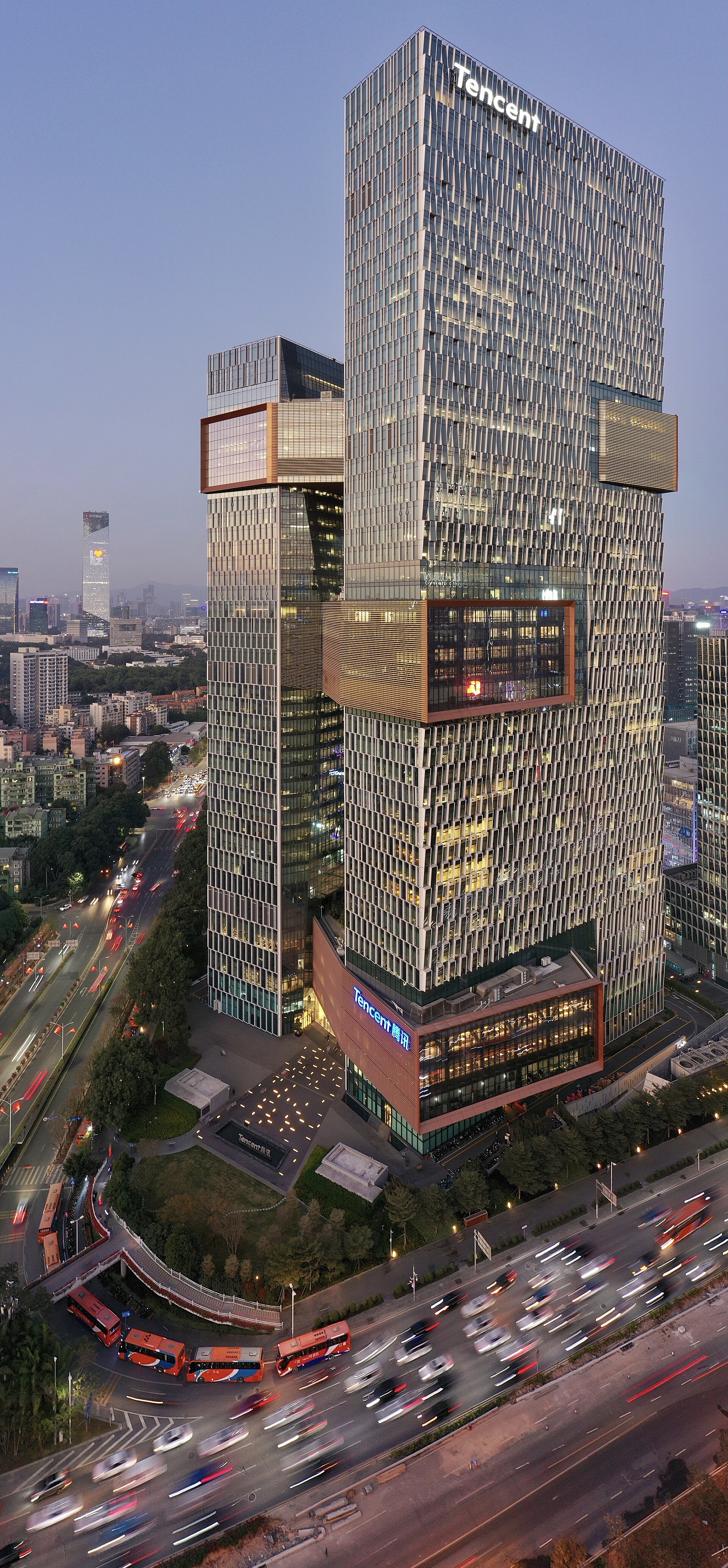
Start with what the reporting actually says, because the details matter and some of them are still moving. Reuters reported on Thursday that DeepSeek is "wrapping up" the round, having generated about 100 billion yuan ($14.98 billion) from existing and new investors, citing four people familiar with the matter. CATL — Contemporary Amperex Technology, the world's largest EV battery maker — and Tencent were among the biggest investors, according to two of the sources. The new names in this round, per three of the sources, read like a cross-section of industrial China: home-appliance maker Midea, food-delivery giant Meituan, automaker Geely and semiconductor maker GigaDevice, alongside Boyu Capital, CPE and Legend Capital, and existing shareholder IDG Capital. More than 15 investors took part in total. Bloomberg, which reported the raise first, described a target that kept growing as the talks went on: 50 billion yuan at the outset, then 80 billion, then the final tally of about 100 billion.
Two caveats belong in the lead, not the footnotes. First, the round has not formally closed: Reuters' sources said the fundraising is set to complete in the coming days, and that the financial details and the investor lineup are "not ironclad and could still change." Second, nobody involved is talking on the record. DeepSeek, CATL and Tencent could not be reached for comment by Reuters, and the other named firms did not respond. So this is a reported round, sourced to people familiar with confidential negotiations — the same basis on which most large private financings are first reported, but a reported round all the same. What gives it weight is the convergence: Bloomberg reported the headline figure independently, Reuters added the investor list and the valuation, TechCrunch and PYMNTS carried the story with additional detail from the Wall Street Journal's reporting, and Forbes has already updated founder Liang Wenfeng's profile to reflect a $14.9 billion raise at a $74.7 billion valuation.
The numbers, in context
Put the figures against the company's own short history and they are startling. DeepSeek was founded in July 2023, spun out of Liang Wenfeng's quantitative hedge fund High-Flyer, and for most of its life it took no outside money at all — Liang funded it from trading profits. Its first external round closed only this year, raising more than $7 billion at a valuation of about $50 billion. In July it was reportedly seeking a further $1.5 billion at around $71 billion. Now, three months later, it is raising roughly twice that earlier round's size in a single go, at a pre-money valuation of about 500 billion yuan — call it $74 to $75 billion. In other words, a company that did not take venture money until 2026 has, inside a single year, gone from self-funded to a valuation in the neighbourhood of a mid-sized public technology company, without selling a single public share.
Against the American frontier labs, the gap is still enormous — and narrowing is not the same as closed. OpenAI and Anthropic have each raised more than $100 billion in total. DeepSeek's cumulative outside capital, even after this round, will be on the order of $22 billion. The difference is the model of spending it has proven so far: this is the lab whose January 2025 R1 release — a reasoning model competitive with OpenAI's best, released as open weights — briefly made it the most downloaded free app in the United States and knocked 18 percent off Nvidia's share price in a single day, as markets repriced the assumption that frontier AI required frontier-sized budgets. The roughly $1 trillion global selloff that followed is the reason the name DeepSeek moves markets at all. The $15 billion question is whether a lab whose entire advantage was efficiency can keep that advantage once it has the money to stop being efficient.
Why this matters
The round matters for three distinct reasons, and only one of them is the money. The first is industrial. Look at who is writing the cheques: not the usual venture syndicate, but China's battery champion, its largest carmaker-by-ambition, its biggest appliance maker, its dominant food-delivery platform and a domestic chip designer. That is not a bet on a chatbot. That is Chinese industry buying itself a seat inside the country's flagship AI lab — the corporate equivalent of a national consortium, assembled privately. When Midea and Geely invest in DeepSeek, they are also buying proximity to the models that will run their factories, cars and appliances. The second reason is geopolitical, and the timing is almost too neat: TechCrunch noted the raise came just two days after the US government ordered federal civilian agencies to strip DeepSeek technology from their systems on security grounds. Washington's position is that the lab is a risk to be removed; Beijing's corporate establishment just answered with $15 billion. Each side is now funding its position.
The third reason is the IPO. Reuters reported in September that DeepSeek had hired CITIC Securities to prepare for a potential listing on Shanghai's STAR Market, China's Nasdaq-style board for technology companies. PYMNTS, citing the Wall Street Journal, reported the company is accelerating plans for a Shanghai listing in early 2027 — which could put DeepSeek on public markets before OpenAI. A $15 billion private round at a $75 billion valuation reads, in that light, less like a fundraising and more like a price-setting exercise: it establishes the number the IPO will be marketed against, broadens the shareholder base to include the bluest of Chinese blue chips, and gives the company a war chest that makes the listing a choice rather than a necessity. Companies that need money go public carefully. Companies that have just raised $15 billion go public when they feel like it.
The sceptics' case, stated fairly
None of this is uncontested, and the counter-arguments deserve the same space as the headline. The valuation rests on revenue that is real but modest next to the number: the Wall Street Journal reported that Liang told investors in September that DeepSeek's annualised revenue run rate had reached $1 billion, up from $400–500 million in July, driven by paid access to its models through APIs. Annualised run rate is not annual revenue, and neither is profit — particularly for a company about to spend heavily on computing infrastructure. PYMNTS noted the company claims gross margins of 70 to 80 percent on access to its V4 flagship model despite charging less than US rivals, and that it introduced peak-hour pricing in August that raised flagship prices roughly fourfold. Those are the economics of a real business, but a $75 billion valuation on a $1 billion run rate is a price-to-sales multiple of about 75 — defensible only if the growth curve stays near-vertical.
There is also the chip problem, which no amount of yuan fully solves. DeepSeek's models run under US export controls that restrict access to the most advanced Nvidia silicon; the company's efficiency was partly a response to that constraint. CNBC reported earlier this month that talks around this round were briefly complicated after Liang told a private investor meeting that Chinese AI companies still lagged far behind their US counterparts and relied heavily on Nvidia chips — a strikingly candid assessment from the man now raising $15 billion on the premise of closing that gap. And the competitive field at home is not standing still: Moonshot AI, maker of Kimi, raised $2 billion at a $20 billion valuation in May; Manus raised more than $500 million this month; Zhipu AI and MiniMax, which listed in Hong Kong in January, carry market capitalisations of roughly $29 billion and $7.2 billion. DeepSeek is the clear leader of that pack — and the pack is why it cannot coast.
What the money is likely to buy
DeepSeek's spending plans are not hard to sketch from its recent behaviour. Last month it released DeepSeek-V4.1-Flash, a model it said was built for greater capability, faster inference and higher throughput — the unglamorous engineering of serving models cheaply at scale, which is where its margins live. The reported round doubles down on the two things efficiency alone cannot provide indefinitely: compute and time. Compute, because training runs at the frontier keep getting larger and because building on domestic Chinese hardware — the direction of travel under export controls — requires patient capital to absorb lower yields and slower chips. Time, because an IPO in early 2027 plus a $15 billion cushion means DeepSeek can keep releasing open-weight models at disruptive prices for years without needing the revenue to cover the burn. Its rivals in the United States should read the investor list as carefully as the total: when the Chinese state-adjacent industrial establishment decides a lab is strategic, the lab does not run out of money. That is a different kind of competition from the one Silicon Valley is used to, where the constraint is a venture market that can turn.
What happens next
Three things to watch. First, the close: the round is expected to complete within days, and any shift in the final investor lineup or the headline figure will say something about how firm the demand really was. Second, the STAR Market filing: if the CITIC-advised listing proceeds toward early 2027, DeepSeek's prospectus will do what no press report can — put audited revenue, margins and chip inventories on the record, and settle the argument between the $75 billion valuation and the sceptics with actual numbers. Third, the American response: the federal removal order was aimed at government systems, but the logic behind it — that a Chinese frontier lab's models are a security surface — does not stop at the government's door, and every expansion of DeepSeek's reach, now funded at this scale, will sharpen the debate in Washington about whether open-weight models can be controlled at all. Readers following the wider contest can catch up on the Nvidia-backed American open-weight challenger built to answer DeepSeek, Tencent's own multibillion-dollar borrowing to fund its AI spending, and the shifting chip map inside China that DeepSeek's next models will be trained on. A lab that started 2023 as a hedge fund's side project is now, by reported valuation, one of the most valuable private technology companies on earth. The $15 billion does not prove the valuation right. It proves that China's industrial establishment intends to find out — with its own money, at its own scale, on its own exchange.
Sources: Reuters, "DeepSeek wrapping up $15 billion fundraising to fuel AI race" (Kane Wu, Hong Kong, October 22, 2026 — round size, investor list, 500 billion yuan pre-money valuation, CITIC Securities / STAR Market preparation, V4.1-Flash, no-comment responses); Bloomberg, "China's DeepSeek raises $15 billion to challenge top US AI labs" (October 22, 2026, via The Hindu BusinessLine — the $15 billion figure, the 50→80→100 billion yuan target path, CATL and Tencent as main backers); TechCrunch, "DeepSeek reportedly raises $15B days after US restrictions" (October 22, 2026 — the US federal civilian agency removal order two days earlier, the June round of more than $7 billion at a $50 billion valuation, Moonshot / Manus / Zhipu / MiniMax comparisons); PYMNTS, "DeepSeek raises $15 billion ahead of planned Shanghai IPO" (October 22, 2026, citing the Wall Street Journal — early-2027 listing plan, $1 billion annualised revenue run rate, V4 gross margins and peak-hour pricing); CNBC reporting on the round's earlier stages (October 6, 2026, as summarised in subsequent coverage — Liang Wenfeng's remarks on the US gap and Nvidia reliance). Funding figures are as reported by the cited outlets from confidential sources; the round had not formally closed and no named company had commented on the record at publication time.