Daniel Boulud new restaurant NYC
TopicsDaniel Boulud new restaurant NYCBrasserie Boulud Lincoln Center openingDaniel Boulud restaurants New YorkBar Boulud closedbest French restaurants NYC 2026Lincoln Center pre-theater diningFrench brasserie New York
NEW YORK — The Daniel Boulud new restaurant NYC diners have watched take shape for more than a year now has a firm date. Brasserie Boulud is scheduled to open October 8 at 1900 Broadway, at West 64th Street and directly across from Lincoln Center. Reservations became available October 2 through the restaurant's official website, ending a long period in which earlier previews had floated September dates that passed while the project was still being finished.
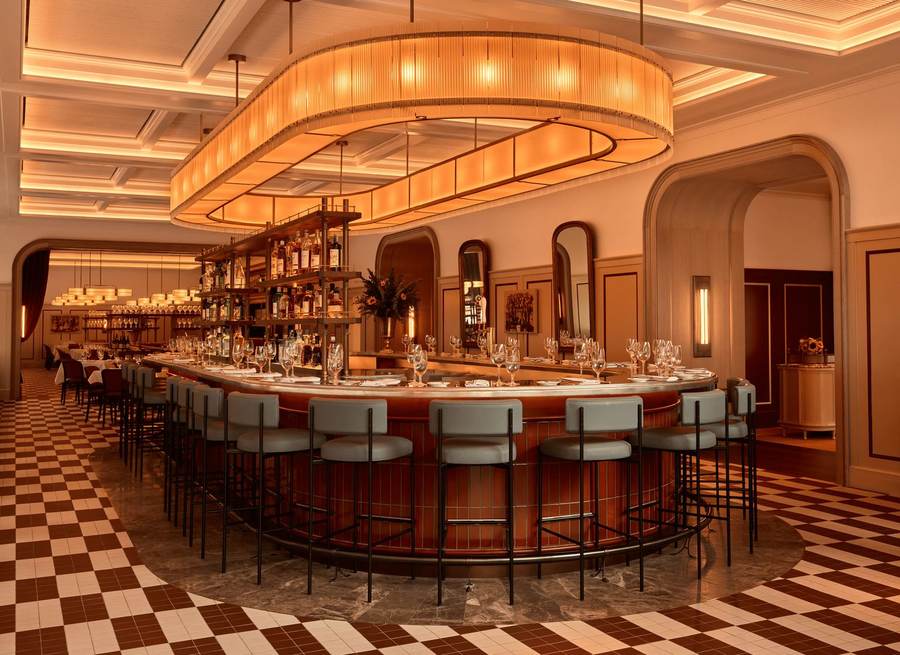
The opening is larger than a routine chef expansion. Boulud closed three neighboring Upper West Side businesses — Bar Boulud, Boulud Sud and an Épicerie Boulud — and rebuilt their combined footprint as a single restaurant of more than 10,000 square feet across two floors. Rockwell Group designed an airy main room around an oval bar and theatrical lighting; the reported 320-seat capacity spans indoor and outdoor service, with private rooms and a speakeasy folded into the operation.
That scale gives Brasserie Boulud a clear thesis: the grand French brasserie can still work in New York if it is useful all day, broad enough for different occasions and disciplined enough to move hundreds of guests through narrow pre-curtain windows. The bet is not only on Boulud's name. It is on a form of restaurant that serves breakfast, lunch, dinner and late cocktails while carrying enough culinary range to satisfy a quick café customer, a family celebrating before the ballet and a serious wine drinker at the bar.
Why this matters: a consolidation designed as an expansion
Closing three restaurants to open one sounds, at first, like contraction. In operational terms, it is consolidation: one kitchen leadership structure, one reservation system, one major bar, one roster of managers and one identity instead of three concepts competing for attention on the same block. In commercial terms, however, Boulud is trying to turn that consolidation into an expansion of relevance.
Bar Boulud built a durable following around charcuterie, wine and French bistro cooking. Boulud Sud broadened the palette toward the Mediterranean. Épicerie Boulud supplied coffee, pastries, takeout and the low-friction rhythm of a market-café. Brasserie Boulud does not simply erase those roles. Its menu and service day are designed to absorb them, then add a larger-room energy that the separate operations could not create on their own.
The strategy answers several pressures at once. Restaurant labor is expensive, Manhattan rents punish underused hours and customers increasingly divide their spending between casual frequency and occasional splurges. A large all-day room can use the same address for more dayparts. A guest who enters for morning coffee might return for a pre-theater prix fixe; a regular who once used Bar Boulud for wine can now bring a larger party; a visitor who knows Boulud's fine-dining reputation can choose a less ceremonial experience.
It also concentrates risk. A 10,000-square-foot restaurant with about 320 seats needs sustained demand, not merely an opening-month rush. The same scale that allows easier reservations and different price points creates a heavier payroll, more inventory and more empty chairs if the calendar turns soft. Boulud is replacing the resilience of three distinct identities with the efficiency — and exposure — of one flagship.
From Lyon to Lincoln Square: the history behind the format
Boulud was raised near Lyon, a city whose restaurant culture makes the distinction between café, bistro, bouchon and brasserie meaningful rather than decorative. He described a brasserie in a recent preview as the “grand restaurant of everyday life”: lively and generous, open from morning until late, with seasonal standards, seafood, regional traditions and the polish of grande cuisine. That definition explains why the new room is more ambitious than a revival of Bar Boulud.
For nearly two decades, the Broadway block served as Boulud's Upper West Side laboratory. Bar Boulud opened opposite Lincoln Center in 2008 and became closely associated with charcuterie and a Burgundy-and-Rhône-minded wine program. Boulud Sud arrived next door in 2011 with cooking oriented around the Mediterranean. Épicerie Boulud supplied the connective tissue of bread, coffee and prepared food. The trio let one restaurant group serve multiple moods without forcing one menu to do everything.
The new model reverses that logic. Instead of separating occasions by storefront, Brasserie Boulud divides them inside a larger building: dining room, bar, terrace, private spaces, café function and late-night speakeasy. It asks design and hospitality to make one address feel flexible without becoming generic.
The timing reflects a wider 2026 New York brasserie wave. High-profile openings and announced projects from Daniel Humm, Thomas Straker and others are leaning toward rooms where recognizable cooking, generous service and social energy matter as much as tasting-menu novelty. Café Charmant, Faux and the return of established French names such as Cognac add to the sense that the city is rediscovering formats built around repeat use, not just destination status.
That does not make the economics easy. The modern brasserie has to deliver the appearance of ease while managing a complex back end: breakfast mise en place, lunch pacing, a concentrated pre-theater surge, dinner turnover, a deep beverage program and late-night service. The form looks traditional. The operating challenge is intensely contemporary.
What is on the menu
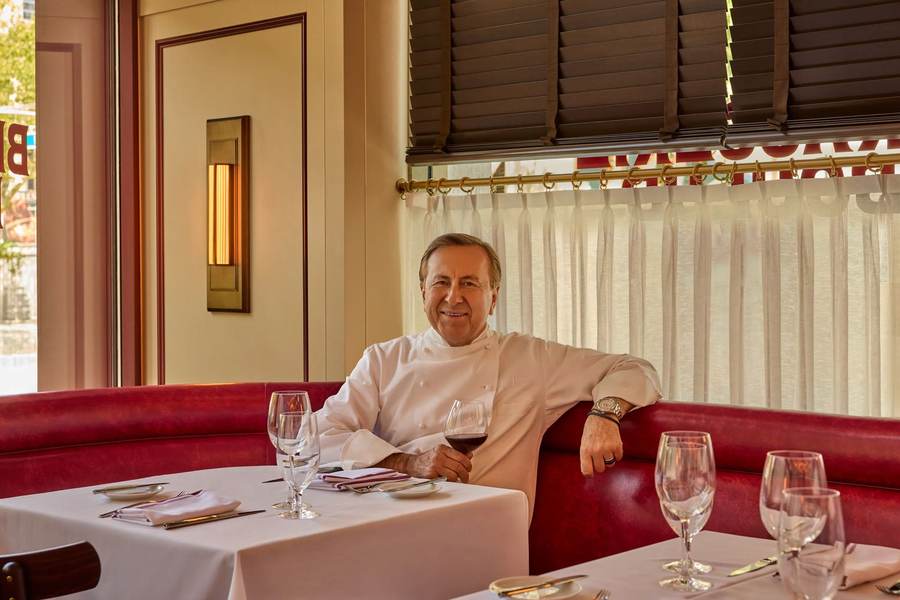
Executive chef Cristina D'Angelo, who previously led the kitchen at Boulud Sud and cooked at Le Gratin while the new project was under construction, is positioned to provide continuity rather than stage a clean break. Published previews describe a menu that draws from all three closed concepts while grounding itself in French brasserie standards.
Returning favorites reported before the opening include Bar Boulud-style charcuterie, coq au vin, chicken tagine, merguez sausage, saffron spaghetti and the grapefruit givré dessert. The DB Burger — famously stuffed with foie gras in earlier incarnations — is also expected in the larger Boulud repertoire. A new timbale of homard à l'Américaine signals that the kitchen intends to pursue more composed, celebratory dishes alongside familiar staples.
The brasserie core is direct: steak frites, onion soup, escargots, blanquette de veau, seafood platters and an extensive charcuterie offering. Those dishes are not novel by design. Their value depends on execution and consistency. In a room of this size, the culinary test will be whether fries arrive hot at the end of a rush, shellfish remains precise through a packed service and braises taste as considered at 10 p.m. as they do at the start of dinner.
What to order first
For a first visit, the most revealing path is to test both inheritance and reinvention. Begin with charcuterie, the signature most closely connected to Bar Boulud; add seafood or escargots to see how the new brasserie handles its classical brief. Choose coq au vin, blanquette de veau or steak frites for the execution test. If the timbale of lobster is available, it is the clearest statement of the opening kitchen's ambition. Finish with grapefruit givré for continuity with Boulud Sud.
The beverage program deserves equal attention. Head sommelier Josh MacGregor is expected to continue the group's emphasis on French regions, with particular attention to Beaujolais and by-the-glass pours from large-format bottles. Magnums and larger bottles are not just visual theater: they allow a sommelier team to offer mature or unusual wine in individual pours when volume is high enough to sell through the bottle before quality declines.
The Lincoln Center advantage — and the pre-theater trap
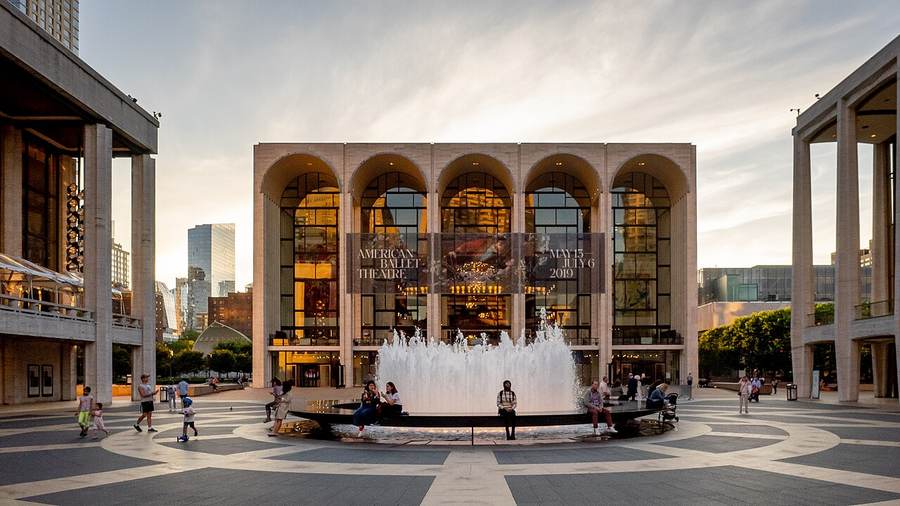
Location is one of Brasserie Boulud's strongest assets. Lincoln Center is a 16.3-acre performing-arts complex whose institutions include the Metropolitan Opera, New York Philharmonic, New York City Ballet and Juilliard. A reported five million visitors pass through the campus in a typical year. Even a small fraction seeking meals before or after performances can support a substantial restaurant ecosystem.
But performance traffic arrives in waves. Hundreds of diners may need to be seated, served and paid within a compressed window before a 7:30 or 8 p.m. curtain. The restaurant cannot solve that problem by cooking faster alone. Reservations must be staggered, servers must understand each table's deadline, menus must identify dishes that fit the available time and the kitchen must prevent one complex order from slowing an entire section.
A prix fixe pre-theater menu is in development, according to previews, but final terms had not been published by October 2. If designed well, it will serve both guest and restaurant: diners gain clarity on timing and cost, while the kitchen gains a predictable order mix. If designed poorly, it becomes a discount expectation that compresses margins during the busiest hours.
Late-night service could be the more interesting test. Lincoln Center's audiences often exit around 10 or 10:30 p.m., precisely when many neighborhood kitchens are winding down. The integrated speakeasy and late-cocktail plan give Brasserie Boulud a chance to capture the after-performance crowd without requiring every guest to order a full meal. That broadens the economics beyond the pre-curtain rush.
The numbers in context
More than 10,000 square feet places Brasserie Boulud in the category of major hospitality operations rather than neighborhood bistros. The reported 320 seats translate to roughly 31 square feet of total footprint per seat before accounting for kitchens, storage, private rooms, circulation and the speakeasy. That is not a measure of dining-room spaciousness by itself, but it shows how aggressively the property must be programmed to accommodate multiple uses.
At full capacity, a single dinner turn would mean 320 guests; two turns would mean 640. If even half the seats turned twice on a busy performance night, the operation would handle 480 covers before counting breakfast, lunch, bar and late-night business. Those are scenarios, not published forecasts, but they illustrate why kitchen systems and reservation pacing matter as much as décor.
Scale can also widen access. A 320-seat room should make it easier to secure a table than at a 30-seat counter, even when demand is strong. Yet the most desirable pre-theater slots may remain scarce because every audience shares the same deadline. Reservations opening on October 2, six days before the announced opening, create an initial compression: local regulars, destination diners and performance-goers are all shopping from a limited first release.
Competition is not limited to nearby French restaurants. New York's fall opening class includes ambitious beverage destinations such as Amphora, reported to be building a 2,500-label wine list. Brasserie Boulud's answer is not necessarily the longest list. Its advantage is curation, glass-pour theater and a service team expected to translate French wine for both experts and occasional drinkers.
Winners, losers and the critical questions
Who stands to win
Lincoln Center patrons gain a high-capacity option designed around their schedule rather than merely located near it. Neighborhood diners gain one venue capable of moving from coffee to formal dinner. Boulud's organization can use a single flagship to showcase chefs, sommeliers and managers while simplifying the public story of its Upper West Side presence.
Staff can also benefit from a larger operation with more service periods and clearer paths between café, dining-room, events and beverage roles. That opportunity depends on scheduling quality and workplace culture; an all-day restaurant can provide more hours, but it can also create exhausting transitions if staffing is thin.
Who bears the downside
Regulars who valued the distinct personality of Bar Boulud or the Mediterranean focus of Boulud Sud lose a dedicated room and menu. Smaller competitors near Lincoln Center face a well-capitalized rival with brand recognition and enough seats to absorb large groups. The project also raises the stakes for Boulud's team: service failures in one consolidated flagship can damage three legacies at once.
What critics will watch
The central critique is that consolidation can flatten identity. A menu trying to preserve charcuterie, Mediterranean dishes, café habits and brasserie classics may feel generous — or unfocused. Reviewers will test whether the concept has a coherent center beyond Boulud's name. They will also assess noise, comfort, pacing and whether the speakeasy feels integrated or simply appended as a trend-driven amenity.
Price will be another dividing line. The restaurant had not posted a complete opening menu with confirmed prices as of October 2, so precise checks or prix fixe costs would be speculation. The setting, chef, service model and predecessor restaurants indicate premium full-service pricing rather than a low-cost bistro. Diners should verify current menu prices when booking and budget separately for wine, tax and gratuity. The planned pre-theater format may offer more predictable spending, but its price and courses remained to be announced.
What happens next: four scenarios
1. The neighborhood flagship works
In the strongest scenario, Brasserie Boulud becomes an all-day institution rather than an opening-season event. Breakfast and lunch build neighborhood frequency, performance nights keep dinner full, the bar creates spontaneous traffic and late cocktails extend revenue beyond the curtain. The separate identities of the former trio survive as recognizable threads within a coherent brasserie menu.
2. It succeeds mainly as a pre-theater machine
A narrower success is still plausible: the restaurant fills before performances but struggles during ordinary afternoons, dark nights and late hours. That outcome would validate the location while challenging the all-day promise. Management might respond with sharper lunch value, neighborhood promotions, more events or a stronger distinction between café, dining and speakeasy programming.
3. Scale exposes inconsistency
The risk scenario is not lack of interest but uneven execution. A room can be fully booked and still disappoint if waits lengthen, hot food cools or guests miss curtain time. Opening-week reviews will matter, but the more useful test comes after the first surge, when systems either settle or fatigue becomes visible. Consistency, Boulud has argued in other contexts, is more difficult than novelty; this restaurant will make that principle measurable every night.
4. The model influences New York's next cycle
If Brasserie Boulud proves that a large, polished, all-day French restaurant can thrive without becoming either a tasting-menu temple or a casual chain, other operators will study the mix. The lesson would not be to copy steak frites. It would be to combine recognizable food, flexible rooms, serious beverage service and a location with recurring cultural traffic.
The bottom line
Brasserie Boulud is a major opening because it compresses a long New York restaurant history into one bet. Three familiar Upper West Side concepts are gone. In their place is a room that asks classic French cooking, contemporary design and Lincoln Center's calendar to reinforce one another from morning until late.
The physical facts are impressive: more than 10,000 square feet, two floors, a reported 320 seats, an oval bar, private dining and a speakeasy. The deeper question is cultural and operational. Can one large restaurant feel like the “grand restaurant of everyday life” rather than a flagship that only works on special occasions?
The answer will not come from opening-night glamour. It will come from a Tuesday breakfast, a rushed Saturday before the opera, a quiet lunch, a sommelier's well-judged glass and a late table after the ballet. If those experiences feel connected, Boulud will have done more than combine three addresses. He will have given the New York brasserie a convincing new scale.
Sources
- Brasserie Boulud official site: address, reservations, service concept and contact details
- Food & Wine: Fall 2026 restaurant-opening preview
- Hamptons Real Estate Showcase: Boulud's brasserie definition, chef leadership and menu preview
- Haute Living: New York's fall 2026 opening class
- Pearl: Lincoln Center location and reported 320-seat capacity
- Wisevoter: October 8 opening date and October 2 reservation release