US · Colorado · Chaffee County
US — Two Colorado Mountain College students who set out for Ice Mountain with a map, a plan and the right gear were found dead Wednesday in a basin of West Apostle Mountain, after a days-long search through the season’s first big snow. The sheriff who ran the search says they had done almost everything right.
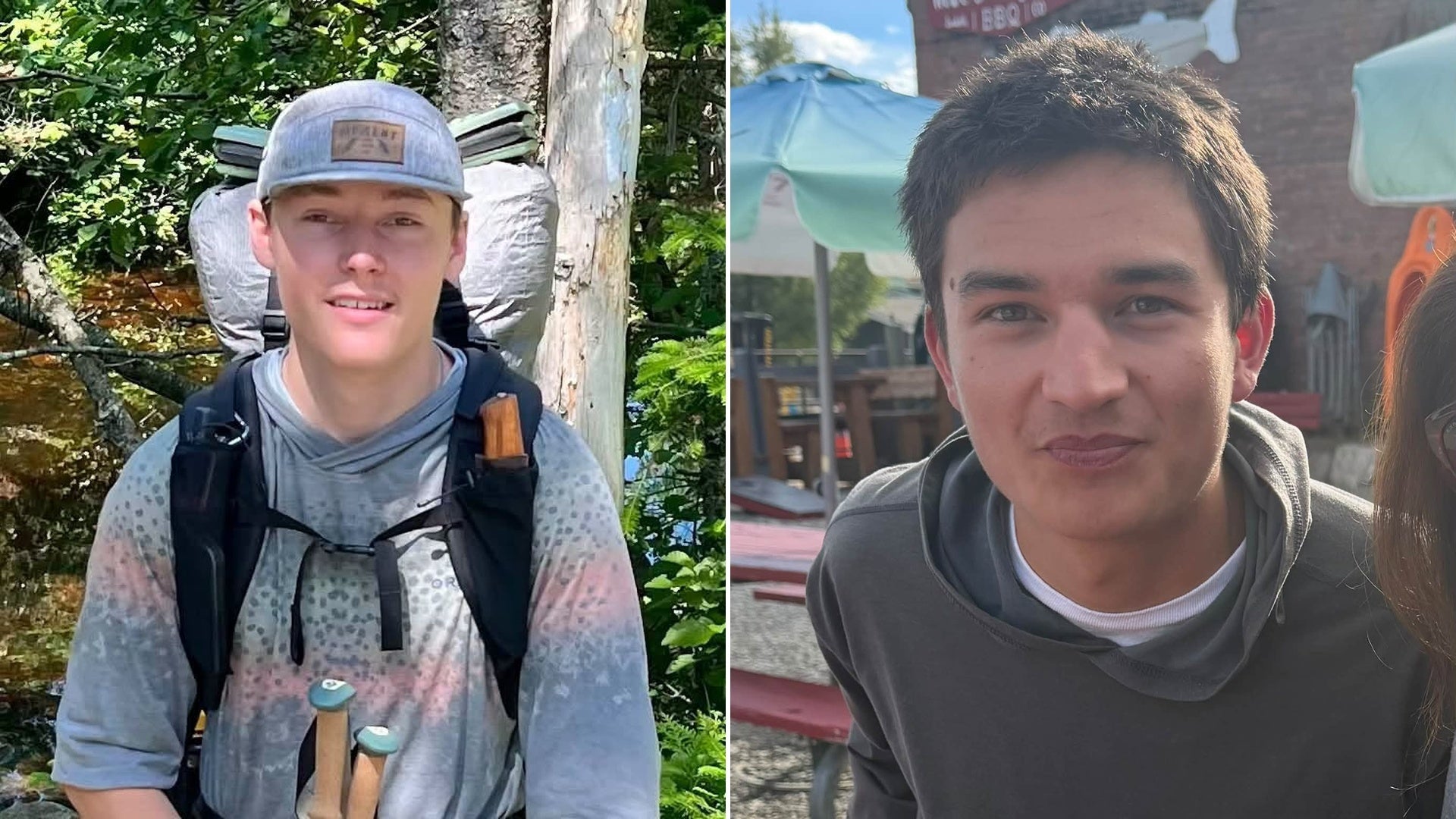
Kaden Matsuda and Jackson Donlon did almost everything right. They told people where they were going. They shared a map of their intended destination. They carried the gear experienced backcountry travellers are told to carry, and they had a plan with a built-in exit: back on Saturday if the mountain felt unsafe, back on Sunday if they pushed on toward the summit of Ice Mountain. On Wednesday afternoon, after a search that drew some 60 rescuers, dogs, drones and helicopters into a snowbound basin in Colorado’s Collegiate Peaks, searchers found the two Colorado Mountain College students dead, near each other, in a basin of West Apostle Mountain. Matsuda was 19, from Ridgway, Colorado. Donlon was 20, from Queensbury, New York. The Chaffee County Sheriff’s Office said foul play is not suspected — and, pointedly, that it will not offer theories about what happened until autopsies are completed.
What happened, day by day
The two students left Colorado Mountain College’s Leadville campus on Friday, October 23, bound for Ice Mountain, a 13,958-foot (4,254-metre) peak in the Sawatch Range that the sheriff’s office calls “a very technical climb” recommended only for advanced hikers — “that is when it is dry.” Ice Mountain is the middle summit of the Three Apostles, a chain of three peaks on the Continental Divide, and is generally regarded as one of the most difficult climbs in the Sawatch Range. Matsuda was studying to become a wildland firefighter. Donlon was studying outdoor recreation leadership — in the sheriff’s telling, training to become a mountain guide. Friends and family described both as experienced hikers who should have had appropriate clothing, and they had shared a map of where they intended to go.
The weather turned on Saturday afternoon, October 24. Rain gave way to heavy snow — one to two feet on the mountain, the sheriff’s office said, with three to four feet in places where it sluffed and drifted, and ice coating the rock. About eight inches fell at the trailhead. When the students did not return on Sunday as expected, Colorado Mountain College staff reported them missing at about 10 a.m. on Monday, October 26. Deputies found Matsuda’s vehicle at the trailhead, with snow on the ground around it but none under it — a quiet timestamp of when they had arrived, before the storm.
The search: a collapsed tent and a closing window
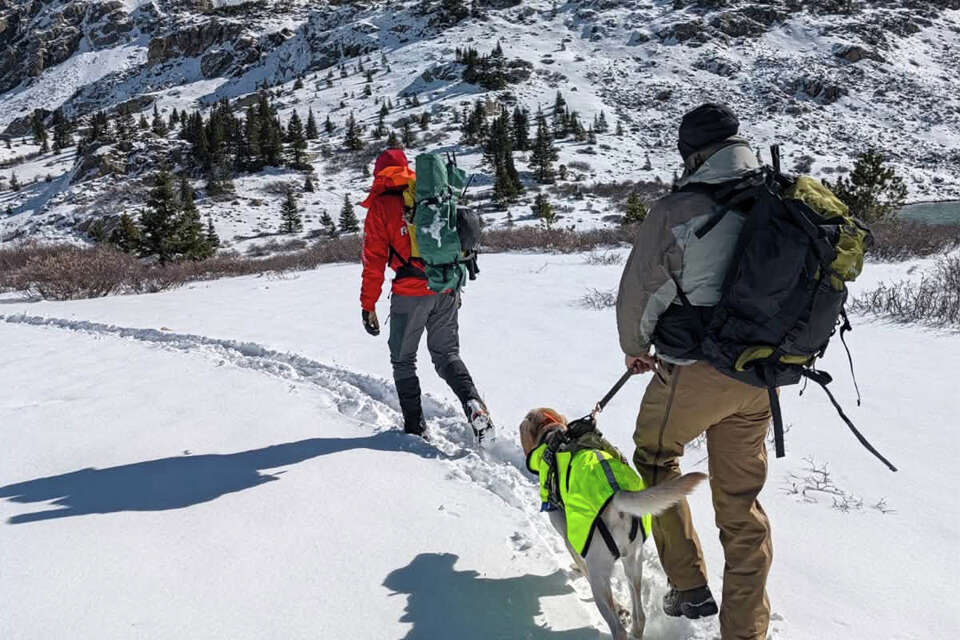
What followed was one of the larger backcountry searches Colorado has mounted this autumn. Teams came from Chaffee, Lake, Teller, Park and Arapahoe counties — around 60 searchers in total — supported by helicopters, drones with infrared technology, search dogs, and a Flight for Life effort to pick up the avalanche beacon Donlon typically carried. Forensic checks showed neither student’s phone had been used in 48 hours, though the sheriff’s office cautioned that coverage on the mountain is almost nonexistent and the phones may simply have been switched off to save battery.
The terrain fought them. To reach the mountain, teams had to cross boulder fields buried under snow — “extremely dangerous and virtually impossible on foot,” the sheriff’s office said — and there was nowhere on the mountain a helicopter could land. On Tuesday, October 27, a helicopter crew spotted an object near Lake Ann. A ground team reached it and found the students’ tent, collapsed under the weight of the snow. There was no snow under the tent and no footprints around it, suggesting it had been pitched before the storm arrived. Inside were their sleeping bags, a stove and clothing. Matsuda and Donlon were not there — and the mix of what was left and what was missing told searchers the two had left camp carrying advanced climbing gear.
Even then, Sheriff Andy Rohrich refused to give up on them publicly. “We are still optimistic Kaden and Jackson are hunkered down somewhere waiting to be rescued,” he said on Tuesday, while warning that “our window of opportunity is closing” ahead of more poor weather expected later in the week. On Wednesday morning he was still praising the two students’ preparation: “We are proud of these young men concerning how prepared they were, but sometimes mother nature throws you a curveball. Almost all the safety measures we tell backcountry explorers to use, these men did.”
At about 3:30 p.m. on Wednesday, October 28, searchers found the two bodies near each other in a basin of West Apostle Mountain, the neighbouring peak about 100 miles (160 km) southeast of Aspen and roughly half a mile from where the tent had been found.
Why this matters
This story matters precisely because it breaks the comforting script that usually surrounds mountain tragedies. The standard account of a fatal hike assigns a mistake: no map, no gear, no warning left behind, cotton clothing, a late start. Rohrich — the official who ran the search — has gone out of his way to say that script does not fit. The students left an itinerary and a map. They were trained, or training, for exactly this environment: one bound for wildland firefighting, the other for mountain guiding. They had a conditional return plan. And a single October storm — the season’s first big snow, arriving on a Saturday afternoon — still turned a technical but planned climb into a fatal one.
That is the uncomfortable data point for everyone who uses Colorado’s high country in the shoulder season. October in the Collegiate Peaks is a bet on a calendar that no longer holds: Ice Mountain’s alpine climate can deliver winter in a single afternoon, and a peak rated technical when dry becomes something else entirely under one to two feet of snow and a skin of ice. Experience reduces risk; it does not repeal altitude, exposure or weather. The sheriff’s refusal to speculate before autopsies is also part of the record: as of Thursday, no official cause of death exists, and any account that names one — exposure, a fall, an avalanche — is guessing. What is documented is the sequence: a camp pitched before the storm, a departure from that camp with climbing gear, and two bodies found together in the next basin.
The mountain, in context
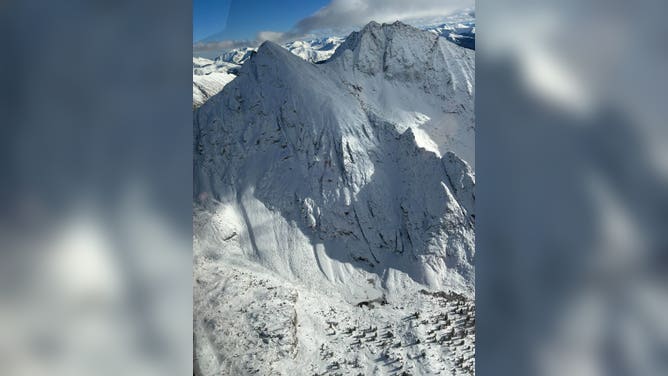
Ice Mountain is not a walk-up fourteener. At 13,958 feet it falls just short of the 14,000-foot line that draws Colorado’s summit crowds, but climbers rate the Three Apostles among the most serious undertakings in the Sawatch — loose, steep, and exposed, in a wilderness whose average elevation is the highest of any in the United States. The Collegiate Peaks Wilderness covers some 168,000 acres between Leadville and Buena Vista. The search area sat near Lake Ann and the Mount Huron trailhead, country the students’ own college uses as a classroom: Colorado Mountain College’s Leadville campus trains students for outdoor careers, which is why two of its students were on that mountain, in that season, with those skills.
What we do not know yet
The central question — what happened after Matsuda and Donlon left their tent with their climbing gear — remains unanswered. The Chaffee County Coroner’s Office will determine cause and manner of death through autopsies, and the sheriff’s office has said it will not theorise in advance of those findings. Even the recovery was unfinished on Thursday: Rohrich told AP on Thursday morning that the bodies remained in the basin while officials waited for gusty winds to calm enough for a helicopter crew to fly in and retrieve them, ahead of another storm expected this weekend — the same closing weather window that had driven the search’s urgency all week.
A campus in mourning
Colorado Mountain College said Thursday it was “devastated by the loss of Kaden Matsuda and Jackson Donlon, two members of our Colorado Mountain College community,” and that staff and faculty were supporting students at the Leadville campus. The college described Matsuda as kind, intelligent and welcoming, and Donlon as an avid climber and skier who had come to Colorado to pursue his love of the mountains and was studying outdoor recreation leadership. Rohrich’s closing statement asked for space: “Our heart aches for Kaden and Jackson’s family and friends. We are very proud of our team’s efforts to find them before this weekend’s coming storm. Although this is a gut punch, our prayers were answered that we would find Kaden and Jackson, allowing some closure for the family. We ask that everyone give time and distance to family members and friends as they mourn their loss.”
What happens next
Three things follow from here. First, the autopsy findings, which will convert a week of careful official silence into a factual account of how the students died — and which every responsible retelling of this story must wait for. Second, the formal investigation the sheriff’s office and coroner are conducting together, which will reconstruct the pair’s route from the Lake Ann camp into the West Apostle basin. Third, the harder, slower reckoning on campuses and in mountain towns across Colorado: how outdoor-leadership programmes teach the difference between preparation and safety, in a range where the first storm of the season can arrive in October and erase the margin that preparation buys. For now, the verified record is a short one — two prepared, experienced young men, a storm that came on a Saturday afternoon, a collapsed tent, and a search that found them one basin too late.
Sources
- Chaffee County Sheriff’s Office statements, Oct. 26–29, 2026 — Sheriff Andy Rohrich’s statements on the search, the collapsed tent near Lake Ann, the discovery of the students, and the decision not to offer theories before autopsies are completed.
- USA Today (Oct. 29, 2026) — “2 college students found dead after vanishing during Colorado hike”: the timeline, the search effort and the sheriff’s preparedness remarks.
- Associated Press, Dave Collins (Oct. 29, 2026) — “2 college students found dead after going missing during a hiking trip in the Rocky Mountains”: the discovery in the West Apostle basin and the Colorado Mountain College statement.
- The Coloradoan (Oct. 29, 2026) — “Search for missing Colorado hikers ends in tragedy”: the day-by-day search timeline and snow depths.
- Colorado Mountain College statement (Oct. 29, 2026) — the college’s tributes to Matsuda and Donlon and support for students at the Leadville campus.