Sports / Gymnastics — The Claire Pease floor gold that closed the World Gymnastics Championships in Rotterdam on Sunday was not supposed to happen yet. Pease is 17, at her first world championships, and a year ago she finished 10th in the all-around at the U.S. Championships. She went last in the floor final, scored 13.866, and beat her own teammate — Reese Esponda, also 17, also on debut — to complete an American 1-2 and a weekend U.S. gymnastics has not produced in 15 years.
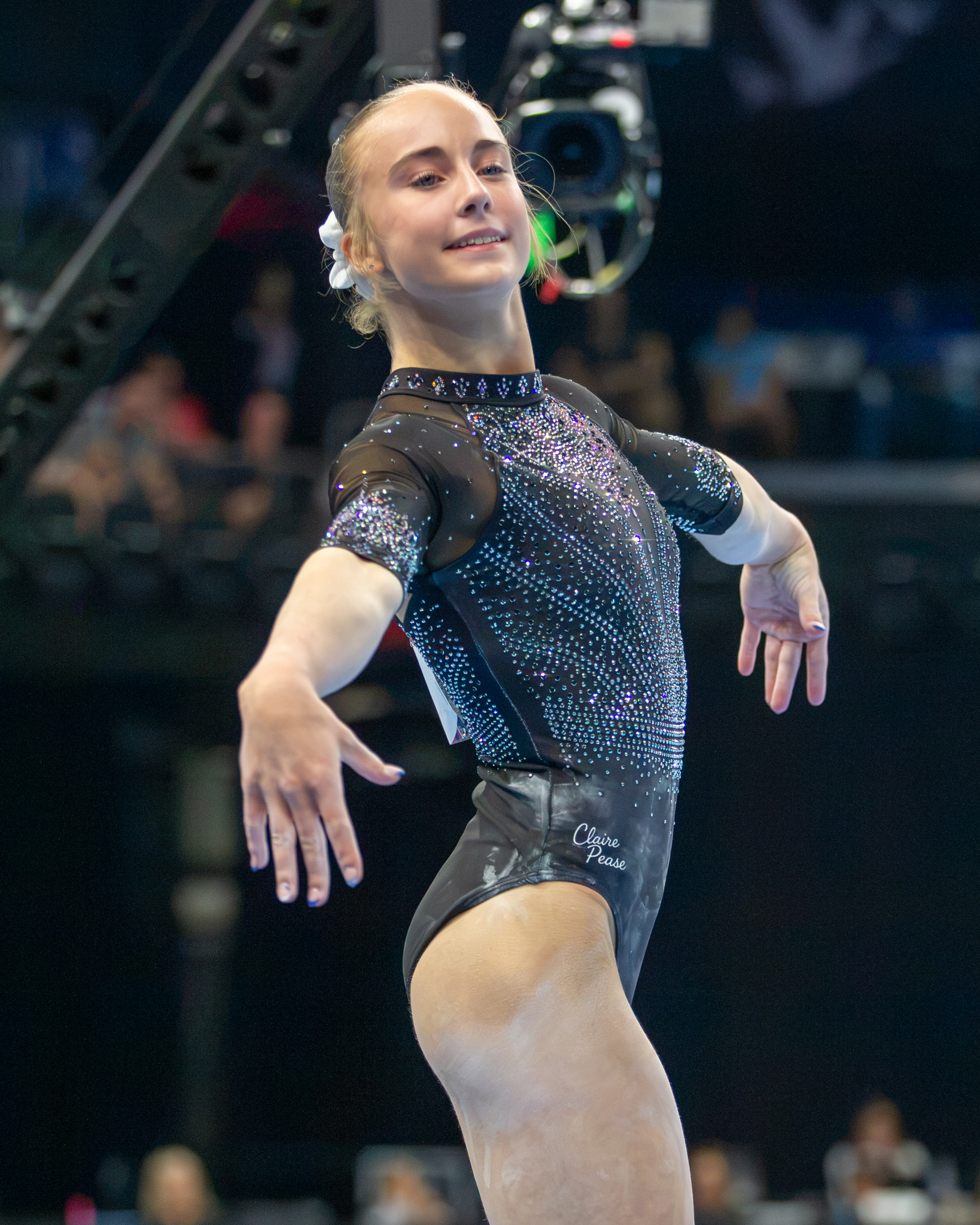
ROTTERDAM, Netherlands — The last routine of the last final of the World Gymnastics Championships decided the story of the week. Claire Pease, the eighth and final gymnast to compete in Sunday’s floor exercise final at the Rotterdam Ahoy arena, scored 13.866 to win gold — 0.300 ahead of her United States teammate Reese Esponda, whose 13.566 had led the final until Pease walked onto the floor. France’s Maiana Prat took bronze with 13.466. Both Americans are 17 years old. Both were competing at a world championships for the first time.
“I really controlled my power and settled into the podium landings,” Pease said, according to NBC Sports. Esponda, who had posted the highest floor score of qualifying last week but left errors in her final — a big bounce out of one tumbling pass, a near-fall out of a leap, in USA Today’s on-the-ground account — was just as clear about what the medal meant after a team final in which, by her own admission, she had not done her best work. “I’m just really proud of my fight,” she said. “I worked really hard. In team final, I didn’t have my best routine, so I put my best foot forward, and I was trying to work on all my landings, and I think I did a lot better today.”
A first since 2011, built in three days
The 1-2 finish did something no single result earlier in the week could do: it changed the historical frame of these championships for the United States. With Pease’s title, three different Americans won individual world gold medals at one championships for the first time since 2011, when Jordyn Wieber won the all-around, McKayla Maroney won vault and Danell Leyva won parallel bars. It was also the first time two different American women have won individual world titles at the same championships since 2015, when Simone Biles and Madison Kocian did it. And it was the third consecutive day an American stood on top of a world podium — after Skye Blakely’s all-around gold on Friday and Frederick Richard’s men’s floor title on Saturday, the first by an American man on that event since Paul Hamm in 2003.
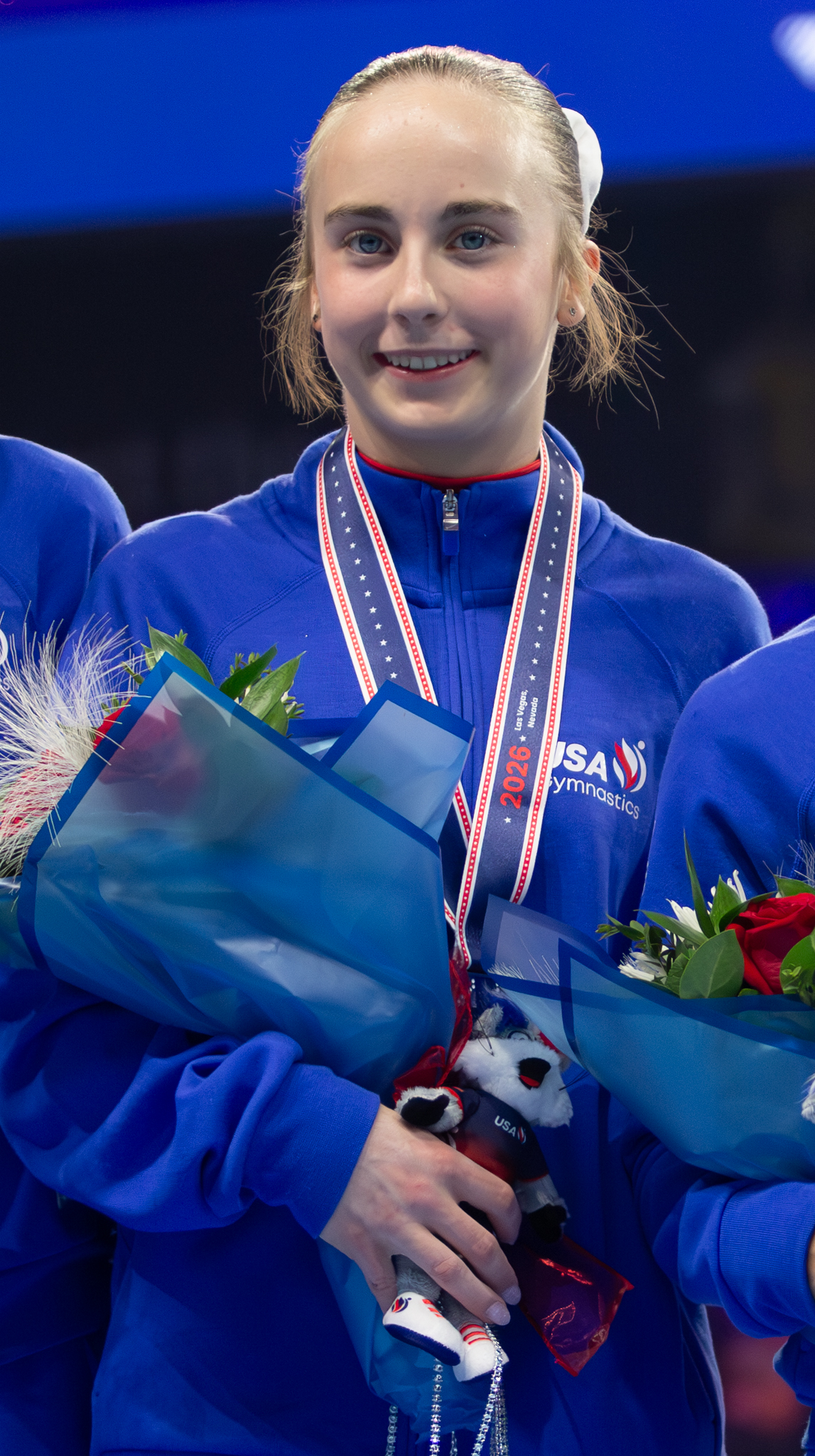
Pease’s own lines in the record book are just as striking. She is the youngest American to win an individual world title since Morgan Hurd’s all-around gold in 2017, and the first American to win individual gold at her first world championships since Hurd did exactly that. Her week in Rotterdam produced three medals: team silver, vault silver behind Rebeca Andrade on Saturday, and now floor gold. A year ago she was 10th in the all-around at her own national championships; last month she had to win a selection competition simply to make this team.
Why this matters
Read in isolation, a floor final is a nice ending. Read against the week that preceded it, it is an argument about where American gymnastics actually stands two years before a home Olympics in Los Angeles. On Wednesday, China beat the U.S. women for the team title by 0.233 of a point — the first time in 16 years the Americans had lost a world team final, with a squad in which Blakely was the only gymnast who had ever competed in a world team event and nobody had Olympic experience. The easy story that night was decline. The floor final is the counter-evidence: the youngest members of that beaten team went out on the last day, against a field that included the qualifying leader’s own mistakes and France’s Prat, and took the top two steps of the podium anyway.
That is what depth looks like in this sport, and depth, not a single star, is what wins team titles across an Olympic cycle. The 2011 comparison matters for the same reason. The last time three different Americans won individual world titles, it announced a generation — Wieber and Maroney became central to the London 2012 team a year later. Nobody can promise Pease and Esponda the same trajectory, and this article will not: selection for Los Angeles is two years and several selection camps away, in a program that also has Biles deciding on a return and a deep NCAA pipeline feeding gymnasts back into elite competition. But a federation choosing between a famous name and a 17-year-old world champion now has recent, senior, world-level evidence for the 17-year-old. That is a genuinely different position from the one the U.S. program feared it was in on Wednesday night.
What the numbers actually imply
The scores tell the redemption story precisely. Esponda owned floor in qualifying — the top score of the round, more than 0.20 clear of the field even after she had to rebuild part of her routine at short notice because one of her skills was not going to be credited. In the team final her floor work was part of an American rotation that could not close a 0.233 gap. On Sunday she scored 13.566 with visible errors and still medalled, because her difficulty is high enough to absorb mistakes that would end a cleaner gymnast’s chances. Pease, by contrast, won the way finals are supposed to be won: last up, knowing exactly what she needed, controlling landings she described herself as “podium landings.” A 0.300 winning margin on floor — an event usually decided by tenths and steps — is not close.
The totals complete the picture. NBC Sports’ accounting has the United States leaving Rotterdam with the most medals of any nation, eight across the men’s and women’s competitions, and tied for the most golds with three. The women’s share of that was built by three teenagers-and-20-year-old Blakely across four days: Blakely’s all-around gold and her vault and bars bronzes, Pease’s vault silver and floor gold, Esponda’s floor silver, and the team silver underneath all of it. The one final that got away on Sunday underlined the standard at the top rather than American weakness: Kaylia Nemour won the beam title on an execution-score tiebreak after she and China’s Zhang Qingying both scored 14.566, with Blakely sixth on 13.633 — her 14th routine of the championships without a major error, closing a four-medal week of her own.
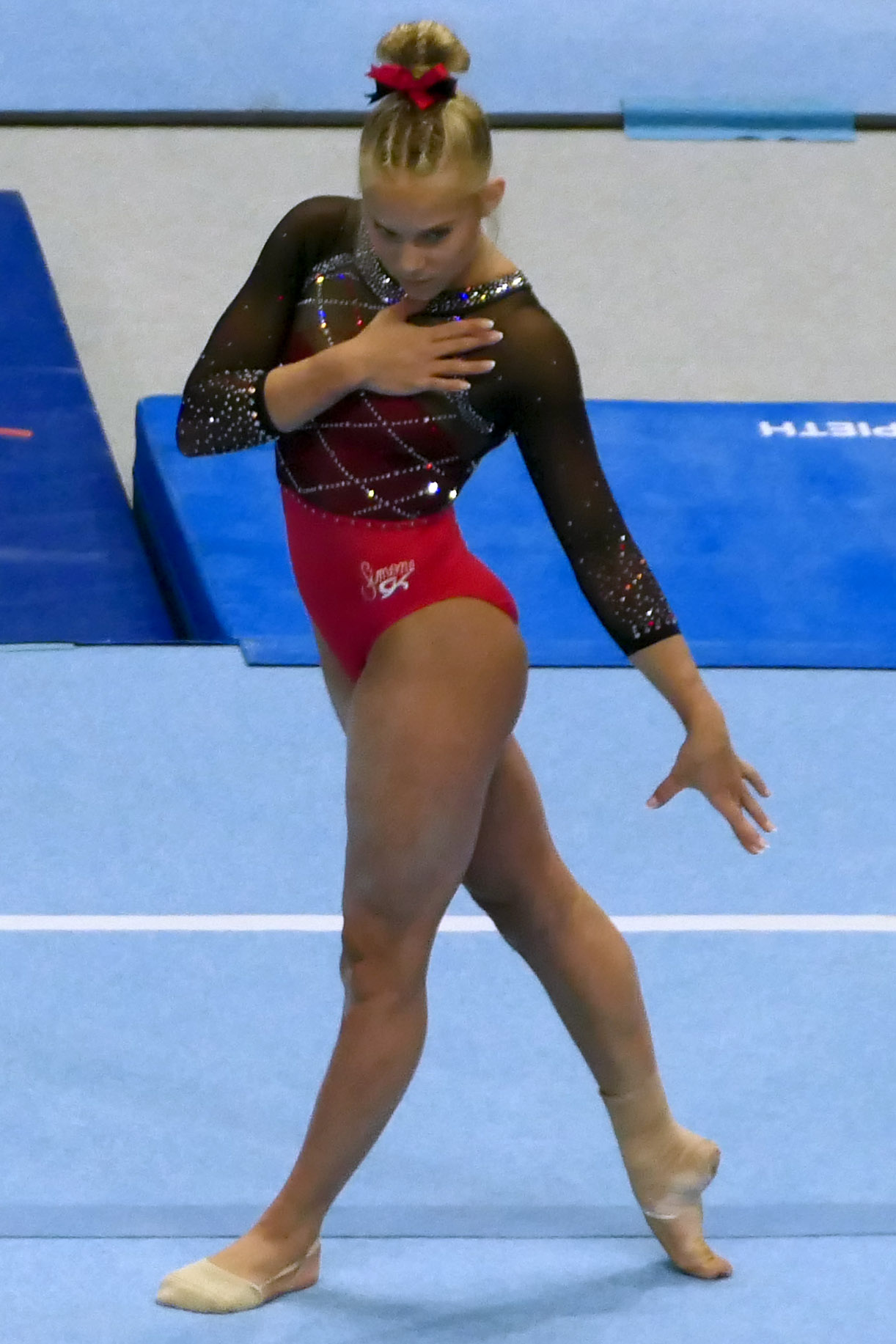
There is a lineage running through the silver medal, too. Esponda left Montana as a teenager to train at World Champions Centre, the gym Simone Biles built her comeback in, and Biles — who watched these finals from the stands in Rotterdam — had publicly backed Esponda’s potential before this week, in USA Today’s reporting from the championships. Esponda’s week repaid that faith the hard way: the top floor score in qualifying, a team final she was unhappy with, and then a medal routine skated on the edge of its own difficulty. Gymnasts who can score 13.566 while making mistakes are, as a rule, the ones still standing when Olympic selection comes around — because the mistakes are fixable in a training cycle and the difficulty is not teachable in one.
What happens next
Esponda turns 18 on October 28, three days after winning a world silver medal; Pease, born in Honolulu and raised in the Dallas area, trains at WOGA under Valeri Liukin, while Esponda trains at Simone Biles’s World Champions Centre in Texas. Both now go home as the faces of the post-Paris generation rather than prospects behind it. The honest caveats travel with them: one worlds, however historic, is a small sample; floor is the event where difficulty inflation and judging taste move fastest; and the Americans still lost the team title that matters most to the program’s self-image. But championships are remembered for who won the last final. In Rotterdam, the last final belonged, one-two, to two 17-year-olds at their first worlds — and U.S. gymnastics has not been able to say that for 15 years.
Sources
- NBC Sports — Claire Pease, Reese Esponda go 1-2 on floor, cap historic gymnastics worlds for U.S., October 25, 2026 (Pease 13.866 as the final gymnast; Esponda 13.566; both 17 and on debut; youngest American individual world champion since Morgan Hurd in 2017; three different American individual champions for the first time since 2011; two different American women for the first time since 2015; U.S. most total medals with eight and tied for most golds with three; Pease 10th at the 2025 U.S. Championships and a selection-competition winner; direct quotes from both gymnasts)
- USA Today — LIVE: USA’s Claire Pease, Reese Esponda win floor gold and silver to cap world championships, October 25, 2026 (Nancy Armour live from Rotterdam: Esponda 13.566 at 12:05 PM ET; Pease 13.866 at 12:13-12:16 PM ET, 0.300 higher; the errors in Esponda’s routine; Blakely sixth on beam and leaving with four medals after 14 routines without a major error)
- NBC Sports — World Gymnastics Championships 2026 Results, October 25, 2026 (full Rotterdam results tables, including the floor final podium with Maiana Prat third and the beam final: Nemour gold 14.566 on the execution tiebreak over Zhang Qingying, Flavia Saraiva bronze, Blakely sixth on 13.633; team final China 165.674, U.S. 165.531)
- Gymnastics Now — Live updates: Event finals at the 2026 World Artistic Gymnastics Championships, October 25, 2026 (routine-by-routine floor final account independently recording Esponda at 13.566 into first place before Pease’s winning routine)
- USA Gymnastics — Reese Esponda athlete profile (Helena, Montana hometown; World Champions Centre; coaches Patrick Kiens and Daymon Jones; 2026 U.S. floor exercise champion)