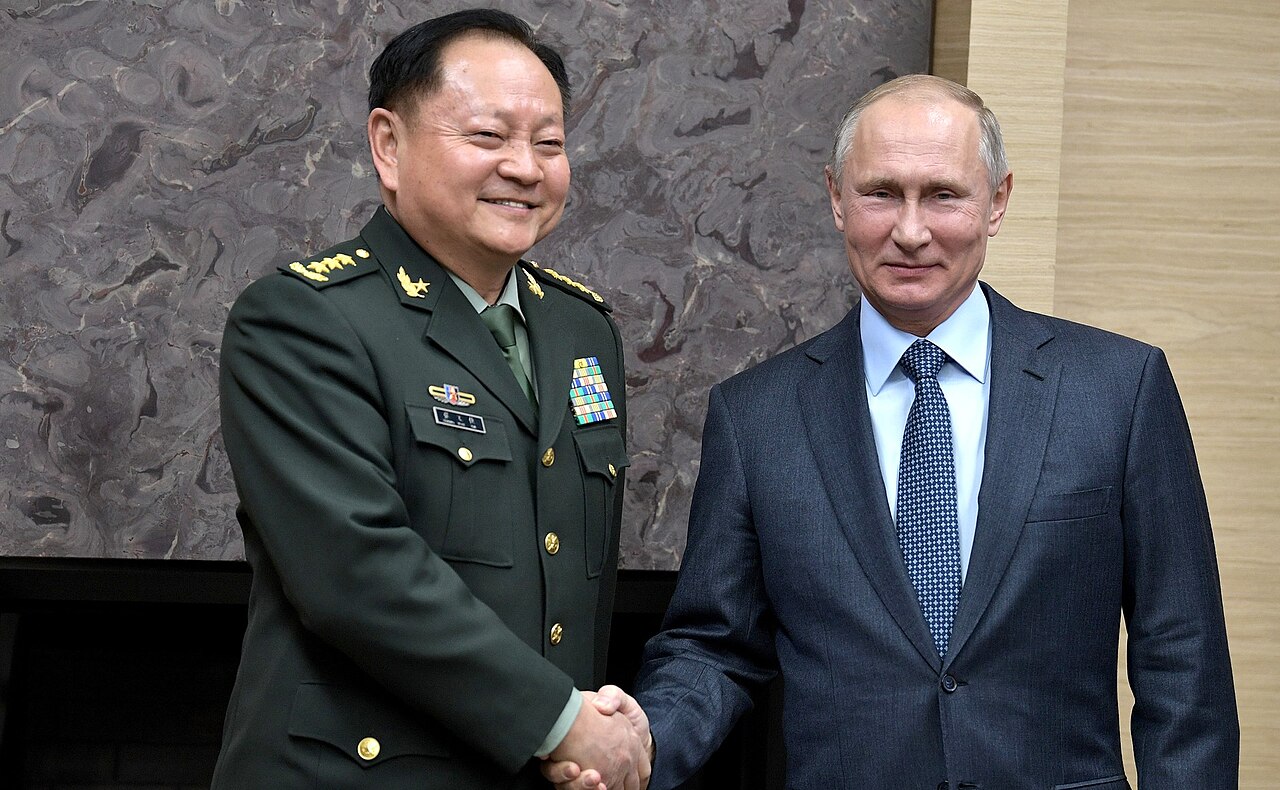
China’s Communist Party has expelled generals Zhang Youxia and Liu Zhenli from the Party and the military, removing two of the People’s Liberation Army’s most senior officers after an investigation that began in January. The official Xinhua announcement on Monday, September 21, said both men had committed “serious violations of discipline and law,” the Party’s standard formulation for corruption and other political offenses.
The decision is extraordinary not only because of rank, but because of function. Zhang was a vice-chairman of the Central Military Commission, a Politburo member and President Xi Jinping’s military second-in-command. Liu was a CMC member and chief of staff of its Joint Staff Department, the organization responsible for planning and coordinating operations across the armed forces. Their removal leaves only two active figures on a commission that had seven members after the 2022 Party Congress, including Xi as chairman.
Chinese authorities accused the two men of political disloyalty, faction-building, corruption, abuse of office, dereliction of duty and failing to supervise staff and family members. State reporting said the alleged sums involved were exceptionally large. No public evidence establishing the accusations, defendants’ responses, exact monetary figures or court findings had been released by the reporting cutoff. The allegations should therefore be understood as official claims in a Party disciplinary process, not as independently proven criminal judgments.
The expulsions complete a rapid institutional sequence. Investigations were announced in January 2026. Both men were removed from the state CMC in late August. The Party and military expulsions followed on September 21, days before Xi was expected to travel to the United States for talks with President Donald Trump and weeks before an October Party conclave focused on governance and discipline.
Why This Matters
China’s military purge has reached the level where a campaign meant to strengthen command authority is also dismantling the command structure expected to carry out Xi’s orders. Removing corrupt or politically unreliable officers can improve discipline and protect procurement from fraud. Removing nearly an entire top leadership body at once can also interrupt planning, weaken trust between commands and make subordinates more cautious about giving candid military advice.
The Central Military Commission is not a ceremonial board. It is the Party organ through which Xi controls the PLA. Its vice-chairmen translate political direction into military priorities; the Joint Staff Department turns those priorities into operational plans. A commission reduced from seven active members to two concentrates power at the top, but it also leaves fewer senior officers to challenge assumptions, coordinate services and absorb responsibility for complex decisions.
That matters most around Taiwan. Beijing has not renounced the use of force to bring the self-governed island under its control, and the PLA has spent years building the capacity to blockade, coerce or attack it. A Taiwan operation would require synchronized air, naval, missile, cyber, logistics and political-warfare commands. Purges can remove compromised leaders and enforce standards; they can also disrupt exactly the relationships and institutional memory on which joint operations depend.
The decision therefore sends two messages at once. To the Party, it says no rank or past relationship with Xi confers immunity. To foreign governments, it says China’s military leadership is less stable and more opaque at a moment when Beijing’s operational intentions are already difficult to read.
Who Zhang Youxia and Liu Zhenli were
Zhang, born in 1950, stood out in the current high command because he was one of relatively few senior Chinese officers with combat experience. He served during China’s 1979 war with Vietnam and in later border fighting, then rose through major regional and equipment posts. His relationship with Xi carried unusual political weight: their fathers were revolutionary-era comrades, and Zhang was widely regarded as one of Xi’s closest military allies.
That history makes his fall more consequential than a routine personnel change. Zhang remained on the CMC beyond the customary retirement age and was elevated after the 2022 Party Congress, reinforcing the impression that Xi trusted him to oversee military modernization and senior appointments. His expulsion shows that proximity to the leader may increase responsibility as much as protection—or that the threshold for perceived disloyalty has narrowed sharply.
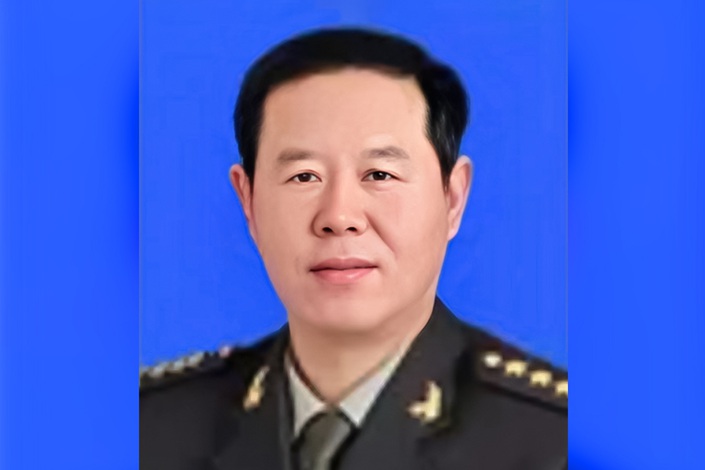
Liu, born in 1964, represented the operational center of the system. A veteran of border fighting with Vietnam, he became chief of the CMC Joint Staff Department in 2022 and joined the commission the same year. The job placed him at the intersection of readiness, exercises, contingency planning and joint command. Removing the Joint Staff chief creates a more immediate operational gap than dismissing an official whose role is largely administrative.
A campaign that began in 2012—and accelerated after 2022
Xi began a sweeping anti-corruption campaign after taking power in 2012. In the military, the campaign targeted patronage networks, the sale of promotions and procurement corruption that had flourished during years of rapid budget growth. Early cases against former CMC vice-chairmen Xu Caihou and Guo Boxiong established that even the highest retired commanders could be investigated.
The campaign also served a political and organizational purpose. Xi reorganized the PLA beginning in 2015, replacing military regions with theater commands, strengthening joint operations and declaring that the armed forces must be absolutely loyal to the Communist Party and its chairman. Discipline investigations helped him break older networks while installing officers tied to the new structure.
The pace accelerated after the 2022 Party Congress. Defense Minister Li Shangfu disappeared from public view in 2023 and was later removed from state and Party posts amid a procurement investigation. His predecessor, Wei Fenghe, was also expelled. Senior figures in the Rocket Force, which controls China’s conventional and nuclear missiles, were replaced; scrutiny spread through the equipment-development and aerospace sectors.
A February 2026 report from the Center for Strategic and International Studies counted at least 36 senior officers officially removed and as many as 101 potentially removed when missing or sidelined figures were included. The broader estimate is necessarily uncertain because China does not publish a complete roster of investigations, and absence from public events does not by itself prove a purge. But even the confirmed total points to a leadership turnover far beyond normal retirement cycles.
Two competing readings: a readiness crisis or a painful correction
One school of analysis sees the removals as evidence of institutional disruption. Senior commanders may delay decisions, avoid risk or withhold bad news when colleagues disappear under investigation. Replacement officers need time to learn portfolios and build working relationships. Exercises can continue, but visible activity does not prove that the command system can integrate intelligence, logistics and political authorization under wartime pressure.
This view is strongest when applied to the Rocket Force, procurement system and Joint Staff Department. Corruption in missiles or equipment can produce faulty inventories, falsified readiness reports and gaps between planned and actual capability. Investigating those failures is necessary, but discovering them also means the force may be less reliable than official modernization targets suggest.
The competing argument is that strict enforcement ultimately improves readiness. An officer corps shaped by promotion-buying, kickbacks or falsified inspections is not a stable foundation for military power. Removing compromised leaders can increase professionalism, recover wasted resources and make commanders more accountable for the condition of their units. From this perspective, short-term turmoil is the cost of correcting deeper weaknesses before a crisis exposes them.
Both claims can be true on different timelines. Discipline may improve the institution over years while degrading continuity over months. The public evidence does not reveal the balance. China has not disclosed how vacancies will be filled, which operational plans are being reassessed or whether investigators found problems in specific weapons programs. Analysts should therefore distinguish the demonstrated fact of leadership depletion from forecasts about combat performance.
Who benefits—and who loses
Xi is the most immediate political beneficiary. The expulsions reinforce his authority to define loyalty and decide who remains inside the military elite. The Party’s discipline apparatus also gains reach, while officers promoted into vacant posts may rise faster than the normal succession process would allow.
But concentration is not the same as insulation. Because Xi personally selected or retained many of the removed officers, the campaign can raise questions about vetting and judgment. If corruption was as extensive as the official allegations suggest, it flourished under his command; if political disloyalty was the greater concern, the purge reveals distrust at the top of an organization built around loyalty to him.
Professional officers who follow procurement and reporting rules may benefit if entrenched patronage networks are broken. Rival military factions may gain openings. Conversely, commanders associated with Zhang, Liu or investigated departments face heightened risk even without public accusations against them. The losers also include institutional candor: when political survival is uncertain, officials may tell superiors what they think leaders want to hear.
Taiwan’s government and U.S. planners may gain time if leadership disruption delays complex operational preparations. They also face greater uncertainty. A weakened command is not necessarily a less dangerous one: leaders can compensate for doubts about readiness with coercive exercises, blockades or other actions below the threshold of invasion, and political pressure can encourage demonstrations of resolve.
Taiwan and the readiness calendar
Xi has ordered the PLA to develop capabilities associated with a 2027 modernization milestone, but that date is not a publicly declared invasion deadline. The purge does not establish that an attack has been postponed, nor does it prove that war is imminent. It does complicate any attempt to assess readiness by counting ships, aircraft and missiles alone.
Hardware must operate through a command system. A blockade would require persistent maritime and air coordination, legal and economic signaling, surveillance, logistics and escalation control. An amphibious assault would be still more demanding. The loss of the CMC vice-chairman and Joint Staff chief creates uncertainty over who is validating plans, who can question optimistic assumptions and how responsibilities are transferred.
At the same time, routine PLA patrols and exercises are likely to continue. Foreign governments should avoid treating every drill as proof that the purge changed nothing, just as they should avoid assuming that vacant posts make China incapable of force. The most useful indicators will be sustained changes in exercise complexity, theater-command leadership, joint logistics and the speed and seniority of replacement appointments.
The October conclave and Trump talks
The timing gives the decision a diplomatic and domestic audience. Xi is expected to meet President Donald Trump during a forthcoming U.S. visit, with trade, technology, Taiwan and security likely to frame the relationship. Arriving after the removal of his two most senior operational commanders allows Xi to project control, but it also invites questions about continuity inside the PLA.
Washington should resist overreading the purge as simple weakness. Chinese leaders may calculate that demonstrating political command strengthens their negotiating position. Trump may see opportunity in the disruption; Beijing may respond by emphasizing that military policy still runs directly through Xi. Neither interpretation is a substitute for concrete negotiating terms or observed force posture.
The October 2026 Party conclave is the more direct institutional test. A meeting centered on governance and discipline can ratify the campaign, signal whether more investigations are coming and begin filling vacancies. The seniority and background of any appointees will show whether Xi prioritizes operational expertise, political reliability, anti-corruption credentials or a balance of all three.
What happens next
The first question is whether the Party names replacements quickly or leaves the commission skeletal. Rapid appointments could restore formal capacity but may not rebuild trust. A prolonged vacancy would preserve Xi’s direct control while placing more work on a narrow leadership core.
The second question is legal. Party expulsion and military dismissal can precede criminal prosecution, but Monday’s announcement did not provide an indictment, trial schedule, defense response or itemized financial case. Any later court findings should be reported separately from the disciplinary allegations now on the record.
The third is operational. Watch for personnel changes in the Joint Staff Department, theater commands and equipment bodies; changes in the scale or complexity of exercises around Taiwan; and official language about the 2027 modernization goals. Those signals will be more informative than speculation about individual motives.
Xi’s campaign has reached a paradox. It demonstrates his ability to remove almost anyone, including a longtime ally with combat experience. It also demonstrates how many of the officers responsible for his military program are no longer in place. The October conclave and the next round of appointments will show whether this is the beginning of a rebuilt command—or a deeper period of institutional uncertainty.
Sources and reporting notes
- Reuters, September 21, 2026: expulsions, official allegations, leadership roles and political timing
- Xinhua report carried by People’s Daily: official disciplinary announcement
- Associated Press: January investigation announcement and background on Zhang Youxia
- Associated Press analysis: command disruption, discipline and Taiwan readiness arguments
- CSIS, February 2026: documented and potential senior-officer removals
- Kremlin: source event page for the 2017 Zhang Youxia file photograph
- Caixin Global: 2023 Liu Zhenli file portrait and Joint Staff appointment context
Reporting cutoff: September 22, 2026. Allegations against Zhang Youxia and Liu Zhenli are attributed to Chinese Party and state authorities. Public evidence, defendants’ responses, exact monetary figures and court findings had not been established in the cited reporting. Readiness, winners-and-losers and Taiwan analysis are Signal Post News’s synthesis of the cited reporting and research.