China GDP growth of 4.5 percent in the third quarter — a more-than-three-year low that nonetheless beat forecasts — is the headline from Monday's National Bureau of Statistics release. The story underneath it is the split: an economy whose factories are booming at 5.5 percent while its consumers manage 1.1 percent, whose high-tech output surges 15.3 percent while property investment collapses a further 20.6 percent. Economists have a name for it now, and Monday's data hardened it: the two-speed economy.
Track it live: Live markets tracker
The fast lane: factories, chips and electric cars
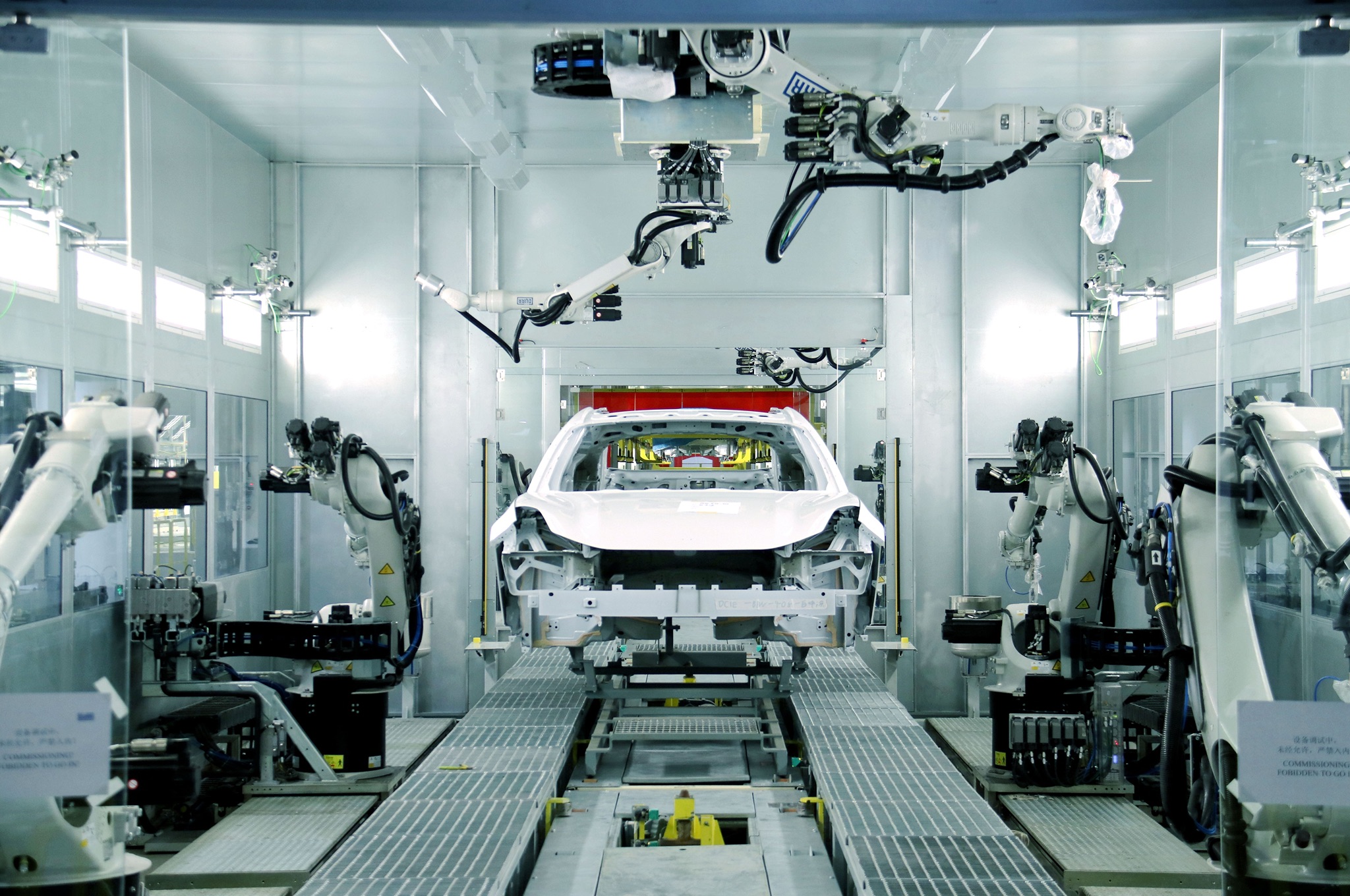
September's industrial data described an economy that, on its production side, is doing something close to booming. Industrial output rose 5.5 percent year on year. High-tech manufacturing grew 15.3 percent — the AI-chip and electronics complex that trade data keeps confirming, with September's trade surplus widening on the back of it. New energy vehicle production rose 16.9 percent to 1.87 million units in a single month, a figure that would have been a respectable annual total for most countries a decade ago. The paradox inside the number is total vehicle output, which fell 5.7 percent: China is not making more cars, it is making different ones, cannibalizing its own combustion fleet at a pace no other large economy has attempted. This is the economy Beijing's industrial policy built — subsidized, export-hungry and increasingly dominant in the technologies the rest of the world is trying to reshore.
The slow lane: property, investment and the missing consumer
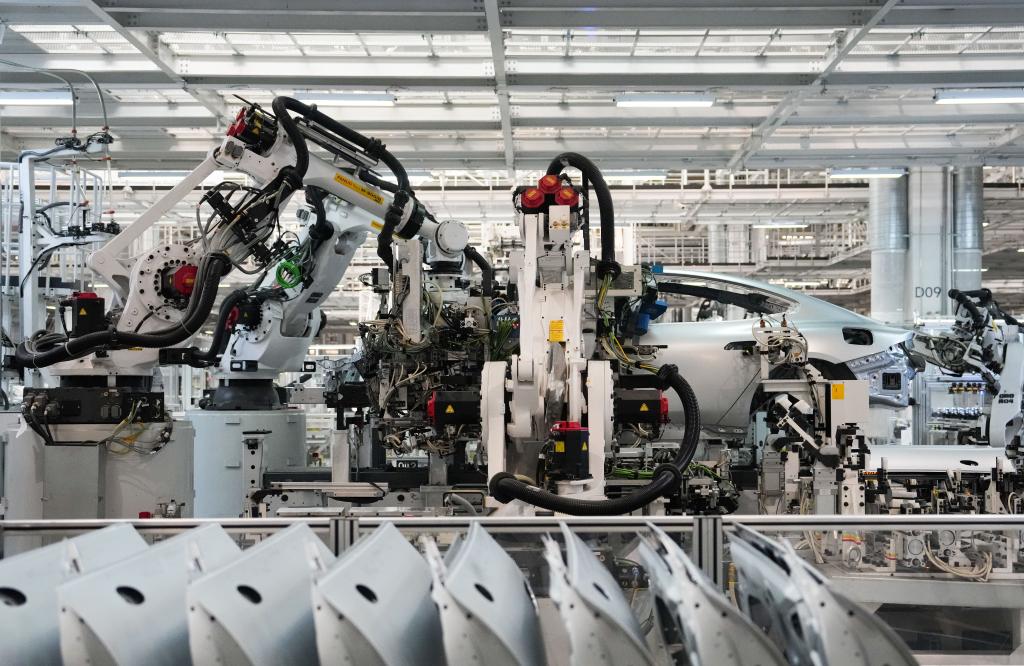
Then the other economy. Fixed-asset investment fell 7.2 percent in the January–September period. Property investment fell 20.6 percent. The housing downturn is in its fifth year, and its weight is not abstract: roughly 70 percent of Chinese household wealth sits in property, which means the asset deflation is a direct tax on the confidence of the consumer the government needs to spend. Retail sales growth of 1.1 percent in September — better than the 0.5–0.6 percent forecast and August's 0.4 percent, and still, in context, a crawl for an economy of China's income level — is what that tax looks like in the data. Beijing's response, reported alongside the figures, is fiscal: 550 billion yuan, about $82.28 billion, in unused debt quotas allocated to local governments — a meaningful sum aimed at the investment leg, which is the leg policy can reach, rather than the consumption leg, which it has repeatedly failed to move. UOB economist Ho Woei Chen's commentary, cited in Monday's coverage, captured the consensus reading: the industrial engine is buying time, but the composition of growth is becoming the risk.

Why this matters
The two-speed economy is not a curiosity; it is a geopolitical fact with a trade balance attached. A China whose domestic demand cannot absorb its industrial output must export the surplus — into markets, from European EVs to Southeast Asian electronics, that are raising barriers precisely because of the flood. September's widening trade surplus, celebrated in the official framing as resilience, is read in Brussels and Washington as the problem exporting itself. Domestically, the property unwind enters the phase where arithmetic defeats announcements: five years of falling investment, local governments whose land-sale revenue funded the old model, and households whose balance sheets are the transmission mechanism between a housing chart and a retail chart. Comparisons sharpen the point. China's 4.5 percent would be a triumph for any Western economy; for a state that targeted it as a floor, organized its local finances around land, and promised a consumption-led rebalancing a decade ago, the composition matters more than the rate. The fast lane is real — the chip and EV numbers are not propaganda, they are corroborated by every customs dataset in Asia. So is the slow lane. Monday's release is simply the moment both lanes appeared in the same table, moving apart.
What happens next
The annual target now becomes a fourth-quarter question: 4.6 percent through September leaves the 4.5–5.0 percent band achievable but narrows the room for a bad quarter, which is why the 550 billion yuan allocation matters — expect it deployed visibly and quickly. Watch the property data for the first month in which the rate of decline, not just the level, improves; watch whether retail sales can hold above 1 percent without subsidy programmes doing the lifting; and watch the trade surplus, because its political cost abroad is rising faster than its economic benefit at home. For the technology thread running through the fast lane, Signal Post News's report on NVIDIA's Vera CPU and on ASML's AI-driven order book shows the other side of the chip economy China is racing to join — and that Washington is racing to fence it out of.
Sources: National Bureau of Statistics of China, October 19, 2026, via Reuters and CNN (Q3 GDP +4.5% y/y versus 4.4% forecast and Q2 +4.3%; +1.2% q/q; January–September +4.6%, GDP ~107.1 trillion yuan; September industrial output +5.5%; retail sales +1.1%; high-tech manufacturing +15.3%; NEV production +16.9% to 1.87 million units; total vehicle output −5.7%; fixed-asset investment −7.2%; property investment −20.6%; 550 billion yuan in unused debt quotas allocated). UOB economist Ho Woei Chen, commentary reported October 19, 2026.