ASML Q3 / AI demand will outrun chip-tool supply in 2027 and 2028, ASML warns
ASML AI demand outruns supply: the only company on Earth that makes EUV lithography machines just reported the best quarter in its history — and said the artificial intelligence boom wants more of its machines than it can physically build for at least two more years.
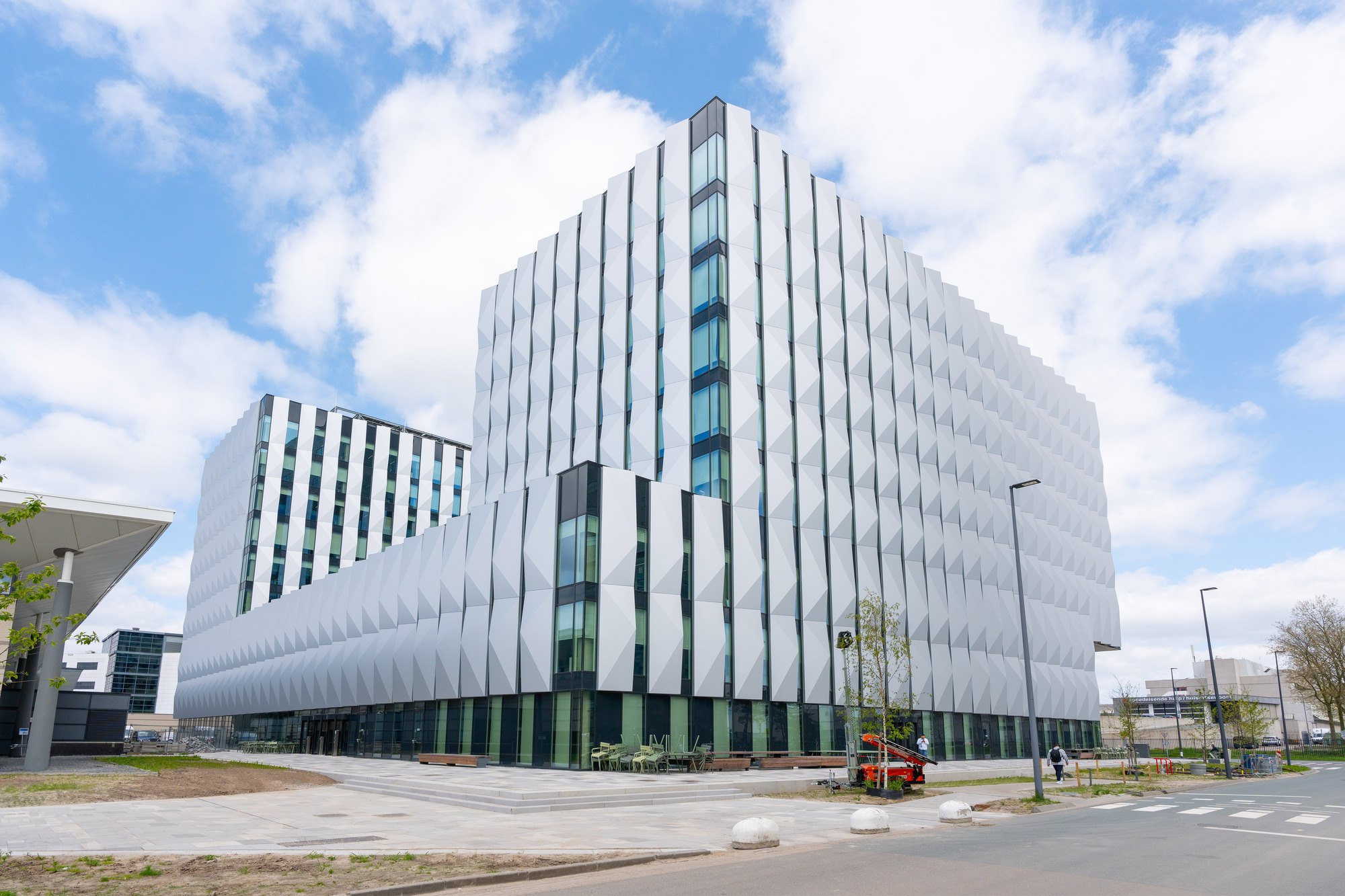
VELDHOVEN, Netherlands, October 14, 2026 — Every artificial intelligence data center rising around the world traces back, sooner or later, to one company in one Dutch town. ASML Holding, the sole manufacturer of the extreme ultraviolet (EUV) lithography machines used to print the world's most advanced chips, reported third-quarter results on Wednesday that would be the envy of any company on Earth — and paired them with a warning that amounts to a speed limit on the entire AI build-out: demand for its machines will exceed its supply in both 2027 and 2028, even with capacity expanding by roughly 30 percent in each of those years.
Track it live: Markets tracker — chip stocks, indexes and the AI trade in real time.
The numbers: a record quarter, by a wide margin
ASML's third-quarter total net sales reached €11.662 billion, a record for the company and up sharply from €9.326 billion in the second quarter and roughly €7.5 billion in the same quarter a year earlier — growth of about 55 percent year over year. Net income was €4.960 billion, more than double the €2.13 billion earned a year ago, with basic earnings per share of €12.95. Gross margin came in at 57.5 percent, well above the 54.0 percent of the prior quarter, helped by a surge in high-margin service and upgrade revenue: Installed Base Management sales — the money ASML makes keeping its already-installed fleet of machines printing — hit €3.289 billion, above the company's own guidance.
The company sold 113 new lithography systems in the quarter, up from 86 in the second quarter, plus eight used systems. It ended September with €12.7 billion in cash and short-term investments, returned €4.1 billion to shareholders through buybacks in the quarter alone, and declared an interim dividend of €1.88 per share payable on November 4. One figure deserves an asterisk for careful readers: the €4.96 billion profit line includes a €500 million upward revaluation of ASML's stake in the French AI company Mistral AI, booked after Mistral's latest funding round. Even stripped of that paper gain, the quarter would have been a record — but roughly a tenth of the headline profit came from re-pricing an investment, not from selling machines.
Why this company matters more than any other in the AI race
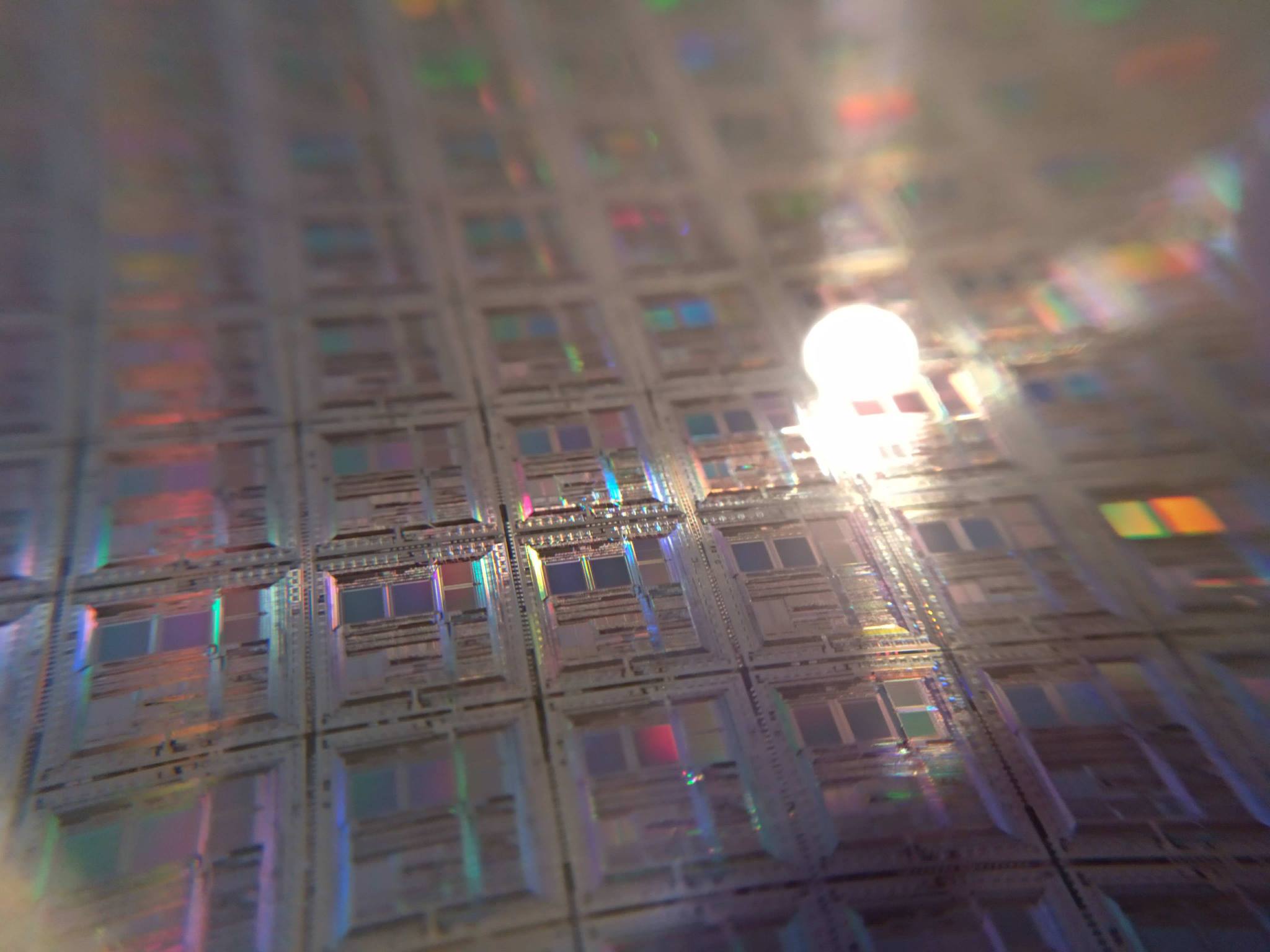
To understand why a Dutch equipment maker's capacity plans can move the whole technology sector, it helps to understand what an EUV machine actually does. Chips are built by printing circuit patterns onto silicon wafers with light. The smaller the features, the more powerful and efficient the chip — and below a certain size, ordinary light simply cannot print fine enough. EUV machines solve this with light at a wavelength of 13.5 nanometers, generated by blasting microscopic droplets of molten tin with a laser 50,000 times a second, and reflected — not refracted — by mirrors made by Germany's Zeiss that are among the flattest objects ever manufactured. A single EUV system contains well over 100,000 parts, ships in dozens of freight containers, and takes months to install and calibrate inside a customer's fab.
No other company sells one. Canon and Nikon, ASML's historic rivals, never cracked EUV. That monopoly is why every advanced processor in the AI boom — Nvidia's accelerators, made by TSMC in Taiwan; the chips Samsung and SK Hynix build in South Korea; Intel's and Micron's production in the United States; even the undisclosed facility Elon Musk's Terafab project is planning — must pass, at its most critical layers, through a machine built in Veldhoven. When ASML says it cannot supply enough machines, it is not describing one company's backlog. It is describing a ceiling on how fast the world's AI computing capacity can grow.
The capacity problem: 30 percent more, twice — and still short
Chief Executive Christophe Fouquet laid out the arithmetic on Wednesday. ASML's customers, he said, have continued to increase their demand forecasts as their own expectations for AI-related investment keep rising — and some are now showing interest in placing orders for 2029 and even 2030. Against that demand, the company's planned expansion — roughly 30 percent more capacity in 2027 and another 30 percent in 2028 — will not be enough in either year. ASML is now investigating whether it can expand 2028 capacity further, beyond the 30 percent already planned.
There are only three ways to print more wafers with a constrained machine fleet, and ASML is pushing all three. The first is more machines: the company is expected to ship roughly 65 EUV systems this year, about 50 percent more than last year, and it broke ground last month on a major expansion of its Eindhoven-area campus whose first phase is due in 2029. The second is faster machines: the next EUV model, the NXE:3800F due in 2027, is designed to process 260 wafers an hour against 230 for the current generation, and upgrades to ASML's workhorse DUV immersion systems are slated to lift their throughput to 330 wafers an hour. The third is squeezing more from the machines already installed — which is precisely what the blowout Installed Base Management quarter reflects, as chipmakers pay for productivity upgrades rather than wait in line for new tools. Chief Financial Officer Roger Dassen added the predictable corollary: with demand outrunning supply, ASML has pricing power, and the price increases it has been negotiating will show up partly in 2027 and in full from 2028 onward.
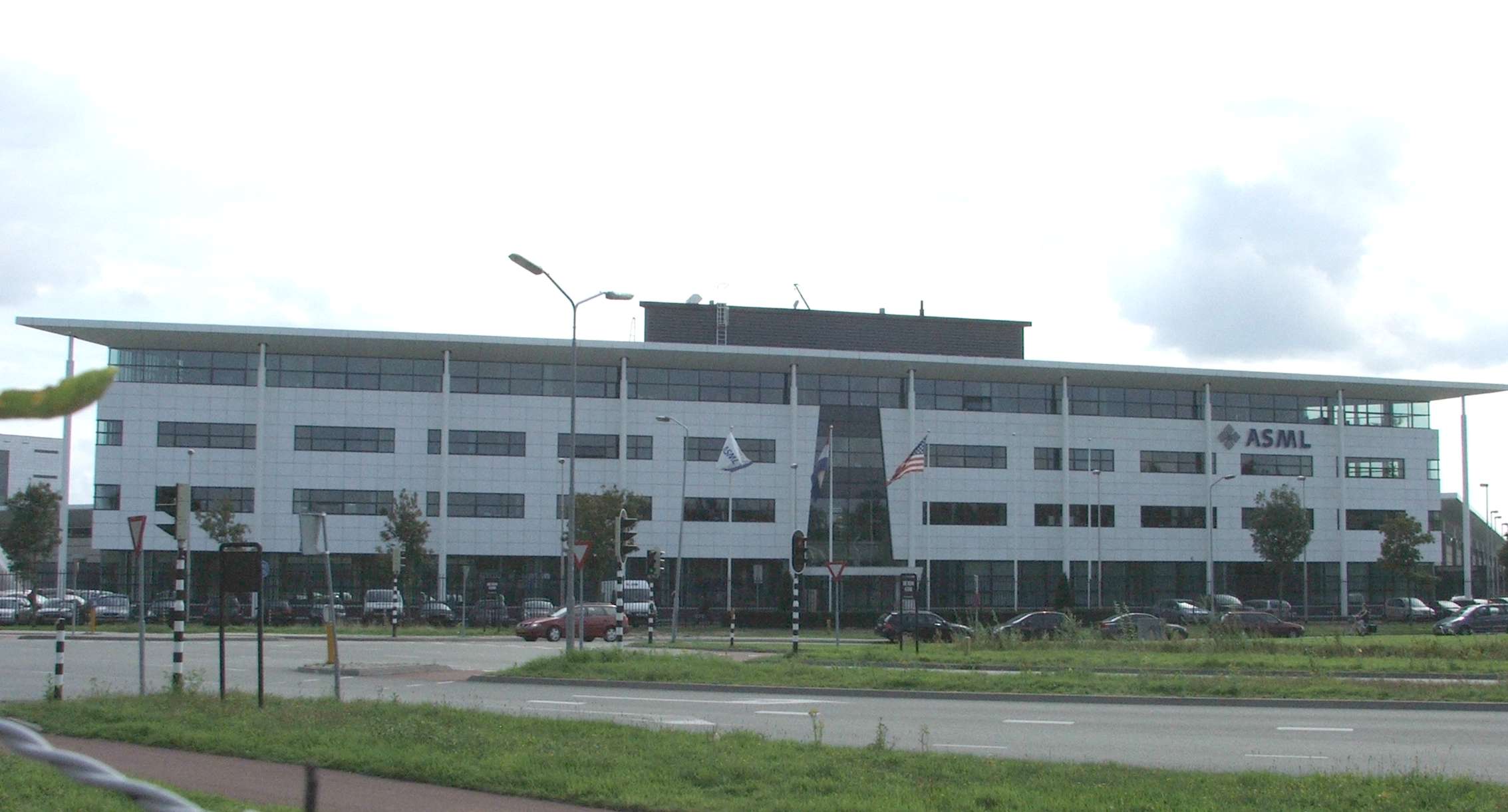
The guidance: a third raise, and a huge fourth quarter ahead
ASML raised its full-year 2026 sales outlook for the third time this year, to between €44 billion and €45 billion, with a gross margin of about 56 percent. Its fourth-quarter guidance — €14.2 billion to €15.2 billion in sales at a gross margin around 57 percent — sits above the roughly €14.19 billion analysts surveyed by LSEG had pencilled in, implying a very large end to the year as customers take delivery of systems ahead of 2027 production plans. For a company whose quarterly revenue records keep falling, the raise itself was not the surprise. The surprise was the explicit admission that the constraint is no longer demand, orders, or customers' willingness to pay — it is the physical pace at which ASML and its roughly 5,000 direct suppliers can build the most complex machines in industrial history.
The balance: what the sceptics point to
Not everything in the report pointed up. Total net sales of €11.662 billion actually landed fractionally below the roughly €11.71 billion consensus expectation — a narrow miss that, in a stock priced for perfection, was enough to send ASML's U.S.-listed shares down about 3 percent in overnight trading even as the company raised guidance. The sceptics' case has several planks. First, customer "interest" in 2029 and 2030 orders is not the same as signed orders with deposits, and ASML — which has stopped foregrounding quarterly bookings — offered no hard backlog number to underwrite the 2030 rhetoric. Second, semiconductor equipment is the most cyclical corner of the technology industry: when every customer fears a shortage, every customer has an incentive to over-order, and the industry's history — from the 2021 chip shortage to the glut that followed in commodity memory — is littered with demand signals that doubled back. Third, roughly 20 percent of ASML's sales still come from China, a market its EUV machines are barred from by Dutch and U.S. export controls and whose remaining DUV business sits under permanent geopolitical review. And fourth, the valuation: at a market capitalization north of $500 billion, ASML's shares already price in years of exactly the growth it is promising — a fact the overnight dip quietly underlined.
Who wins, who loses
A supplier that cannot meet demand is, first of all, a winner itself: scarcity converts directly into pricing power, multi-year visibility, and the leverage to ask customers to commit earlier and pay more — all visible in Wednesday's guidance and Dassen's pricing remarks. ASML's own suppliers win with it, above all Zeiss, whose EUV mirrors have no substitute, and the thousands of precision-engineering firms in the Eindhoven ecosystem. Among customers, the winners are the chipmakers who locked in allocation earliest and deepest — TSMC above all, which manufactures Nvidia's AI accelerators and has committed alongside Samsung to ASML's next-generation High-NA EUV systems. The losers are equally identifiable: any chipmaker or would-be chipmaker — national champions, startups, second-tier foundries — that now discovers the line for the machines that matter stretches past 2028; AI companies whose data-center timelines quietly assumed unlimited chip supply; and, ultimately, the buyers of AI services, who will pay prices set by scarce compute. The geopolitical ledger cuts both ways. Export controls keep EUV out of China entirely, making ASML's order book a map of the Western-aligned chip world — while guaranteeing that Beijing's well-funded effort to build a domestic alternative remains one of the industry's most consequential unknowns.
What happens next
Three milestones will test Wednesday's story. The first is ASML's own decision on 2028: whether its investigation into expanding beyond the planned 30 percent produces a new, bigger number — and whether suppliers like Zeiss can match it. The second is the fourth-quarter print in January, when the guided €14.2–15.2 billion either lands or does not, and when investors will press for hard evidence behind the 2029–2030 order interest. The third is the High-NA transition: both TSMC and Samsung have committed to the next, larger generation of EUV machines, and the pace at which those systems move from qualification into volume production will decide whether the industry's answer to the crunch is bigger machines as well as more of them. The scenarios diverge from there. In the bullish case, AI investment keeps compounding, ASML's scarcity pricing holds, and 2030 demand — the demand customers are already circling — turns into the longest order visibility the equipment industry has ever had. In the bearish case, the AI build-out pauses, double-ordered tools arrive into a softer market, and the same operating leverage that doubled profit in a year works in reverse. What Wednesday's numbers establish beyond argument is narrower, and striking enough: as of the third quarter of 2026, the limit on the AI revolution is not ideas, capital, or demand. It is the number of machines one Dutch company can build — and by its own account, that limit binds for at least two more years.
Sources
ASML's official third-quarter 2026 results release (GlobeNewswire, October 14, 2026); Reuters' coverage of the results and the 2027–2028 capacity warning; the Wall Street Journal and AFP on the raised outlook and overnight share reaction; TrendForce on EUV shipment expectations and the NXE:3800F throughput programme. Sales narrowly missed the roughly €11.71 billion consensus while profit beat it; figures are as reported by ASML under U.S. GAAP and IFRS.