Technology · Business · Markets
China blocks SoftBank ABB deal: that is the decision that landed on Thursday, November 5, when China prohibited SoftBank Group’s $5.4 billion acquisition of ABB’s robotics division in China — the division’s largest market — in a ruling ABB confirmed after SoftBank informed it of the prohibition. The deal, agreed in October 2025 at an enterprise value of about $5.375 billion, has not been terminated, and both companies say they are still working on the transaction. But a ban in the one market that accounts for roughly 30 percent of ABB Robotics’ business does not trim the deal. It puts its structure, its timing and its price in doubt, and it hands Masayoshi Son’s “physical AI” strategy its most expensive setback yet.
Track it live: Live Global Trackers — Markets
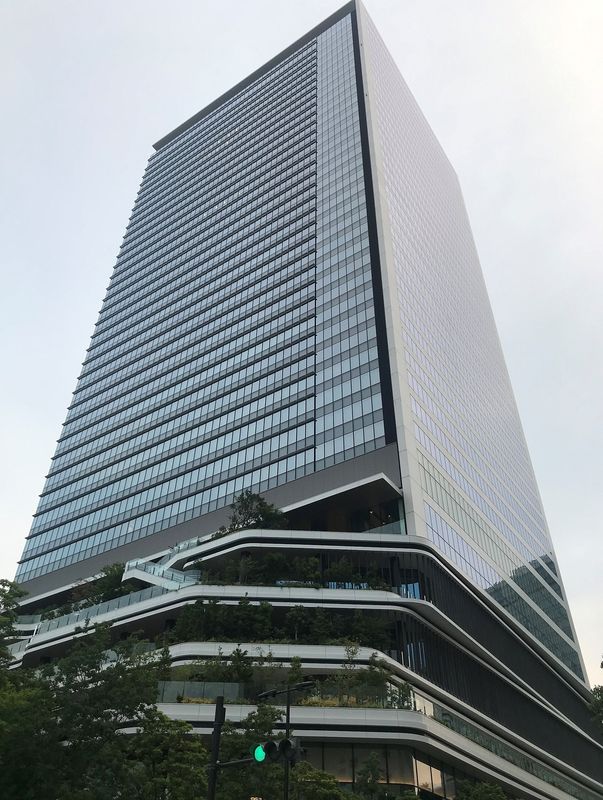
TOKYO — Start with what is actually known, because on a story moving this fast, the confirmed facts are narrower than the reaction to them. China’s National Development and Reform Commission (NDRC), acting through the Office of the Working Mechanism for Foreign Investment Security Review, has prohibited SoftBank’s acquisition of ABB Robotics in China. ABB, the Swiss engineering group selling the division, confirmed the prohibition on Thursday: it was SoftBank, ABB said, that informed ABB of the decision. The Financial Times first reported the block, and reported that SoftBank had expected approval until it was told last week that the answer was no.
Three silences frame the announcement. SoftBank declined to comment. The NDRC did not immediately respond to a Reuters request for comment. And no official Chinese reasoning has been published: the explanation now circulating — that Beijing feared robotics data generated in China could be transferred overseas and used to train AI models, including OpenAI’s — comes from Financial Times sources reported via Reuters, not from any Chinese announcement. That distinction matters, and this article will keep it: the prohibition is confirmed fact; the data concern is reported reasoning, attributed to sources, and it may not be the whole of Beijing’s thinking.
What exactly was blocked — a China prohibition, not yet a dead deal
The instrument Beijing used matters as much as the decision itself. China’s foreign investment security review is the mechanism through which acquisitions by foreign buyers can be examined for national-security risk and, as here, prohibited for the Chinese portion of a transaction. The ruling, as ABB described it, prohibits the acquisition in China. It does not, on its face, unwind a global deal that has not yet closed — but ABB Robotics is not a business that can be neatly cut along a border, and China is not a peripheral market for it. China is ABB Robotics’ largest market, at about 30 percent of its robotics business. A buyer told it cannot own the Chinese third of what it is buying is not buying a slightly smaller company; it is buying a different company, with different growth, different factories and a hole where its biggest market used to be.
That is why ABB’s careful wording on Thursday deserves close reading. ABB did not announce a termination. It said both companies are in close dialogue and working on the transaction — language that keeps every option alive, including a restructured deal, while conceding nothing about price or timing. SoftBank, for its part, had expected approval until last week, according to the FT’s reporting, which suggests the prohibition arrived late in a process the buyer believed was on track. Deals of this size are rarely killed by a single sentence; they are more often repriced, delayed and renegotiated until one side decides the remainder is not worth having. Thursday’s prohibition starts that clock. It does not yet stop it.
For readers who have watched Beijing’s review process tighten across the technology sector, the SoftBank ABB robotics takeover blocked in China fits a pattern that now has a second data point large enough to call a trend. Earlier this year, Meta was ordered to unwind its acquisition of the AI startup Manus, a deal valued at more than $2 billion — the first major transaction China blocked this year, on Reuters’ account. A forced unwind of a closed deal and a prohibition of a pending one are different tools, but they point the same way: the security review is no longer a formality that large foreign buyers clear on the way to closing. It is a gate that can stay shut, and stay shut late.
The numbers in context — $5.375 billion against a $140 billion slide
The deal itself was agreed in October 2025: SoftBank would buy the robotics division of ABB, the Swiss-Swedish engineering group, for an enterprise value of about $5.375 billion. Against SoftBank’s balance sheet that is a significant but not existential sum. The market reaction on Thursday was less about the $5.4 billion than about what the block says regarding the strategy the money was meant to buy. ABB shares fell 1.1 percent in morning trading on Thursday — a seller’s shrug, reflecting a company that keeps a profitable robotics business it had planned to simplify away. SoftBank shares fell 6.7 percent on Thursday, and the Wall Street Journal put the wider slide in stark terms: SoftBank stock is now down more than 50 percent from its June all-time highs, erasing over $140 billion in value. A single day’s fall cannot be laid entirely on one regulator’s decision; SoftBank’s valuation rides on Arm, on OpenAI and on the market’s faith in Son’s AI spending. But Thursday’s move says investors read the prohibition the way this article does — not as a lost factory purchase, but as a crack in the physical AI strategy itself. The selling pressure rhymes with the broader fragility in Asia’s AI trade seen in the Asian stocks selloff earlier this autumn, when chip and AI names fell together.
Why this matters — data is the new export control
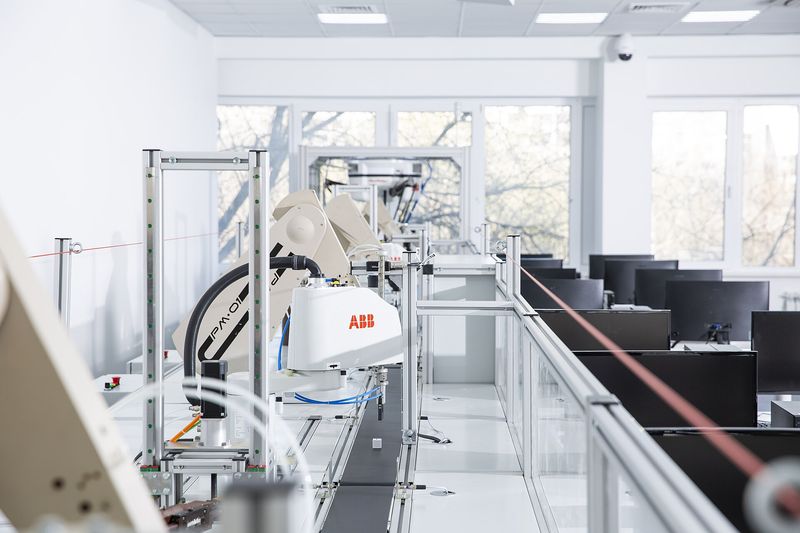
Here is the analysis underneath the headlines, and it is the reason this prohibition will be studied long after the share prices settle. A modern factory robot is not just machinery. It is a sensor platform that learns: every weld, grip, correction and failure on a production line generates data, and that data is exactly what is needed to train the next generation of “physical AI” — models that do not just generate text or images but teach machines to act in the physical world. Whoever owns the robots operating in the world’s largest manufacturing economy sits on one of the richest training-data estates in existence. The reported FT concern — that robotics data generated in China could flow overseas and help train AI models, including those of OpenAI, in which SoftBank is a major investor — is, if accurate, a claim about that estate. This is not really a fight about who owns the factories. It is a fight about who owns what the factories learn.
Seen that way, the SoftBank case belongs to the same family as the chip export controls and AI investment fights that have defined technology geopolitics for three years — including the pressure that surfaced when OpenAI’s revenue miss rattled AI chip stocks, a reminder of how tightly SoftBank’s fortunes are now bound to the AI build-out. Semiconductors were the first chokepoint, then advanced models, then the data centres that train them. Robotics data is a logical next frontier: scarcer than text, impossible to scrape from the open web, and generated inside sovereign borders. Supporters of Beijing’s framework make a data-sovereignty argument that many governments, including Western ones reviewing Chinese acquisitions in their own markets, would recognise in mirror image: data generated by machines in China, they say, is a strategic asset, and its transfer to a foreign owner’s AI programme is a legitimate security question. Critics — investors, deal lawyers and the foreign companies now repricing China risk — answer that a review which can prohibit a deal late, without published reasoning, taxes every future transaction: if a buyer cannot know the rules in advance, it will either demand a discount, structure around China from the start, or not bid at all. Both arguments can be true at once. Thursday suggests Beijing is willing to pay the second cost to secure the first benefit.
Background — Son’s physical-AI bet, and the factory at the heart of it
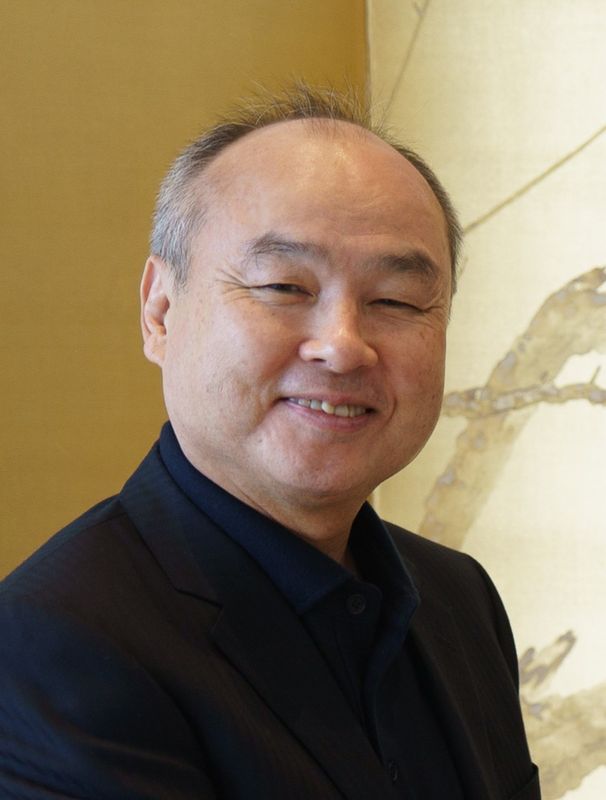
To understand why Son wanted ABB Robotics badly enough to pay $5.375 billion, follow the strategy he has been describing for two years. SoftBank’s AI position already rests on Arm, the chip designer whose architecture sits inside almost every smartphone and a growing share of data centres; on a major investment in OpenAI and the Stargate data-centre programme; and, in Son’s telling, it needed a third leg: machines that act. Robotics — “physical AI” — is that leg. The Wall Street Journal reported that the ABB unit was to headline a new SoftBank business called Roze AI, which SoftBank had hoped to spin off in an IPO as soon as this year. On that plan, ABB Robotics was not an acquisition to be tucked into a portfolio. It was the founding asset of a listed company, the proof that SoftBank’s AI story extends from chips and models into the factory floor. A prohibition in the unit’s largest market does not merely delay that plan; an IPO story built on global robotics leadership reads very differently with China carved out of it.
ABB Robotics, for its part, is one of the world’s big four industrial-robot makers, with a history stretching back to some of the first commercial electric robots and a customer base across carmaking, electronics and logistics. Its China footprint is not a sales office. It includes the company’s 67,000-square-metre, $150 million Shanghai megafactory in Kangqiao — a plant where, in ABB’s own phrase, “robots make robots,” opened after a 2019 groundbreaking and designed to supply the Chinese market from inside China. That factory is the dispute in miniature. The assets sit in China. The workers are in China. And the data those robots generate — the production knowledge of Chinese manufacturing, encoded in machine behaviour — is generated in China too. A foreign buyer headquartered in Tokyo, investing alongside an American AI champion, was always going to have to persuade Beijing that all three could change hands without the third one effectively leaving the country. On Thursday, that persuasion failed.
Who wins, who loses — and what each side says
The clearest winners, in the short run, are China’s domestic robot makers. Every year that a global leader’s Chinese business sits in ownership limbo is a year in which local champions can sell into the same factories, hire from the same talent pool and present themselves to Chinese customers as the option no regulator will ever unwind. ABB itself is a partial winner in the narrowest sense: it keeps, for now, a profitable robotics division in a growing market, and its 1.1 percent share dip suggests investors think the retained business is worth having. But ABB wanted this sale — exiting robotics was meant to simplify the group around electrification and automation — and a seller whose flagship disposal is blocked in its biggest market has a portfolio problem, not a windfall.
The losers are easier to list. SoftBank loses time, which for Son’s strategy may matter more than money: the Roze AI timetable, the IPO window and the narrative of unstoppable AI expansion all slip at once, on top of a share price already halved from its June peak. ABB loses the clean exit it announced a year ago. Deal arbitrageurs who bought either stock on the assumption of a routine closing lose immediately and mechanically. And, critics of the prohibition argue, future sellers and buyers lose something harder to price: confidence that a signed, financed, strategically logical deal in China will be allowed to close. Defenders of the review answer that this framing assumes the confidence was ever the point — that a security review which never says no is not a review at all, and that Western governments, which have blocked or conditioned Chinese acquisitions on identical data and security grounds, are poorly placed to call the mechanism illegitimate merely because it is now being used in the other direction. That symmetry argument is the strongest card Beijing’s supporters hold, and the honest version of this debate has to concede it — while noting that symmetry of principle is not the same as predictability of practice, and it is predictability, not principle, that capital prices.
What happens next — restructure, negotiate, or walk away
Three scenarios now present themselves, none of them clean. The first is a restructure that excludes China: SoftBank buys ABB Robotics everywhere except its largest market, with the Chinese business retained by ABB, sold separately, or held in some ring-fenced form. The obstacle is arithmetic and engineering at once — China is about 30 percent of the business, its Shanghai megafactory is woven into the division’s supply and research plans, and a deal priced at $5.375 billion for the whole cannot simply lose its biggest part and keep its price. The second scenario is negotiation: the companies seek a path through undertakings, most plausibly around data — commitments that Chinese robotics data stays in China, is processed locally, and is walled off from SoftBank’s wider AI programme, including OpenAI. Whether the prohibition even admits that kind of remedy is unknown, because no reasoning has been published; companies cannot easily offer to fix a concern that has not been officially stated. The third scenario is the quietest and, after a prohibition this explicit, far from the least likely: the parties agree, sooner or later, to walk away, with ABB keeping robotics and SoftBank keeping its $5.4 billion and its problem.
What to watch is therefore specific. Any statement from the NDRC would matter more than any statement from the companies, because reasoning — if it ever comes — tells every other foreign buyer where the line now runs. ABB and SoftBank updates will show whether “close dialogue” means a restructured transaction or a managed retreat. And December’s market reaction will test whether SoftBank shares can stabilise once the first shock passes, or whether the halving from June’s highs has further to run. One thing Thursday has already settled: the Manus affair was not a one-off. China has now blocked a second major technology deal this year, against a second American-linked buyer’s ecosystem, on reasoning that points at data and AI. Boards planning acquisitions with a Chinese centre of gravity will read this prohibition as a standing instruction: the security review is the deal now, and everything else — price, financing, strategy — is negotiated in its shadow.
Related coverage: OpenAI missed its revenue target and AI chip stocks tumbled, Asian stocks sell off as the AI trade crumbles and Manus raises after splitting with Meta.
Sources
Reuters, reporting on ABB’s confirmation (Nov. 5, 2026) that China’s National Development and Reform Commission, through the Office of the Working Mechanism for Foreign Investment Security Review, prohibited SoftBank’s acquisition of ABB Robotics in China, including the reported Financial Times account of the data concern, SoftBank’s declined comment and the NDRC’s non-response; The Wall Street Journal (Nov. 5, 2026) on SoftBank shares falling 6.7 percent, down more than 50 percent from June all-time highs with over $140 billion erased, and on the planned Roze AI unit; ABB statement (Nov. 5, 2026) that both companies remain in close dialogue and are working on the transaction; Financial Times reporting via Reuters on the prohibition and the robotics-data concern. Full reports: https://duke.fm/2026/11/04/china-blocks-softbanks-5-4-billion-takeover-of-abbs-robotics-division-ft-reports-2/; https://www.wsj.com/business/deals/abb-confirms-china-blocked-softbank-deal-for-robotics-unit-cf1d44bf; https://www.pymnts.com/cpi-posts/china-blocks-softbanks-5-4-billion-abb-robotics-takeover/. Photos: Wikimedia Commons, as credited in captions.