Charles Spencer Diana memoir
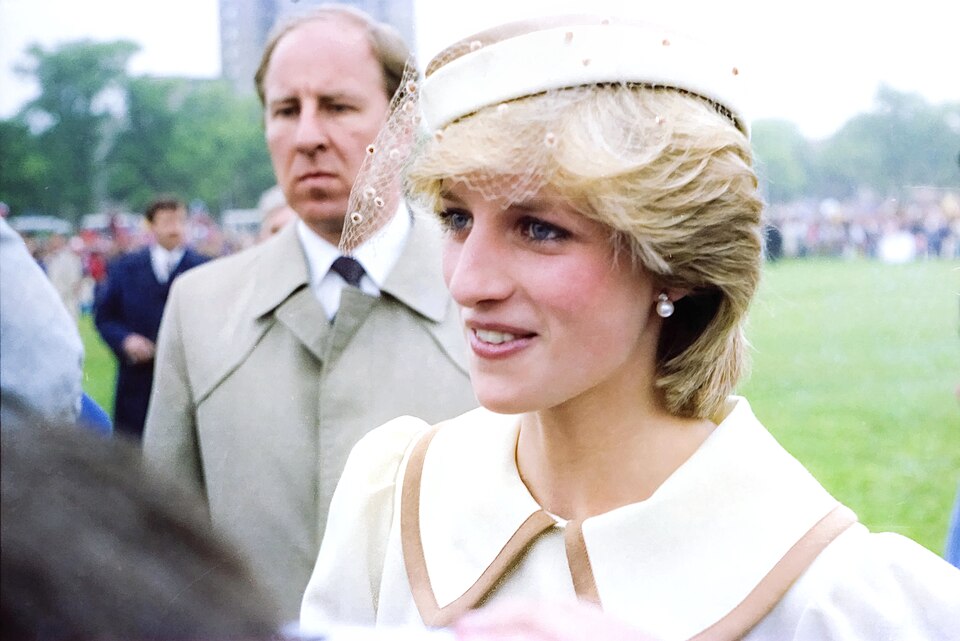
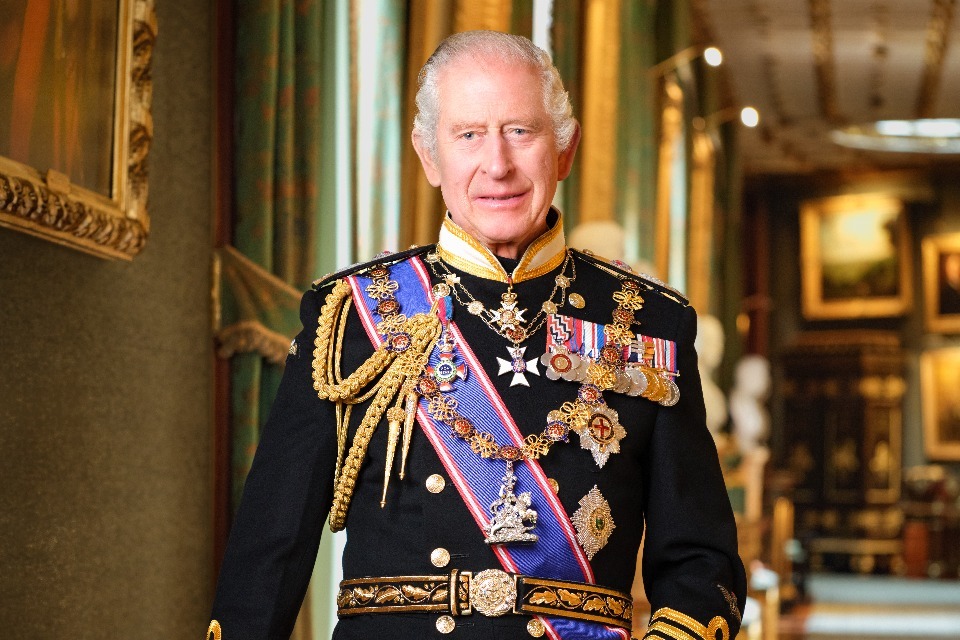

On Tuesday, September 22, 2026, the Charles Spencer Diana memoir went on sale worldwide — and with it, one of the most damaging royal rows in a generation went public in full. Swan Song: Diana, My Sister is Earl Spencer's 500-page account of his sister's life and death, carrying allegations that the now King Charles III was “giddily elated” when he learned Diana had died in Paris in 1997, and that he hissed “Rest assured, we'll forget her soon enough!” during a furious row over her funeral. Buckingham Palace has hit back in unusually blunt terms. Prince Harry, Diana's younger son, is said to be “completely fine” with the book.
That opening must be read with a necessary distinction. The publication date, the book's existence, its length, the palace's response and Spencer's public interviews are matters of record. The private conversations and states of mind described inside the book are Spencer's account. They concern moments almost three decades old, several of which had no neutral witness, and Buckingham Palace disputes the reliability of his memory. The force of the story lies partly in that collision: not an archive conclusively opened, but two powerful family narratives now competing in public.
Why this matters
Buckingham Palace says it does not comment on books “as a matter of principle.” That convention is not ornamental. Silence denies an author the spectacle of a direct fight with the sovereign, avoids validating every disputed anecdote and preserves the monarchy's claim to operate above the churn of promotion. The palace maintained that discipline through the publication of Prince Harry's Spare in 2023, despite a far wider blast radius, weeks of serialization and claims that touched the King, Queen Camilla and the Prince and Princess of Wales.
Breaking the rule for Swan Song therefore carries its own message. Whatever officials intended, the intervention signals that the King regarded Spencer's version as sufficiently personal, damaging or unfair to require an answer. The palace did not offer a point-by-point rebuttal. Instead, it questioned the mechanism behind the recollection: grief, judgment and memory. That was controlled and concise, but it also moved the quarrel from the book's pages to the institution's official voice.
The result is a fraternal war of words between the monarch and the brother who, at Diana's funeral in 1997, delivered an eulogy heard around the world. That speech challenged the forces Spencer believed had pursued and constrained his sister. Twenty-nine years later, the same fundamental struggle has returned: who gets to define Diana, who was responsible for her suffering, and whether private grief can ever be separated from public history. Diana still commands a global news cycle because her story combines family, celebrity, media power and constitutional symbolism in ways no ordinary biography can contain.
What the full book reveals
The post-publication reporting goes beyond the first serialized extracts. Reuters described Spencer's claim that, in the hours after Diana's death in Paris, Charles sounded “giddily elated,” like a “lottery winner.” It is an allegation about tone and interpretation rather than a verifiable transcript. The palace response does not specifically deny that wording; instead, it challenges the reliability of memories formed under traumatic grief. Readers should hold those two facts together rather than converting either into proof of motive.
Spencer also writes that Diana told him on the eve of her 1981 wedding that Charles was not in love with her. He places that disclosure beside an engagement-era remark allegedly made by Charles — “Oh, a bit chubby here, aren't we?” — and a rapid change in Diana's waist from 29 inches to 23.5 inches. According to Spencer's account, she had been living with an eating disorder for five months by the wedding. These details echo Diana's own later public disclosures about bulimia, but the precise private dialogue remains attributed to Spencer.
More disturbing passages concern Diana's drives to Beachy Head while contemplating suicide. Spencer says love for William and Harry kept her from acting. Because those claims involve mental distress and an absent subject, they demand particular restraint: they should not be mined as gothic royal imagery. Their relevance is in showing the severity of the condition Spencer says his sister described, and in reminding readers that later celebrity narratives can conceal an immediate human crisis.
The book also revisits Diana's status after her divorce. Spencer alleges that Robert Fellowes — Queen Elizabeth II's private secretary and Spencer's own brother-in-law — offered a restored title as a “consolation prize” after Diana lost the style Her Royal Highness. Spencer calls the handling “petty and vindictive.” The episode illustrates how titles can function simultaneously as constitutional classifications, family signals and instruments of public dignity. It also shows why the book is not simply about one marriage: Spencer casts an entire system of courtiers and kinship as participants.
The war of words
The exchange developed in stages. On September 16, the Daily Mail published an extract recounting the alleged “we'll forget her soon enough” telephone call. The next day, September 17, Buckingham Palace gave the BBC a statement that departed from its normal refusal to engage: “While we do not comment on books as a matter of principle, His Majesty is mindful that the pain of fraternal grief can cloud reason, affect judgment and colour memory in ways others do not recognise, even many years after such a loss.”
The phrasing was surgical. It acknowledged grief while implying that grief had distorted Spencer's account. It did not directly say the disputed words were never spoken. Nor did it supply a competing chronology of the funeral arrangements. In institutional terms, the palace attempted to narrow the argument from “what happened” to “whether this narrator can be trusted.” That is why Spencer treated it not as sympathy but as an accusation.
On September 21, in a Good Morning America interview with ABC News correspondent Maggie Rulli, Spencer replied: “It is not every day you wake up to find you've been gaslit by a king.” He called the statement “astonishingly provocative and below the belt,” arguing that “it was essentially trying to say I'd lied without the King being able to deny what I'd said.” His final point was blunt: “It doesn't say he didn't say it either.”
That sequence matters because both sides selected language that attacks credibility without fully litigating evidence. The palace did not call Spencer a liar; it suggested grief can colour memory. Spencer did not produce a recording; he stressed the absence of a denial. The public is left with an asymmetry common to memoir disputes: a vivid quotation travels farther than a methodological caution, while an official rebuttal can make a disputed recollection more memorable than silence would have done.
Harry’s blessing, William’s silence
Spencer told People magazine that Prince Harry was “completely fine” with the book. He recalled Harry saying, “I hope there's nothing embarrassing about him in it.” Spencer's answer was, “There isn't.” That exchange, reported in coverage of the release, is not the same as a formal endorsement of every allegation. It does indicate that Harry knew about the project and, on Spencer's account, did not object to its treatment of him.
Spencer has admitted “concern” about how William and Harry would feel about a book that portrays their father so harshly. He has also insisted that he is “not here” to write a “scandalous book” about the King. His boundary is chronological: the narrative “pretty much ends in 1997 with Diana's death, and there's a tiny postscript by the grave.” That limitation can be sincere and still leave explosive material inside the period it covers.
William has not offered a comparable public reaction. That silence should not be read as approval, disapproval or estrangement without evidence. It does, however, underline a broader contrast. Harry's relationship with royal memoir is already public and adversarial; William's public role depends more heavily on continuity with the institution he is expected eventually to lead. Spencer's account places both sons in the uncomfortable position of seeing their parents' marriage and mother's death reopened by a relative who also played a central role in the funeral.
The wider royal response remains similarly limited. The King's statement is the institutional fact. Everything beyond it must be separated from speculative briefings and anonymous interpretations. For readers wanting the pre-publication sequence, Signal Post News's earlier report on Earl Spencer's serialized claims and the first palace rebuke provides the background; the release of the complete book is the new development.
The numbers behind the noise
Retailer TG Jones said Swan Song had ranked among its top ten pre-orders since August and that sales rose 650% after the first revelations appeared. The book has been translated into twelve languages. Those figures describe momentum, not a final audited sales total, and the 650% increase needs a base number before it can be converted into copies. Still, the direction is unmistakable: controversy accelerated demand before publication.
Few nonfiction books dominate a full week of hard-news coverage before reaching readers. Swan Song did so because the commercial launch, palace statement and televised reply formed a self-reinforcing sequence. A claim generated an official reaction; the reaction validated the claim's importance; Spencer's response then generated a second news cycle. By release week, the book was no longer being covered only as biography. It had become an active dispute involving the reigning monarch.
The 1997 eulogy supplies the deeper metric. Spencer's address was watched by an enormous global audience and remembered for its criticism of the forces surrounding Diana. The book extends that intervention from minutes to 500 pages. Whether it ultimately changes the historical record will depend on corroboration, documents and how later scholars weigh memoir against contemporary evidence. In immediate media terms, the Spencer–palace exchange has become arguably the most sustained royal story of 2026, but attention is not the same thing as verification.
Background: the funeral fight
The fiercest allegation returns to the planning of Diana's funeral. Spencer says he objected to 15-year-old William and 12-year-old Harry walking behind their mother's coffin. A palace aide pointed to Lord Mountbatten's 1979 funeral as a precedent for a younger royal joining a procession. Spencer's reply was that Charles had been 30 when he walked for Mountbatten. Age was not a footnote: for Spencer, it was the moral center of the disagreement.
According to the memoir, the dispute escalated during a telephone call. Spencer says Charles “went nuts” and unleashed what Spencer interpreted as “his pent-up contempt for Diana, and his horror that the world was so bowled over by her death.” USA Today and the Daily Mail reported the account. The alleged line “Rest assured, we'll forget her soon enough!” is presented as Charles's response during that argument. No recording has been produced in the reporting cited here, and the palace contests Spencer's memory without issuing a line-by-line denial.
The facts that are independently visible are narrower. William and Harry did walk behind the coffin on September 6, 1997, alongside Charles, Spencer and Prince Philip. Spencer delivered the eulogy. The images became among the defining public scenes of the royal family at the end of the twentieth century. What was said in the private planning calls, and why each participant took the position he did, comes to readers through recollection.
That distinction is more than legal caution. It is the difference between using memoir responsibly and treating it as stenography. Spencer had proximity, emotional stake and firsthand participation. Those qualities make him indispensable and partial at once. The palace has institutional records and its own stake in reputation. A serious history will test both sources rather than granting either automatic authority.
Who wins, who loses, what the experts say
Majesty magazine editor-in-chief Ingrid Seward described the palace statement as unprecedented in its directness. “I can't think of another occasion,” she said, that a response “has been as stark.” Her observation helps explain why the story outgrew normal publishing publicity. Royal communications are measured partly by deviation from precedent; a short sentence can become major news when an institution has spent decades declining to answer.
Spencer says his motive is to correct “untruths” about Diana. The book gives him the advantage of narrative space, emotional intimacy and a public already inclined to revisit how Diana was treated. The publisher and retailers benefit from extraordinary attention. Readers may benefit if the controversy brings neglected records, letters or corroborating witnesses into view. But visibility rewards the most dramatic claim first, not necessarily the best-supported one.
The palace's calculus appears different. Dignified silence may have seemed inadequate once a quotation went to the King's reaction to Diana's death and his conduct toward two grieving sons. A controlled rebuttal allowed officials to defend him without serializing a counter-memoir. Yet the strategy carried a predictable cost: it made the palace a participant in the launch and gave Spencer an official sentence to attack on television.
The clearest losers are any near-term hope of a Spencer–Windsor reconciliation and the monarchy's preferred image of family stability during Charles's reign. The historical record also risks flattening into rival slogans — “giddily elated” on one side, “grief can cloud reason” on the other. There is no clean winner if the public discussion reduces Diana's life to ammunition. Institutional credibility improves through records and consistent conduct, not through the sharpness of a single rebuttal.
What happens next
Serialization and interviews are likely to continue as the book moves through international markets and its twelve translated editions. The immediate questions are whether Spencer releases documentary support for any of the most contested passages, whether the palace returns to silence, and whether Charles or William addresses the book directly. A second palace response would indicate that the first failed to contain the dispute; no response would not, by itself, resolve any claim.
King Charles appeared publicly on September 23 in Peterhead, Scotland, for a renewable-energy visit, his first engagement after publication. The appearance presented the monarchy's preferred counter-image: public work continuing while controversy burns at the edge of the institution. It should not be interpreted as a substantive answer to the memoir. It was evidence of the royal schedule and of the palace's capacity to separate official duty from family dispute.
The longer horizon is 2027, the thirtieth anniversary of Diana's death. Anniversaries produce exhibitions, documentaries, reassessments and renewed scrutiny of the surviving participants. Swan Song ensures that the Charles–Diana record will enter that anniversary under fresh argument. It may push historians toward new interviews and documentary searches; it may also harden camps that already treat every recollection as either revelation or betrayal.
Related Signal Post News reporting follows Karen Spencer and the wider Spencer family context, while our coverage of William and Catherine's Isle of Bute visit shows the public-work narrative against which this private dispute now unfolds. The next meaningful development will not be another adjective. It will be evidence: a document, a corroborating account, a direct denial or a decision by the principals to let the record stand.
Sources: Reuters; Associated Press report; The Times; USA Today; The Sun. Facts and figures are a fixed September 24, 2026 reporting snapshot and do not update live. Private conversations, quotations and states of mind are attributed claims from Spencer's memoir and interviews unless otherwise stated.