Bronx Mercedes Driver Blows Red Light, Kills Pedestrian in Chain-Reaction Crash on Allerton Avenue
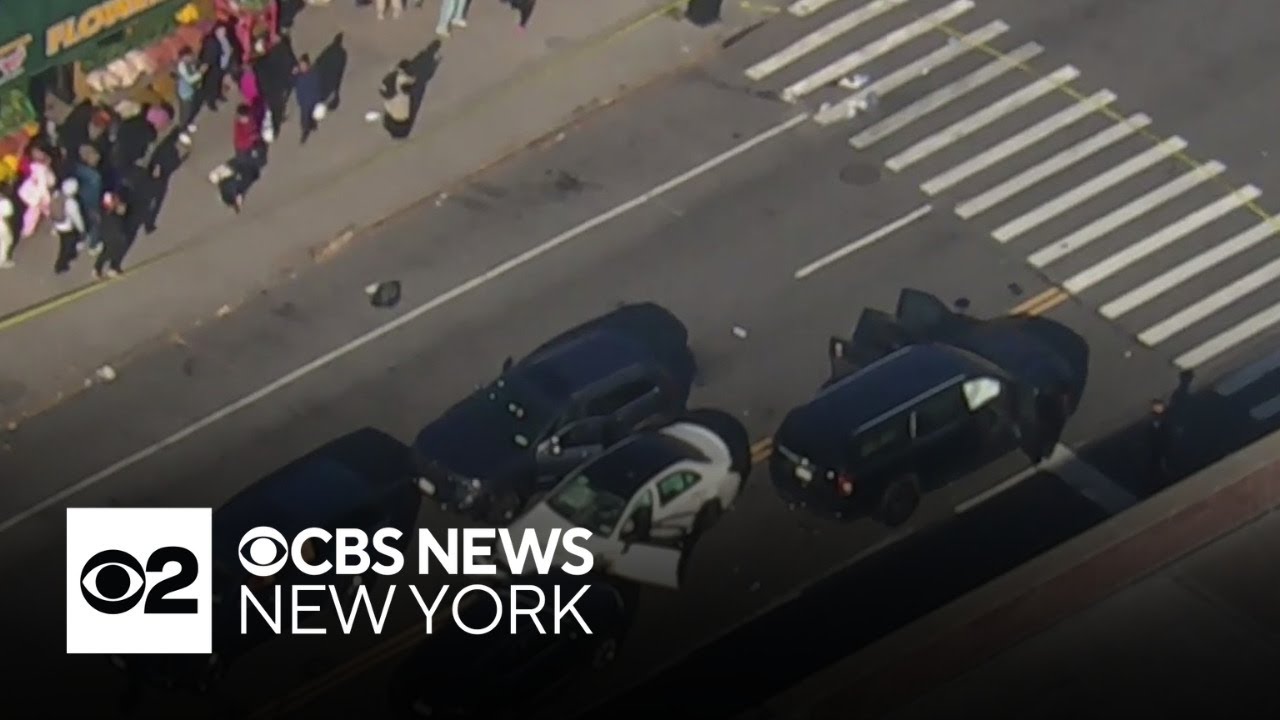
A white Mercedes-Benz traveling west on Allerton Avenue ran a steady red light at Holland Avenue at about 2:15 p.m. Friday, rear-ended two vehicles, shoved them into two more and struck four women who were crossing the street, according to early accounts from police, fire officials and law-enforcement sources. All four pedestrians, described as women in their 50s and 60s, were taken to Jacobi Medical Center. The New York Post, citing law-enforcement sources, reported that one woman was pronounced dead, two were critically injured and a fourth was expected to survive. The NYPD's public account Friday evening had not confirmed a death and instead listed nine people injured — two critically, four moderately and three in stable condition. That conflict is not a detail to smooth over; it is the reality of an unfolding investigation, and the toll may change as agencies reconcile hospital and scene reports.
Why this matters
This was not a freak mechanical failure or an unknowable act of weather. Running a steady red light is a deliberate gamble made after the signal is visible: a driver wagers that speed can beat cross traffic, pedestrians and the rules meant to keep both alive. A witness said the Mercedes driver later told him he had been trying to "beat the light." Investigators will decide what legal weight, if any, that reported statement carries. The public significance is already clear: seconds of impatience can radiate across an intersection, turning one violation into multiple impacts and a mass-casualty response.
The national scale makes the pattern harder to dismiss. The Insurance Institute for Highway Safety estimates that red-light running contributes to roughly 1,000 deaths and more than 100,000 injuries each year in the United States. Those are not random crashes in the usual sense. They are overwhelmingly preventable collisions created when a driver sees a command to stop and chooses not to obey it.
What happened on Allerton Avenue
The chain reaction began in broad daylight at one of Allerton's busy neighborhood crossings. The westbound Mercedes entered against the red at Holland Avenue, struck two vehicles from behind and pushed them into two additional vehicles, according to preliminary law-enforcement accounts. Its path then carried into the crosswalk, where four women were struck. Surveillance footage obtained by News 12 reportedly captured the car hurtling through the intersection, an image likely to become central evidence as investigators reconstruct speed, braking and the timing of the signal.
FDNY's initial account said a 911 caller reported multiple people struck near Cruger and Allerton avenues, about a block from the Holland Avenue intersection. That difference in location is consistent with the confusion of the first emergency calls and the size of the response area, not proof of a separate incident. Police and fire crews converged on the corridor, treating victims and closing surrounding streets while damaged vehicles remained scattered across the roadway.
The victims and the response
The four pedestrians — women believed to be in their 50s and 60s — were rushed to Jacobi Medical Center, the Level 1 trauma center roughly two miles from the scene. FDNY said EMS treated nine people in total. Police publicly described two patients as critical, four as moderately injured and three as stable. The Post's law-enforcement sources gave a grimmer account, reporting that one woman had died, two remained critical and another was expected to survive. Until police and hospital officials issue a reconciled update, both accounts must be read as provisional.
The crash drew a massive emergency response and forced road closures across the Allerton neighborhood, near the Bronx Zoo corridor. For residents, the disruption was immediate; for the victims' families, the far more consequential wait was for doctors and detectives to establish who survived and how a routine Friday crossing became a disaster.
The driver: what police have — and haven't — said
The Mercedes driver remained at the scene, was conscious and appeared to have minor injuries. A witness told reporters that the driver said he had been trying to "beat the light," a reported admission investigators will compare with video, vehicle data and witness testimony rather than treat as a verdict on its own. The Post's sources described the driver as 81 years old, but police had not publicly confirmed that age or released an identity Friday evening. Age, identity and medical condition remain preliminary or undisclosed; speculation cannot substitute for the evidence police are still gathering.
A city that keeps paying for impatience
New York's Vision Zero era has changed street design, lowered speeds and expanded red-light camera enforcement at scores of intersections. Yet cameras and policy cannot fully eliminate the temptation to steal a few seconds at an ordinary neighborhood light. The risk is especially acute on outer-borough arterials, where wide roads designed to move cars meet dense foot traffic, bus stops, shops and residential blocks. Allerton Avenue is not an expressway; it is a community street where people cross because their daily lives require it.
The Bronx has already faced a tense run of street-level emergencies this month, including the shooting of a man during an ICE vehicle stop and the political fallout covered in our report on New York City's response to that Bronx confrontation. Across the city, public safety scrutiny also extends to institutions, including the continuing federal investigation involving New York City schools. These stories differ sharply in cause, but each exposes how fast a routine setting can become the center of a larger argument about accountability.
Who answers for it
The NYPD Highway District Collision Investigation Squad is leading the crash inquiry. Its work will include measuring the scene, reviewing signal timing and surveillance video, interviewing witnesses, examining the Mercedes and determining whether impairment, distraction, speed or a medical issue played any role. If investigators confirm that the driver knowingly ran the light, prosecutors could consider charges ranging from reckless driving to more serious criminal liability if the reported death is officially confirmed. That is a description of the process, not a legal conclusion; charging decisions belong to investigators and prosecutors after the evidence is tested.
What happens next
The next official update should clarify the casualty count and whether police confirm the death reported by law-enforcement sources. Investigators are also expected to release the driver's identity when appropriate, determine whether charges are warranted and establish a fuller second-by-second reconstruction of the collision. A crash of this severity is also likely to prompt the city Department of Transportation to review the intersection's signal operations, visibility and pedestrian protections, even if investigators conclude the immediate cause was a driver's decision rather than a design defect.
For now, the most important unresolved fact is also the most human one: whether every person taken from Allerton Avenue is still alive. Early reporting can count vehicles and injuries faster than it can deliver certainty. What it can already show is that trying to save a few seconds at a red light cost an entire neighborhood hours of chaos — and may have cost one family everything.
Video: CBS News New York's report on the crash (Credit: CBS News New York)
Sources
- New York Post, law-enforcement-source reporting on the crash and preliminary fatality.
- Fox 5 New York, police and FDNY updates from the scene.
- CBS News New York video report, October 9, 2026.