Brazil stock market crash is the only honest description of Monday in São Paulo. Hours after President Luiz Inácio Lula da Silva completed the most improbable comeback in modern Brazilian politics — winning Sunday's runoff with 51.79 percent of the vote after losing the first round — the benchmark Bovespa index plunged through the 10 percent circuit-breaker threshold, forcing exchange operator B3 to halt trading for 30 minutes, and went on to close down about 13.9 percent at 176,608 points, its worst day since the onset of the Covid pandemic, according to the Wall Street Journal. The real fell about 8 percent against the dollar by the close, its greatest one-day decline since 1999 on LSEG data cited by the Journal, after dropping 11 to 12 percent in early trading. The Treasury cancelled its government bond auctions scheduled for Tuesday and Thursday. It was, in the space of one session, the complete unwinding of the trade investors had spent three weeks building on the assumption that Flávio Bolsonaro would win.
Track it live: live market data on the Signal Post News markets tracker.
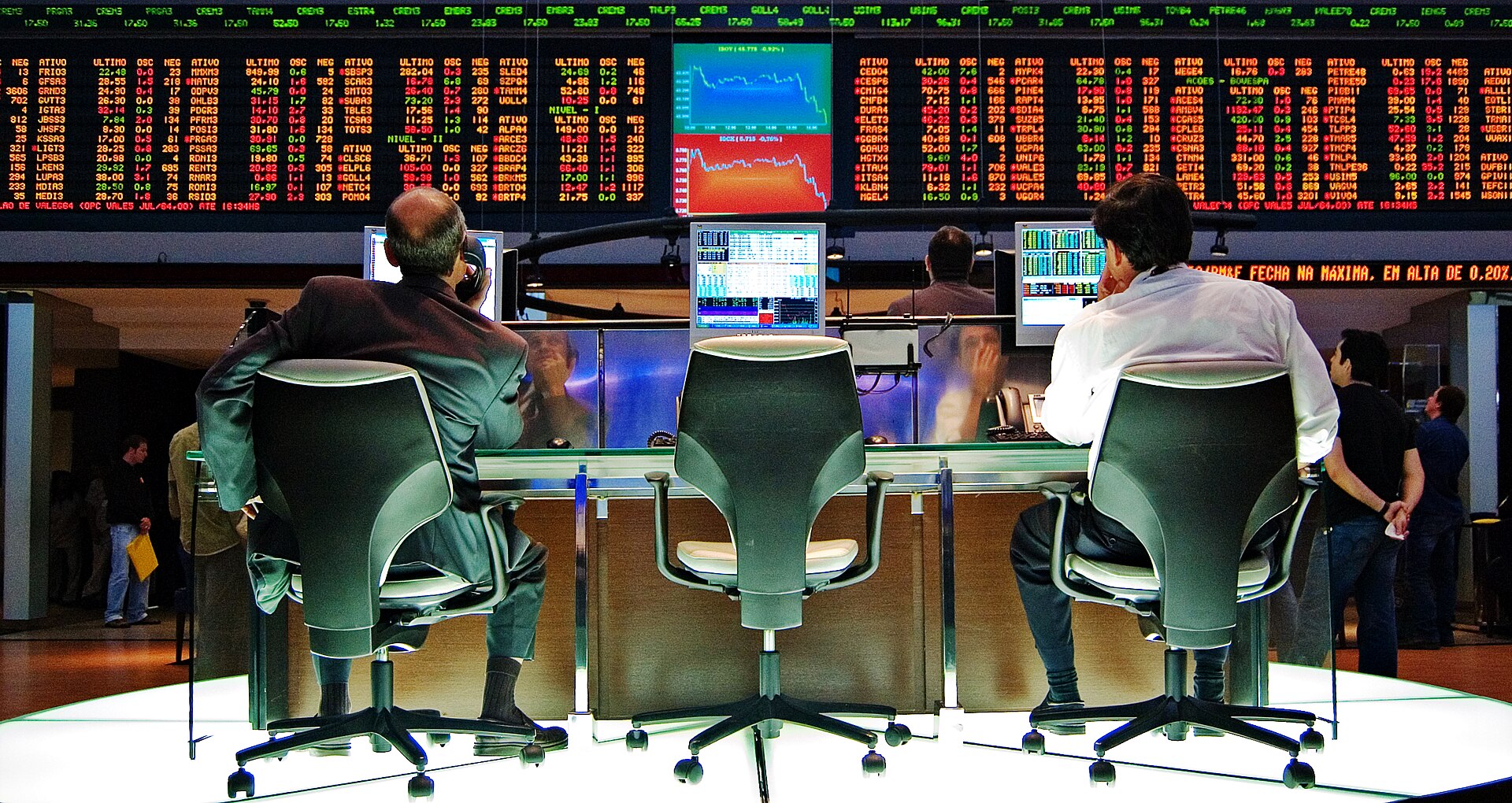
How the day unfolded: a halt, a 169,516 low, and a 3-times-normal session
The selling began before São Paulo even opened. Overseas instruments pointed down violently: the iShares MSCI Brazil ETF (EWZ) fell more than 26 percent in U.S. premarket trading, a Tokyo-listed Brazil fund dropped 15 percent in Asia, and November real futures slid more than 10 percent. B3, anticipating the wave, widened the daily trading limits on stock-index, dollar and interest-rate futures before the open. It was not enough. When the cash index fell 10 percent from Friday's close, B3 pulled the circuit breaker and stopped trading for 30 minutes, the exchange said in a statement reported by Reuters. After trading resumed, the index sank to an intraday low of 169,516 points — more than 35,000 points below Friday's close above 205,000 — before recovering part of the loss into the close.
The final tallies describe a session with few hiding places. Sixty-eight of the index's 76 stocks finished lower, and total financial volume reached 88.6 billion reais, about three times the daily average, according to Exame's closing report. Rate-sensitive domestic companies were destroyed: retailer Magazine Luiza fell 58.2 percent, leasing company Vamos 56.8 percent and health operator Hapvida 54.9 percent, as longer-term interest-rate futures surged — some swap contracts rose almost 300 basis points after hitting their trading limits, according to market reporting compiled by ZeroHedge. The only winners were the exporters the weak currency helps: pulp maker Suzano rose 10.1 percent, planemaker Embraer 8.9 percent and industrial group WEG 4.2 percent. In New York, the selloff was nearly as broad: EWZ closed down about 20 percent, Bradesco fell 28 percent, Itaú Unibanco 20 percent, Nu Holdings 17 percent and Petrobras about 14 percent, while iron-ore miner Vale — a dollar earner with China-facing revenues — limited its loss to about 3 percent, according to Investopedia's market coverage.
The debt market delivered the real verdict
Stocks grabbed the headlines, but the moves in Brazil's debt and currency markets are what will govern the next four years. Five-year sovereign credit default swaps — the price of insuring against a Brazilian default — jumped to 151.67 basis points from Friday's 120.21, S&P Global Market Intelligence data reported by Reuters showed. Longer-dated international bonds took the heaviest losses, with the 2054 maturity down 2.5 cents to yield 7.45 percent and the 2056 down close to 3 cents. JPMorgan downgraded its stance on Brazil's currency and rates from overweight to market-weight within hours. And the Treasury's decision to cancel its regular auctions of inflation-linked bonds scheduled for October 27 and fixed-rate bonds for October 29 was the official acknowledgment that the state itself did not want to borrow into this market at these prices.
Why this matters: the market had bet the country, not just the election
To understand why a 3.6-point election margin produced a near-record market collapse, you have to understand how one-sided the positioning had become. After Flávio Bolsonaro won the first round on October 4 — 47.03 percent to Lula's 45.16 percent — global investors piled into Brazilian assets on the expectation of spending cuts, deregulation and a friendlier fiscal path. Stocks had their best run in years, closing Friday almost 7 percent above their pre-first-round level and up 27 percent for the year, the best performance of any major index in the world, according to Investopedia. The real had strengthened nearly 5 percent. Prediction markets priced a Bolsonaro win at better than 75 percent as late as Friday, Kalshi data cited by Reuters showed. "Everyone is very surprised today," ING's global head of markets research Chris Turner told the Wall Street Journal. "There was a strong consensus that it was going the way of Bolsonaro."
That is the mechanics of Monday: not a considered verdict on four years of Lula government delivered in a day, but thousands of leveraged positions built for one outcome being liquidated into a market with no buyers for the opposite outcome. UBS analyst Daniel Pompiani called it a major turnaround that caught most of the market by surprise. The deeper question — what a fourth Lula term actually means for Brazil's public finances — is real, but it is a question about budgets, a finance minister and congressional arithmetic over the next year, not one that a single session can answer. What Monday priced, above all, was the death of the Bolsonaro trade.
What investors say they fear — and what Lula's side answers
The bear case is specific, and it is about debt. Brazil's public debt exceeds 82 percent of GDP, and Lula campaigned on promises that cost money: real wage growth, a shorter working week without a pay cut, debt relief for struggling households and free weekend public transport. "Lula's victory triggered a sharp market selloff as investors reassessed the fiscal outlook under his fourth term," Oxford Economics senior Latin America economist Mauricio Monge wrote, adding that Lula's biggest challenge "will be to convince markets that he can deliver a credible, sustainable fiscal adjustment while prioritizing real wage growth and employment." Macquarie strategist Thierry Wizman, quoted by the Journal, expects traders to assume Brazil will "muddle through" for four years rather than consolidate. Erste Asset Management's Peter Varga put the demand bluntly: "There is no vacation time for the next four years, and the country will need to address the fiscal issue."
Lula's side has answers, and a fair account has to include them. His economic team is targeting a budget surplus of about 1.3 percent of GDP by 2030, Reuters reported — not the profile of a government planning to spend without limit. Lula's first two terms, from 2003 to 2010, combined rising social spending with primary budget surpluses, falling debt ratios and investment-grade upgrades; the fiscal deterioration his critics cite belongs mostly to the governments that followed him. His supporters also note the obvious democratic point: markets priced an election result, voters delivered a different one — Lula took 64,256,232 votes to Bolsonaro's 59,826,041 on the completed Superior Electoral Court count — and an asset repricing, however violent, is not a veto. Attention now turns, as ING's Turner noted, to Lula's choice of finance minister and what it signals about which of those two records his fourth term will follow.

The political uncertainty layered on top
Markets were not only pricing a winner they had not expected; they were pricing a loser who has not accepted the result. As Signal Post News reported in our coverage of Lula's runoff victory, Flávio Bolsonaro has refused to concede and pledged to seek an annulment of the runoff, attacking the Supreme Court-ordered two-hour extension of voting on Sunday — the episode that paused the count on election night. That is a claim, not a finding: the completed TSE count is the official result, and no court has annulled anything. But for investors already fleeing, the prospect of weeks of legal and political contest over the legitimacy of the result — in a country whose institutions survived a genuine stress test after the 2022 election — added a second reason to sell first and ask questions later. Even raw sugar, one of Brazil's signature exports, fell nearly 5 percent on the collapsing exchange rate, Reuters reported.
What happens next
Three things will decide whether Monday was a one-day liquidation or the start of a longer repricing. First, the finance ministry: a market-credible appointment, and an early, specific fiscal framework, is the single fastest way for Lula to stop the bleeding, and his team knows the 1.3-percent-of-GDP surplus target will be tested line by line. Second, the annulment bid: if Bolsonaro's challenge is processed and settled inside the courts quickly, the political-risk premium embedded in Monday's CDS move should fade; if it metastasises into street confrontation, it will not. Third, the central bank: with the real down about 8 percent in a day and rate futures screaming higher, the bank's next signals on the Selic rate will set the cost of credit for every Brazilian household and business — the channel through which a market crash becomes, or does not become, a real-economy event. Brazil's assets were the world's best performers on Friday. They are its worst on Monday. Both facts are about expectations; the government's job now is to give investors something sturdier than expectations to price.
Sources
Reuters, "Brazil stocks, real tumble as Lula win shifts investor focus" and companion market reports, October 26, 2026 (B3 circuit-breaker statement, CDS and bond data, Treasury auction cancellations, analyst comment); Wall Street Journal, "Brazilian Markets Crash After Lula's Surprise Election Win Stuns Investors," October 26, 2026 (index fell 14 percent, worst since Covid onset; real's greatest one-day decline since 1999 on LSEG data; Turner and Wizman comment); Exame closing data via Ad Hoc News, "Bovespa closes 13.9 percent lower after Lula re-election," October 26, 2026 (close at 176,608, intraday low 169,516, volume 88.6 billion reais, stock-by-stock closes); Investopedia, "Brazilian Stocks Sink After Surprising Presidential Election Result," October 26, 2026 (EWZ and U.S.-listed closes; index up 27 percent year-to-date through Friday); Superior Electoral Court (TSE) completed count as reported October 26, 2026 (Lula 51.79 percent, 64,256,232 votes; Bolsonaro 48.21 percent, 59,826,041 votes).