On September 29 the Navy bet more than $20 billion that one company — Boeing — can build the carrier fighter of the 2040s. The decision concentrates America's sixth-generation future in a single industrial base, just as the Pacific race intensifies.
WASHINGTON — The Boeing F/A-XX Navy fighter contract, announced September 29, 2026, is the most consequential fighter decision the Pentagon has made this decade. The Department of War chose Boeing over Northrop Grumman to build the Navy's first sixth-generation carrier-based strike fighter, awarding a full-scale development contract worth more than $20 billion. Eighteen months after Boeing also won the Air Force's F-47, one company now holds both American crewed sixth-generation fighter programs.
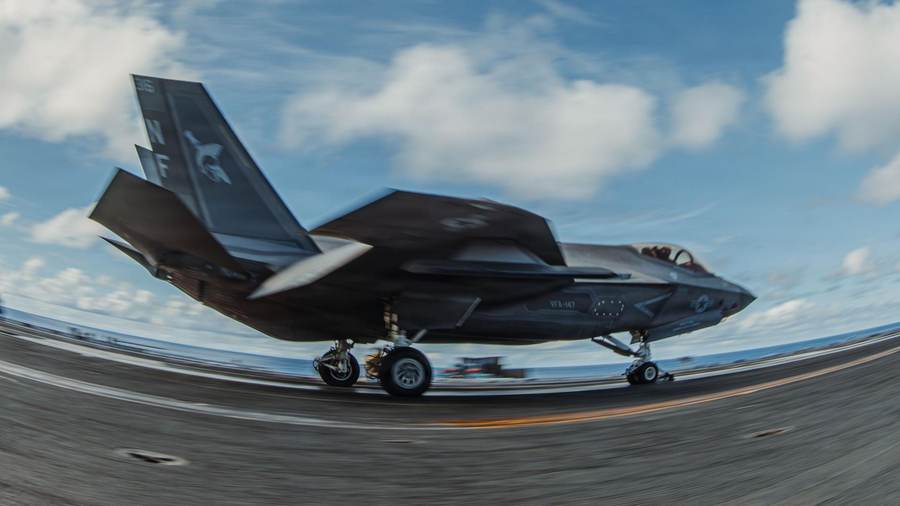
Lockheed Martin, which builds the F-35 — the only fifth-generation fighter flown by the U.S. military — dropped out last year, leaving Boeing and Northrop as the final two contenders. The Pentagon release ends more than a year of uncertainty about whether the program would survive at all.
What is F/A-XX? The Navy's sixth-generation fighter jet, explained
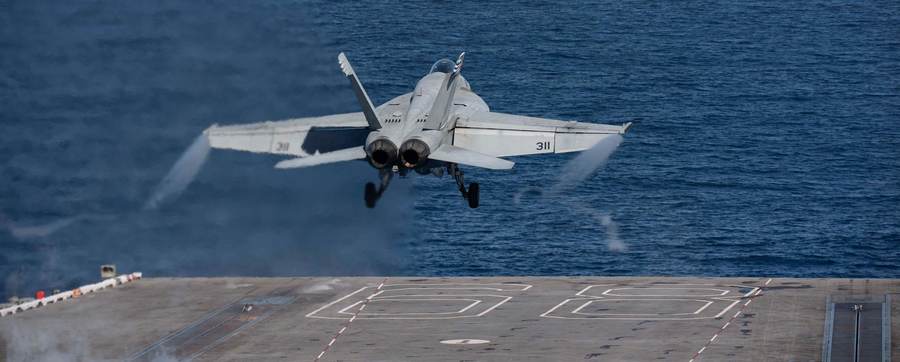
F/A-XX is the carrier-based centerpiece of the Navy's Next Generation Air Dominance (NGAD) family of systems — the answer to a hard question: what keeps an aircraft carrier lethal when adversaries can track it from thousands of miles away? Beginning in the 2030s, it will first augment and then replace the F/A-18E/F Super Hornet and the EA-18G Growler, while flying alongside the carrier-based F-35C Lightning II.
What sets it apart is what it does beyond flying: control semi-autonomous Navy drones called Collaborative Combat Aircraft, and team with manned and unmanned aircraft through an open mission systems architecture that lets new sensors, weapons and software be added as threats evolve. Boeing promises advances in mission systems, operational reach and capacity — but details remain classified. The service released a single artist's rendering of the design on a carrier deck.
The Congressional Research Service says sixth-generation aircraft will likely feature more advanced stealth than fifth-generation jets, AI-using sensors, lasers or hypersonic weapons, more advanced engines and drone teaming. The Navy's former air-warfare chief, Rear Adm. Michael Donnelly, said in April 2025 that F/A-XX could be the service's last manned fighter: "It could be our last tactical manned fighter that we operate out of the Navy. It will actually be at a point where we are more man-on-the-loop than man-in-the-loop, and be the bridge to fully integrating towards the hybrid air wing [combining piloted aircraft and unmanned platforms] in the future, in the 2040s."
"The F/A-XX is a critical pillar in our commitment to maintaining peace through strength," Michael P. Duffey, the Pentagon's undersecretary for acquisition and sustainment, said in the September 29 release. "F/A-XX will dominate contested airspace, extend operational reach, and deliver a decisive combat advantage for the warfighter."
Why this matters — America's sixth-generation future now runs through one company
The operational case is reach. The Super Hornet has been the backbone of carrier aviation since the 1990s, but Donnelly said F/A-XX would likely fly more than 25 percent farther than current Navy fighters before refueling — "a core attribute." The Super Hornet's combat range is roughly 1,275 nautical miles, slightly more than the F-35C's. Pushing that radius outward lets a carrier strike from farther beyond enemy anti-ship systems — decisive in the Indo-Pacific.
But the deeper significance is industrial. Boeing is now the sole U.S. builder of crewed sixth-generation fighters — a historic consolidation. Lockheed Martin spent two decades as America's only fifth-generation jet maker through the F-35; it now holds no sixth-generation fighter franchise. Northrop Grumman, builder of the B-21 Raider bomber, is locked out of the next-generation fighter market for years. Never in the jet age has the entire American crewed fighter future — Navy and Air Force — sat with one prime contractor.
Acting Navy Secretary Hung Cao called the decision "a new era," and Missouri Gov. Mike Kehoe celebrated with "St. Louis is Fighterland, USA!" Boeing's shares rose on the news while Northrop's fell.
How we got here — a frozen program, a congressional rescue, a two-horse race
F/A-XX nearly died before it was born. After Boeing won the F-47 in March 2025, the Pentagon moved in mid-2025 to put the Navy fighter on ice, arguing the industrial base could not support two next-generation fighters at once. The freeze clouded the program's funding and timeline through much of 2025 and 2026.
Chief of Naval Operations Adm. Daryl Caudle said in January the service had to "walk and chew gum" and build the fighter without delay, citing the growing air defenses of China, Russia and Iran. Congress intervened: lawmakers earmarked $750 million in the 2025 tax-and-spending law, and fiscal 2026 appropriations carried $972 million in F/A-XX R&D funding with direction to award a single development contract. The award landed just before that money expired.
The rollout was strikingly quiet next to the F-47's live White House broadcast — a sign of how classified the work remains.
The F/A-XX contract's $20 billion question — what the money actually buys
The headline number needs context: more than $20 billion covers full-scale development, not production. It buys multiple test aircraft for ground testing, airworthiness evaluations, and systems and weapons integration — the decade-long grind that turns a design into a carrier-capable weapon. Whatever the fleet costs will be a multiple of that.
For scale, the F-35's lifetime acquisition-and-sustainment bill tops $2 trillion, per the Government Accountability Office. F/A-XX will never approach that — the Navy will buy hundreds of carrier fighters, not thousands — but the development award already ranks among the largest aircraft R&D contracts in Pentagon history.
The timeline math is unforgiving. Award in September 2026, service entry "beginning in the 2030s," full Super Hornet and Growler replacement into the 2040s — the jet must stay relevant against threats two decades out, on technologies classified today.
The money lands on a company with a mixed recent record. Boeing booked more than $5 billion of losses on its biggest defense contracts in 2024 and another $800 million in 2025, including over $2.7 billion in charges for its KC-46 tanker. Its MQ-25 Stingray refueling drone was supposed to fly in 2021 but first flew in April 2026, and is not expected to operate until 2029 — about four and a half years late. The same day it won F/A-XX, Boeing also received a roughly $16.7 million Navy order to plan shutting down the Super Hornet and Growler lines in St. Louis.
Boeing beats Northrop Grumman — who gains, who loses, what the critics say
Boeing gains a second sixth-generation franchise to pair with the F-47 and the long production tail that comes with it. St. Louis and Missouri gain the geographic center of American fighter production — Boeing's secure manufacturing facility there, billed as the largest in the United States, is still under construction. Navy aviators gain the range and drone-teaming they asked for; suppliers gain a decade of funded development.
Northrop Grumman, which said it "offered a highly survivable, digitally advanced sixth-generation fighter," keeps a protest option — the one near-term uncertainty over the award. Lockheed Martin, shut out of both sixth-generation competitions, faces a future in which its F-35 franchise ages while Boeing owns the next generation. Taxpayers carry the classic development-contract risk: $20 billion-plus with classified specifications and a contractor whose recent defense record includes multibillion-dollar write-downs.
The critics' case has three strands. First, monopoly: both crewed sixth-generation programs at one company erodes competitive pressure for decades. Second, capacity. Analyst J.J. Gertler told Air & Space Forces Magazine that F-47 work could accelerate F/A-XX if the designs share DNA — "they might be able to put an aircraft in the air very quickly" — then asked the question the Pentagon asked in 2025: "They've got F-15EX numbers expanding. They've got T-7 there. Do they have the people to be able to produce this aircraft quickly?" Third, schedule risk: the MQ-25's four-and-a-half-year slip is the cautionary tale critics will cite the first time F/A-XX misses a milestone.
"It's an honor to be selected to produce the Navy's first sixth-generation platform," Steve Parker, president and CEO of Boeing Defense, Space & Security, said in the company's statement. "Delivering two advanced fighters in parallel was always our plan, and we invested accordingly."
The China race — why the Navy can't wait for sixth-generation airpower
F/A-XX's entire logic is keeping the carrier strike group lethal at those extended distances: longer range, stealthier penetration, unmanned teammates widening the sensor and weapons envelope.
The range number matters more than any artist's rendering. A fighter that flies 25 percent farther before refueling changes where the carrier itself can safely operate — and therefore the geography of a Pacific conflict. The pilot's job is evolving from flying one aircraft to commanding a small formation of crewed and uncrewed aircraft — F/A-XX as the quarterback. If China is building toward the same hybrid air wing, the race is about whose industry fields the system of systems first.
The carrier air wing of the 2040s — what happens next
First, the protest window: Northrop can challenge the award, freezing work during review. Second, the engineering: design, ground testing, airworthiness evaluations, weapons integration, and carrier-suitability trials — catapult launches and arrested landings no Air Force fighter ever faces. The Navy has not announced a designation; for now it is simply F/A-XX, a placeholder for a jet that does not yet exist.
Third, integration: making F/A-XX genuinely interoperable with Collaborative Combat Aircraft drones and the F-35C through open mission systems that work across services and vendors. Donnelly's 2040s air wing — piloted fighters commanding unmanned teammates — only works if the networking is real, not a slide-deck promise.
Three scenarios are worth watching. The most likely: the award survives any protest, development runs a decade-long arc, and the first F/A-XXs replace the oldest Super Hornets in the mid-2030s while costs creep and schedules slip. The optimistic case: shared F-47 DNA genuinely accelerates development, St. Louis staffing holds, and the open architecture upgrades fast enough to matter. The pessimistic case: capacity strain across Boeing's crowded St. Louis lines, a protest that delays the start, or a requirements spiral as the classified design meets carrier operations.
Conclusion: the September 29 decision did not just pick a fighter; it picked an industrial future. One company will now design the airframes, write the mission software and build the production lines for every crewed sixth-generation fighter the United States flies. Whether that concentration proves a masterstroke or a single point of failure will be decided in St. Louis hangars, Pentagon budget fights and — eventually — on carrier decks in the Pacific. The Navy has placed its bet. The race is on.
Related coverage
Sources
- The Wall Street Journal — "Navy Chooses Boeing to Build Next-Generation Jet Fighter" (September 29, 2026)
- Air & Space Forces Magazine — "F-47 Maker Boeing Tapped for Navy's F/A-XX Sixth-Gen Fighter" (September 29, 2026)
- New York Post — "Boeing lands $20B-plus Navy deal for sixth-generation fighter" (September 30, 2026)
- SOFX — "Navy Picks Boeing Over Northrop Grumman to Build F/A-XX Carrier Fighter" (September 29, 2026)
- Army Recognition — "U.S. Navy Selects Boeing F/A-XX Sixth-Generation Fighter to Replace F/A-18 Super Hornet" (September 30, 2026)
- Reuters — pre-award reporting on the F/A-XX decision timeline and China's advanced combat aircraft programs, cited by name (no direct URL available)
Reporting basis: the September 29, 2026 Pentagon/Department of War award announcement as reported by the Wall Street Journal, Air & Space Forces Magazine, the New York Post, SOFX and Army Recognition, with pre-award context from Reuters. Aircraft performance figures beyond the Navy's stated range goal remain classified; the analysis of industrial, strategic and budget implications is Signal Post News's own. This is a fixed September 30, 2026 reporting snapshot.