Blue Origin IPO date
Jeff Bezos has given the clearest signal yet that Blue Origin could become a public company. The important caveat is in his own timetable: “several years,” not an imminent filing, stock symbol or launch date for shares.
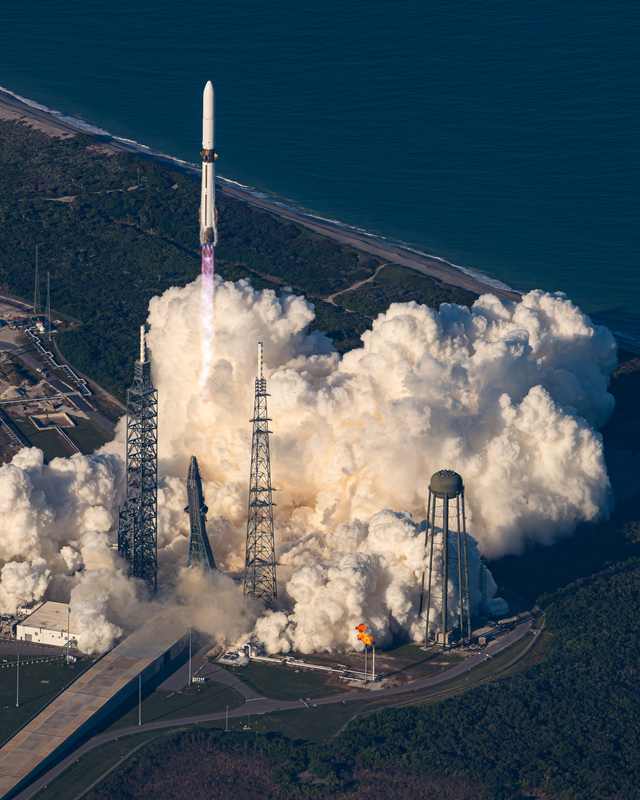
Jeff Bezos said Wednesday that Blue Origin will probably pursue an initial public offering in the coming years, his most direct acknowledgment that the space company he founded in 2000 may eventually open its ownership to public investors. The remark matters because it follows Blue Origin's first major outside funding round, a $10 billion raise that shifted the company away from near-total reliance on Bezos's fortune and reportedly valued it at $140 billion.
It is not, however, an IPO announcement. There is no Blue Origin IPO date, no regulatory filing, no underwriting group, no stock symbol and no price available to ordinary brokerage customers. For investors asking can you buy Blue Origin stock, the answer remains no in the public market.
Why this matters
Blue Origin has spent more than a quarter-century behaving like the private project of one of the world's wealthiest founders. Bezos supplied patient capital, accepted long development cycles and kept the company largely insulated from quarterly pressure. His suggestion that public ownership “probably makes sense” indicates that the financial model may be changing just as the commercial space sector enters a new phase.
SpaceX's June 2026 listing established a public-market benchmark for a scaled launch-and-satellite company. Other financial outlets have placed the rival's IPO valuation near $1.75 trillion, a reported figure that underscores both investor enthusiasm and the extraordinary distance Blue Origin still has to close. Blue Origin's case is not that it has matched SpaceX; it is that a credible second large platform could command capital of its own.
That distinction is important for a market already weighing expensive technology bets. Signal Post News's analysis of SpaceX's post-listing scale and proposed $40 billion Nvidia-chip financing shows how quickly access to public and institutional capital can expand a technology company's ambitions. Our report on today's stock-market backdrop also shows the other side: elevated yields can make distant, capital-intensive promises harder to value.
What Bezos actually said
Appearing on Fox News Channel's “Special Report with Bret Baier,” Bezos framed public ownership as a logical eventual destination rather than a transaction already in motion. “I think, someday, Blue Origin will have an IPO,” he said, adding that it would be “several years from now” but would probably make sense for the business at some point.
The timing language is the center of the story. “Someday” and “several years” give Blue Origin room to build a launch record, advance its lunar work and decide whether public-market scrutiny would help or hinder those goals. According to Reuters's report on Bezos's remarks, the interview came after the first outside capital raise in Blue Origin's history.
The comment therefore clears one hurdle — founder willingness — while leaving almost every execution question unanswered. An IPO becomes real when a company appoints advisers, prepares audited disclosures, files an S-1 registration statement and submits itself to investor price discovery. None of those steps has been announced.
The money trail: from Bezos's fortune to outside capital
Bezos said he has put $28 billion of his own money into Blue Origin since founding it. That number explains both the company's freedom and its constraint. One founder could finance years of engine development, launch infrastructure and spacecraft work without negotiating each round with venture investors. But even a fortune measured in the hundreds of billions is an awkward permanent funding source for a business trying to compete across rockets, lunar systems and national-security programs.
The new $10 billion round changes the balance. It brings professional outside investors into the capital structure for the first time and creates an external reference point for value. The Wall Street Journal reported in September that the round valued Blue Origin at $140 billion. At that level, the private company would already be comparable in size to a substantial public corporation and large enough to sit among major index constituents if it were public and otherwise eligible.
A private valuation is not the same as a public stock price. Funding-round terms can include preferences, protections or other rights that common shareholders do not receive. An eventual IPO could price above $140 billion if operations improve and space valuations remain strong, or below it if markets weaken, launches slip or investors demand a discount for execution risk. The figure is a signal, not a guarantee.
What the $140 billion valuation implies
For the bullish case, the valuation says sophisticated investors see more than a launch startup. Blue Origin holds multibillion-dollar work for NASA and the U.S. Space Force, participates in the Artemis lunar program and has built infrastructure that would be difficult for a newcomer to reproduce. An IPO could fund more vehicles, factories and missions while diversifying the company's dependence on Bezos.
For skeptics, $140 billion raises the bar before Blue Origin has proved New Glenn can launch reliably at a cadence that materially challenges SpaceX. Public investors would not merely be buying engineering potential; they would be underwriting years of heavy expenditure while expecting visible progress toward revenue and cash flow.
How Blue Origin arrived here
Blue Origin began in 2000, roughly 18 months before Elon Musk founded SpaceX. The similar ages hide opposite financing strategies. Bezos largely self-funded a deliberate development program. SpaceX repeatedly raised outside money, won government work, scaled launch operations and used Starlink to build a recurring revenue engine. The comparison is often simplified into “slow versus fast,” but the more useful distinction is between two ways of absorbing technological and financial risk.
Blue Origin's approach produced real assets and contracts, including NASA and Space Force work and a role in America's return-to-the-Moon architecture. Yet it also left the company trying to translate engineering milestones into a commercial launch rhythm after its principal rival had already achieved dominant scale.
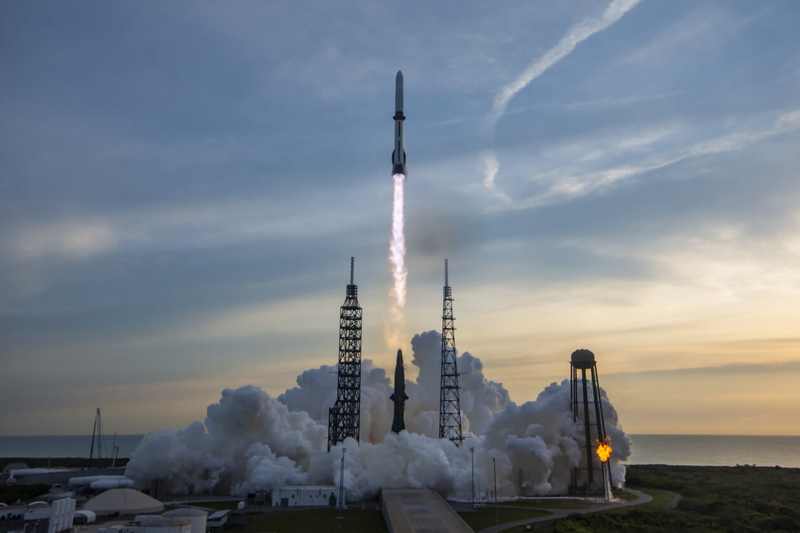
New Glenn is the pivot. Bezos said Blue Origin intends to fly the heavy-lift rocket again in December. That target follows a May explosion on the launch pad during a static-fire test, which delayed the campaign and sharpened questions about schedule and reliability. A successful return would not settle the competition, but it would give prospective investors tangible evidence that the program is moving forward.
Who benefits, who waits and what critics say
Outside investors gain a possible exit path
The institutions that supplied the new $10 billion now have a plausible route to liquidity. An IPO is not the only route — a sale or private tender could also return capital — but Bezos's words make a listing easier to model. If Blue Origin reaches its operational milestones, those investors could benefit from entering before public price discovery.
Employees could finally see broader liquidity
Earlier Financial Times reporting described employee frustration over expiring options and said CEO Dave Limp had told staff there were no immediate IPO plans. Those accounts form part of the bear case, not proof of a current timetable. A future listing or well-structured tender offer could give employees a clearer way to convert equity into cash, but waiting several more years may still strain retention.
Retail investors still cannot buy Blue Origin stock
Searches for Blue Origin stock price or Blue Origin stock symbol can produce misleading pages. Blue Origin is not publicly traded, so it has no official ticker. Promotions using “BORGN” or similar invented symbols, tokens or supposed pre-IPO access should not be treated as Blue Origin securities without rigorous verification. A ticker-like label is not evidence of ownership.
Some accredited investors may encounter Blue Origin interests on private-market or secondary platforms, but those transactions can be illiquid, restricted, expensive and dependent on the authenticity of the seller's shares. They are not equivalent to buying listed stock through a normal brokerage. For most people, the honest answer to is Blue Origin publicly traded remains no.
The SpaceX-dominance counterargument
The strongest skeptical case is operational rather than ideological. SpaceX has more launches, an established satellite network and a long record of attracting outside capital. Blue Origin must spend heavily to prove New Glenn's reliability while pursuing programs with long timelines and demanding customers. A May test accident does not make failure inevitable; it does demonstrate that capital cannot substitute for flight performance.
Public ownership also changes incentives. Quarterly reporting can impose discipline and transparency, but it can punish delays that are normal in aerospace. The structure that helped Blue Origin tolerate long development may be harder to preserve once thousands of shareholders expect regular results.
What happens next
The most important milestone is not an IPO roadshow. It is the next New Glenn flight. A successful December mission would support Blue Origin's argument that it is moving from development toward repeatable operation. Another significant delay or technical failure would give the skeptical valuation case more weight.
NASA's Artemis progress will matter as well. Investors will want to see contract milestones translate into durable revenue and a credible lunar schedule. Tender offers, employee-liquidity programs and secondary-market activity could provide earlier clues about how the company and its new investors value the business before any filing.
Eventually, an S-1 would replace speculation with numbers: revenue concentration, backlog, operating losses, capital needs, risk factors and the rights attached to different share classes. Until then, every proposed Blue Origin IPO date is an estimate rather than a company commitment.
Two scenarios to watch
Fast-track scenario: New Glenn returns in December, launch cadence improves, Artemis milestones arrive and outside investors press for broader liquidity. Under that path, Blue Origin could begin formal IPO preparation sooner within Bezos's several-year window, especially if public demand for space stocks remains strong.
Delay scenario: New Glenn suffers more setbacks, lunar timelines slip or markets reprice long-duration growth companies. Blue Origin could then continue using private capital and Bezos's resources, postpone a filing or conduct additional private rounds. Bezos's phrasing leaves ample room for that outcome.
The bottom line is narrower than the excitement around it. Bezos has moved a Blue Origin IPO from a topic outsiders debated to an outcome the founder says probably makes sense. That is a meaningful change. It is still several steps — and, by his own account, several years — away from a stock anyone can buy.
Blue Origin IPO questions
What is the Blue Origin IPO date?
Blue Origin has not announced an IPO date. Jeff Bezos said a listing would be several years away, and the company has not filed an S-1 registration statement.
Can you buy Blue Origin stock?
Not through a normal public brokerage. Blue Origin remains private. Limited secondary transactions may be available only to qualifying accredited investors and carry restrictions and liquidity risks.
What is the Blue Origin stock symbol?
There is no official Blue Origin stock symbol because the company is not publicly traded. Any ticker promoted as Blue Origin should be treated as unverified unless it appears in an official company filing.
What is Blue Origin's valuation?
The Wall Street Journal reported that the 2026 outside funding round valued Blue Origin at $140 billion. That private-round valuation is not a public stock price and can change before an IPO.