Athens explosion four injured: two police officers and two members of the public were hurt on Wednesday, October 21 when a backpack thought to contain drugs detonated as officers inspected it at a building in the Kolonos district of central Athens.
Europe / Greece — a routine drugs call, a bag by a ground-floor lift, and two conflicting accounts of what set the device off
What happened in Kolonos on Wednesday
The sequence, as Greek police described it to Reuters, began with a call about drugs, not about a bomb. Police had earlier received a call from a resident and the manager of the building notifying them of suspected drugs at the building’s entrance in Kolonos, a densely residential district in central Athens. Officers who reached the building picked up a backpack thought to contain drugs — and the blast followed as they inspected it.
Anadolu’s account, reported via Qazinform, adds the physical detail that makes the scene legible: the bag had been left near a ground-floor elevator, and when two officers opened it they discovered what appeared to be drugs, weighing scales and pills before an improvised explosive device detonated under unclear circumstances. Firefighters also responded to the incident, Anadolu reported.
All four injured people were taken away in ambulances, police said in a statement reported by Reuters. Anadolu reported that one officer sustained more serious injuries to an eye and a hand. Neither wire named the injured, gave the hospital, or published a full condition list on Wednesday, and readers should treat any more specific injury claims circulating elsewhere with caution until Greek authorities publish them.
Two early accounts of the trigger — and why neither is settled
Here is where an honest report has to slow down, because the two reputable accounts of the detonation do not agree with each other.
Reuters, citing a second police official, reported that the bomb went off as police inspected the backpack and “was potentially activated remotely” — and that police later found parts of an explosive device at the scene. Anadolu reported that officials described a device containing a detonator connected to batteries and low-grade explosives, and that initial reports suggested one of the officers may have pressed a button on the detonator, triggering the explosion.
Those are materially different stories. A remotely activated device points toward a deliberate trap set for whoever handled the bag — most plausibly, in that reading, for police or for a rival in a drugs dispute who was expected to open it. An accidentally pressed detonator button points toward a device that was armed and catastrophically unsafe to handle, but not necessarily triggered by a watching attacker. Greek police have not, in the reporting available on Wednesday, publicly resolved which account is correct, and the forensic examination of the device parts recovered at the scene is the obvious route to an answer. Until that examination is reported, any outlet stating the trigger as settled fact is getting ahead of the evidence.
Not terrorism, police say — the homicide unit investigates
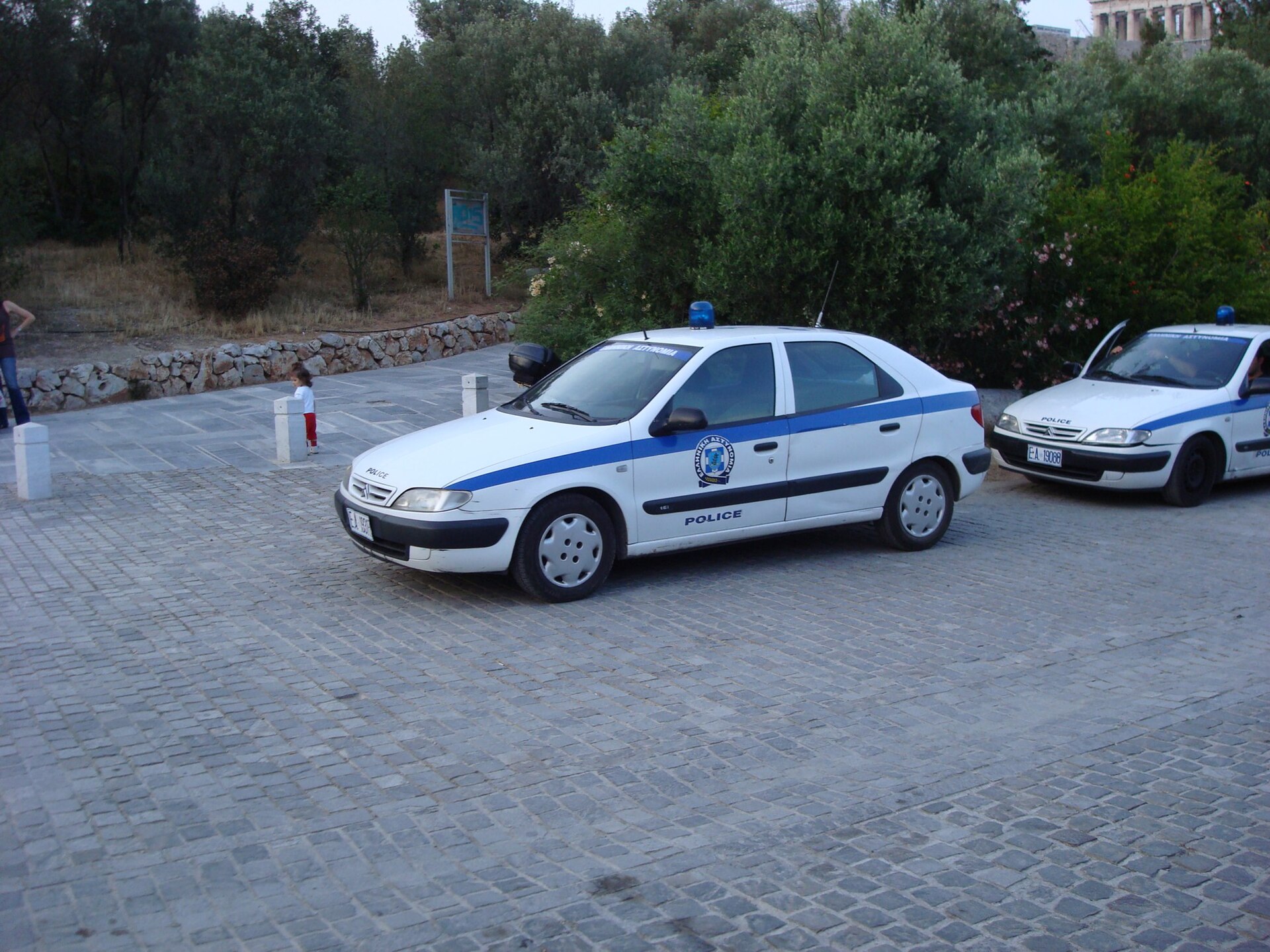
The classification police chose on Wednesday matters for how readers should understand the risk. A police official told Reuters the blast is not being treated as a terrorist act, and that the homicide unit — in some syndicated copies rendered as the murder unit — is leading the investigation. That framing, combined with the reported contents of the bag (suspected drugs, scales and pills), points investigators’ public posture toward the criminal and drugs economy rather than toward a political attack.
That posture should be reported precisely, and no further. Police have not named a suspect, announced an arrest, identified whose drugs the bag allegedly held, or said who the device was intended for in the reporting available on Wednesday. A booby-trapped drugs bag, if that is what the forensic work eventually shows, would be a grave escalation in ordinary criminal violence precisely because its victims were whoever happened to handle it — on Wednesday, two officers doing a routine call-out and two civilians, one of them the manager who had done the publicly responsible thing and reported the bag in the first place.
Why this matters
An explosion that injures four people and kills none can slide past international attention in a day. It should not, for three reasons that go beyond the casualty count.
First, the setting is the story. This was not a remote warehouse or a targeted gang address at 3 a.m. It was the entrance of an occupied apartment building, by a ground-floor lift, in a working central-Athens neighbourhood, in daylight hours when residents, children and passers-by move through exactly that space. A device left in a bag in a shared entrance converts every neighbour into a potential victim, and every building manager in the city now has a concrete reason to wonder what a routine “suspicious bag” call can lead to.
Second, the incident exposes a procedural knife-edge that every police force in Europe lives with. The officers were called about drugs. The bag reportedly did contain the paraphernalia of the drugs trade. Nothing in the first minutes of that call-out announces “explosive device” — and yet, on the accounts reported so far, handling the bag is exactly when the device went off, seriously injuring one officer’s eye and hand on Anadolu’s reporting. Whether the trigger was remote activation or an accidental press is not a detail for its own sake: the answer determines whether the lesson is about surveillance and ambush risk, or about handling protocol and when a drugs bag must be treated as a bomb until a specialist unit clears it.
Third, the drugs context is a signal worth reading carefully, without inflating it. Scales and pills in a backpack are street-level trade, not a cartel shipment. If a device of this kind was genuinely combined with a street-level drugs bag — a finding that still depends on the forensic and investigative work now under way — it would suggest a willingness to use explosive violence at the lowest, most local rung of the trade, in a European capital, in a shared residential space. That is a different and in some ways more corrosive kind of danger than an organised attack on a symbolic target, because it is unpredictable, deniable and woven into ordinary streets.
The numbers, in context
The verified figures from Wednesday’s reporting are small and should be kept exact: four people injured in total; two of them police officers; two of them members of the public, one identified as the building manager; four ambulances’ worth of casualties removed from the scene, in the police statement’s phrasing that all four were taken away in ambulances; one officer reported by Anadolu with more serious eye and hand injuries; zero deaths reported by either wire; and one device, described as improvised, built around a detonator, batteries and low-grade explosives on Anadolu’s account, with device parts later found by police on Reuters’ account.
Set against the kind of explosion Athens residents fear most — a political bombing of a public target — this incident is, on current police classification, a different category of event. Set against an ordinary drugs arrest, it is an extraordinary one. That in-between position is precisely why precision matters more here than drama: overstating it as terrorism misinforms readers about the threat; understating it as a routine drugs call misses that a device exploded in an apartment entrance and put four people in hospital.
Kolonos: an ordinary neighbourhood, not a landmark district
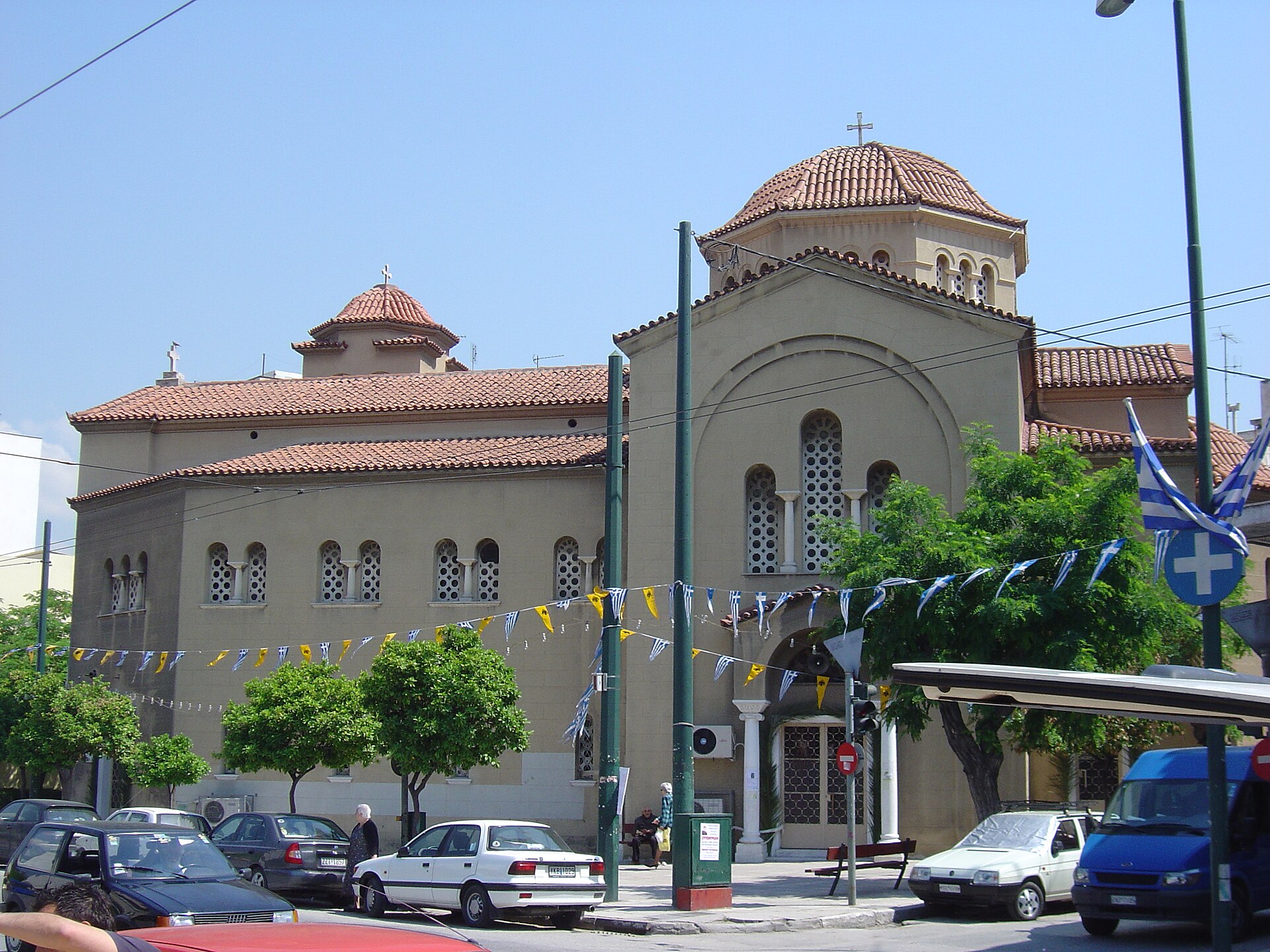
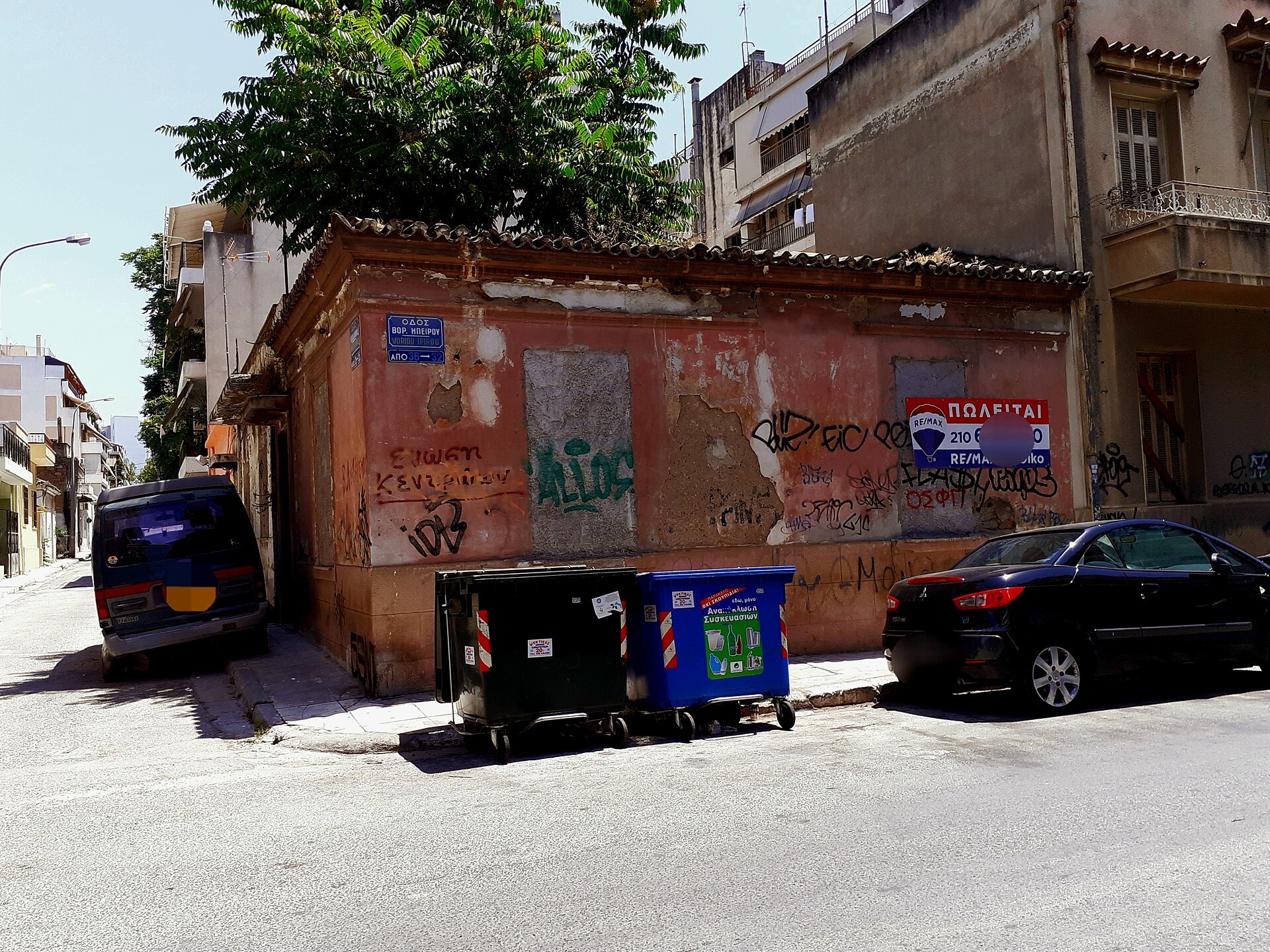
Kolonos is a residential district in central Athens, north-west of the historic centre, known locally for the hill of Kolonos and its ancient associations rather than for tourism or government buildings. Its streets are apartment blocks, small shops, churches such as Agios Konstantinos, and the daily traffic of people who live there. Athens has lived through politically motivated bombings in past decades, usually aimed at symbolic or state targets and often preceded by warning calls. Wednesday’s blast, on everything police have said so far, fits none of that pattern — which is itself a finding worth stating plainly, because the first question many Athenians will have asked on hearing “explosion in central Athens” is whether it was that kind of attack. Police’s answer, for now, is no.
What happens next
Four checks will show what this incident really was. First, the forensic report on the device parts: its construction should settle, or at least narrow, the remote-activation versus accidental-trigger question that the two wire accounts left open. Second, identifications: whether police name the injured civilians, the owner of the bag, or any suspect, and whether an arrest follows. Third, the officers’ condition, in particular the officer reported with eye and hand injuries — the detail most likely to drive public and police-union reaction in Greece. Fourth, any change of classification: if the homicide unit’s investigation moves the case toward attempted murder charges, a drugs-network case, or — contrary to Wednesday’s posture — any political motive, that shift will be visible in who is charged and with what.
Until those checks land, the responsible summary is the narrow one: a backpack containing suspected drugs and an improvised device exploded at an Athens apartment entrance on Wednesday, October 21; four people, including two police officers and the manager who reported the bag, were injured and taken to hospital; police are not treating it as terrorism; the homicide unit is investigating; and how the device was triggered remains, on the public record, unresolved.
Other reading
For Signal Post News’ earlier Athens explosion coverage — a separate September incident in the Plaka district, not connected to Wednesday’s Kolonos blast on any reporting so far — see Athens Plaka explosion coverage. For another Greek story this month, see the Rhodes rights-defenders trial, and for a recent Athens-set diplomatic story, Rubio’s Acropolis speech in Athens.
Sources
- Reuters, October 21, 2026 (Greek police statement via reporting by Angeliki Koutantou and Yannis Souliotis: two officers and two members of the public injured; all four taken away in ambulances; backpack thought to contain drugs picked up in Kolonos; resident and manager call; parts of an explosive device later found; second official’s potentially-remotely-activated account; not treated as a terrorist act; homicide unit leading the investigation; manager among the injured).
- Anadolu via Qazinform, October 21, 2026 (bag left near a ground-floor elevator; officers opened the bag and found apparent drugs, weighing scales and pills before the improvised device detonated; detonator connected to batteries and low-grade explosives; initial reports suggesting an officer may have pressed a button on the detonator; one officer’s more serious eye and hand injuries; firefighters responded; all four, including the building manager, taken to hospital).
Accuracy note: the two wires’ accounts of what triggered the detonation conflict (remote activation vs. an officer possibly pressing a detonator button). Both are carried above as early, attributed and unproven accounts; no trigger mechanism is asserted as fact. Injury detail beyond the four-injured total is limited to Anadolu’s eye-and-hand report for one officer; no names, hospitals or fuller condition lists were published by either wire on Wednesday. All photographs are Wikimedia Commons place file photos of Kolonos and Hellenic Police vehicles, captioned as such; no photograph of the incident building or scene is used or implied.