WEDELA, South Africa — The Wedela tavern shooting began at about 9:30 p.m. on Saturday, September 26, when eight unidentified men arrived at a drinking venue in this Gauteng mining township and opened fire on patrons outside, according to South African police. The attackers then went in and, in the words of police Captain Tintswalo Sibeko, “continued shooting at patrons inside.” By the time emergency medical personnel entered, 17 people — 13 men and four women — were dead.
Fifteen more people with gunshot wounds were taken to hospitals. Police said the assailants were reportedly carrying AK-47 rifles and pistols. They allegedly searched some patrons, took cellphones, escaped in two vehicles and set two vehicles alight. Those details make the assault look deliberate and organized. They do not establish why it happened. Police said the motive was unknown, and no arrests had been announced by the reporting cutoff on Sunday.
The distinction matters. South Africa has endured a succession of attacks in taverns, homes and informal gathering places in which military-style weapons, multiple shooters and rapid escape plans have produced the appearance of professional violence. But appearance is not proof of a gang order, an illicit-mining feud, a robbery, a contract killing or any other motive. The first responsibility in covering Wedela is to describe what investigators say happened, identify what remains allegation and resist turning a pattern into a verdict.
What happened, step by step
The police account establishes a short, brutal sequence. At approximately 21:30 local time — 19:30 GMT — eight men approached a tavern in Wedela township, in the West Rand District southwest of Johannesburg. They first fired at people outside the venue. They then moved through the entrance and kept shooting at patrons inside. The attack therefore crossed two spaces: the public edge of the business and its interior, where people had less room to escape.
Police said some victims were searched and cellphones were taken. The gunmen fled in two vehicles. Two vehicles were subsequently set alight, adding a possible evidence-destruction trail for detectives to examine. Emergency medical services declared all 17 dead at the scene. The 15 wounded victims were transported for treatment; police did not publish a complete, independently verified list of their conditions.
Investigators opened 17 counts of murder, 15 counts of attempted murder and two counts of malicious damage to property. That ledger is more than paperwork. Each count creates its own evidentiary burden, requiring investigators to connect bullets, injuries, witnesses, property damage and suspects to a common event. A multi-shooter scene also complicates ballistics: different weapons can generate several cartridge patterns, wound paths and possible firing positions.
One local outlet reported that the venue was Dora’s Tavern at 4713 Hector Peterson Street in Extension 3, Wedela. The same outlet reported that some attackers wore balaclavas; that four men and one woman were killed outside and nine men and three women inside; that wounded people were taken to hospitals in Carletonville and Leratong; and that cartridges and CCTV material were present at the scene. It also reported that some of those killed were Lesotho nationals. Signal Post News has not independently verified those details, and they should not be treated as official findings unless police, hospitals or named families confirm them.
Police appealed for information through the Crime Stop Line at 08600 10111 or through the MySAPS App. The appeal indicates the case is still in the evidence-gathering stage. Tips can help identify vehicles, weapons and participants, but public speculation can also contaminate witness recollections or falsely identify uninvolved people. The useful question now is not which rumor sounds plausible; it is which claim can be matched to time-stamped footage, physical evidence, phone records or a credible witness.
The human toll comes before the theory
Seventeen deaths in a single venue can become an abstract number within hours, especially when the public debate turns quickly to weapons, policing and politics. It is not abstract to the families waiting for formal identification, to survivors with gunshot wounds or to residents who heard the firing. The dead were 13 men and four women. Beyond that breakdown, police had not released a complete official list of names at the time of publication.
That restraint is necessary. Identification after a mass shooting involves more than reading names from identity documents. Families must be notified; nationality and next-of-kin questions may cross borders; hospitals and mortuaries must reconcile records. The report that some victims were from Lesotho remains a single-outlet claim. It may prove accurate, but until authorities or relatives confirm it, repeating it as settled fact risks compounding grief with error.
The wounded deserve similar care. A count of 15 people taken to hospitals says nothing about the severity of each injury or the length of recovery. Some may face surgery, disability, lost income and trauma long after the manhunt ends. Tavern staff, emergency responders and residents who were not physically wounded may also carry the psychological consequences. Public attention usually peaks at the scene; the costs continue in homes and clinics.
Why this matters: the evidence suggests planning, not a proven motive
Several features support a cautious inference that the assault involved preparation. Police describe eight attackers rather than one impulsive gunman. The group reportedly carried rifles and pistols, fired first outside and then inside, searched some patrons, took phones, departed in two vehicles and left burned vehicles behind. Coordinating that many people and movements would ordinarily require forethought.
But “planned” is not the same as “explained.” Phone theft could have been robbery, an attempt to eliminate recordings or both. Burned vehicles could have been getaway cars destroyed to obscure ownership, or property damaged for another reason. Rifles can signal organized criminal access without identifying the organization that supplied them. Investigators must test each possibility instead of choosing the most dramatic narrative.
The significance of Wedela lies partly in that gap between what the scene appears to show and what police can yet prove. Communities have heard many promises of specialized teams and high-level intervention after spectacular shootings. Trust now depends on the less visible work: preserving cartridges, recovering video, tracing vehicle histories, interviewing survivors separately, comparing ballistic markings against databases and following the phones that disappeared.
There is also a national-policy lesson. A tavern is a business and a social space, but it can become a high-casualty environment when entrances are limited, crowds are dense and armed attackers control the exits. Security measures can reduce vulnerability, yet responsibility rests with the perpetrators, not patrons or workers. The policy challenge is to disrupt gun supply and repeat offenders before a venue becomes a crime scene, rather than merely harden every gathering place after the fact.
A grim ledger of South African mass shootings
Wedela did not arrive without warning. On September 23, just days earlier, gunmen killed 11 people and injured three at a homestead in KwaMakhutha, south of Durban, according to police accounts carried by CNN, Reuters and other outlets. Reporting described a gathering at a house, not a tavern, but the proximity in time means investigators will inevitably compare weapons, vehicles, suspect descriptions and communications. There is no public evidence at this stage that the attacks are linked.
The best-known tavern precedent is the Orlando, Soweto, massacre of July 9, 2022, when gunmen killed 16 people. That date matters because inaccurate retellings can distort both the investigative record and the pace of violence. The attack occurred in 2022, not 2024. It became a national reference point for how quickly gunfire in a crowded drinking venue can produce mass casualties.
Other cases have reinforced the pattern. An Associated Press report on another South African pub attack described nine people killed and 10 wounded. In September 2024, 18 relatives and neighbors were killed at two homes near Lusikisiki in the Eastern Cape. Different provinces, venues and suspected motives caution against treating them as one campaign. The common thread is tactical: firearms in confined social settings can turn disputes, robberies or targeted attacks into mass-casualty events within minutes.
A ledger is useful only if it avoids false equivalence. Some incidents involve a single shooter; others involve teams. Some appear connected to criminal markets; others to personal or community conflicts. Some produce arrests quickly; others remain unresolved. Counting them together shows scale, but it does not prove a common command structure. The comparative value lies in repeated operational questions: how the guns moved, whether suspects were already known, how vehicles were sourced and whether forensic evidence from one scene appears in another.
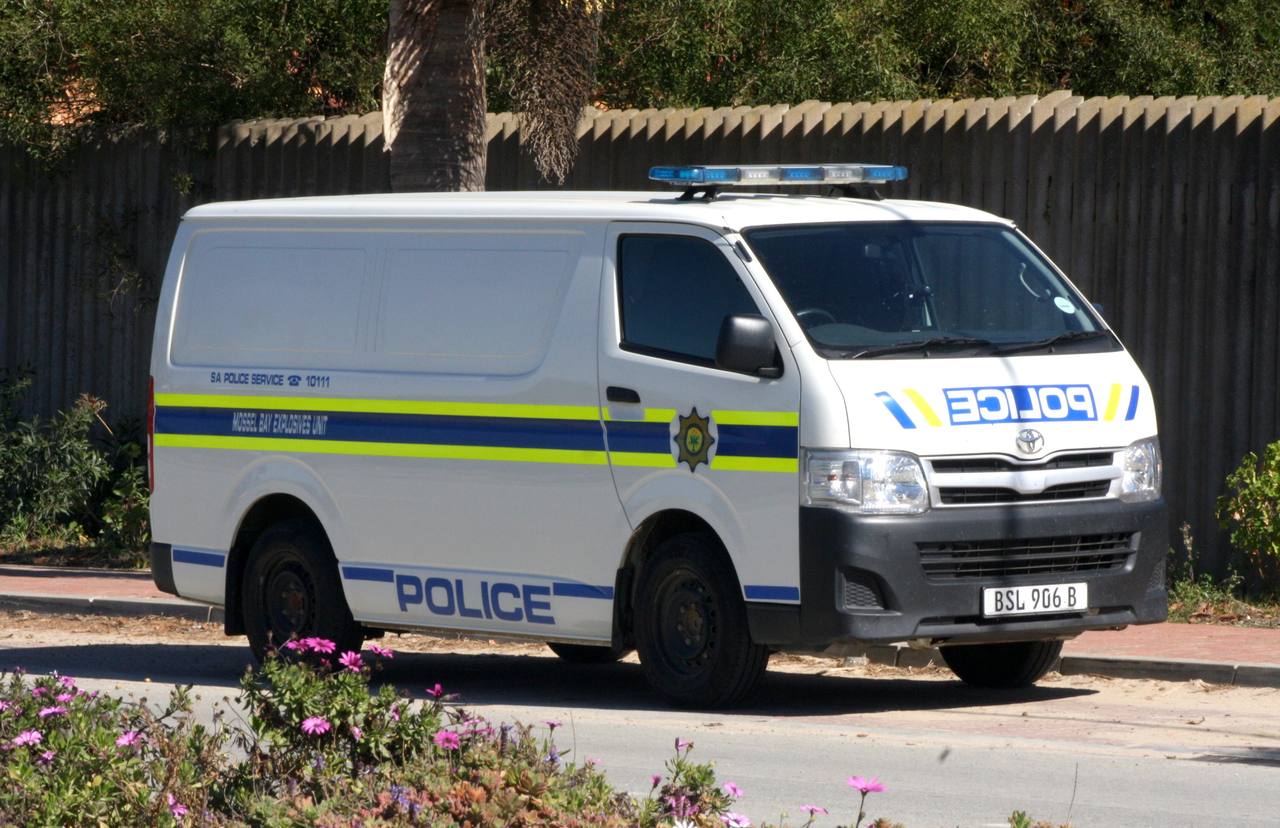
Policing criticism is about prevention and follow-through
South African police will be judged first on whether they identify and arrest the gunmen. The harder judgment concerns what happened before Saturday night. Were any of the weapons previously recovered, reported stolen or linked to other shootings? Were the vehicles cloned, stolen or registered to associates? Did intelligence units have warning of tensions in the West Rand? Were there outstanding warrants or known networks that could have narrowed the risk?
Criticism of policing often collapses two different problems. One is capacity: too few detectives, slow laboratories, crowded dockets and uneven evidence management. The other is integrity: corruption or leakage that can protect gun markets and alert suspects. Wedela may implicate either, both or neither. The investigation’s transparency should allow the public to distinguish a resource failure from an intelligence failure and both from an attack that was genuinely difficult to foresee.
The case also tests cooperation across units and borders. If any victim or suspect is a foreign national, consular and migration records may become relevant without making nationality a proxy for guilt. If vehicles crossed municipal or provincial lines, camera networks and road records matter. If weapons were trafficked, firearm-control investigators need to work alongside homicide detectives. A siloed inquiry would miss the very connections a coordinated attack may leave behind.
Accountability should not mean broadcasting every lead. Detectives need room to protect witnesses and avoid teaching suspects what evidence has been recovered. But officials can still publish basic milestones: whether autopsies are complete, whether all families have been notified, whether ballistic links have emerged and whether the burned vehicles have been identified. Regular factual updates are one way to keep rumor from filling the vacuum.
Illegal firearms: large estimates, weak precision
Illegal guns are central to South Africa’s violence debate, but the numbers demand care. Researchers, police officials and civil-society groups have offered estimates running into the millions for unlawfully held firearms. Those figures are estimates, not a live inventory. They can count different things — stolen civilian weapons, diverted police or military guns, smuggled firearms and weapons whose licenses expired — and therefore should not be stacked as if they measure the same population.
The durable point is narrower and better supported: high-powered firearms circulate beyond lawful control, and some weapons move repeatedly through violent networks. Ballistic comparison is therefore crucial. Cartridge cases can indicate whether a weapon used in Wedela appeared at another scene, even before police possess the gun. Serial numbers, where recoverable, can trace a firearm’s last lawful owner. Neither method alone identifies the shooter, but together with video and witness evidence they can map a chain of possession.
South Africa’s broader homicide burden gives the issue urgency. A frequently cited benchmark is roughly 58 murders per day, derived from past annual police totals and useful only as a rough historical average. It is not a verified count for September 2026, and daily violence is not evenly distributed. Newer reporting periods can produce different averages. The benchmark nevertheless helps explain why a 17-death attack is both extraordinary in scale and embedded in a much larger crisis of lethal violence.
Mass-shooting totals are even less precise because South Africa has no single universally applied public definition. A threshold of four people shot, four killed or incidents excluding domestic cases will produce different counts. Any national figure should therefore identify its method and period. Wedela is unambiguous under the strictest common thresholds; comparison across years is not.
The illicit-mining and gang context — relevant, but not a conclusion
Wedela sits in the West Rand, a region shaped by gold mining, mine closures and informal extraction. Illegal mining networks — often discussed under the broad label zama zamas — can intersect with extortion, protection rackets, stolen explosives, trafficking and armed disputes. Gangs and organized-crime groups also operate in and around Gauteng. Those conditions belong in the background because investigators routinely test whether spectacular violence connects to existing markets and rivalries.
They do not justify attributing this attack to miners, migrants or a gang. Police have not announced such a link. Collective labels can become shortcuts that stigmatize entire communities while the actual perpetrators remain free. The evidentiary route should run in the opposite direction: identify guns, vehicles, communications and money; then determine which network, if any, those traces reveal.
The same caution applies to the reported Lesotho nationality of some victims. Nationality is not motive. West Rand communities include South Africans and migrants living and working around an economy long connected to labor movement. If cross-border elements emerge, they should be reported as facts tied to named evidence, not as insinuation.
Related Signal Post News reporting has examined the justice system through the Sibiya rape and trafficking case, the politics of migration in the Trump administration’s South African refugee plan, and the West Coast economy through South Africa’s offshore-wind debate. None establishes the cause of the Wedela attack; together they show why crime, migration and economic pressure must be examined without collapsing one into another.
Who gains, who loses
No legitimate actor “wins” from a massacre, but political and criminal incentives still shift. The attackers gain time for every hour evidence remains unconnected. Gun traffickers benefit when investigations stop at the immediate shooters rather than tracing supply. Rumor merchants gain attention from premature claims about nationality or motive. Each incentive rewards confusion.
The losses spread outward. Families lose relatives and income earners. Survivors face medical and psychological costs. Tavern workers and nearby businesses may lose customers as fear changes evening life. Police lose trust if early promises do not produce a case. The national government absorbs another reminder that public safety can be punctured by small groups with access to rifles and vehicles.
There may also be a civic loser in the way attention is allocated. A mass shooting produces national headlines, yet the slower violence reflected in daily homicide averages often receives only local notice. Effective policy must answer both: the spectacular coordinated attack and the ordinary accumulation of killings that never become a national symbol.
What happens next: the manhunt and the evidence trail
The immediate task is a manhunt for eight suspects. Witness descriptions, surviving video, vehicle movements and cellphone data are likely to be central. If phones were taken from patrons, investigators may seek device identifiers and later network activity. If CCTV exists, its evidentiary value will depend on whether the footage is complete, time stamps are accurate and original files are preserved. If the burned vehicles were used in the escape, chassis and engine numbers may survive even when license plates do not.
Ballistics can test how many firearms were discharged and whether any are linked to prior cases. Autopsies can help reconstruct firing positions and sequence, though such findings should not be sensationalized. Financial records, vehicle purchases, fuel stops and communications may expose preparation. A case involving eight alleged shooters will also require prosecutors to distinguish direct perpetrators from drivers, planners and accessories.
The existing charges — 17 murders, 15 attempted murders and two malicious-damage counts — are a starting framework. Further counts could follow if evidence supports robbery, unlawful firearm possession, conspiracy or other offences. Charges are allegations until proved. Arrests, if made, should be evaluated by the evidence disclosed in court rather than by police confidence at a news conference.
Funerals and memorials will bring a second phase. Families may need support with burial costs, travel and documentation. If some victims are confirmed as foreign nationals, repatriation and consular coordination may delay arrangements. Officials should allow relatives to control personal details and avoid turning grief ceremonies into campaign stages.
Election pressure is nevertheless inevitable. With South African politics increasingly competitive, opposition parties will use Wedela to challenge the government’s record on violent crime, firearms and detective capacity. The government will point to the manhunt and specialized resources. Voters should look past both scripts and ask measurable questions: arrest and prosecution rates, forensic turnaround, witness protection, gun tracing and whether prior recommendations after mass shootings were implemented.
Investigators will likely run link analysis against the KwaMakhutha shooting and other recent cases because timing and tactics make comparison rational. That does not mean a link exists. A responsible update would identify the basis — shared weapon markings, vehicle records, suspect communications or another concrete overlap — rather than announce an association from geography or intuition.
The standard for the days ahead
The first public account of a mass shooting is almost always incomplete. Numbers can change, names are withheld, witnesses conflict and investigators protect leads. The answer is not to freeze the story at its first version, nor to fill the gaps with certainty. It is to update transparently: what police have confirmed, what hospitals and families have confirmed, what one outlet has reported and what remains analysis.
For Wedela, the confirmed core is devastating enough. Eight men allegedly attacked a tavern. Seventeen people died at the scene. Fifteen were wounded. The assailants reportedly carried AK-47 rifles and pistols, moved from outside to inside, took phones and escaped in two vehicles. Two vehicles were burned. Thirty-four criminal counts have been opened. No arrest or motive had been announced.
The deeper question is whether the state can turn that record into lawful accountability. A fast arrest without a sound chain of evidence can collapse in court. A meticulous investigation without urgency leaves dangerous people at large. South Africa needs both speed and rigor — and the families of Wedela need names, answers and a case that survives beyond the news cycle.
Sources: Reuters; CNN; The Bulrushes; BNK News; Nova News; Metro Lens; CNN on KwaMakhutha; Reuters via WTAQ on KwaMakhutha; Daily Guardian Europe; 2022 Soweto shooting background; Associated Press background via Louisiana First News.