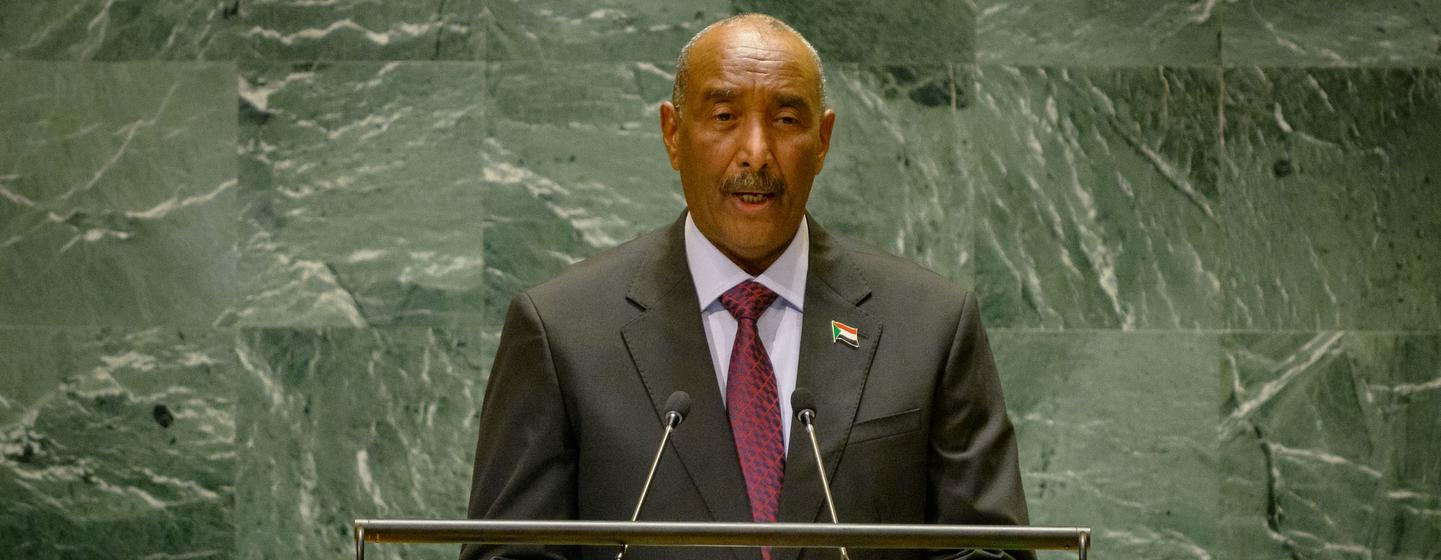
The United States has withheld an entry visa for Sudanese army leader Abdel Fattah al-Burhan just days before he is scheduled to address the U.N. General Assembly on Thursday, September 24, according to a Reuters exclusive published Tuesday, September 22. Reuters reported that issuance of the visa appears to have been made contingent on Burhan signing a 90-day ceasefire proposed by U.S. Senior Advisor for Arab and African Affairs Massad Boulos, citing a Sudanese diplomatic source and a Western analyst close to American and Sudanese officials. The U.S. State Department and Sudanese authorities did not immediately respond to Reuters’ requests for comment.
The central allegation is therefore reported rather than officially confirmed. There is evidence of a visa impasse and a formal U.N. intervention, but Washington has not publicly stated that a signature on the ceasefire is the condition for entry. That distinction matters because the dispute combines a documented travel problem with an anonymously sourced account of the leverage behind it.
The letter to the U.N. and the Secretary-General's response
Sudan’s U.N. Ambassador Al-Harith Idriss Al-Harith asked Secretary-General António Guterres to intervene with U.S. authorities in a letter dated September 21. The ambassador requested the United Nations’ “immediate intervention” to ensure the visa is issued before Burhan’s scheduled appearance.
“Should this situation persist, it would effectively prevent the Head of State of a Member State of the United Nations from participating in person in the work of the General Assembly.”
U.N. spokesperson Stéphane Dujarric said in a statement sent to Reuters: “The Secretary-General is deeply concerned that a visa has reportedly not yet been issued to the President of the Transitional Sovereign Council of the Sudan.” Dujarric added: “The Secretariat immediately raised the matter with the United States authorities and continues to engage with them.”
The Washington Examiner, citing the Sudan Tribune and Reuters, reported that diplomatic sources in Khartoum believe the United States will ultimately issue Burhan a visa before Thursday’s speech. The same account said Sudan’s delegation learned of the barring only days before the scheduled address. That expectation describes what the sources think Washington will do; it is not confirmation that the visa has been approved.
The ceasefire plan at the center of the dispute
The proposal associated with Boulos calls for a three-month humanitarian truce followed by a nine-month political process, according to Associated Press reporting. The Rapid Support Forces has said it accepted the truce. Reuters reported that Sudan’s army raised reservations about the Boulos proposal during the summer.
Burhan has rejected U.S.-backed terms before. He called one proposal “the worst yet” and accused mediators of bias. In June, regional reporting said he rejected a U.S.-backed Quad proposal as “unacceptable” and the “worst” submitted during the conflict. Those descriptions are Burhan’s characterizations of the plans, not independent judgments about their substance.
The Quad—the United States, Saudi Arabia, Egypt and the United Arab Emirates—called on September 12 for a three-month humanitarian truce to enable aid access, followed by a nine-month transitional roadmap. President Donald Trump has said he intends to give greater attention to ending Sudan’s war after Saudi Crown Prince Mohammed bin Salman urged him to do so.
This is diplomatic leverage applied to a negotiation, not a battlefield event. The reported visa link does not itself create a ceasefire, alter front lines or prove that either armed force would comply with a pause. It is an attempt, as described by Reuters’ sources, to change the negotiating calculation of the army’s leader.
Why this matters
A host country withholding a U.N. General Assembly entry visa from a sitting head of state is exceptionally rare. It tests the United States’ obligations under the 1947 U.N. Headquarters Agreement, which generally requires Washington to facilitate entry for representatives traveling on U.N. business. The agreement exists alongside national-security exceptions that the United States has invoked in earlier visa disputes, leaving the legal and diplomatic questions connected but not identical.
Reuters described the impasse as a low point in U.S.–Sudan relations since the war began. The dispute is personal in the immediate sense—whether one leader travels to New York—but systemic in its consequences because the credibility and future role of U.S. mediation are also at stake.
The timing concentrates the pressure. Burhan’s scheduled speech falls during the General Assembly’s highest-attention week and only days after a major battlefield loss in Darfur. If the linkage reported by Reuters is accurate, Khartoum is being presented with a stark choice: accept the truce framework or surrender its leader’s most visible international platform.
For Washington, the visa would function as an instrument of coercive diplomacy short of new sanctions. But that interpretation must remain qualified. The claim that the visa is contingent on the ceasefire rests on unnamed sources cited by Reuters and reporting attributed to the Sudan Tribune, not on an official U.S. statement. The State Department did not respond to Reuters, so the linkage should be read as reported—not as confirmed U.S. policy.
Background: from the 2021 coup to El Fasher's fall
Sudan’s war began in April 2023 as a power struggle between the Sudanese Armed Forces, led by Burhan, and the paramilitary Rapid Support Forces, led by Mohamed Hamdan Dagalo, known as Hemedti. The two forces had shared power after the fall of Omar al-Bashir before the October 25, 2021 coup derailed the civilian transition.
More than 40,000 people have been killed according to U.N. figures, while aid groups say the true toll is likely far higher. More than 14 million people have fled their homes, making Sudan’s displacement and aid emergency the world’s largest humanitarian crisis. Those figures explain why mediators are focusing first on access and a time-limited truce even though the political conflict is much broader.
The visa row came two days after the RSF claimed full control of El Fasher, the army’s last capital in Darfur. Burhan acknowledged the withdrawal on national television on September 21 and promised retaliation. The RSF’s control claim and Burhan’s acknowledgment establish the central territorial change; claims about conduct and casualties around the city require separate verification and attribution.
The dispute also marks a sharp escalation from the previous year. The United States then restricted Burhan and his delegation to a 25-mile radius around Columbus Circle in New York. Burhan did not attend, and Transitional Prime Minister Kamil Idris spoke in his place. Last year’s measure limited movement. This year’s reported position would bar entry altogether unless, according to the sources, a truce is signed.
Who gains, who loses, what critics say
The United States gains negotiating leverage if the reported linkage holds: an administrative decision becomes pressure for acceptance of the Boulos truce. That leverage may be meaningful precisely because it targets diplomatic visibility rather than military capacity, but its effectiveness depends on whether Khartoum values the General Assembly platform more than it resists appearing to yield.
Burhan faces political costs on either path. Signing under visible pressure could expose him to domestic accusations of capitulation. Refusing could cost him the General Assembly podium where he planned to present his government’s position only days after El Fasher’s fall. Those are potential political consequences, not evidence of what he will choose.
The RSF, which says it accepted the truce, could benefit from its rival’s absence or embarrassment. That advantage does not validate the group’s conduct or claims; it reflects the negotiating asymmetry created when one party says yes to a proposal and the other remains under pressure to do so.
The U.N. Secretariat is caught between its member states. Guterres’s “deeply concerned” statement records institutional unease without assigning blame or deciding the legal dispute. Sudan’s position, set out in the ambassador’s letter, is that excluding a member state’s head of state would undermine the universality of the General Assembly.
The implied U.S. argument, if Reuters’ sources are correct, is that extraordinary pressure is justified to stop the world’s largest humanitarian crisis. Washington has not made that case publicly in connection with the visa. The State Department’s silence leaves the rationale unconfirmed and limits how confidently any analyst can describe U.S. intent.
What the numbers imply
The 90-day term maps directly onto the Quad’s September 12 framework: three months for humanitarian access before a nine-month political roadmap. The reported visa condition therefore appears to be an enforcement mechanism for a calendar the mediators have already published, rather than a new timetable created in the travel dispute.
Set against more than 40,000 deaths in the U.N. count and more than 14 million displaced people, the standoff shows how Sudan diplomacy has moved beyond battlefield mediation into procedural pressure. The numbers do not prove that a truce will hold; they explain the urgency behind trying to produce one.
The comparison with the previous year is also instructive. U.S. pressure moved from a 25-mile travel radius to a potential full entry bar in twelve months. That is a measurable escalation in the restrictions applied to Khartoum’s leadership, even though the government’s unannounced legal and policy reasoning remains uncertain.
What happens next
There are three immediate paths. First, Washington could issue the visa at the last minute, as the Sudan Tribune-sourced expectation suggests, allowing Burhan to address the Assembly on Thursday without first signing the truce. That would provide both sides a face-saving outcome while leaving the ceasefire unresolved.
Second, the United States could grant the visa only after Khartoum signs or publicly accepts the 90-day truce. If that happened, it would be the first formal pause produced by the Boulos framework—but the agreement’s practical value would still depend on compliance by forces on the ground and access for humanitarian agencies.
Third, the standoff could continue through Thursday. Burhan would remain outside the United States, and the General Assembly’s debate on Sudan would proceed without him. Other member states would likely study the precedent because the dispute touches both host-country authority and the promise of universal access to U.N. proceedings.
The clearest indicators are now procedural: whether the U.N. Secretariat’s engagement with U.S. authorities produces a visa; whether the State Department explains its decision; whether Khartoum changes its position on the truce; and whether Burhan’s Thursday speaking slot is filled. Until one of those events occurs, the reported ceasefire condition remains a consequential but unconfirmed account of U.S. policy.
Sources
- Reuters, September 22: U.S. withholding Sudanese leader’s visa over ceasefire plan, sources say
- Washington Examiner, September 22, citing the Sudan Tribune and Reuters
- Regional reporting on Burhan’s rejection of a U.S.-backed Quad truce proposal
Reporting cutoff: September 22, 2026. The visa’s reported connection to the ceasefire rests on unnamed sources cited by Reuters and the Sudan Tribune; the U.S. State Department had not publicly confirmed the linkage at publication.