Nidal Hasan execution
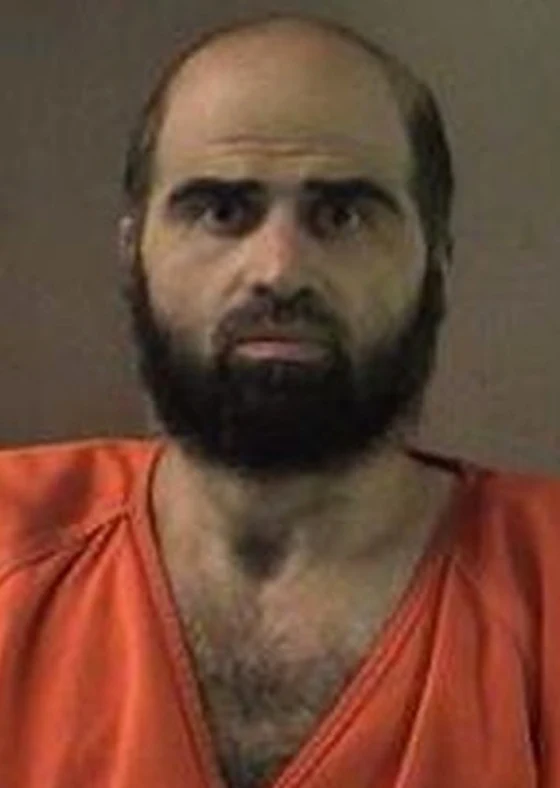
The Nidal Hasan execution is scheduled for December 3, 2026, at 1 p.m. Central time at Fort Hood — 2 p.m. Eastern. Acting Army Secretary Adam Telle set the date after President Donald Trump approved Defense Secretary Pete Hegseth's recommendation that Hasan be executed by U.S. Army firing squad.
Pentagon spokesperson Sean Parnell announced the presidential approval on X with the words, “Judgment day for Hasan has finally come.” Hegseth replied: “Justice.” The administration presents the decision as long-delayed accountability for the victims; the schedule also opens a final period in which Hasan may pursue further litigation over the method, venue or timing.
Why this matters
This order is not simply the final administrative step in a notorious murder case. It would end a 65-year period without a U.S. military execution — a de facto moratorium created not by the absence of death sentences, but by the rarity, complexity and institutional caution surrounding their use. Army Pvt. John Bennett was hanged at Fort Leavenworth in 1961, the last military execution recorded by the Death Penalty Information Center. If Hasan is executed, that long historical break closes.
The method intensifies the symbolism. A firing squad evokes command, uniform, battlefield discipline and the sovereign authority of an armed force. Supporters may see that as fitting for a former Army major convicted in a military court after attacking soldiers and civilians on an Army post. Opponents may see the same imagery as an unnecessarily martial spectacle that raises moral and diplomatic costs without repairing the harm.
There is also a forward-looking precedent. The New York Post, citing ABC News, reported that the Army has a plan called “Operation Resolute Justice” to coordinate with the Federal Bureau of Prisons for Hasan and three other military death-row inmates, including transfers to a facility in Indiana. Hasan's case may therefore become the template for a group of four, not a singular exception.
Politically, Trump and Hegseth are signaling that sentences already upheld through the military appellate system should be carried out. Whether that becomes a durable policy or remains tied to an exceptionally notorious case will depend on the timetable, final litigation and the administration's handling of the other inmates.
Who Nidal Hasan is — and what happened on November 5, 2009
Nidal Malik Hasan is a Palestinian-American born in Virginia to Palestinian parents. He served as a U.S. Army major and psychiatrist before the attack that placed him at the center of the military's most consequential capital case in generations.
On November 5, 2009, Hasan opened fire inside Fort Hood's Soldier Readiness Processing Center, where troops were preparing to deploy to Iraq and Afghanistan. Witnesses said he shouted “Allahu Akbar.” Thirteen people were killed — 12 unarmed active-duty soldiers and one retired serviceman working as a civilian — and 32 were wounded. A responding police officer shot Hasan, leaving him paralyzed.
Hasan later said he acted to defend Muslims fighting American forces overseas and, in his formulation, to protect “the leadership of the Islamic Emirate of Afghanistan, the Taliban.” Before the attack, he had communicated online with Anwar al-Awlaki, the U.S.-born cleric who became a prominent al-Qaeda propagandist. Those statements are part of the record of motive; they do not alter the individual circumstances of those killed and wounded.
The numbers remain the clearest measure of the attack's human scale: 13 lives ended, 32 people wounded, and far more families and colleagues forced into a future shaped by a few minutes of gunfire. The years since have added legal terminology and political argument, but those figures are why the case has never receded into an ordinary death-row file.
One survivor, Staff Sgt. Patrick Zeigler, was shot four times. Recalling the encounter to the Killeen Daily Herald in 2023, he said: “He looked me straight in the eyes as he pointed the gun at me, and a split second later, I'm on the floor with a hole in my head.” That testimony captures what institutional timelines can obscure: every procedural milestone sits behind a moment experienced at arm's length by victims.
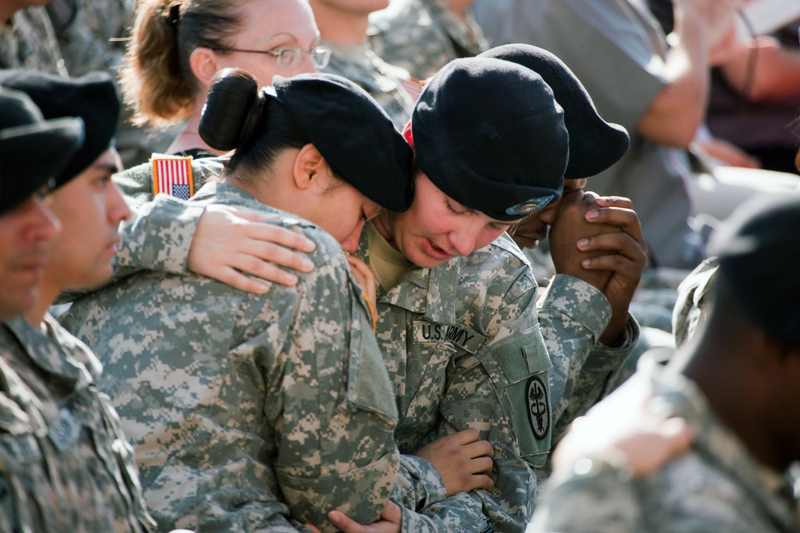
Seventeen years to judgment day
Hasan represented himself at his 2013 court-martial. He called no witnesses and did not testify. The panel convicted him of 13 counts of premeditated murder and 32 counts of attempted premeditated murder, then returned a unanimous death sentence. The verdict began, rather than ended, the long review required in a military capital case. He has since been held at the U.S. Disciplinary Barracks at Fort Leavenworth, Kansas.
From the sentence to the Supreme Court's March 31, 2025, refusal to hear his petition, the process lasted nearly 12 years. For families waiting for a conclusion, that span can feel like justice suspended. For courts, it reflects the heightened scrutiny required when the punishment cannot be reversed.
From the court-martial to appeals
The Army Court of Criminal Appeals upheld the conviction and sentence on December 7, 2020. The Court of Appeals for the Armed Forces upheld them again on September 11, 2023. On March 31, 2025, the U.S. Supreme Court denied Hasan's petition for review. Each loss narrowed the ordinary appellate path and left executive approval as the decisive remaining threshold.
The record after conviction also fed arguments about motive and martyrdom. In 2014, Hasan wrote a letter requesting citizenship in the Islamic State and signed it “Soldier of Allah.” A 2015 report described him as “eager to follow his path to martyrdom.” Those statements do not alter the crimes proved at trial, but they complicate how the government presents execution: a punishment intended as final accountability may also be incorporated into the condemned man's own ideological narrative.
Hegseth's move
Hegseth announced on September 24, 2025, that he was seeking Trump's approval. The October 5, 2026, announcement confirms that the president agreed with the recommendation. The 12-month interval between those announcements underscores that presidential approval was treated as a consequential decision, not a routine signature.
The method debate: why firing squads are returning
The Army's last firing-squad execution occurred on January 31, 1945. Pvt. Eddie Slovik was executed in France for desertion during World War II. The last U.S. military execution of any kind came 16 years later, when Pvt. John Bennett was hanged after being convicted of rape and attempted murder of a child. Hasan's execution, if carried out as approved, would therefore be the first military execution in 65 years and the first Army firing squad in more than eight decades.
The Trump administration has widened the permissible methods for federal executions to include firing squads, electrocution and gas, a shift made partly against the backdrop of recurring shortages and legal disputes involving lethal-injection drugs. The policy does not make every method interchangeable in practice; each protocol still has to survive scrutiny under the governing law and the facts of an individual case.
That argument sharpened after Tennessee's September 30 attempt to execute Christa Pike. Two doses of pentobarbital failed to kill her, and she survived and was hospitalized. Signal Post News has separately examined the Christa Pike botched execution and the resulting protocol questions. Supporters of firing squads argue that the method is less dependent on scarce drugs and complicated intravenous access. Critics answer that administrative reliability does not resolve objections to the death penalty or eliminate constitutional litigation.
That history produces two sharply different but internally coherent readings. The first is institutional: Hasan was a soldier, convicted by a court-martial for an attack on an Army post, and a military firing squad expresses the jurisdiction and discipline under which he was tried. On this view, the method is not theater but the armed forces enforcing a lawful sentence within their own tradition.
The second reading focuses on the condemned man's stated desire for martyrdom. Critics of the method may argue that a distinctly martial death risks giving him imagery resembling the warrior's end he said he wanted. Supporters can answer that punishment is defined by law and the victims' claims to justice, not by the prisoner's attempt to narrate it. Neither interpretation can be proved by the method alone; both will shape the public argument around it.

Two verdicts on justice
The case for carrying out the sentence
Supporters begin with the victims and the passage of time. Families and survivors have lived through almost 17 years of hearings, appellate review and political debate. Hasan admitted the shooting; a military jury imposed death; military appeals courts upheld it; and the Supreme Court declined review. From this perspective, another indefinite delay would turn procedural protection into practical nullification of a lawful sentence.
They also argue that punishment communicates boundaries. An attack by an officer against people at an Army processing center violated the institution's most basic obligations. Carrying out the sentence, supporters say, demonstrates that rank does not insulate betrayal and that attacks within the force can bring the maximum penalty. Some add a deterrence argument, though the extent to which executions deter ideologically motivated mass violence remains disputed.
The case against execution
Abolitionists oppose capital punishment regardless of the defendant's notoriety, arguing that the state should not take a life when permanent imprisonment can incapacitate the offender. They also point to the irreversible character of execution and to international criticism of the death penalty. In a military context, the first execution since 1961 would receive global attention and could be read abroad as a deliberate expansion of state killing.
This case adds the martyrdom concern. Because Hasan linked himself to militant causes and was described as seeking martyrdom, critics argue that execution may serve the story he constructed for himself. Supporters reject allowing that claim to veto a sentence. The disagreement is not over the scale of the crime; it is over whether execution delivers justice or lets the killer define the symbolism of his own death.
Neutral analysis requires separating moral judgment from legal status. The sentence has survived the appellate steps listed in the record. That makes it legally durable. It does not settle the wider ethical debate, which is why the administration's language, the method and the treatment of victims will matter alongside the mechanics.
The “workplace violence” fight
Long before the execution order, the Fort Hood case generated another conflict over language and recognition. The government's administrative treatment of the shooting as workplace violence became a lasting grievance among victims and families who believed the label obscured the attack's ideological character and denied service members the military recognition attached to combat-related harm.
The government's stated rationale centered on preserving the criminal process and applying the eligibility rules then in force rather than prejudging disputed legal questions. Families answered that the result felt detached from what Hasan said and did, and that bureaucratic caution had material and symbolic consequences. The argument became inseparable from the campaign for Purple Hearts and the civilian equivalent.
The 2015 defense authorization changed the framework, allowing recognition for those killed or wounded in the attack. That did not erase the earlier dispute. It showed that Congress could distinguish between honoring victims and dictating the outcome of a criminal case. The current execution debate revives the same underlying question: how can the government use precise legal language without making survivors feel that the nature of the attack has been minimized?
What happens next
Acting Army Secretary Adam Telle has now supplied the missing operational milestone: December 3, 2026, at 1 p.m. Central time at Fort Hood, which is 2 p.m. Eastern. Stating both time zones matters because the Army memo uses local Fort Hood time while several national reports use the Eastern equivalent.
Operation Resolute Justice contemplates coordination with the Federal Bureau of Prisons and could involve transfer to the federal execution facility in Terre Haute, Indiana. Hasan is one of four inmates on U.S. military death row. The plan therefore reaches beyond one case, although the legal and factual posture of each sentence remains separate.
The date is firm as an Army order, not immune from court action. Hasan may pursue further litigation over the protocol, venue, competence, method or timing. Army Lawyer has noted that presidential approval starts a potentially lengthy post-appellate phase rather than guaranteeing immediate implementation. Any filing could delay the execution without changing the underlying conviction or the president's approval.
Three forward-looking scenarios
First, the schedule proceeds: the Army coordinates custody, witnesses and the firing-squad protocol for December 3 while defending the process in court. That would make Hasan the first test of the reported four-inmate plan and could accelerate decisions in the other cases.
Second, prolonged protocol litigation: the approval could stand while disputes over method, venue or procedure delay the execution. In that scenario, the political announcement arrives long before the institutional act.
Third, case-by-case divergence: Hasan's notoriety and exhausted appellate record may not translate into identical outcomes for the other three inmates. A process presented politically as a group could still fracture legally into separate timelines.
The broader political reverberations are already visible. Trump and Hegseth have framed the decision as overdue justice. Supporters will likely present implementation as proof of resolve; opponents will treat it as the reopening of a military death-penalty system dormant since the Kennedy era. Families and survivors, meanwhile, may judge the next stage less by national symbolism than by whether the government handles it with clarity, dignity and an end to avoidable delay.
A conclusion 65 years in the making
Hasan's guilt and death sentence passed through a court-martial, two levels of military appellate review and a denied Supreme Court petition. Trump's approval now places the case at the boundary between judgment and execution. The numbers define the distance traveled: 13 killed, 32 wounded, nearly 17 years since the attack, 65 years since the last U.S. military execution, and four inmates in the reported operational plan.
What those numbers mean remains contested. For one side, they measure how long justice has been delayed. For the other, they warn against reviving a punishment unused by the military for generations. The Army has now answered when and where: December 3 at Fort Hood. Courts may still decide whether that schedule holds, and the execution debate will continue whether the date is carried out or delayed.
Sources
- Reuters — Trump order, Hasan's case and the return of a military execution
- USA Today — Trump approves firing-squad execution for the Fort Hood shooter
- CNN — presidential approval and the military death-penalty process
- The Times — firing-squad decision and historical context
- New York Post — December 3 execution date and Fort Hood location
- Army Times — military execution history, appeals and Army process