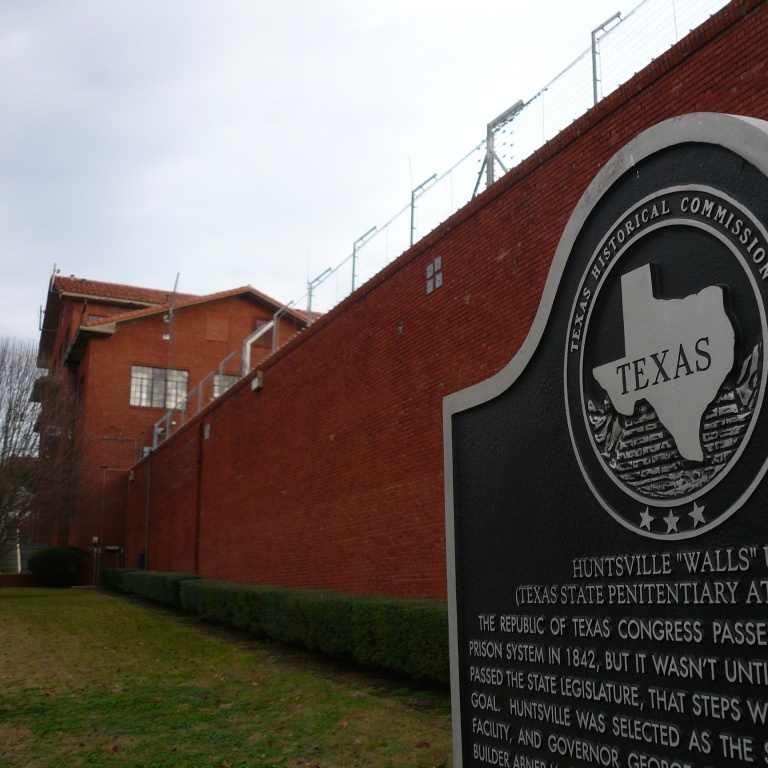
Howard was convicted of killing Vickie Swartout, a 42-year-old convenience-store clerk in Silsbee, during a robbery in 2000. The shooting was captured on surveillance video. The facts of that crime and the grief carried by Swartout's family remain the foundation of the state's case for punishment; the final legal battle was not over whether a jury had convicted Howard, but whether Texas could responsibly use the same drug implicated in the failure in Tennessee.
As the pentobarbital took effect, witnesses described Howard taking a couple of breaths and gasping, then making snoring sounds and coughing as the sounds became progressively quieter. His movement stopped within roughly 30 seconds. He was pronounced dead 19 minutes after the drug began flowing.
Why the execution became a national test
First execution since the Pike botch put pentobarbital under live scrutiny
Every execution is consequential, but this one arrived with a specific, immediate burden. Pike had survived two doses of pentobarbital only seven days earlier, becoming the first person known to survive a lethal injection in the modern American death-penalty era. Her case converted a familiar debate about execution protocols into a visible failure with a living plaintiff and evidence still being contested.
Howard's lawyers asked Texas courts to stop the execution because the state planned to use the same drug. They also sought records about the purchase, storage and testing of the pentobarbital. Texas disclosed none of those records. That left a basic asymmetry: the state insisted its protocol was sound while withholding the information needed for outsiders to evaluate the drug lot and its handling.
The Texas Court of Criminal Appeals rejected two requests to halt the execution. The U.S. Supreme Court declined to intervene; Justice Ketanji Brown Jackson was the only justice to publicly note a dissent. Gov. Greg Abbott did not respond to a request for a 30-day reprieve that would have allowed lawyers to seek the drug records.

Jamaal Howard's final statement and the people behind the case
An apology passed through glass while two families watched
Howard apologized to members of Swartout's family watching through the witness-room window. “I wish that you accept my apology,” he said, adding that he was sorry for what happened. He thanked friends and family, said he was at peace and closed with, “enjoy life, and peace to y'all.”
His sister became distraught in the witness room and had to be escorted out. That scene resists easy political packaging. Swartout's family had waited more than a quarter-century for the sentence to be carried out and received an apology from the person convicted of killing her. Howard's family watched the state end his life. The glass separated the participants physically, but it could not simplify what either family experienced.
His attorneys also argued that Howard was intellectually disabled. Courts did not accept the claims as grounds to stop the execution. The unresolved drug-record question was narrower and more institutional: not whether Texas had a lawful sentence, but whether a government exercising its most irreversible power should have to disclose where its execution drug came from and how it was tested.
How pentobarbital became the standard—and secrecy followed
Texas execution drug secrecy protects suppliers but weakens independent review
Pentobarbital became the dominant execution drug after manufacturers and distributors restricted access to other chemicals once used in three-drug protocols. States turned toward a single-drug method, often buying from compounding pharmacies or other suppliers shielded by secrecy laws. Officials argue that confidentiality is necessary because public identification can cause suppliers to withdraw.
The trade-off is stark. Secrecy may keep the execution system operational, but it makes questions about potency, contamination, storage and expiration harder to answer. In ordinary medicine, those details are part of quality control. In capital punishment, states often treat them as security-sensitive procurement information. The result is a protocol that demands public confidence while resisting public verification.
Nothing publicly disclosed establishes that Texas used the same lot, supplier or handling process as Tennessee. That distinction matters. “Same drug” does not necessarily mean the same product quality or the same execution team. But because Texas did not release its records, neither Howard's lawyers nor the public can rule those differences in or out.

The numbers and the execution system's shrinking margin for error
Texas death penalty 2026: seven of 30 executions
Howard was the 30th person executed in the United States this year and the seventh in Texas, meaning the state has carried out nearly one in four of the national total. Texas has two more executions planned later in 2026. The count already places this year above many recent annual totals, showing that the machinery of capital punishment is active even as the method faces unusual scrutiny.
Historical comparisons also sharpen the moment. Modern execution controversies usually concern prolonged procedures, difficulty establishing IV access or visible signs of distress. Pike's survival moved the discussion into a different category. A protocol designed to produce certain death failed to do so, and a second state resumed executions one week later without publicly resolving whether the problem was the drug, the lines, the personnel or some combination.
Tennessee has now suffered two botched executions in four months. In May, executioners trying to put Tony Carruthers to death failed to establish a second IV line. On September 30, Pike survived after receiving two doses of pentobarbital; improperly placed IV lines or blown veins are believed to be a leading explanation, but litigation and evidence review are ongoing.
Who wins, who loses—and what remains unknown
The state completed its sentence; public trust absorbed the cost
Texas achieved its immediate objective: the sentence was carried out, and the state recorded the nation's 30th execution of 2026 without the prolonged failure seen in Tennessee. Supporters will view that as proof that one state's breakdown did not invalidate another state's protocol.
But the state also deepened a credibility problem of its own making. Refusing to disclose drug provenance may protect a supplier, yet it leaves the public unable to distinguish a robustly tested dose from an assertion that officials followed procedure. The execution's apparent completion does not retroactively answer the questions Howard's lawyers raised.
Swartout's family received the enforcement of a sentence and heard Howard's apology. Howard's family lost him and watched the process collapse into distress. Neither experience fits comfortably inside a claim that one side simply “won.” The punishment concluded a legal case; it did not close the moral argument.
What happens next
Pike litigation and the Carruthers protocol fight will test disclosure rules
The most important evidence may come from Tennessee, where Pike's attorneys are seeking to preserve and examine medical and execution records. If litigation identifies failed IV placement, degraded drug, faulty monitoring or a chain-of-custody problem, other states will face pressure to compare their own procedures. If the cause remains hidden, the controversy will migrate from one execution to the next.
Lawmakers and courts will also confront the secrecy question. States can change line-placement requirements, mandate independent testing, disclose certificates without naming suppliers or create outside protocol reviews. Each option carries costs, but doing nothing makes confidence depend on the same institutions whose performance is being challenged.
The unknowns should be stated plainly: Texas has not disclosed Howard's pentobarbital lot, supplier, purchase records, storage history or testing results. Wednesday's execution showed that Texas could complete the procedure. It did not prove why Tennessee failed—or that the next state will not.
Sources and reporting notes
- CNN: Texas executes Jamaal Howard after pentobarbital challenge
- Associated Press via WVLT: execution witnesses, appeals and final statement
- New York Post: same-drug challenge and execution account
- USA Today: Howard execution and national context
- Fox News: Supreme Court decision and Justice Jackson dissent
Reporting note: Texas has not publicly disclosed the pentobarbital's lot, supplier, purchase, storage or testing records. Claims about why Tennessee's protocol failed remain under litigation and are described as unresolved.