Texas Capitol attack plot
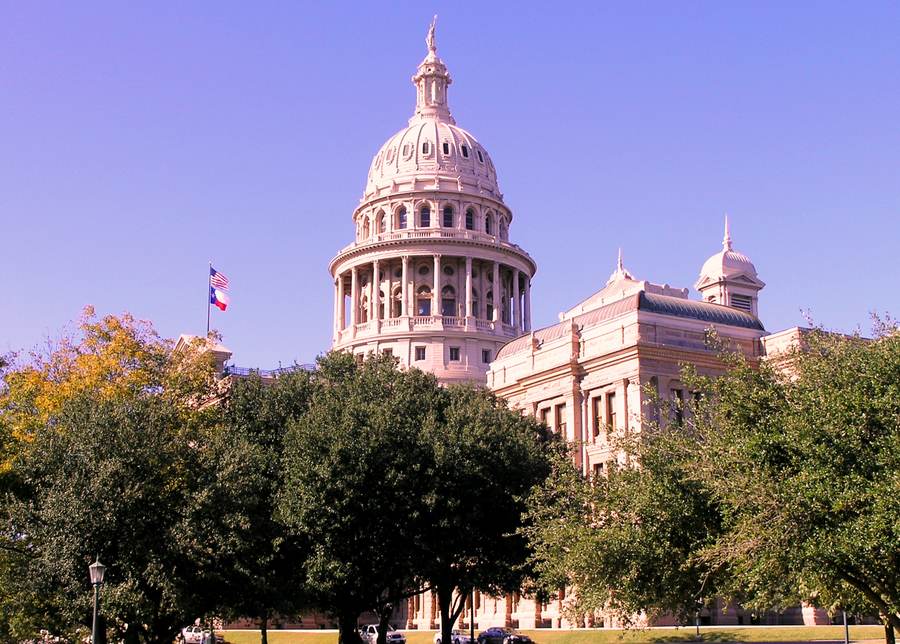
AUSTIN, Texas — The Texas Capitol attack plot moved from an evening warning to a pre-dawn arrest in the space of one overnight shift. The Texas Department of Public Safety said it received “credible information” Tuesday evening, September 29, that an individual was planning a violent attack on the Texas State Capitol for Thursday, October 1. DPS Criminal Investigations Division agents worked through the night with the FBI and local law enforcement. At about 3 a.m. Wednesday, a DPS SWAT team arrested Benny Caldera Jr., 40, at his home in Converse.
Caldera was charged in state court with making a felony terroristic threat against a public servant. Court records cited by news organizations show he was booked into the Bexar County Jail and posted a $75,000 bond. He did not simply walk free: late Wednesday, after the state bond was posted, the FBI arrested him and took him into federal custody to face additional federal charges.
DPS increased its security presence at the Capitol, notified state lawmakers and kept the building open during regular hours. The department later said there was “no reason to believe there is an ongoing threat.” That reassurance is significant, but it is not the same as a full public account. Officials have not disclosed the alleged method, motive, intended point of entry, weapons, target inside the building or how the tip reached investigators. The investigation remains active.
Texas State Capitol threat October 2026: the verified timeline
The public chronology is unusually compressed. The first known point is Tuesday evening, when DPS says it received credible information. The next is the overnight collaboration among state criminal investigators, the FBI and local agencies. The arrest came at approximately 3 a.m. Wednesday at a residence about 65 miles southwest of the Capitol. The alleged attack date was Thursday.
Because DPS has not published the exact time of the tip, a precise hour count would be false precision. What the record does show is a response measured in hours, not days. Investigators had to assess credibility, identify a suspect, establish location, coordinate jurisdictions and execute a high-risk arrest before dawn. The remaining gap between the arrest and the alleged attack date gave security officials time to notify legislators and reinforce the Capitol without closing it.
The sequence also explains why public facts remain sparse. In foiled-plot cases, intervention often occurs before prosecutors have filed the detailed federal complaint that later reveals alleged communications, surveillance, purchases or operational steps. That makes speed a public-safety advantage and an information disadvantage. The state can say it acted; the public still has to wait for filings that show why the action was justified.
Texas DPS SWAT arrest in Converse and the state charge
The Texas DPS SWAT arrest in Converse placed Caldera under state authority first. The announced allegation — a terroristic threat against a public servant — is a felony charge, not a conviction. Prosecutors will have to establish the required elements in court, and Caldera is entitled to the presumption of innocence.
The wording of the charge is narrower than the phrase “Capitol attack plot.” A threat offense focuses on an alleged threat and its target; it does not by itself tell the public whether investigators found a detailed operational plan. Nor does the use of a SWAT team prove what weapons, if any, were recovered. DPS has not released those details. That distinction protects both public understanding and the integrity of the case: dramatic police tactics cannot substitute for evidence disclosed in a charging document.
Still, the combination of a named target, a near-term date and coordinated state-federal action indicates that authorities treated the information as more than an online outburst they could monitor at a distance. Supporters of aggressive preemption will see the sequence as the system working: identify risk, act before the threatened day and keep the public institution operating. Critics will answer that the same urgency makes transparency more important, especially when the allegation is serious and the public account is so limited.
What the Bexar County $75,000 bond and federal handoff mean
The Bexar County $75,000 bond is easy to misread. Posting state bond resolved only Caldera's immediate custody status on the Texas charge. The subsequent FBI arrest placed him in federal custody for additional charges that had not yet been publicly detailed. The two systems can proceed on separate legal theories arising from the same alleged conduct.
That handoff may signal that federal investigators believe the evidence implicates federal statutes, interstate communications, weapons law, threats against officials or another federal nexus. It does not establish which theory applies, and it does not automatically prove the underlying case is stronger. The federal complaint, when unsealed or filed publicly, should show the probable-cause basis and clarify what prosecutors say Caldera actually did.
For now, the custody sequence establishes three facts: a state felony case exists, the state bond was posted, and federal authorities then made a separate arrest. It would be premature to describe a conviction, a completed conspiracy or a proven capability to carry out an attack. Those are questions for evidence and court proceedings.
Why this matters: a threat paced in hours
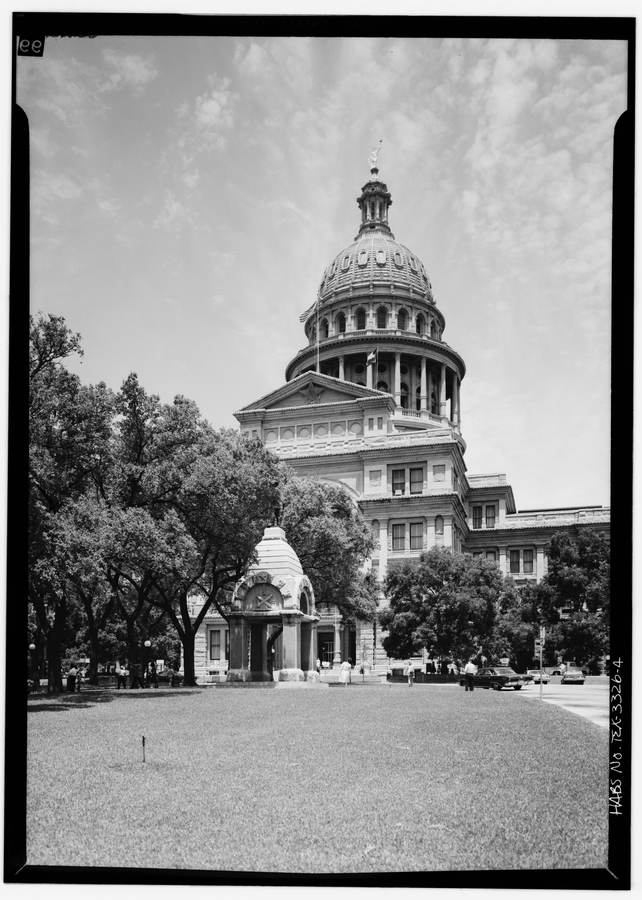
The alleged target was not simply a building. A state capitol concentrates elected officials, staff, visitors, law enforcement and the machinery of democratic government in a place designed to be accessible. An alleged plan set for the next operating day compresses the decision window: wait too long and prevention may become response; move too quickly on weak information and officials risk overreach.
This case landed on the day authorities said the attack was planned. The public saw an open Capitol and heavier security rather than barricades after violence. That is the central public-safety achievement claimed by DPS and the FBI. It is also why the missing details matter. The closer authorities intervene to a threatened date, the more people need to know what transformed a tip into probable cause.
Governor Greg Abbott framed the episode in categorical terms: “Texas DPS and the FBI stopped a planned attack on the Texas Capitol. Texas will NOT tolerate threats of violence against our Capitol.” The Greg Abbott Texas Capitol statement projects certainty about prevention. The legal process will now test the evidence beneath that certainty.
Capitols as symbolic targets after January 6
The January 6, 2021, attack on the U.S. Capitol permanently changed how security agencies assess threats to legislative buildings. State capitols are smaller and more locally accessible, but symbolically similar: they are the visible seat of government, a regular gathering place for protest and a predictable workplace for public officials. A threat against one building can therefore aim at people, institutions and public confidence at once.
Texas has experienced that post-January 6 security environment directly. In January 2021, state officials temporarily closed the Capitol grounds around the presidential inauguration amid warnings of possible armed demonstrations nationwide. The present case differs because authorities say they identified one alleged plot and one suspect, rather than responding to a broad warning. But the operational lesson is related: a capitol's openness is both a civic value and a security vulnerability.
DPS occupies a central role in that balance. Its Capitol Region protects the complex, while its Criminal Investigations Division handles criminal intelligence and investigations that can extend beyond Austin. Bringing in the FBI and local law enforcement allowed the inquiry to move from a state-government target in Austin to an arrest in Converse without forcing one agency to carry every piece of the operation.
Suspected co-conspirators at the Texas Capitol: what is known
An internal notice from Texas Senate Secretary Patsy Spaw referred to “suspected co-conspirators.” That phrase broadens the investigative horizon but should not be turned into a head count. Officials have not publicly named another suspect, announced another arrest or said whether the possible collaborators were believed to have provided planning, transportation, equipment or encouragement.
The distinction between suspicion and charge is essential. A co-conspirator investigation can include people who never joined an agreement, contacts who did not know the alleged purpose, or accounts that investigators ultimately clear. It can also reveal a wider plan. Until warrants, complaints or official statements supply particulars, the public record supports only this: lawmakers were warned that investigators were looking beyond the one person arrested.
That uncertainty should shape security posture through the 2026 midterm season. Higher visibility around the Capitol may deter opportunistic threats, but durable protection depends on intelligence, threat assessment and communication with offices that receive alarming messages. The goal is not to turn a public building into a sealed compound. It is to detect credible movement toward violence while preserving lawful access and dissent.
Texas Capitol increased security while the building remained open
The Texas Capitol increased security without canceling regular public hours. That choice signals that DPS believed the immediate danger had been contained enough to maintain operations, even as investigators continued working. It also reduces the secondary effect attackers often seek: disrupting government and spreading fear beyond the people directly threatened.
There is a trade-off. An open building requires officers to screen more people, watch more entrances and distinguish ordinary political passion from conduct that signals violence. Visible security can reassure visitors, but it can also produce confusion if lawmakers and the public receive different information. Clear notices about access rules, delays and prohibited items are part of a credible response.
Signal Post News has examined similar problems of evidence and public accountability in the Austin ICE shooting investigation, where competing official and legal accounts required independent evidence. A different kind of disrupted threat forced an evacuation at New York's Chrysler Building after a bomb threat. And the aftermath of the Macon park shooting that wounded 12 teenagers shows the cost when authorities are investigating after gunfire rather than before it.
What the public still needs to know
The first missing document is the federal charging complaint. It should identify the alleged conduct, the federal statute invoked and the evidence supporting probable cause. If portions must remain sealed to protect the investigation, prosecutors can still disclose enough to explain the basis for continued detention or release conditions.
The second question is method. Officials have not said whether the alleged plan involved firearms, explosives, a vehicle, communications, reconnaissance or another means. Reporting any of those as fact now would be invention. The method matters because it determines whether the security lesson is about screening, perimeter defense, online threat reporting, weapons access or something else.
The third is motive and target. “The Capitol” can mean the building, a public servant, a gathering or the institution itself. The state charge names a public servant as the threatened category, but officials have not identified the person. Motive will shape whether investigators treat this primarily as political violence, a personal grievance, ideological extremism or another form of threat.
The fourth is the tip. DPS has not said who provided it or through what channel. Protecting a source may be necessary. Eventually, however, the public should learn enough to understand whether the warning came from a family member, a digital platform, an informant, another agency or direct communication. That is how institutions learn which reporting systems work.
What happens next
Federal charges should define the case. The FBI's custody decision points to a federal proceeding. A complaint, indictment or hearing will be the first place to look for allegations detailed under oath rather than summarized in a press release.
The suspected co-conspirator inquiry may widen or close. Investigators will likely examine communications, devices, travel, financial records and contacts under lawful process. The outcome could produce more arrests, or establish that Caldera acted alone. Neither result should be assumed.
Capitol security will remain under review. The fact that the Texas Capitol remains open does not mean the alert is over operationally. DPS can maintain additional officers, adjust screening and brief legislative offices while officials assess whether any residual risk remains.
Public confidence will depend on disciplined disclosure. DPS's statement that there is no ongoing threat is the immediate reassurance. The lasting measure will be whether prosecutors explain the evidence, courts test it, and officials correct the record if early assumptions change. Prevention deserves credit when it is supported by facts; transparency is how that credit becomes trust.
Sources and reporting notes
- Associated Press — arrest, state charge, bond, federal custody and Capitol operations.
- CNN — timeline, agency coordination and lawmaker notification.
- FOX 49 / WOAI — DPS statements, security posture and the governor's response.
Reporting note: Officials have not disclosed the alleged plan's method or motive, the basis of the tip, or details of the expected federal charges. This report labels the conduct alleged and distinguishes official claims from analysis.
Signal Post News will update this report when federal charges are filed, additional suspects are named or DPS releases further evidence.
Back to all stories