Supreme Court SAVE voter ruling
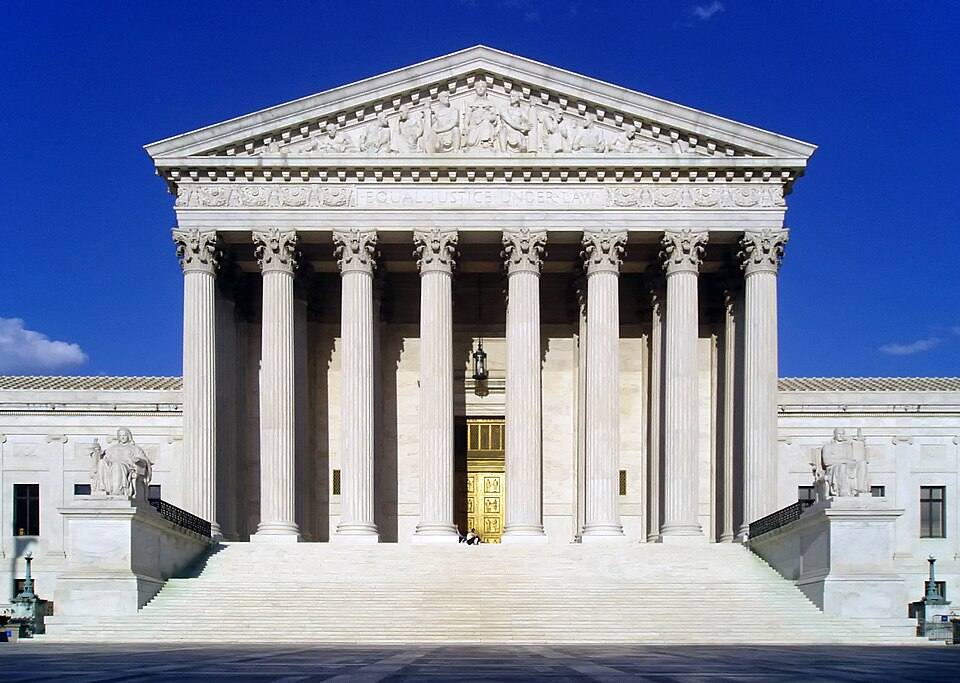
The Supreme Court on Friday temporarily revived the Trump administration's expanded federal system for checking voter-registration records against citizenship data, handing states access to a powerful verification tool little more than five weeks before the November 3 midterm elections. The unsigned September 25 order split the justices 6-3 along ideological lines, with all three liberal justices dissenting. It pauses a lower-court injunction while the administration's appeal proceeds; it does not decide whether the program is ultimately lawful, and it does not itself remove a single voter.
Why this matters
The Supreme Court SAVE voter ruling changes who can run the search, not the legal standard for taking away a ballot. Twenty-five states have already used the revamped system to scan at least 67 million voter registrations, according to reporting cited in the litigation. That reach makes SAVE potentially useful for identifying records that deserve a closer look. It also makes a modest error rate consequential: when a screening tool operates across tens of millions of records, weak matches can generate a large queue of lawful voters who must prove what the government already knows.
The central distinction is between a flag and a finding. A database response can reflect incomplete records, a name or birthdate mismatch, or a citizenship file that has not caught up with naturalization. It is a lead for an election official, not a judicial determination of ineligibility. Treating those two things as interchangeable would turn a voter-roll maintenance tool into a disenfranchisement machine. Refusing to examine any lead at all, however, would leave officials without one of the federal government's broadest sources of citizenship information. The hard policy question is not whether rolls should be accurate; it is how much verification must stand between an automated match and the loss of a citizen's vote.
From benefits screening to a Trump voter verification database
SAVE — the Systematic Alien Verification for Entitlements program — began in 1986 as a way for benefit-granting agencies to verify the immigration status of applicants. It was not designed as an election system. Its transformation accelerated after President Donald Trump's March 2025 executive order directed the federal government to support citizenship verification in voter registration. The Department of Homeland Security then expanded the data available through SAVE, adding Social Security Administration information that covers native-born citizens and enabling bulk queries using combinations of names, dates of birth and Social Security numbers.
That redesign matters because the original system was built mainly to answer an individualized question about a noncitizen's immigration record. The new DHS SAVE database voter rolls workflow can test entire registration lists, including millions of people born in the United States. Administration lawyers say the larger reach closes a longstanding information gap for states and helps enforce the federal rule that noncitizens may not vote in federal elections. Critics answer that combining datasets built for different purposes creates predictable matching errors, exposes personal information at scale and gives partisan officials a federal-looking flag that can be mistaken for proof.
What Judge Sparkle L. Sooknanan blocked in June
In June 2026, U.S. District Judge Sparkle L. Sooknanan issued an injunction restricting the expansion. The challenge focused on the government's authorization of broad searches and disclosure of personal data, including Social Security information, without the procedures and safeguards the plaintiffs said federal law requires. Her order did not erase SAVE or prevent every citizenship inquiry. It limited the new mass-query architecture that had turned a benefits-verification system into a nationwide voter-screening platform.
The Supreme Court's Friday order puts that injunction on hold. States can again use bulk searches, and the administration can continue providing the expanded service while the appeal moves through the courts. The justices did preserve an important boundary described in the lower-court litigation: searches still must be tied to real people and legitimate verification work, rather than free-form trawling through federal records. The practical scope of that “individualized” limit will be contested, especially when a state uploads a list containing millions of individualized entries at once.
The administration's case: eligibility checks before ballots are cast
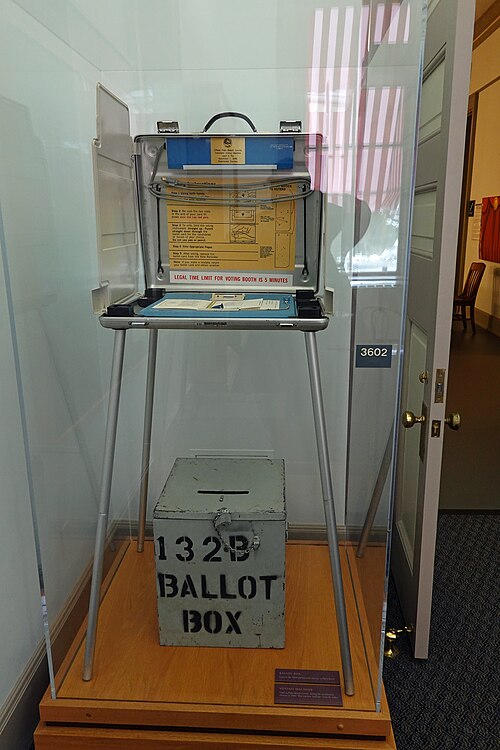
The administration's argument starts with a proposition that is not seriously disputed: noncitizen voting in federal elections is illegal, and states have a duty to maintain accurate rolls. Federal officials contend that SAVE gives election administrators a consistent national source instead of forcing them to rely on scattered state records or older immigration files. A search by Social Security number can be more precise than a name-only match, they argue, while bulk processing makes the tool usable for large statewide databases rather than one case at a time.
Supporters also reject the idea that rarity makes the problem irrelevant. A close race can turn on a small number of votes, and public confidence suffers when officials cannot explain how they verify eligibility. On that view, the injunction imposed a real operational harm: it withheld a government database from officials who are legally responsible for registration lists. The Supreme Court majority did not explain its reasoning, so it is not possible to say which of those claims persuaded six justices. The order establishes temporary authority, not a factual finding about the prevalence of noncitizen voting registration.
Critics' case: error rates, privacy and the burden of proving citizenship twice
The record also shows why civil-rights groups are alarmed. In St. Louis County, Missouri, an initial batch of 691 SAVE flags fell to 133 after officials checked passport data — a reminder that a first-pass alert can dramatically overstate the number of unresolved records. In Travis County, Texas, audits found roughly 10% to 21% of people flagged in different reviews were citizens. One reported set identified 97 records, at least 11 of which belonged to citizens. Those figures do not prove that every SAVE search performs the same way, but they do prove that “flagged” cannot safely mean “ineligible.”
Privacy is the second concern. Bulk searches can move names, birthdates and Social Security information across agencies and into state election workflows on a scale never contemplated when SAVE was created. Even if officials never publish the data, wider access increases the number of systems and people that can mishandle it. The government's answer is that the revised program uses established federal records and access controls. The unresolved legal question is whether those safeguards and disclosures satisfy the Privacy Act and administrative-law requirements — precisely the merits question the lower courts still must decide.
Jackson's dissent puts the lawful voter at the center
Justice Ketanji Brown Jackson wrote for the three dissenters and framed the stay as an imbalance of harms. The government, she argued, had not shown that it would suffer a concrete injury from waiting while the appeal proceeded, while eligible people face a direct risk if imperfect matches become removal notices. Her conclusion was categorical: “The harm caused by burdening or disenfranchising even a few lawful voters outweighs the nonexistent harm that the government experiences.”
That logic does not deny the government's interest in accurate rolls. It insists that the cost of error is asymmetric. An ineligible registration can be investigated and, if proved, removed under law. A lawful voter wrongly purged near Election Day may have only days to resolve a mismatch, obtain documents, navigate an appeal or cast a provisional ballot that is later rejected. Jackson's dissent therefore treats timing and process as the substance of voting rights, not as administrative details.
What 67 million scans do — and do not — tell us
The number is politically explosive and easy to misuse. At least 67 million registrations scanned means the tool has examined records covering a large share of the American electorate. It does not mean 67 million people were flagged, questioned or suspected of being noncitizens. Coverage is the denominator; flags are a much smaller numerator that each state must disclose and validate before anyone can assess the program's yield.
The local error evidence nevertheless becomes serious at scale. Suppose a state generates 10,000 flags and 10% to 21% of them are actually citizens, in line with the reported Travis County audit range. That would mean 1,000 to 2,100 lawful voters caught in the review queue — not because 10% to 21% of all voters are misclassified, but because that share of the already-selected flags may be wrong. The multiplication belongs on the flagged population, never on all 67 million scanned registrations. The policy danger comes from a large search universe producing many leads and from officials then skipping the slower human work that separates a useful lead from an erroneous accusation.
St. Louis County illustrates a different layer of the same problem. Passport checks narrowed 691 preliminary flags to 133 unresolved records, removing more than four-fifths from the original queue before any final eligibility judgment. That is what a verification pipeline is supposed to do. It is also why publishing the first number without the second distorts the program's performance. The honest metric is not how many alerts the system can generate; it is how many are ultimately confirmed, how many citizens are wrongly burdened, how long corrections take and whether affected voters receive meaningful notice.
The NVRA 90-day voter purge rule changes the midterm math
November 3 is less than 90 days away. The National Voter Registration Act generally bars states from conducting a program whose purpose is to systematically remove ineligible voters during the 90 days before a federal election. That quiet period sharply limits the immediate effect of Friday's order. A state can run SAVE, analyze results and pursue genuinely individualized cases, but it cannot simply treat a bulk file as a mass-purge list and sweep names off the rolls before the midterms.
The distinction will generate litigation. Election officials may continue routine corrections, act on a voter's own request, process deaths and address individual eligibility evidence under applicable law. What they may not do is disguise a systematic removal program as thousands of simultaneous “individual” checks. Because SAVE now supports name, birthdate and Social Security number voter verification, the technical operation can look individualized even when its policy purpose and timing are mass maintenance. Courts will likely examine substance over labels.
For voters, the practical message is narrower than the politics: Friday's order does not cancel registrations nationwide, and SAVE cannot determine by itself whether a person may vote. For state officials, the prudent course is documented secondary review, direct notice, time to respond and a fail-safe voting option where state and federal law require it. Accuracy without due process is not accuracy; it is an unreviewed database decision.
What states can do now
States participating in SAVE can resume expanded queries, compare flags with passports or other authoritative records, investigate specific cases and contact registrants for clarification. They can also preserve results for post-election list maintenance. They should not infer citizenship from names, accents or incomplete identifiers; rely on a single mismatch as conclusive proof; or launch a broad removal campaign inside the federal quiet period. Participation remains voluntary, so states may decline to use the system or adopt stricter verification protocols than the federal minimum.
The order will produce uneven election administration. A state with a mature audit process may use SAVE as one layer among several. Another may publicize raw flags as evidence of fraud before completing checks. The same database can therefore improve records in one jurisdiction and undermine confidence in another. Transparency — total searches, total flags, confirmed ineligible records, confirmed citizens, unresolved cases and correction times — is the best defense against both complacency and exaggeration.
Three paths from here
First, the appeal: the lower courts will continue considering the privacy, statutory and administrative-law claims. A final ruling could sustain the expansion, require new procedures or again limit bulk access. Because Friday's order is temporary, every state building a permanent workflow around it is assuming legal risk.
Second, the 2026 midterms: states can investigate individual records before November 3, but the NVRA's 90-day restriction makes a sweeping purge difficult to defend. The most immediate effects may be notices, provisional-ballot disputes and political claims about the number of flags rather than a lawful mass removal.
Third, the long-term federal-state balance: election administration remains primarily state-run, but the federal government now controls a nationwide data gateway that can shape how states judge eligibility. If that arrangement survives, future administrations of either party will inherit it. Congress and the courts will have to decide what data states may submit, what federal records may be returned, how errors are measured, how citizens correct them and whether the rules change close to an election.
The Supreme Court has reopened the tool while declining, for now, to answer those questions. That is why the ruling is both consequential and incomplete: it gives officials access to a larger machine but leaves the legal guardrails, the error budget and the remedy for a wrongly flagged citizen to the appeal still underway.
Sources
- CNN, “Supreme Court allows Trump administration to resume voter-roll citizenship checks” (Sept. 25, 2026)
- USA Today, report on the 6-3 order, bulk searches and individualized-query limit (Sept. 25, 2026)
- Associated Press via TMJ4, report on the temporary order, voluntary state use and the 90-day restriction (Sept. 25, 2026)
- New York Post, report on state participation, registration scans and local audit results (Sept. 25, 2026)