SpaceX 40 billion Nvidia chips
The proposed financing would put about $10 billion of bank loans beside $30 billion of investment-grade debt, turning Elon Musk's AI expansion into a defining test of whether credit markets will keep underwriting the compute race.
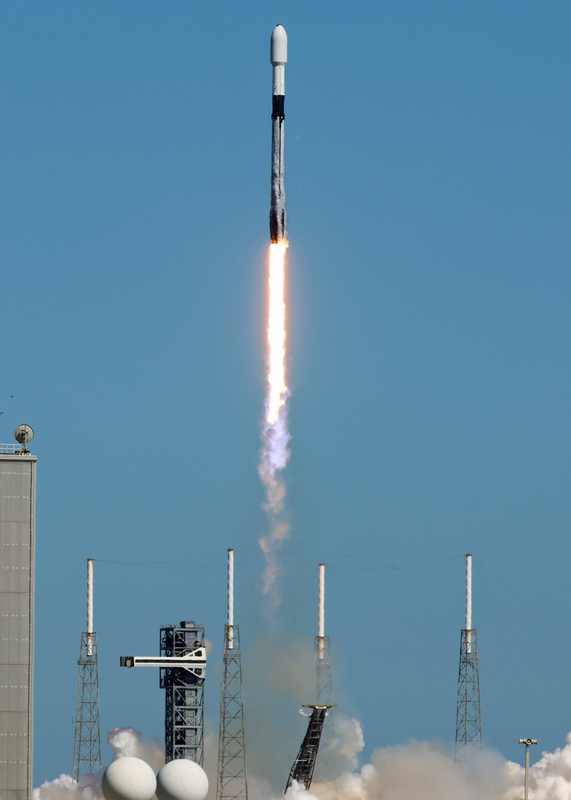
SpaceX 40 billion Nvidia chips financing is moving from an extraordinary idea toward a possible template for the next phase of the AI boom. SpaceX is planning to raise about $40 billion in financing led by Apollo Global Management to buy Nvidia processors, the Financial Times reported, with roughly $10 billion expected from bank loans and $30 billion from investment-grade debt. Pimco is among a small group of lenders in talks. The transaction is expected to close in 2027. SpaceX, Apollo and Nvidia did not immediately respond to Reuters requests for comment; Pimco declined to comment.
The scale is the story. A company best known for launch vehicles and satellites would be borrowing tens of billions of dollars to secure a fast-depreciating technology asset: advanced AI chips. That is possible because SpaceX's merger with xAI tied the rocket and satellite business more directly to Elon Musk's AI ambitions, including the Colossus data-center network that powers the Grok model and sells computing capacity to other developers. It is risky because lenders would be financing capacity whose economics depend on demand, utilization, energy costs and successive generations of Nvidia hardware.
Why this matters
The proposed deal connects three markets that used to be discussed separately: commercial space, artificial intelligence and investment-grade credit. SpaceX brings launch revenue, Starlink cash flow and public-market access. xAI brings a voracious appetite for computing power. Nvidia supplies the scarce processors. Apollo and other lenders would turn that strategic need into securities that can be distributed across the financial system.
If the deal closes near the reported terms, it would show that the AI buildout is no longer funded mainly by technology-company cash reserves and venture equity. It is becoming a debt-market project on a scale associated with power plants, telecom networks and sovereign infrastructure. That matters because debt changes the timetable. Equity can wait through a weak quarter; interest payments cannot. The moment AI capacity is financed with fixed obligations, chip utilization and customer demand become credit questions rather than merely technology questions.
There is also a signaling effect. A successful sale of $30 billion in investment-grade paper could lower the psychological barrier for the next borrower. A difficult syndication, wider-than-expected yields or demands for stronger protections could do the opposite, telling markets that enthusiasm for AI does not eliminate balance-sheet discipline.
What the financing would look like
Apollo Global SpaceX financing puts banks beside bond investors
The reported structure separates the financing into about $10 billion of bank loans and $30 billion of investment-grade debt. The bank portion could give SpaceX committed capital and flexibility while the larger bond component spreads exposure among institutional buyers. Apollo's role matters because arranging and distributing a transaction this large requires more than writing one check: it means shaping maturities, covenants, collateral and pricing so multiple groups of lenders can accept the risk.
Pimco's reported participation is another clue. Large bond managers assess not only whether a borrower can repay, but whether the securities offer enough yield relative to other high-grade corporate debt. Their scrutiny will fall on the combined company's cash generation, the separation between space and AI operations, and the residual value of the financed hardware. None of the reported terms has been confirmed by the companies, and negotiations can change before a 2027 close.
SpaceX investment-grade debt AI logic: why borrow instead of sell more stock?
Debt lets existing shareholders avoid immediate dilution after SpaceX's record $86 billion initial public offering in June. That is the attraction. If the chips produce revenue faster than the debt costs accrue, leverage can magnify the return to equity holders. The company also gains purchasing power now, when access to top-tier Nvidia systems can determine how quickly an AI lab expands.
The tradeoff is rigidity. Borrowing creates mandatory payments regardless of whether Grok subscriptions, enterprise contracts or rented computing capacity meet forecasts. Equity absorbs disappointment through a lower share price; debt can force cost cuts, refinancing or asset sales. The split structure suggests a deliberate attempt to balance flexibility and reach, but the risk does not disappear simply because the bonds carry an investment-grade label.

Background: the xAI merger, the IPO and the compute race
Elon Musk Nvidia chips Colossus 2 ambitions moved inside SpaceX
The merger of SpaceX and xAI changed the financial frame. What had been an AI startup's appetite for chips now sits alongside a public company with a record-setting IPO, launch contracts and a global satellite network. The strategic argument is that the businesses reinforce one another: SpaceX can finance infrastructure at a lower cost than a young AI company, while xAI adds a high-growth use for capital and computing.
Last month Musk said the Colossus 2 data center could more than double its Nvidia chip count by December. SpaceX is expected to use Nvidia hardware exclusively in its data centers, according to the report. Those processors would power Grok through the Colossus facilities and support capacity rented to outside AI developers, including Anthropic and Google. That rental business matters because it offers a potential revenue stream separate from xAI's own models, although customer demand and contract terms will determine whether it can carry debt at the proposed scale.
SpaceX Nvidia chip order 2026 turns scarcity into a balance-sheet contest
In the early AI race, model quality and access to engineers dominated the discussion. Increasingly, the decisive constraint is the ability to obtain chips, power and data-center space at once. A company that secures a very large block of Nvidia systems can train larger models, run more inference and sell spare capacity. A competitor that cannot finance the same buildout may have strong software but no comparable production engine.
This is why a chip purchase can be strategic even though the equipment loses value quickly. The relevant asset is not merely the resale price of a processor; it is the period of privileged access before comparable capacity becomes broadly available. SpaceX is effectively considering paying a very large premium to move faster. Lenders must decide whether that lead will last long enough to repay them.
The numbers behind the bet
$40 billion against an $86 billion IPO
The proposed raise equals about 46.5% of the $86 billion SpaceX raised in June. That comparison is more revealing than the raw number. The IPO refreshed the equity base; the debt plan would then add almost half as much capital again without another stock sale. Used well, that is efficient financing. Used poorly, it concentrates the consequences of one technology cycle on the same shareholders the IPO just brought in.
The $10 billion bank tranche represents one quarter of the reported package, while the $30 billion bond component represents three quarters. That weighting shifts most of the funding burden from relationship banks to institutional credit markets. It also means pricing will reveal what investors demand to hold AI-linked risk at investment-grade scale.
The AI infrastructure financing trillion-dollar gap
Morgan Stanley estimates that AI infrastructure will require $1.5 trillion in external financing by 2028. On that measure, SpaceX's $40 billion would cover about 2.7% of the total need. One borrower absorbing nearly three cents of every externally financed dollar implied by that estimate shows both SpaceX's ambition and the limits of the available capital pool.
Nvidia's August partnerships with Apollo, BlackRock, Blackstone, Brookfield, Goldman Sachs and KKR were designed to mobilize more than $500 billion for AI infrastructure. That platform is roughly one-third of Morgan Stanley's estimated external-financing requirement. The remaining gap explains why banks, private-credit firms, infrastructure funds and public bond investors are all being drawn into the same market.
Who benefits—and who carries the downside
Nvidia, Apollo, Pimco and AI labs
Nvidia is the clearest commercial beneficiary. Financing helps transform long-term demand into orders and reinforces its position as the preferred supplier for frontier computing. Apollo could earn fees and deepen its role as a bridge between AI projects and institutional capital. Pimco and other lenders could obtain high-grade exposure to a growth theme, provided the yield compensates for technology and execution risk.
AI labs also gain. Anthropic, Google and other customers that rent Colossus capacity could access large clusters without owning every chip or building every data center themselves. That can lower the entry cost for experimentation and shorten deployment times. SpaceX, in turn, gains another way to monetize the infrastructure beyond Grok.
Lenders, competitors and indirect public exposure
Lenders carry the obvious downside if cash flow falls short or refinancing becomes expensive. Competitors face a different risk: the largest companies could lock up chips, electrical capacity and favorable financing before smaller labs can reach the market. That may accelerate innovation at the top while making the industry less contestable.
The public exposure is indirect, not a reported government guarantee. Investment-grade bonds often enter pension, insurance and retirement portfolios, spreading gains and losses well beyond specialist technology investors. Data-center expansion can also require grid upgrades, tax incentives and public infrastructure. Those costs and benefits depend on local agreements, but the financing illustrates how a private AI race can reach household portfolios and public utility planning.
What critics of debt-fueled AI spending are warning about
Critics describe a potentially circular system: chip demand supports Nvidia's valuation; Nvidia and financial partners help mobilize capital for infrastructure; borrowers use that capital to buy more Nvidia hardware; the new orders then reinforce the original demand story. In the harshest version of the critique, financing can pull tomorrow's demand into today and make utilization appear inevitable before end-user revenue proves it.
Supporters answer that project finance often works this way. Railroads, power plants, fiber networks and aircraft fleets were built with long-term capital before demand fully arrived. Financing does not manufacture a useful asset; it allows a company to build one sooner. They also note that no report says Nvidia is guaranteeing SpaceX's debt or that public investors lack the information needed to price it. The important distinction is between coordinated financing and disguised vendor subsidy.
The market's first reaction was restrained rather than panicked: SpaceX shares fell about 1% in extended trading after the report, while Nvidia rose about 0.5%. The S&P 500 and Nasdaq had both closed at record highs on October 6 amid the technology rally. Those moves suggest investors saw incremental benefit for the supplier and modest balance-sheet concern for the buyer—not an immediate verdict on a transaction that may not close until 2027.
The telecom and dot-com parallel—and its limits
The late-1990s telecom boom offers both sides evidence. Cheap capital financed fiber networks far ahead of demand. Many carriers failed when pricing collapsed and debts remained, yet the resulting bandwidth later became essential infrastructure for the modern internet. Society kept much of the capacity even when shareholders and creditors lost money.
AI infrastructure has a crucial difference: chips age faster than buried fiber. A processor bought near the frontier can be overtaken within a product cycle, and its economic value depends on software compatibility, energy efficiency and workload demand. That makes timing more dangerous. SpaceX could build a durable computing platform that generates years of revenue, or it could lock in expensive hardware just as newer chips reduce the cost of equivalent performance.
The parallel therefore is not that an AI crash is inevitable. It is that transformative technology and poor capital allocation can coexist. The internet fulfilled the bullish vision, but many financing structures built around it did not survive. Investors considering SpaceX debt will need to separate belief in AI from confidence in this particular purchase, borrower and repayment schedule.
What happens next
Scenario one: the 2027 close becomes a market template
In the strongest case, Apollo assembles the bank group, the bond issue prices cleanly and SpaceX closes the package in 2027. Colossus 2 expands on schedule, rented capacity remains heavily used and Grok demand supports the economics. Other AI companies then copy the structure, combining loans with investment-grade bonds rather than relying on equity or cloud-provider commitments alone.
Scenario two: lenders narrow the ambition
A middle path would preserve the transaction but change the terms. Lenders could require staggered chip purchases, stronger covenants, more collateral, shorter commitments or a larger equity contribution. SpaceX might still obtain the full $40 billion over time, but only as installation and revenue milestones are met. That outcome would validate the project while showing that the credit market has limits.
Scenario three: chip prices or demand fall
If Nvidia chip prices fall sharply, SpaceX could buy more computing power for each dollar—but hardware already purchased would lose collateral value. If AI demand falls at the same time, rental rates and utilization could weaken, producing the worst combination for lenders: lower cash flow against depreciating assets. The company could respond by slowing deployment, redirecting capacity or refinancing, but each option depends on contract flexibility and market conditions.
The broadest danger is a credit-cycle reversal. A few delayed projects are manageable; simultaneous weakness across borrowers can make investors reduce exposure just when companies need to refinance. Because the same asset managers, banks and chip suppliers appear across multiple AI projects, caution could spread quickly. That does not make the SpaceX deal unsound. It makes its structure—and the protections demanded by lenders—a leading indicator for the entire sector.
Conclusion: the chip race is becoming a credit race
The proposed SpaceX financing is not simply a large purchase order. It is a wager that access to compute will create enough strategic and commercial value to justify $40 billion of new obligations. Nvidia gets demand, Apollo gets a landmark mandate, AI developers get potential capacity and SpaceX gets speed. In exchange, credit investors inherit the risk that technology, pricing or demand changes before the debt is repaid.
That is why the 2027 close matters beyond one company. The deal will help answer whether AI infrastructure can be financed like a mature utility while its hardware and business models still move like early-stage technology. If the answer is yes, the next wave of data centers will have a much larger pool of capital. If it is no, the compute race may discover that the tightest constraint was never chips. It was confidence.
Sources
- Reuters: SpaceX seeks $40 billion to buy Nvidia chips, citing the Financial Times
- LA Post: Reuters wire report on the proposed SpaceX financing
- BusinessWorld: Reuters wire report on Apollo's reported role
Reporting note: The proposed financing terms are attributed to the Financial Times and Reuters reporting. SpaceX, Apollo and Nvidia had not responded to Reuters requests for comment; Pimco declined to comment. Analysis and framing are by Signal Post News.