South Sudan dissolves government elections
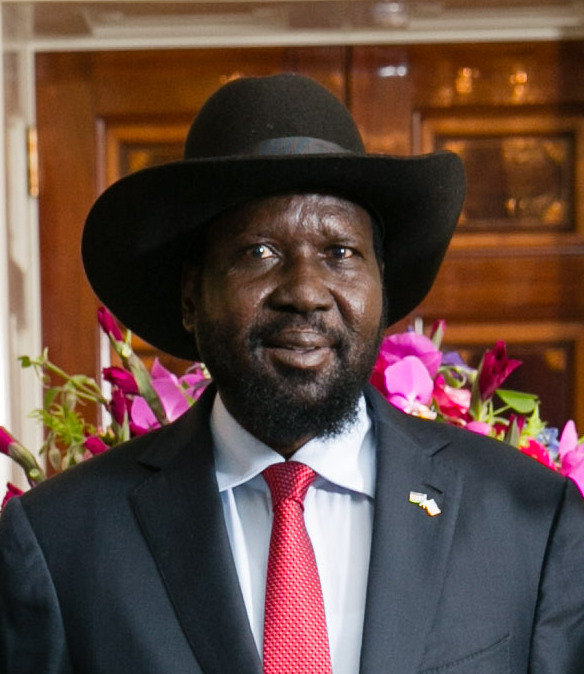
Three months before its first-ever national vote, South Sudan dissolves government elections season has officially begun: on Tuesday, September 22, 2026, President Salva Kiir Mayardit dissolved the Revitalized Transitional Government of National Unity (R-TGoNU) — the power-sharing arrangement created under the 2018 Revitalized Agreement on the Resolution of the Conflict in South Sudan (R-ARCSS) — and appointed a 13-minister caretaker administration to run the country into elections scheduled for December 22, 2026, fifteen years after independence in 2011.
“It is today, on this date of 22 September 2026, that I want to announce to you that the Government will be dissolved today, as per the legal requirements governing the conduct of every election,” Kiir said at an expanded meeting of the presidency attended by vice presidents, party leaders, advisers, ministers, and senior officials.
A presidential decree read on the national broadcaster removed all five vice-presidents, every minister, and local administrators, and dissolved the national and state assemblies. The judiciary and security institutions remain in operation.
What happened in Juba
Kiir delivered the announcement at an expanded presidency meeting attended by the officials whose power-sharing administration he was ending. His public explanation was procedural: the transitional government had to be dissolved “as per the legal requirements governing the conduct of every election.” That framing places the decree inside an election timetable rather than presenting it as a break with constitutional order.
The decree went much further than changing a cabinet. It removed all five vice-presidents, dismissed every minister and local administrator, and dissolved both the national and state assemblies. Kiir, however, remains president “during the election period until the next elected president assumes office,” retaining full constitutional powers. The result is a sharp concentration of authority: the offices created to distribute executive power under the 2018 settlement have gone, while the presidency remains.
The announcement came amid a visible security lockdown in Juba. BBC reporting carried by Nairobi News described a heavy army and national-security presence, soldiers blocking access to government ministries, staff being turned away and told to return the following Monday, and United Nations agencies asking employees to work remotely. Those precautions do not by themselves establish an intention to suppress political activity, but they show that the government treated the transition as a moment of heightened risk.
The caretaker cabinet
The Salva Kiir caretaker government is reported as a 13-minister administration. The published list reviewed for this article names the core cabinet portfolios: Africano Mande Gadime for Presidential Affairs; Martin Elia Lomuro for Cabinet Affairs; Ambassador Cecilia Adut Manyok for Foreign Affairs; Ayor Akuoch Anok for Defence; Rizik Zachariah Hassan for Interior; Dr. Wek Mamer Kuol for Justice; Obote Mamur Mete for National Security; Athian Diing Athian for Finance; Awow Daniel Chuang for Petroleum; and Dr. Labanya Margret for Trade and Industry. Former Speaker Joseph Ngere Paciko was appointed Presidential Adviser on Governance. The list as reported totals the core cabinet portfolios; the reviewed accounts did not supply additional names beyond those listed here.
Why this matters
The dissolution ends Africa’s longest-running power-sharing experiment at the precise moment it is supposed to produce an election. South Sudan, the world’s youngest country, has never held a national vote in fifteen years of independence. If the December poll is credible, ending the transitional arrangement could mark the final institutional step from civil war toward democratic government. If competition is not credible, the same decree could become the mechanism for entrenching one-man rule.
The stakes are inseparable from the war the 2018 agreement helped end. Five years of conflict killed an estimated 400,000 people, according to United Nations figures cited in the reviewed reporting. The South Sudan peace deal 2018 R-ARCSS did not resolve every dispute, but it stopped a civil war by sharing power among former enemies. Dissolving that settlement can therefore be read in two opposite ways: either the war’s final political chapter is closing, or the agreement that contained it is being buried before its safeguards have been replaced.
The central question is not whether a transition must eventually end. It is whether this particular transition ends in a genuine democratic contest or in a presidency freed from the counterweights written into the peace deal. The calendar points toward an election. The institutional balance points toward Kiir.
How we got here: from independence to the December vote
South Sudan became independent in 2011. Two years later, a split between Kiir and Riek Machar helped plunge the country into civil war. Five years of fighting followed before the parties signed the Revitalized Agreement on the Resolution of the Conflict in South Sudan in 2018. That pact created the power-sharing government and returned Machar to office as first vice-president.
Elections were originally expected in 2022, but the timetable was postponed twice. Each delay reflected the gap between what the peace agreement required and what institutions had completed. The repeated extensions allowed the coalition to survive, yet also prolonged rule without a national mandate.
On December 10, 2025, political leaders met in another expanded presidency session and agreed against extending the transitional period again. They renewed their commitment to the South Sudan elections December 2026 and agreed to an Inter-Party Dialogue on unresolved electoral matters. The September dissolution is Kiir’s argument that the promise is now being converted into law and administration.
The National Elections Act amendments
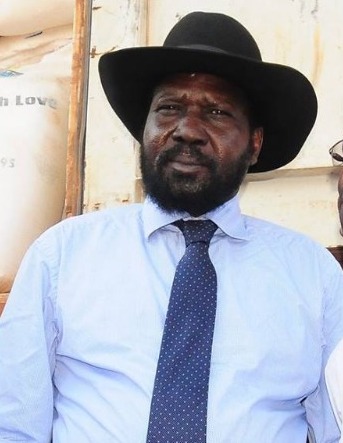
On September 21, Kiir signed amendments to the National Elections Act, 2012, after Parliament passed them. The South Sudan National Elections Act amendments remove the requirement that elections wait for completion of the permanent constitution-making process and the national population and housing census. In the government’s reading, removing those prerequisites clears a legal obstacle to the vote. The main opposition alliance rejected the changes.
Analysts cited in the reviewed reporting warned that the revised framework gives Kiir unfettered control during the electoral period. The concern follows directly from the new arrangement: Kiir retains full constitutional powers while the vice-presidents installed by the 2018 peace deal are gone. The phrase South Sudan vice presidents removed therefore describes more than a personnel change; it captures the disappearance of the executive structure designed to distribute power among former belligerents.
An electoral commission without money or its chairman
Last week Kiir dismissed National Elections Commission chairman Abednego Akok Kacuol without explanation and replaced him with the commission’s secretary-general, Gabriel Bol Deng. Leadership changed at the body responsible for organizing the poll just as the legal framework and the national government were also being remade.
The commission’s finances are more concrete than the political promises. In August, Akok said it needed $250 million but had received only $21 million. That is less than one-tenth of the required budget, with roughly three months to organize the country’s first-ever vote. A date can be decreed; voter registration, polling administration and observation still require institutions and money.
The opposition's verdict — and the Machar factor
Opposition parties rejected the election-law amendments, and the absence of Machar hangs over the entire process. The former rebel leader became first vice-president under the 2018 deal, but was sacked last year, charged with treason and remains under house arrest. The shorthand Riek Machar house arrest treason describes the opposition’s most consequential constraint: the figure at the center of the original power-sharing bargain is not free to campaign.
Kiir is the Sudan People’s Liberation Movement’s presidential candidate, and no prominent figures have announced challenges. That does not predetermine the result, but it narrows the visible field at the same moment the presidency’s institutional rivals have been removed. A first election can be historically important without automatically being competitive.
Amnesty International called the decree a “decisive step” toward first-ever elections. Tigere Chagutah, the organization’s regional director for East and Southern Africa, urged authorities to “ensure that a conducive environment exists for people to vote and stand in elections.” The two parts of that response belong together: the decree advances the formal process, while the conditions for meaningful participation remain the test.
Who wins, who loses
The government gains a cleaner legal chain of command. Its framing is that dissolution was necessary to avoid an institutional vacuum between the transitional government and the election period. The caretaker cabinet can focus on the vote without the bargaining architecture of the previous coalition.
The opposition loses the guarantees built into power-sharing. Its framing is that the decree is a coup against the settlement rather than its lawful completion. With vice-presidents removed, Machar confined and no prominent challenger declared, critics see election preparation occurring on ground tilted toward the incumbent.
Donors and the United Nations inherit a verification problem. They must watch whether political commitments translate into funding, administration, access and observation. Support for a first ballot does not require accepting every condition under which it is organized.
The military and security institutions gain continuity. They remain intact while civilian political institutions are dissolved and now operate under a single chain of command. That continuity may prevent an immediate security vacuum; it also concentrates coercive authority during the campaign.
Ordinary South Sudanese gain the prospect of a first ballot in fifteen years. They also carry the greatest risk if the process fails. Amnesty’s own welcome was conditional on an environment in which people can vote and stand. The world's youngest country election will be judged not only by whether polling stations open, but by whether genuine choices reach them.
What the numbers actually say
- $250 million needed; $21 million received: the election commission had about 8.4% of its stated requirement in August.
- About 400,000 war dead: the estimated human cost behind the peace deal now being dissolved.
- Five vice-presidents removed: one decree eliminated the executive power-sharing structure created by the 2018 agreement.
- Three months: the time between the September dissolution and the scheduled December 22 vote.
- Fifteen years: the period since independence in which South Sudan has not held a national election.
- Thirteen caretaker ministers: the reported size of the administration replacing the full power-sharing government.
The funding ratio is the most immediate operational warning. At roughly 8.4%, the money received is not merely short of the target; it is an order of magnitude below it. The other numbers measure political compression: an enormous peace settlement, five vice-presidencies and fifteen years of deferred electoral legitimacy are being pushed toward a three-month deadline.
Three scenarios for December 22
1. A credible vote
The Inter-Party Dialogue resolves outstanding matters, funding arrives and observers certify the poll. In this scenario, the legal amendments are treated as practical measures that prevent unfinished constitution-making and census work from blocking the election. A competitive campaign and accepted result would turn the South Sudan first elections 2026 into the democratic transition the peace agreement was designed to make possible.
2. A controlled coronation
The amended legal framework, an unfunded commission and a detained opposition leader produce a Kiir victory that neighboring governments accept but few observers call free. The formal timetable is met, yet the result settles little about political legitimacy because the incumbent controls the state while the architecture meant to balance him has been removed.
3. A third delay
The same unfulfilled benchmarks associated with the 2018 settlement — no permanent constitution, no voter registration and no unified armed forces — repeat, and the December date slips as the 2022 date did. The amendments remove some legal preconditions, but they do not complete the practical work those benchmarks were meant to represent.
Every unmet benchmark in 2018 was paid for in postponed promises; the next deadline will invoice the same.
Related coverage
- State Department says Sudan’s warring leaders cannot govern
- U.S. withholds Burhan’s U.N. visa over the ceasefire plan
Sources
- Nairobi News: BBC reporting on the dissolution and security measures in Juba
- St Lucia Chronicle: Al Jazeera syndicated reporting on the first national election
- Catholic Radio Network: caretaker administration and December election timetable
- Radio Generation Kenya: decree, caretaker appointments and election context
Reporting basis: This analysis uses the confirmed facts and attributed statements available in the cited September 23, 2026 reports. It distinguishes the government’s legal justification, the opposition’s objections and forward-looking scenarios; none of the scenarios is presented as a forecast.