Houthi ballistic missiles Khamis Mushait September 26 2026
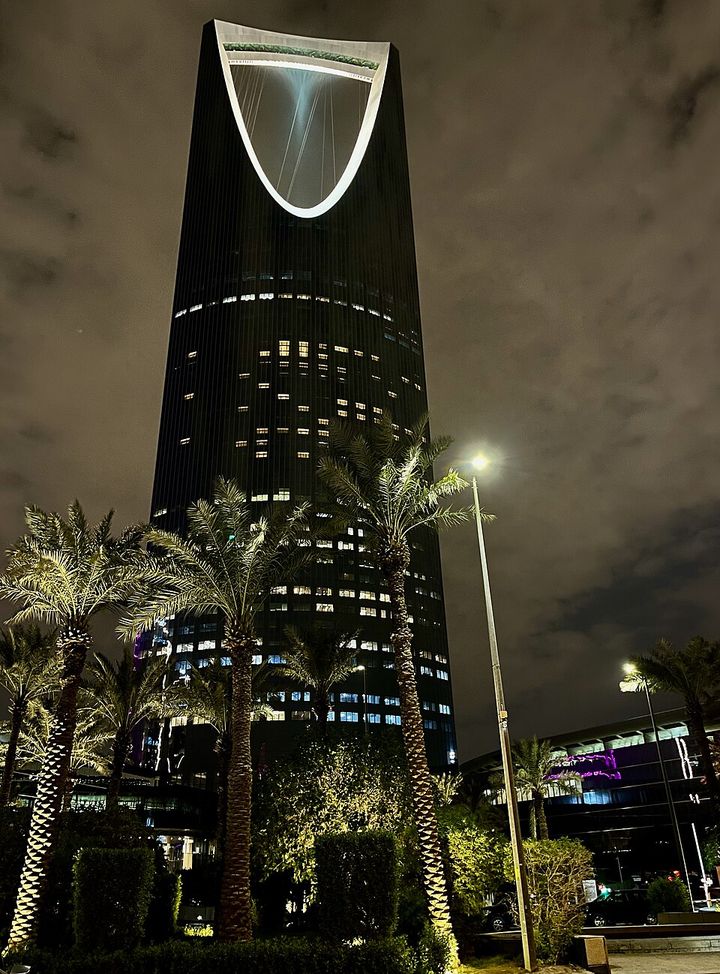
RIYADH — According to the Saudi-led coalition, Saudi air defenses intercepted two ballistic missiles launched toward Khamis Mushait and two drones launched toward Riyadh before dawn Saturday. Reuters reported the fuller account from Cairo, citing coalition posts on X. The coalition did not provide interception locations, debris imagery, or damage and casualty figures.
What is new in this update
The initial report described only the two drones aimed at Riyadh. The coalition subsequently said two ballistic missiles were also intercepted on their way to Khamis Mushait, a southwestern Saudi city described in the reporting as housing a strategic air base. Coalition spokesman Turki Al-Maliki posted the announcement on X at 4 a.m. Saturday, according to Arab News and Reuters-linked reporting.
Saudi civil defence sent overnight alerts for Khamis Mushait and nearby Abha but not for Riyadh, Reuters reported. No damage or casualties were reported. The Houthis have not publicly confirmed or claimed these specific launches in the reporting reviewed for this update; every account of the weapons' origin and intended targets remains a Saudi-led coalition claim.
The salvo followed another exchange on Thursday, when the Houthis claimed missile and drone attacks on what they called a "sensitive target" in Riyadh and on Saudi Aramco facilities in Yanbu, while Saudi Arabia said it intercepted six ballistic missiles aimed at Taif and the Yanbu area. Our earlier report on Thursday's exchange details those competing claims.
What the announcement did and didn't say
The coalition's account was concise: two ballistic missiles headed for Khamis Mushait and two drones headed for Riyadh were intercepted early Saturday. Its X posts said forces were monitoring missile and drone threats against the kingdom, language indicating an active alert posture rather than a single contained incident.
What remains unknown is as important as what was stated. The coalition published no wreckage imagery in the reporting reviewed, did not identify where the interceptions occurred and gave no damage or casualty figures. The civil-defence alerts for Khamis Mushait and Abha are consistent with the reported missile track toward the southwest, while the absence of an alert for Riyadh leaves the drones' route and interception point unclear.
The Houthis had not claimed the missiles or drones at the reporting cutoff. That silence does not disprove the coalition's account—the group sometimes claims operations later—but it means the launch and targeting claims remain attributed rather than independently established.
Why it matters: a heavier weapon and a wider target set
Ballistic missiles are a heavier weapon class than one-way attack drones: they can carry larger warheads, travel at far higher speeds and are generally harder and more expensive to intercept. According to the coalition's account, pairing two missiles with two drones made this the heaviest single Houthi salvo reported against Saudi Arabia since the group's July naval-blockade declaration.
Aiming ballistic missiles at Khamis Mushait, a southwestern military hub that hosts a strategic air base, would widen the target set beyond the capital's airspace. That is a clear escalation in the campaign described by the coalition, even though Saudi defenses said all four weapons were intercepted and no resulting damage or casualties were reported.
Riyadh remains politically significant as the seat of government and home to foreign embassies. But the reported Khamis Mushait component shows why the kingdom must protect multiple population centers and military sites at once. Successful interceptions demonstrate defensive capability; repeated alerts also show that the conflict is not contained.
Who loses: shippers, insurers and energy consumers
The reported salvo lands in the middle of an energy-security crisis. Reuters notes that the attacks add pressure to global oil supplies already squeezed by the U.S.-Israeli war with Iran. Traffic through the Strait of Hormuz—about a fifth of the world's traded oil and gas in peacetime, according to the Associated Press—remains largely blocked. That makes the Red Sea route through Bab el-Mandeb, which normally carries about 12% of the world's goods according to AP, the threatened alternative.
Shippers and insurers lose first: each attack or interception raises war-risk premiums, complicates routing and increases the chance that vessels must make the longer voyage around Africa. Those costs ultimately reach refiners, manufacturers and consumers even when every incoming weapon is stopped.
Saudi Arabia's other workaround is the East–West pipeline to the Red Sea port of Yanbu, which can carry up to seven million barrels of crude a day. Thursday's Houthi claims against Aramco facilities in Yanbu were aimed squarely at that workaround — and France's president has now said Paris will send soldiers, radars, and defense systems to Yanbu to protect the site, a deployment explicitly framed as defensive rather than participation in the conflict.
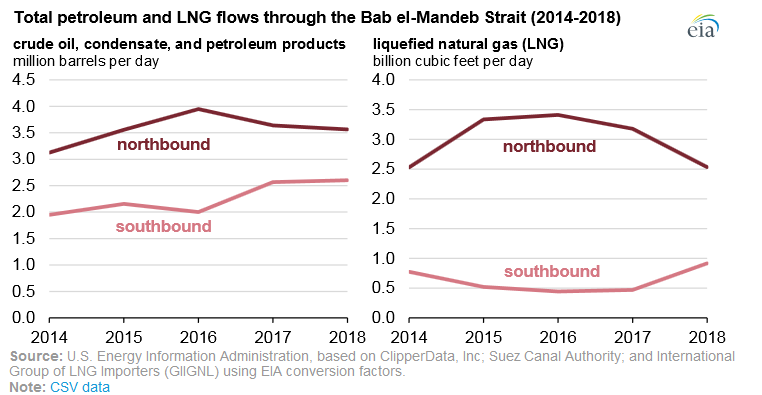
The chart above gives the scale of what is at stake: the Bab el-Mandeb has long carried several million barrels of oil a day, and any sustained disruption forces tankers onto the long diversion around Africa. Markets are already pricing the risk — Brent crude briefly rose above $108 a barrel on Thursday during the Yanbu claims before easing to around $105.77 on Friday morning. Each new interception announcement, successful or not, is another data point keeping prices elevated.
Timing: the Mecca pact is being stress-tested in real time
The salvo came the same night the military chiefs of Saudi Arabia, Pakistan and Türkiye reviewed threats facing the kingdom at a meeting in Riyadh. The three countries signed the Mecca Joint Defence Agreement last month, declaring that an armed attack on any member would be treated as an attack on all. Our earlier report on the pact explains its collective-deterrence mechanism and its limits.
Saudi Defence Minister Prince Khalid bin Salman said early Saturday that he had affirmed with Pakistan's army chief, Asim Munir, continued joint efforts to confront attacks on the kingdom in accordance with the pact. The proximity of that conversation to the reported interceptions means the agreement is being stress-tested in real time, even though Saudi Arabia has not publicly said that it has formally invoked the pact.
Winners, losers, and critics
Who gains: Saudi air-defense credibility rises with each announced interception, reassuring domestic audiences and the foreign governments being asked to contribute systems and troops. Oil-price bulls and energy traders profit from the sustained risk premium. France gains leverage in the Gulf by positioning itself as the protector of Yanbu. And the Houthis gain leverage either way — a successful penetration would be a propaganda victory, while even failed attempts demonstrate reach and force Riyadh to spend.
Who loses: Civilians in alerted cities lose sleep and normalcy. Red Sea shippers face rising insurance costs and rerouting decisions. Yemeni civilians face the near-certainty of retaliatory Saudi airstrikes, which have already intensified against Houthi-held areas. And Saudi Arabia's economic diversification narrative — tourism, investment, mega-projects — absorbs another dent each time the capital's airspace becomes a news story.
The critics' case: Skeptics note that interception announcements without debris evidence ask the public to take the coalition's word, and that the alert pattern — warnings for southern cities, silence for the capital — is consistent with multiple interpretations. Others warn that the escalation ladder has no obvious top: each Houthi attempt invites a Saudi response, each Saudi response invites the next attempt, and the Mecca pact's "attack on one is an attack on all" language could eventually pull in powers that currently prefer mediation.
What the numbers mean
Four weapons—two ballistic missiles and two drones—do not constitute a saturation strike, but the mixed salvo matters. Ballistic missiles provide speed, larger potential warheads and shock; drones provide persistence at lower cost. Used together, they can complicate an air-defence picture by forcing operators to track threats with different flight profiles at the same time.
The energy numbers frame the wider contest: about a fifth of the world's traded oil and gas passed through Hormuz in peacetime, according to AP; roughly 12% of world goods normally transit Bab el-Mandeb; and Saudi Arabia's East–West pipeline can move up to seven million barrels of crude a day toward Yanbu. The Houthis do not need to close every route to impose costs—they need only keep the threat credible enough that insurers, shippers and traders price in disruption.
Historical comparison
Saturday's announcement belongs to a recognizable lineage. In September 2019, drone and missile strikes on the Abqaiq and Khurais oil facilities temporarily knocked out half of Saudi Arabia's oil production—the precedent that makes every missile or drone alert an energy story, not just a military one. In 2017 and 2018, Houthi ballistic missiles aimed at Riyadh's airport were reportedly intercepted, though one 2018 attack killed an Egyptian civilian. In 2022, Houthi attacks reached Abu Dhabi, killing three people and demonstrating that Gulf capitals beyond Saudi Arabia were in range.
The pattern across these episodes is that interceptions are often reported as successful while the rarer penetrations cause outsized economic and political effects. That asymmetry helps explain the campaign's leverage: even weapons destroyed in flight can consume costly interceptors and sustain market anxiety.
What happens next
Saudi retaliation is likely. The Associated Press reported that Saudi Arabia struck Mokha airport after the Houthis captured the port on Thursday, although that account came from a Houthi broadcaster and there was no immediate report of damage or deaths. A further Saudi response to the reported missile-and-drone salvo would fit the current escalation cycle, but its timing and scale remain uncertain.
- Evidence or a Houthi claim. Debris photographs, wreckage locations or a Houthi statement would narrow the current evidentiary gap. Until then, the launch, weapon and targeting details remain coalition claims.
- Further waves. More Houthi missile or drone launches are probable given the pattern since July, but their targets and timing cannot be predicted.
- The Mecca pact threshold. The agreement's invocation threshold is closer than at any point since it was signed. Concrete air-defence deployments, intelligence sharing or joint rules of engagement would show whether collective defence is moving from declaration to operation.
- Yanbu and the shipping route. French defensive deployments, East–West pipeline throughput and any further Houthi action against the Red Sea corridor will matter directly to oil markets, shippers and insurers.
- Retaliation versus diplomacy. The balance between Saudi strikes and mediation involving Pakistan and Türkiye will determine whether the cycle accelerates or begins to narrow.
Saturday's reported interception marks a broader target set and a heavier mix of weapons than the initial account suggested. Saudi defenses say they held; the Houthis have not claimed the launches; and the risks to regional security and global trade have increased even without reported casualties or damage.
Sources and reporting notes
- Reuters: Saudi coalition says it intercepted Houthi missiles and drones
- Saudi-led coalition statements posted on X at about 4 a.m. Saturday, attributed to coalition spokesman Turki Al-Maliki and quoted by Reuters and Arab News. Direct post URLs were not available in the reviewed reporting.
- Sweden Herald: coalition account of missiles toward Khamis Mushait and drones toward Riyadh
- Arab News via Scoop: coalition says two missiles and two drones were intercepted
- Associated Press via WUTC: Mokha airport strikes and Bab el-Mandeb trade exposure
- Devdiscourse (Reuters syndication): Saudi says it intercepted two drones launched by Houthis towards Riyadh
- TBS News (reporting Al Jazeera): France to send troops, air defences to Saudi Arabia as Houthi attacks mount
- Reuters: Houthis say they attacked Riyadh and Aramco facilities in Yanbu
- U.S. Energy Information Administration: petroleum and LNG flows through the Bab el-Mandeb Strait
Reporting cutoff: September 26, 2026, 8:30 a.m. Saudi time. The launch, weapon and targeting details are statements by the Saudi-led coalition reported by Reuters and also carried by Sweden Herald and Arab News; the Houthis had not publicly claimed these specific launches. No debris imagery, deaths, injuries or verified damage from Saturday's reported interceptions had been reported. Analysis sections represent the editorial desk's evidence-based assessment, not reported fact.