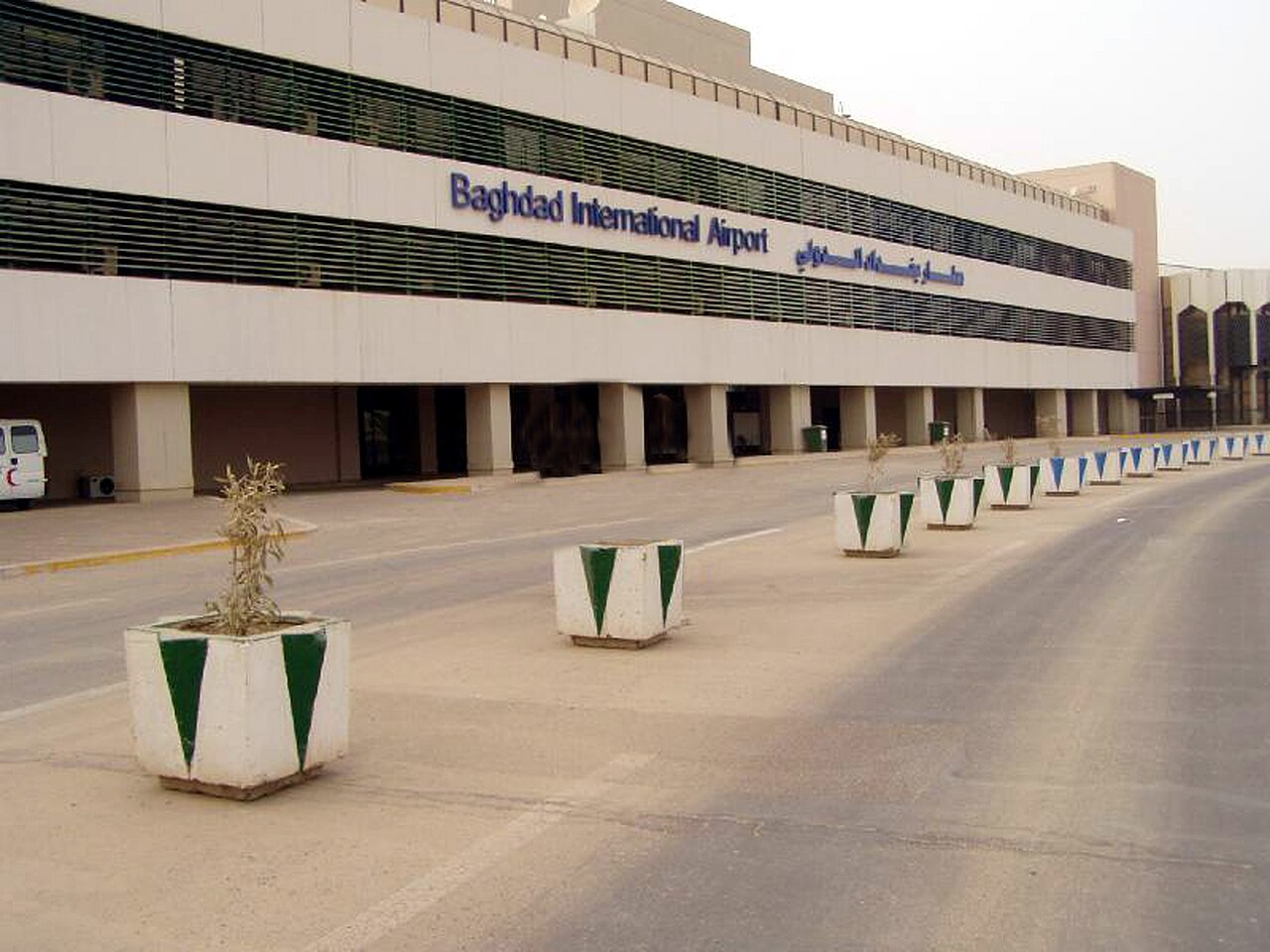
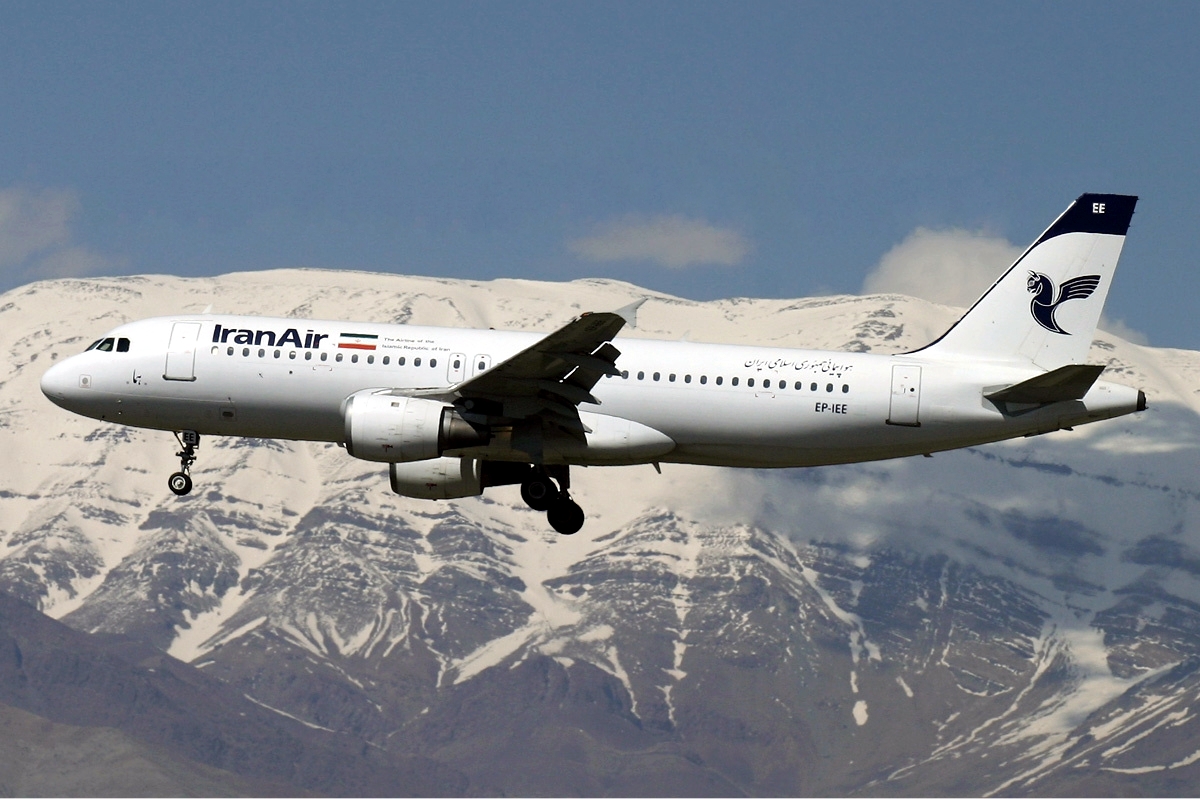
Iraq suspends Iranian flights to Baghdad starting at Wednesday midnight, September 23, after U.S. Treasury Secretary Scott Bessent warned that service providers dealing with Iranian airlines could be excluded from the dollar system. The order converts a broad U.S. secondary-sanctions threat into an immediate operational decision at one of Iran’s most important neighboring destinations.
Two anonymous sources told Reuters on September 22 that the Iraqi government had instructed the civil aviation authority to suspend Iranian flights to Baghdad airport. They also said officials were discussing whether Iranian Airways flights could be diverted to Najaf, a major center of Shia pilgrimage south of the capital.
AFP reported on September 21, citing two Iraqi government sources, that the suspension followed the U.S. Treasury announcement. One Iraqi official said Baghdad would enforce a ban and warned that countries failing to comply could face sanctions.
The order does not establish that every Iranian flight to Iraq will stop. The possible Najaf diversion is still under discussion, according to Reuters, and the available reporting does not identify a final timetable, eligible carriers or the services Najaf would provide. The Reuters sources were anonymous, and the Iraqi government’s implementation can be confirmed only through formal notices and observed operations.
Why this matters
Iraq’s decision is an early test of whether U.S. financial leverage can reorganize civilian air links without Washington controlling the airports involved. Bessent’s warning is directed not only at Iranian carriers but also at the network that lets them operate: airport authorities, fuel suppliers, ground handlers and ticket sellers. If those counterparties believe servicing a flight could jeopardize their access to dollar finance, a sanctions designation can become a practical route closure.
The case also exposes Iraq’s geopolitical position. Baghdad depends on security, financial and diplomatic relationships with Washington while maintaining deep economic, religious and political ties with Tehran. Enforcing the U.S. pressure risks angering Iran and disrupting travel used by pilgrims, families and businesses. Resisting it could expose Iraqi institutions and service providers to sanctions risk. The government is not choosing between cost and no cost; it is choosing where the cost lands.
The Najaf option shows why the distinction between a national ban and an airport-specific suspension matters. Diverting service away from Baghdad could preserve some connectivity and support pilgrimage traffic. But a different Iraqi airport would still need landing clearance, fuel, handling and ticket distribution. Unless those services are explicitly protected, a diversion changes the geography of the problem rather than eliminating the sanctions exposure.
Background: Bessent’s September 21 warning
In a CNBC interview on September 21, Bessent said that “on September 23, all the Iranian airlines will be shut down around the world.” He then described the enforcement mechanism: providers could not give Iranian carriers fuel or landing services, or sell their tickets, without risking exclusion from the dollar system.
The language suggested a synchronized global grounding, but the mechanism is decentralized. The United States can designate carriers and threaten penalties. Foreign governments, airports and companies must separately decide how to respond under their own laws, contracts and exposure to U.S. finance. The emerging pattern is therefore a chain of national and commercial decisions, not one worldwide aviation order.
The administration describes the broader pressure campaign as Operation Economic Exclusion. Earlier in September, the United States sanctioned what it called all remaining Iranian airlines. The aviation move is part of a strategy to deny Tehran international economic access during a war that began with U.S.-Israeli strikes in late February 2026 and had entered its seventh month by the time of the Baghdad decision.
That context raises the stakes of every flight restriction. Washington argues that aviation pressure can constrain networks linked to the Iranian state and military. Critics answer that broad restrictions on civilian carriers can fall most directly on ordinary passengers, aviation workers and communities whose cross-border ties are religious or commercial rather than military. Both points can be true: the pressure may create strategic leverage while imposing civilian costs.
For the fuller sanctions architecture, see Signal Post News’s earlier analysis of Bessent’s threatened worldwide service cutoff for Iranian airlines.
Network analysis: Baghdad, Muscat, Georgia, Turkey and Oman
The first operational reports show a network fragmenting one node at a time. Each node reflects a different authority—government, airport, airline or border agency—and that distinction matters when judging how far the sanctions have traveled.
- Baghdad: Iraq ordered the civil aviation authority to suspend Iranian flights to the capital’s airport from Wednesday midnight, according to Reuters. This is the clearest reported government action tied directly to the U.S. threat.
- Najaf: Iraqi officials were discussing a diversion of Iranian Airways flights to Najaf. No final arrangement was reported. If it proceeds, it may protect some pilgrimage access while transferring the service-provider risk to a different airport.
- Muscat and Oman: Iran’s Civil Aviation Organization, cited by Tasnim, said Tehran–Muscat flights would be canceled from Wednesday alongside Tehran–Baghdad service. ISNA separately reported that Iranian travelers were not being admitted at Oman’s airport and that consultations were continuing. Those reports indicate pressure on both air service and passenger admission, but they describe different decisions.
- Georgia: Georgia barred Iranian carriers, adding another national air-access restriction to the emerging regional map.
- Turkey: Mahan Air suspended its Turkey service at the Turkish government’s request. Other Iranian international flights, including some Istanbul service, were reported by Tasnim as remaining scheduled, underscoring that carrier, route and government decisions were not yet uniform.
Two conclusions follow from that pattern. First, the shutdown is not all-or-nothing. A country may bar a carrier, an airline may cancel a route, an airport may deny a service, or border officials may deny passenger admission. Second, operational continuity depends on the weakest link. A flight with formal landing permission can still fail if it cannot refuel, obtain handling or sell tickets.
The Tehran–Baghdad and Tehran–Muscat cancellations are therefore significant data points, but not proof of a complete global shutdown. Tasnim said other international flights, including Istanbul, remained scheduled. Schedules can change quickly, and a scheduled flight is not the same as a completed flight. The relevant evidence after the deadline will be departures, arrivals and service availability.
Who benefits, who loses
Washington gains leverage if counterparties comply. Secondary sanctions can extend U.S. influence beyond its jurisdiction by making access to the dollar system the price of cooperation. Iraq’s order shows that the threat is being treated as credible by at least one neighboring government.
The Iraqi government buys time but not freedom of action. Suspending Baghdad flights reduces immediate exposure at the capital’s airport. Considering Najaf may help Baghdad limit the political and economic backlash. Yet any compromise must still satisfy U.S. sanctions concerns, Iranian expectations and domestic constituencies tied to pilgrimage traffic.
Pilgrims and families face the most immediate disruption. Tehran–Baghdad and possible Tehran–Najaf routes serve travelers visiting Shia holy sites as well as people with family and commercial ties across the border. Cancellations can increase travel time, create refund and rebooking problems and push passengers toward more expensive or indirect ground and air routes.
Iraq’s Shia pilgrimage economy is exposed. Hotels, transport operators, restaurants and shops in Najaf and other pilgrimage centers benefit from cross-border visitors. A successful diversion could preserve some demand and make Najaf an operational beneficiary. A wider service cutoff would reduce visitor flows and shift the cost to local businesses and workers.
Iranian airlines and aviation workers lose network access. Even where aircraft remain available, uncertainty over landing, fuel and handling can make a route impossible to operate reliably. Repeated cancellations can also weaken passenger confidence and ticket revenue beyond the routes formally blocked.
Critics see humanitarian and sovereignty risks. One argument is that broad aviation pressure is insufficiently targeted because civilians absorb cancellations before political or military elites change behavior. Another is that secondary sanctions compel third countries to enforce U.S. policy under threat to their financial access. Supporters answer that denying logistical and commercial support to designated carriers is a non-kinetic way to raise costs during war and may be preferable to military escalation. The evidence available now shows disruption; it does not yet show which argument will dominate the policy outcome.
What remains uncertain
The Reuters account relied on two anonymous sources. Anonymous sourcing can be necessary when officials are not authorized to speak, but it limits the public’s ability to assess the sources’ roles and direct knowledge. AFP’s separate report from two Iraqi government sources supports the existence of a suspension, while a formal Iraqi aviation notice and airport operating data remain the strongest tests of implementation.
The Najaf plan is explicitly unresolved. Officials were discussing diversion, not announcing a completed agreement. It is unknown whether Washington would treat a Najaf operation differently, whether service providers would accept the risk, or whether Iran would find the routing commercially workable.
Oman’s position also contains two separate questions: whether Tehran–Muscat flights operate and whether Iranian travelers are admitted. Tasnim and ISNA reported developments on those points, but consultations were ongoing. Georgia’s ban and Turkey’s request to Mahan Air show broader pressure, yet each government and provider is making its own decision.
Finally, the phrase “all the Iranian airlines will be shut down” is an intended outcome stated by Bessent, not a verified worldwide condition. Outcomes depend on separate government and provider decisions. A complete assessment requires route-by-route evidence after the September 23 deadline.
What happens next
Najaf is the first practical test. If the diversion holds, watch whether flights actually arrive, which carriers operate them and whether fuel, handling and ticketing remain available. If the plan disappears, that would suggest the sanctions risk follows Iranian airlines across Iraqi airports rather than stopping at Baghdad.
Other states may follow—or draw narrower lines. Georgia, Turkey, Iraq and the Oman-related reports provide early examples, but not a uniform model. New civil aviation notices, carrier cancellations and supplier decisions will show whether the pressure expands across Central Asia, the Gulf and other Iranian destinations.
U.N. General Assembly diplomacy could create an off-ramp. Iranian President Masoud Pezeshkian’s presence in New York places sanctions and aviation access inside a wider diplomatic week. Possible talks between President Donald Trump and Pezeshkian would matter only if they produce terms that change enforcement, flight access or the wider conflict.
Trump has said the United States and Iran already held three hours of talks during the General Assembly. The participants, agenda and results have not been fully disclosed. Signal Post News has a separate report on the three hours of U.S.–Iran talks and what remains unknown, as well as analysis of Iran’s reported conditional offer to reopen the Strait of Hormuz.
The decisive indicators are concrete: a published Iraqi aviation directive, completed or canceled flights, a confirmed Najaf arrangement, additional national bans, service-provider refusals and any diplomatic agreement that modifies the sanctions. Until those appear, Iraq’s order is strong evidence that the pressure campaign is disrupting regional aviation—but not proof that every Iranian airline has been grounded worldwide.
Sources and reporting notes
- Reuters, September 22, 2026: Iraqi suspension order, Wednesday-midnight timing and discussion of a Najaf diversion
- AFP, September 21, 2026: confirmation from two Iraqi government sources and the sanctions-compliance warning
- CNBC interview with U.S. Treasury Secretary Scott Bessent, September 21, 2026: the September 23 warning covering fuel, landing services, ticket sales and access to the dollar system.
- Tasnim, citing Iran’s Civil Aviation Organization: Tehran–Baghdad and Tehran–Muscat cancellations from Wednesday and the reported status of other international routes.
- ISNA: report that Iranian travelers were not being admitted at Oman’s airport and that consultations were continuing.
Reporting cutoff: Tuesday, September 22, 2026. Reuters’ sources were anonymous, the Najaf diversion remained under discussion and the Oman consultations were ongoing. Government directives, airline schedules and actual operations can diverge; every restriction and cancellation is attributed to the organization that reported or ordered it.