Iran could reopen the Strait of Hormuz within seven days if the United States eases military pressure and lifts its blockade on Iranian ports, a senior Iranian official told Reuters on September 22. The official said the proposal had been transmitted to Washington through mediators on September 16 and that Iran’s delegation at the United Nations General Assembly had authority to revive diplomacy.
That account was immediately contested. Fars News Agency, citing Iranian sources, prominently denied reports that Tehran had offered a Hormuz reopening deal. The contradiction is central to the story: there is a reported proposal from an unnamed senior official, but there is no publicly signed text, no joint statement and no verified evidence that Iran’s civilian and military decision-makers have accepted one position.
Oil prices moved before the dispute could be resolved. Brent fell sharply—about 2.75% within minutes on headline feeds—then partly reversed after the Fars denial and subsequent remarks from President Donald Trump. Newsquawk recorded Brent moving from about $97.70 a barrel before the headlines to an intraday low of $93.84. The Wall Street Journal later reported Brent settling 1.1% lower at $99.25, its first close below $100 since September 8. Those quotations reflect different moments and market references, but they tell the same story: traders rapidly removed part of the Hormuz risk premium, then restored some of it when certainty disappeared.
What is confirmed, what is disputed and what is analysis
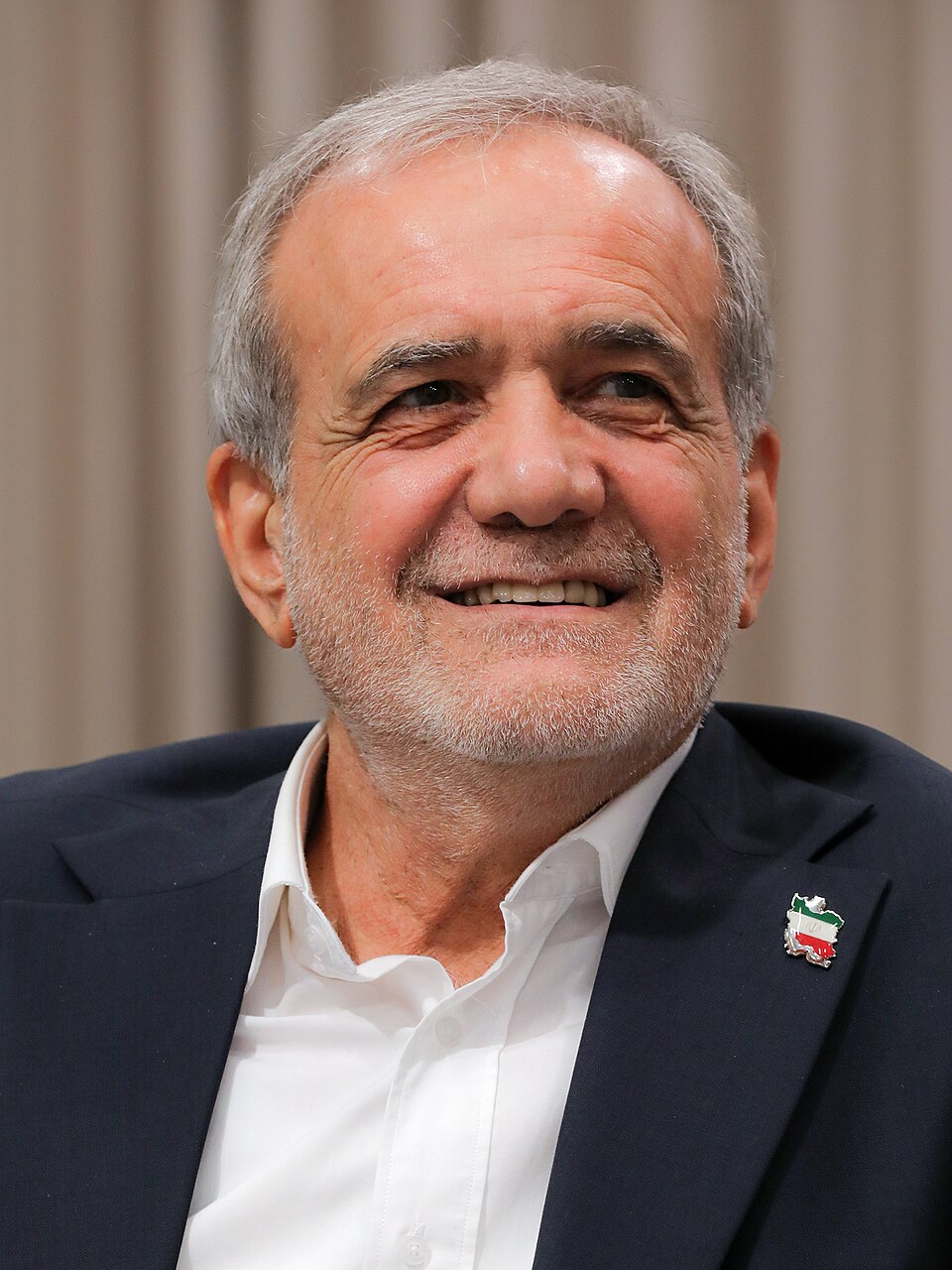
Confirmed reporting: Reuters published the terms attributed to a senior Iranian official. The official said the United States would need to make a public diplomatic commitment, ease military pressure and lift the port blockade; the details could then be discussed in New York through mediators. President Masoud Pezeshkian left Tehran for New York on September 22, while the same official said he would not meet Trump at U.N. headquarters.
Disputed claim: Fars News, an influential Iranian outlet, said Iranian sources denied the reopening reports. That denial does not by itself prove that no message was sent, just as the anonymous official’s account does not prove that Iran has made an authorized national commitment.
Analysis: The mismatch could indicate a factional leak, a deniable diplomatic trial balloon, an effort to test U.S. terms or simple internal incoherence. None of those interpretations is confirmed. In Iran’s divided security system, a message can be useful to one institution precisely because another institution can reject it. Markets, however, must price the probability of a deal before they know which explanation is right.
Why the seven-day formulation matters
The offer, if genuine, is more specific than a generic call for talks. It links an operational result—reopening the waterway within a week—to identifiable U.S. actions. That creates the outline of a sequence: Washington signals a reduction in military pressure and port restrictions; mediators define timing and verification; Iran changes its behavior in the strait; and both sides use the U.N. gathering to keep contact moving.
Specificity does not make implementation easy. Washington would have to determine what “reopening” means: fewer attacks, no interference, verified mine clearance, restored navigation warnings, or a measurable return of commercial traffic. Tehran would want clarity on which ports and transactions the blockade relief covered, how quickly relief took effect and whether military pressure was merely paused or materially reduced. Without a monitored sequence, each side could accuse the other of moving first in rhetoric and last in practice.
Secretary of State Marco Rubio left the door open to contact. Asked on Fox & Friends about engagement, he said talks could at least provide insight into who Iranian officials are and what they are thinking, adding that even if “nothing good” came from a conversation, “nothing bad would come of it.” The statement is not acceptance of Iran’s reported terms, but it does lower the political cost of exploratory contact.
Hormuz is a physical bottleneck, not just a headline
The Strait of Hormuz connects the Persian Gulf to the Gulf of Oman and the Arabian Sea. Tankers carrying crude, condensate, refined products and liquefied natural gas pass through narrow shipping lanes close to Iran and Oman. That geography makes disruption disproportionately powerful: delay a small corridor and the effect travels into freight rates, marine insurance, refinery scheduling, inflation expectations and government budgets.
The U.S. Energy Information Administration’s historical 2018 baseline put Hormuz oil flow at 21 million barrels a day—about 21% of global petroleum-liquids consumption and roughly one-third of seaborne traded oil at that time. It also found that more than one-quarter of global LNG trade passed through the strait. Those are not 2026 flow estimates, but they explain the structural exposure. Only Saudi Arabia and the United Arab Emirates had pipelines able to bypass Hormuz at scale; EIA estimated 3.8 million barrels a day of unused bypass capacity in 2018, far below the volume then moving through the waterway.
That is why “roughly one-fifth of seaborne oil” is more than a slogan. The vulnerability comes from concentration. Some barrels can be rerouted, inventories can cushion a short interruption and escorted or low-visibility transit can continue, but neither pipelines nor storage can instantly replace the full corridor. The first market effect is therefore a risk premium: buyers pay more for uncertainty before a physical shortage is fully measured.
The 2019–2020 lesson: partial disruption can still be expensive
The tanker crises of 2019 and the naval confrontations that followed into 2020 showed that Hormuz does not have to be completely closed to impose a global cost. Attacks, seizures and close military encounters raised insurance and security expenses, forced operators to reconsider routes and kept governments on alert. Commercial traffic continued, but every incident increased the chance that an accident, miscalculation or retaliation would create a wider interruption.
The 2026 conflict has amplified that old dynamic. Today’s question is not simply whether a tanker can physically pass. It is whether shipowners, insurers, crews and buyers believe passage is predictable enough to restore normal commercial behavior. A political announcement can lower prices immediately; rebuilding routine traffic takes verified security over time.
The road from war to the September offer
- Late February 2026: War and maritime confrontation drove visible commercial traffic through Hormuz sharply lower, while some escorted and “dark” transits continued.
- July: A preliminary memorandum intended to stabilize the conflict collapsed. Reporting said Iran then resumed disruption in the strait, ending hopes that the first framework would normalize shipping.
- September 16: According to the senior Iranian official cited by Reuters, Tehran’s new proposal was delivered to Washington through mediators.
- September 20: Iran’s military central command warned that renewed U.S. operations with regional support would bring retaliation “without limitations and considerations.”
- September 22: Pezeshkian left Tehran for the U.N. General Assembly; the conditional offer became public; Fars denied it; and oil prices whipsawed.
The sequence places the reported offer between deterrence and diplomacy, not after the conflict has been resolved. The same week also brought Trump’s U.N. threat to “annihilate” Iran if no deal emerged, his account of three hours of U.S.–Iran talks, and an Iranian warning that support for new sanctions would be treated as an “act of war.” The simultaneous messages are not proof of a coherent negotiation. They are evidence that both escalation and bargaining remain active.
The blockade’s economic cost to Iran
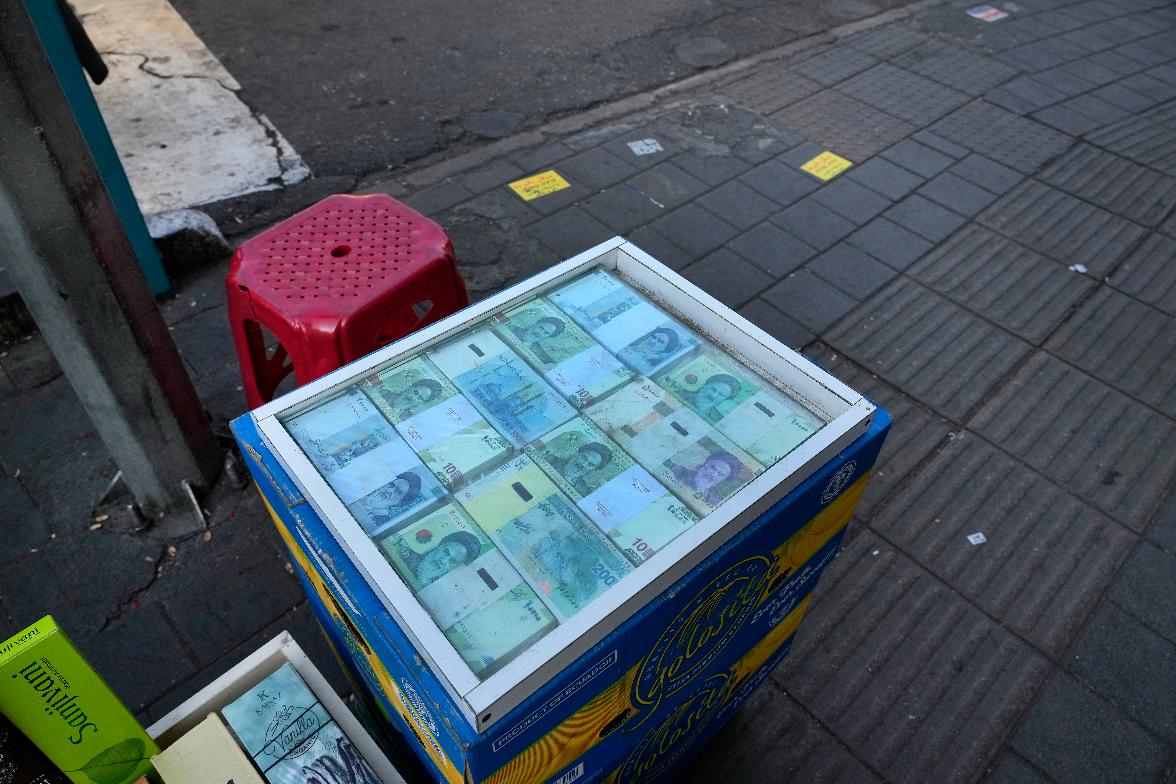
The port blockade constrains the channel Iran needs to convert oil and other exports into hard currency. The immediate loss is forgone export revenue. The second-order cost is wider: fewer dollars and euros available to importers, more pressure on the rial, higher prices for imported goods, weaker business confidence and greater strain on the government’s ability to fund both civilian services and military operations.
For Tehran, reopening Hormuz while retaining political control over the narrative could be economically valuable. It could restore some export capacity, reduce the justification for continued U.S. enforcement and weaken the coalition supporting military pressure. But lifting restrictions without durable guarantees would also reduce Washington’s leverage. That trade-off explains why the practical details—sequencing, verification and reversibility—matter more than the word “offer.”
Who gains if a deal holds—and who loses if the denial holds
Gulf exporters would be first-order winners. Saudi Arabia, the UAE, Qatar, Kuwait and Iraq would gain from lower insurance costs, fewer delays and less dependence on constrained alternative routes. Their fiscal calculations could face lower prices, but the benefit of reliable volume and reduced infrastructure risk is substantial.
Oil consumers would gain through the inflation channel. Cheaper crude does not instantly equal cheaper gasoline, diesel or electricity, but a sustained fall can filter through refining, transport and manufacturing. For central banks, a smaller energy shock reduces pressure to keep interest rates higher.
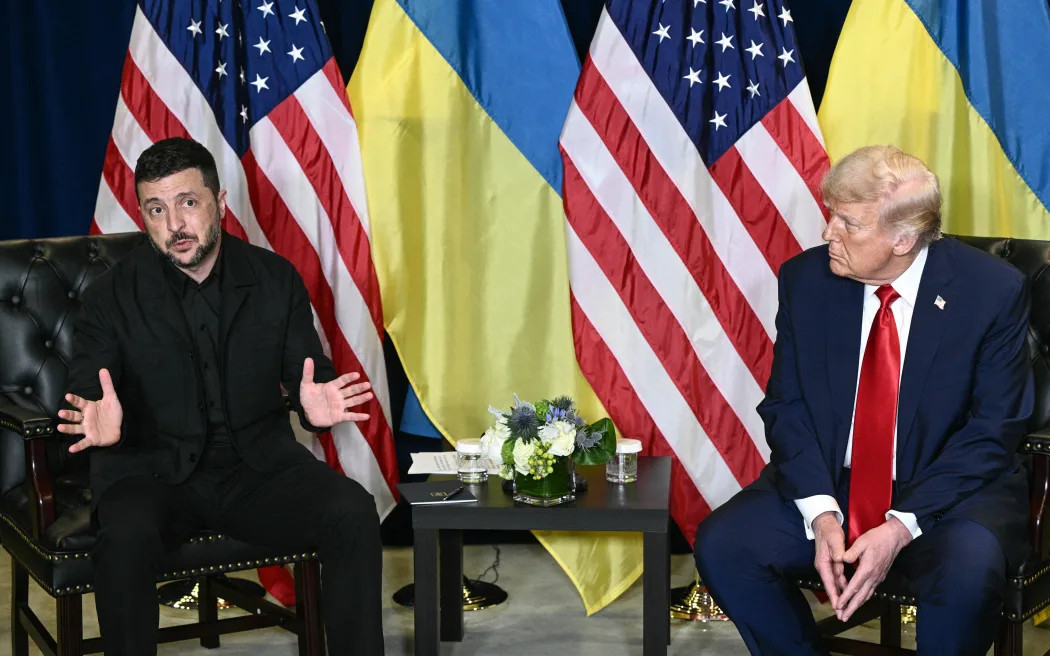
Trump could gain politically before the November midterms. A visible reduction in oil prices and military risk would support his claim that pressure produced negotiations. That benefit depends on timing and durability: a short-lived headline move or a failed arrangement could become evidence of instability instead.
Tehran hardliners could lose influence if civilian diplomacy delivers relief and constrains military leverage over the strait. Conversely, they could gain if Washington rejects the proposal or if the Fars denial proves to be the authoritative line, allowing them to argue that talks invite pressure without producing dependable relief.
Markets lose most from ambiguity. The September 22 price action showed why. Newsquawk’s rapid $97.70-to-$93.84 Brent move priced a meaningful de-escalation probability; the later reversal priced the denial and Trump’s caution. The Wall Street Journal’s $99.25 settlement was below $100 but remained consistent with elevated wartime risk. Compared with the larger Brent spikes seen during the 2026 conflict, this was a partial unwinding of the war premium—not a return to prewar normality.
Four scenarios from New York
- A genuine UNGA trial balloon. Iran’s delegation uses mediators to turn the seven-day proposal into a written, phased arrangement. The first signs would be matching language from both governments, a defined U.S. step and observable changes in shipping conditions.
- Factional or institutional incoherence. Civilian officials explore relief while security institutions reject the terms or dispute who had authority to offer them. In this case, contradictory statements continue and no operational order follows.
- A limited U.S. diplomatic response. Washington agrees to talks or clarifying messages without lifting the blockade immediately. That could reduce near-term escalation risk while preserving leverage, but markets may require more than dialogue to remove the premium.
- Renewed strikes. Talks fail, either side interprets the other’s actions as bad faith, and military operations resume. Iran’s September 20 warning means escalation could spread to regional bases, tankers, pipelines or allied groups, quickly reversing the oil selloff.
The most important signals now are operational rather than rhetorical: vessel traffic, insurer guidance, port access, military posture and whether mediators produce mutually acknowledged terms. Pezeshkian’s presence in New York gives diplomacy a venue, but the reported decision not to meet Trump limits the symbolism of the week.
What to watch next
Watch for a U.S. statement addressing the three stated conditions, an Iranian statement that survives both civilian and military scrutiny, and evidence that commercial shipping can return without exceptional escort or concealed transponders. A seven-day clock matters only once both sides say when it starts.
The deeper lesson is that Hormuz prices political credibility as much as barrels. A denial can reverse a selloff because traders know a paper promise cannot clear mines, restrain armed units or guarantee port access. Equally, the first credible steps toward a monitored reopening could remove risk faster than physical flows recover.
Follow related reporting and explainers in the Energy Security Analysis hub.
- Reuters: reported Iranian offer, September 16 mediator transmission and UNGA authority
- New York Post: Rubio remarks and July memorandum context
- Newsquawk: intraday Brent and WTI reaction
- The Wall Street Journal: settlement price, Fars denial and shipping context
- CoinDesk live coverage: denial and market reversal
- U.S. EIA: historical 2018 Hormuz flow and bypass-capacity data
- Associated Press: Hormuz shipping and tanker-crisis context