Sports
Fleetwood beat Arsenal on penalties 5-3 after a 1-1 draw at Highbury Stadium on Tuesday night, as the League Two club — 18th in the fourth tier and more than 80 league places below the Premier League champions — reached the Carabao Cup quarter-finals for the first time in its history on a night that had everything: a drone delay, a loanee's goal, a teenage red card and a goalkeeper's shootout save.
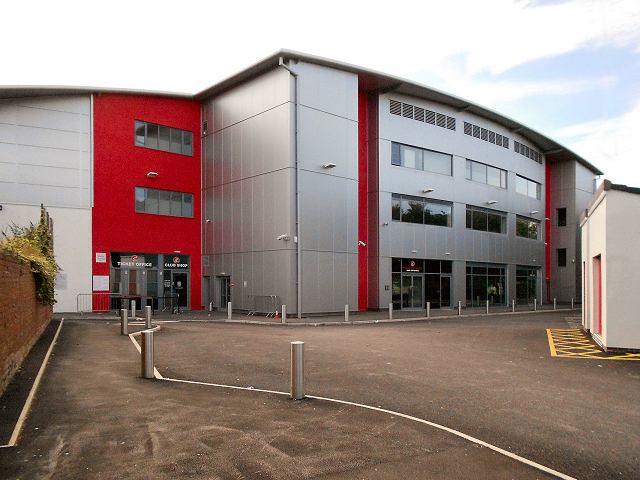
Fleetwood beat Arsenal on penalties, and the scoreline only begins to describe it. When Conor Haughey smashed the fifth and final Fleetwood kick into the top corner, the League Two club had beaten the Premier League champions 5-3 in a shootout, converted every penalty it took, and reached the last eight of the Carabao Cup for the first time in its history. The 1-1 draw that preceded it — an Aaron Loupalo-Bi goal for the hosts, a Viktor Gyokeres equaliser for Arsenal, a straight red card for 16-year-old Max Dowman — was dramatic enough. The shootout, settled by Jay Lynch's save from Bruno Guimaraes, turned a cup tie into one of the great nights in this competition's long history of humiliations for famous clubs.
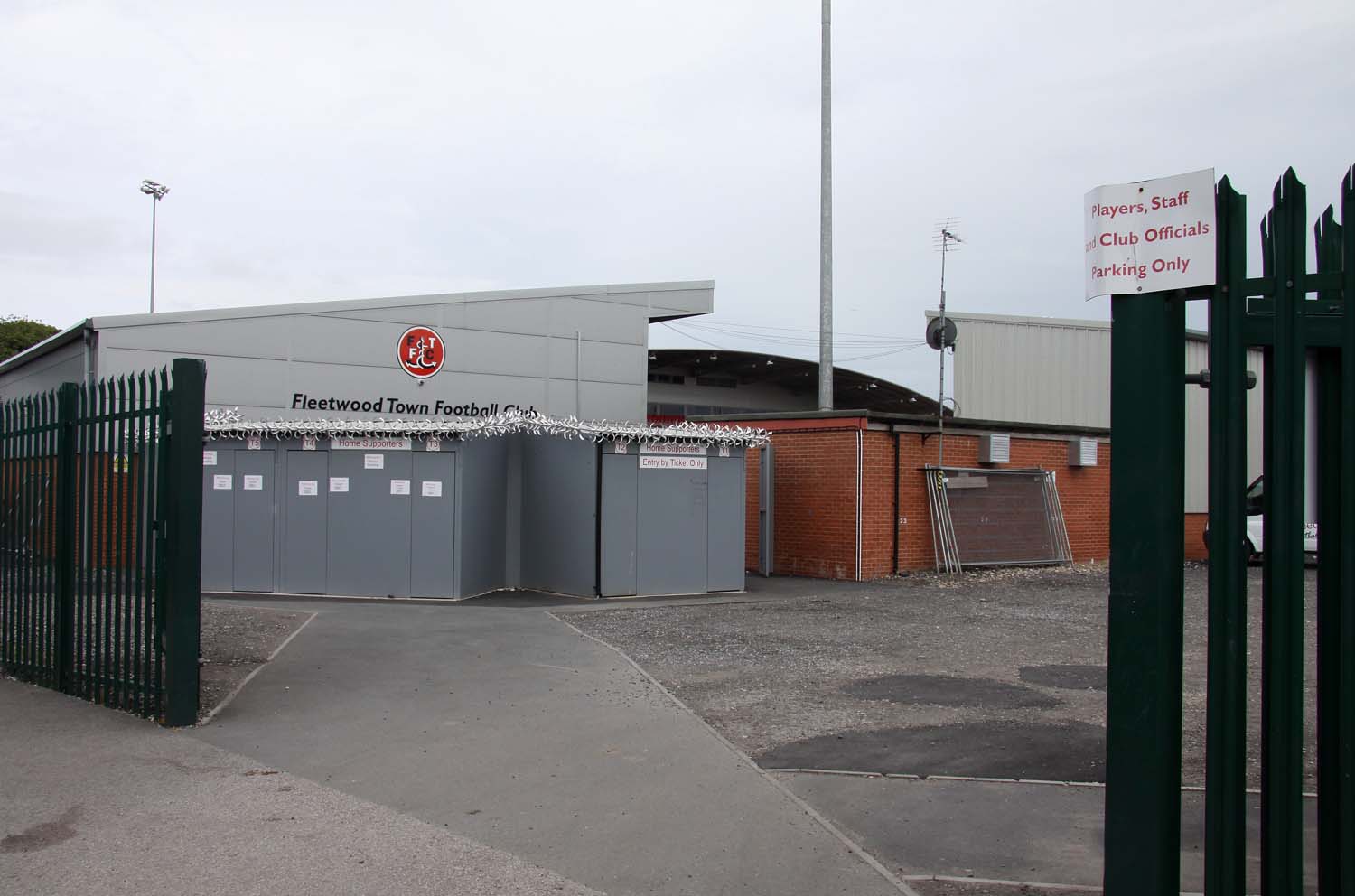
Consider the scale of what happened at Highbury Stadium on Tuesday, October 27, 2026. Fleetwood Town sit 18th in League Two, the fourth tier of English football, some 83 to 84 league places below Arsenal in the pyramid. Their ground holds 5,327 people. Football London framed the result as a humiliation for an Arsenal squad it valued at around £1.15 billion. By the end of the night, Fleetwood's manager Matt Lawlor was in tears and home supporters were on the pitch, and a fourth-round tie that was supposed to be a formality for Mikel Arteta's rotated side had become the story of the round.
How the upset unfolded
Eight lost minutes: the drone delay that stopped Fleetwood vs Arsenal before it started
The evening's strangeness began barely a minute after kick-off. An unauthorised drone appeared above the stadium, and referee Michael Salisbury halted play for more than eight minutes while the players left the pitch and police attended to the incident. In a ground of 5,327 seats, with a Premier League squad standing in the tunnel, it was an early reminder that this would not be a normal night — and for a Fleetwood side that needed everything to feel abnormal for the visitors, the stoppage set the tone before the football had properly begun.
The Aaron Loupalo-Bi goal: a loanee punishes a young defender's error
In the 21st minute, Fleetwood took the lead their start had threatened. Marli Salmon, the young Arsenal defender, made an error in possession, and Aaron Loupalo-Bi — on loan from Fulham — capitalised, finishing low past Illan Meslier, the goalkeeper making his Arsenal debut. It was the game's defining pattern in miniature: Arsenal's rotated defence, short on minutes together, punished by a forward playing with nothing to lose. Fleetwood protected the lead through to half-time, and a ground that had sold out for the biggest visiting club in its history began to believe.
The Gyokeres equaliser: senior debutant O'Neill creates the goal that levels it
Arteta had made nine changes to his side with Sunday's Premier League trip to Liverpool at Anfield in mind, and at half-time he reached for experience, sending on captain Martin Odegaard and Ben White. Five minutes into the second half, Arsenal were level. Ceadach O'Neill, making his senior debut, delivered the cross, and Gyokeres bundled the ball in for 1-1 on 50 minutes. The expected script — the champions' quality telling once the senior players arrived — appeared to be reasserting itself. It did not hold.
The Max Dowman red card: a 16-year-old's night ends in the 85th minute
Dowman had been Arsenal's story of the previous round, scoring twice in the 4-2 third-round win over Ipswich Town. At Fleetwood, his night ended in the 85th minute — some reports placed the incident in the 86th — when, after a heavy tackle by Harrison Neal, the 16-year-old kicked out at the Fleetwood midfielder and was shown a straight red card. It was a moment of retaliation rather than malice, but the laws leave a referee little room, and Dowman now faces a possible multi-match suspension that will stretch beyond this competition. Arsenal finished the tie with ten men, and the momentum that might have produced a late winner went with him down the tunnel.
Jay Lynch's stoppage-time saves force the shootout
Arsenal still nearly won it in normal time. In stoppage time, Lynch produced two big saves — one from White, one from Odegaard — to drag the tie to penalties; a Reuters photo caption from the night also records the Fleetwood goalkeeper saving from Dowman earlier in the evening. Lynch, a goalkeeper playing in the fourth tier, had kept out the Arsenal captain and an England international defender in the space of a few minutes. The shootout would ask him to do it once more.
The shootout in full: five perfect Fleetwood penalties, one Bruno Guimaraes miss
Fleetwood's kicks were flawless. Ryan Coughlan scored. Harrison Neal — the man fouled in the red-card incident — scored. Will Davies scored. Andy Cannon scored. For Arsenal, Odegaard, Kai Havertz and Gyokeres all converted, but Bruno Guimaraes saw his effort saved by Lynch, diving low to his left, and that single save was the shootout. Haughey, with the chance to win it, drove the fifth Fleetwood penalty into the top corner: 5-3, five from five, and the Premier League champions were out.
Why this matters
What a Carabao Cup quarter-final means for a club 18th in League Two
For a club of Fleetwood's size, a run like this is measured in more than romance. A quarter-final place brings prize money, a share of gate receipts from sold-out nights like Tuesday's, live television exposure that League Two clubs almost never receive, and — if the draw is kind again — another full house or a lucrative away day at a major stadium. For a club sitting 18th in the fourth tier, that income is not a bonus; it is the kind of money that funds a season. Culturally, the effect is larger still. Fleetwood is a small Lancashire fishing port whose trawler fleet gave the club its Cod Army nickname and, around 1919, its red-and-white colours. A night when the town's team beats the champions of England is the kind of civic memory that outlasts league positions — the match supporters will describe to people who were not born when it happened.
Why the cup still produces nights like this
English football's two domestic cups survive, in part, on evenings exactly like this one. The ingredients are structural: a one-off tie with no away-goals safety net, a penalty shootout that compresses the gap between squads into twelve yards of nerve, a small ground where the crowd is close enough to feel like a participant, and a favourite whose manager must rotate because the league and Europe pay the bills. None of that diminishes Fleetwood's achievement — they still had to hold the champions for 90 minutes and then score five perfect penalties when the shootout came — but it explains why, in a sport increasingly ordered by money, the fourth round of the League Cup can still produce a result that the league table says should be impossible. It is the same competition that gave English football record scorelines and famous collapses in other eras; Tuesday night added its own entry.
Two clubs, two Highburys: the background
Fleetwood's Highbury and Arsenal's Highbury, together at last
The fixture carried a coincidence no novelist would dare. Fleetwood's ground is called Highbury because it stands beside Highbury Avenue in the town. Arsenal, of course, played at their own Highbury in north London until 2006 — which means Tuesday was the first time Arsenal had played a competitive match at a stadium called Highbury in the twenty years since they left theirs. It was also, remarkably, the first competitive meeting between the two clubs at any ground. Both of them wear red and white: Fleetwood adopted the colours around 1919 in honour of the town's trawler fleet, the red and white of the boats that worked out of the port. Two clubs, two Highburys, one kit palette — and the smaller one won.
From non-league to the last eight: Fleetwood Town's long climb
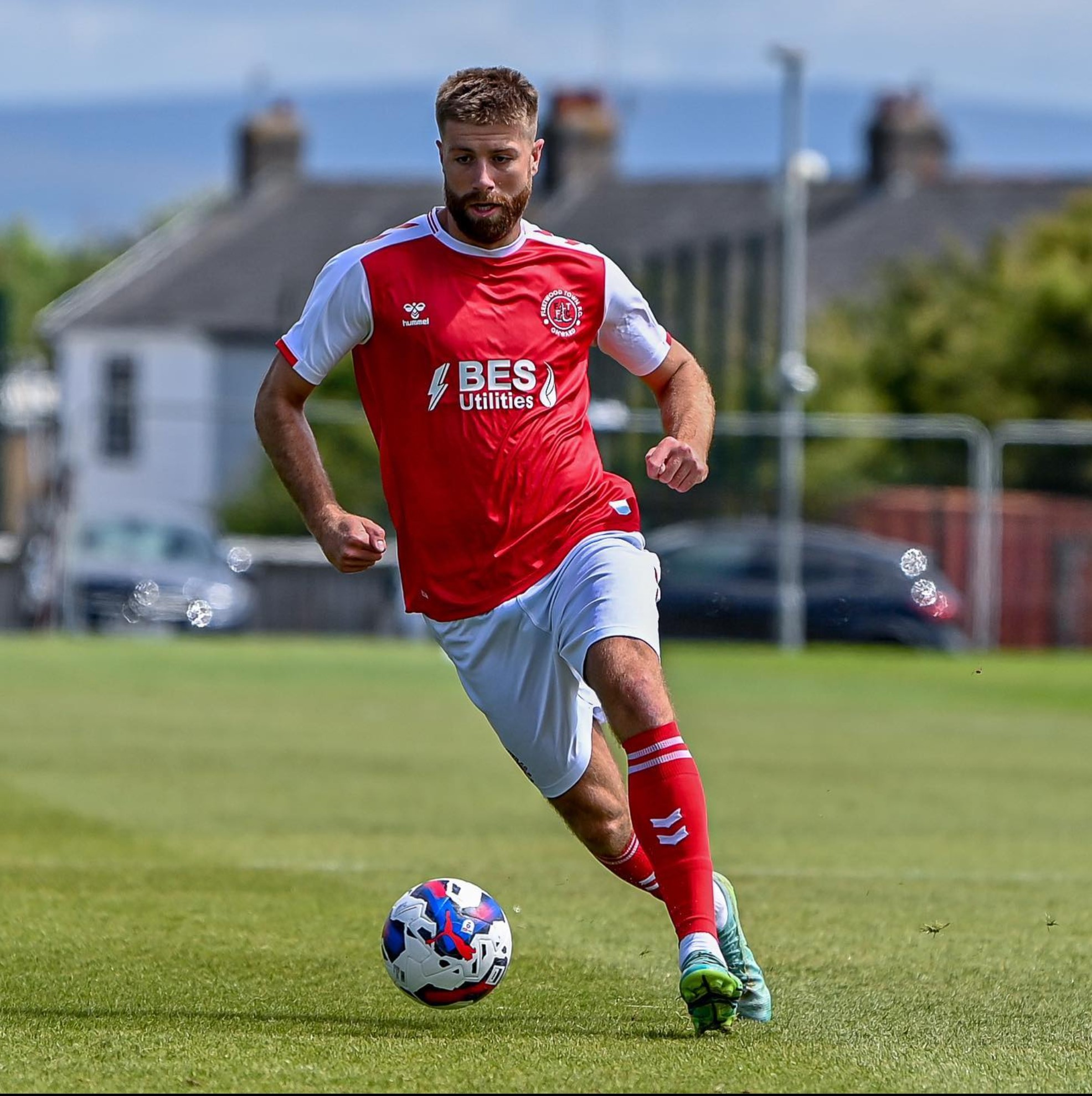
Fleetwood's presence in a tie like this is itself a modern football story. The club climbed from non-league football into the EFL and, at its peak, reached the third tier, building a redeveloped Highbury — the Parkside Stand, the Percy Ronson terrace — as it went. This season's cup run has already taken in Chesterfield, Shrewsbury Town and, in the previous round, Championship side Sheffield United, a result that on its own would have crowned most fourth-tier clubs' seasons. The squad that produced it contains players like defender Shaun Rooney, pictured below in Fleetwood red during an earlier spell with the club — the journeymen and loanees of the lower leagues, a dressing room built for a fraction of one Arsenal salary.
The Bradford parallel: Arsenal have been here before
Arsenal supporters of a certain age will not need the history lesson, but it bears stating: in December 2012, Arsenal lost on penalties to Bradford City — then, like Fleetwood now, a League Two club — in the League Cup quarter-finals. That night at Valley Parade has been widely cited ever since as the club's previous great humiliation in this competition. Fourteen years on, the pattern has repeated almost exactly: a rotated Arsenal side, a fourth-tier opponent, a shootout, and an exit that will be replayed for as long as Fleetwood fans have anything to say about it. The difference is the stage of the clubs involved: the Arsenal of 2026 arrived as Premier League champions, not as a side in transition.
Arteta's gamble, and Arsenal's questions
Nine changes before Anfield: who benefits, who pays
The inquest begins, fairly, with selection. Arteta made nine changes ahead of Sunday's Premier League visit to Liverpool — a decision every manager of a club competing on four fronts makes in this round, and one that looks wise or reckless entirely in hindsight. The beneficiaries are clear: Odegaard, White and the other rested starters travel to Anfield fresher, and Arsenal's league campaign, where nights like the recent 2-1 defeat of Manchester City at Villa Park have shown how fine the title margins are, remains the priority the club would choose if forced. The cost is equally clear: a trophy route is gone, the fringe players who needed a statement performance produced a collective failure instead, and the club's depth — the quality drop from first eleven to second — is now a public question rather than a private one.
Squad depth, a debutant in goal, and the Dowman suspension
The individual threads are uncomfortable. Meslier, on debut, was beaten by the one clear chance Fleetwood created in the first half. Salmon's error produced the goal. Gyokeres, to his credit, scored the equaliser and converted his penalty; O'Neill marked a senior debut with the assist for it. But the defining image of Arsenal's night belongs to Dowman, whose two goals against Ipswich had made him the face of this cup run and whose red card now brings a possible multi-match ban at precisely the moment a thin squad could least use one. Arsenal's European campaign continues against Slavia Prague after the Liverpool trip — their Champions League season has already produced nights like the Williamson penalty win over Paris FC in the women's competition for the club as a whole — and Arteta will have to manage minutes, morale and a suspension simultaneously.
The numbers behind the upset
Strip the emotion away and the arithmetic is stark. Eighty-three to eighty-four league places separated the teams at kick-off — close to the maximum the English pyramid allows between two clubs in the same competition. The ground held 5,327 people; Arsenal's squad, on Football London's valuation, is worth around £1.15 billion. In the shootout, Fleetwood took five penalties and scored five; Arsenal took four and scored three, and the entire tie turned on the single save — Lynch low to his left from Guimaraes — because everything else both sides did from twelve yards was perfect. Cup upsets are usually built on a favourite's profligacy. This one was built on a fourth-tier team's flawlessness at the one discipline where league position means nothing.
What happens next
Fleetwood's reward begins on Wednesday, October 28, when the quarter-final draw follows the Chelsea v Liverpool tie — the Cod Army are in the last eight for the first time, and any of the remaining names would fill Highbury again or take several thousand Fleetwood supporters on the away day of their lives. The harder task is the league: 18th in League Two is a relegation conversation, and Lawlor's side must now convert one famous night into the points that keep their season safe. For Arsenal, the response is immediate and unforgiving — Liverpool at Anfield on Sunday, November 1, then Slavia Prague in the Champions League, with Dowman suspended and the rotation debate now certain to follow Arteta into every press conference. Champions are judged on how they answer nights like this. Fleetwood, for one evening at least, do not have to answer to anyone.
Sources
Sources: Arsenal Football Club, official match report, "Report: Fleetwood Town 1-1 Arsenal (5-3 pens)," October 27, 2026 (arsenal.com); Football London, "Arsenal player ratings and reaction: Fleetwood Town Carabao Cup defeat," October 27, 2026 (football.london) — source of the £1.15 billion squad valuation framing; Sports Mole, "Arsenal set unwanted EFL Cup record as Arteta gamble backfires in Fleetwood," October 27, 2026 (sportsmole.co.uk); Naija Times, "Fourth-tier Fleetwood knock Arsenal out of Carabao Cup," October 27, 2026 (ntm.ng); Reuters match photography and captions, October 27, 2026 (Jay Lynch saves). This article is original reporting and analysis based on those sources.