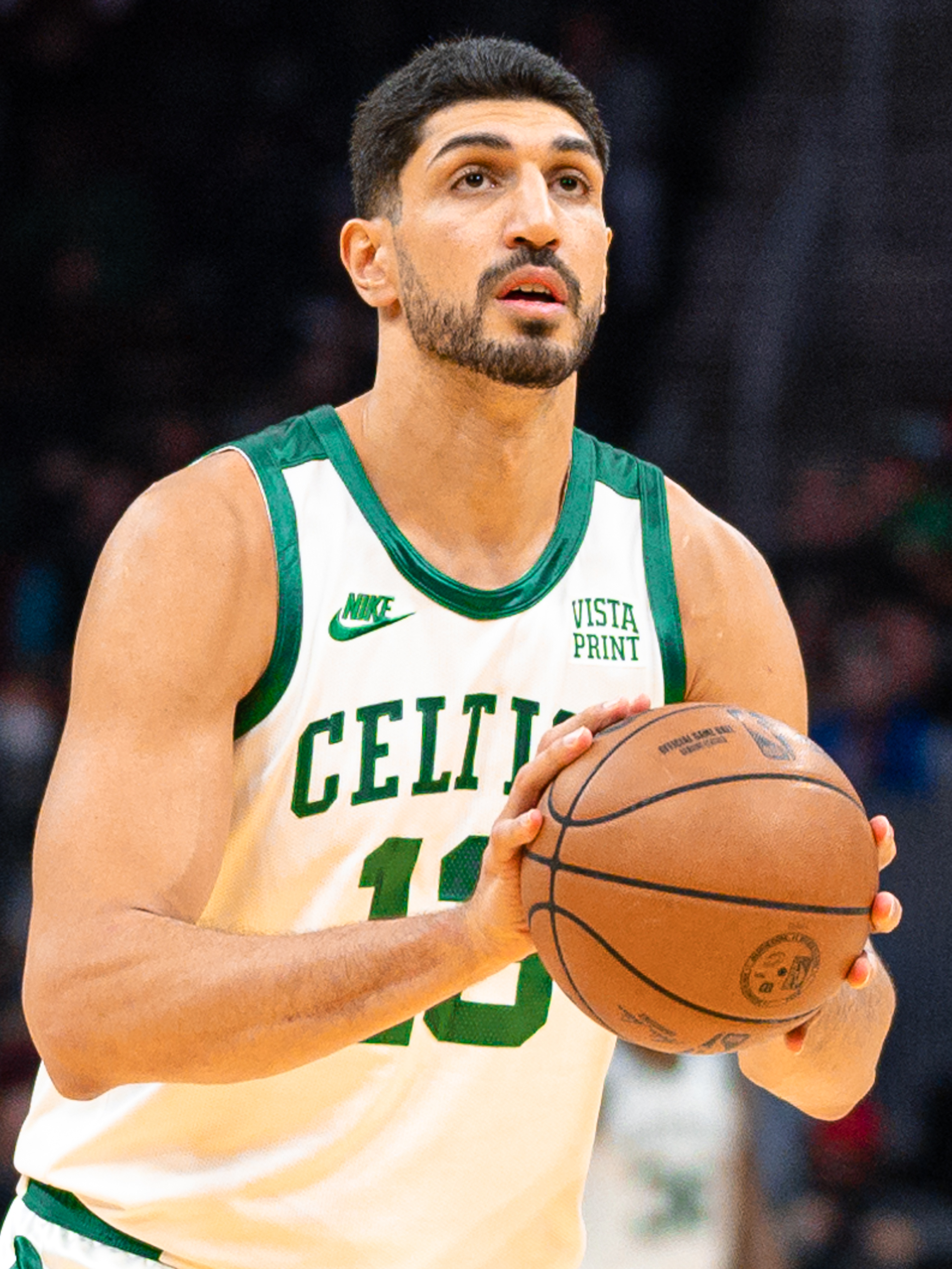
Sports / The Atlanta Dream offered Enes Kanter Freedom a private luxury suite, extra security and a state police officer for Game 3 of the WNBA Finals. He wanted the seat he had paid for. By halftime he was outside State Farm Arena filming himself — ejected from a WNBA game for the second time this season — while Angel Reese and the Dream were busy taking a 2-1 Finals lead on the court he never got to watch.
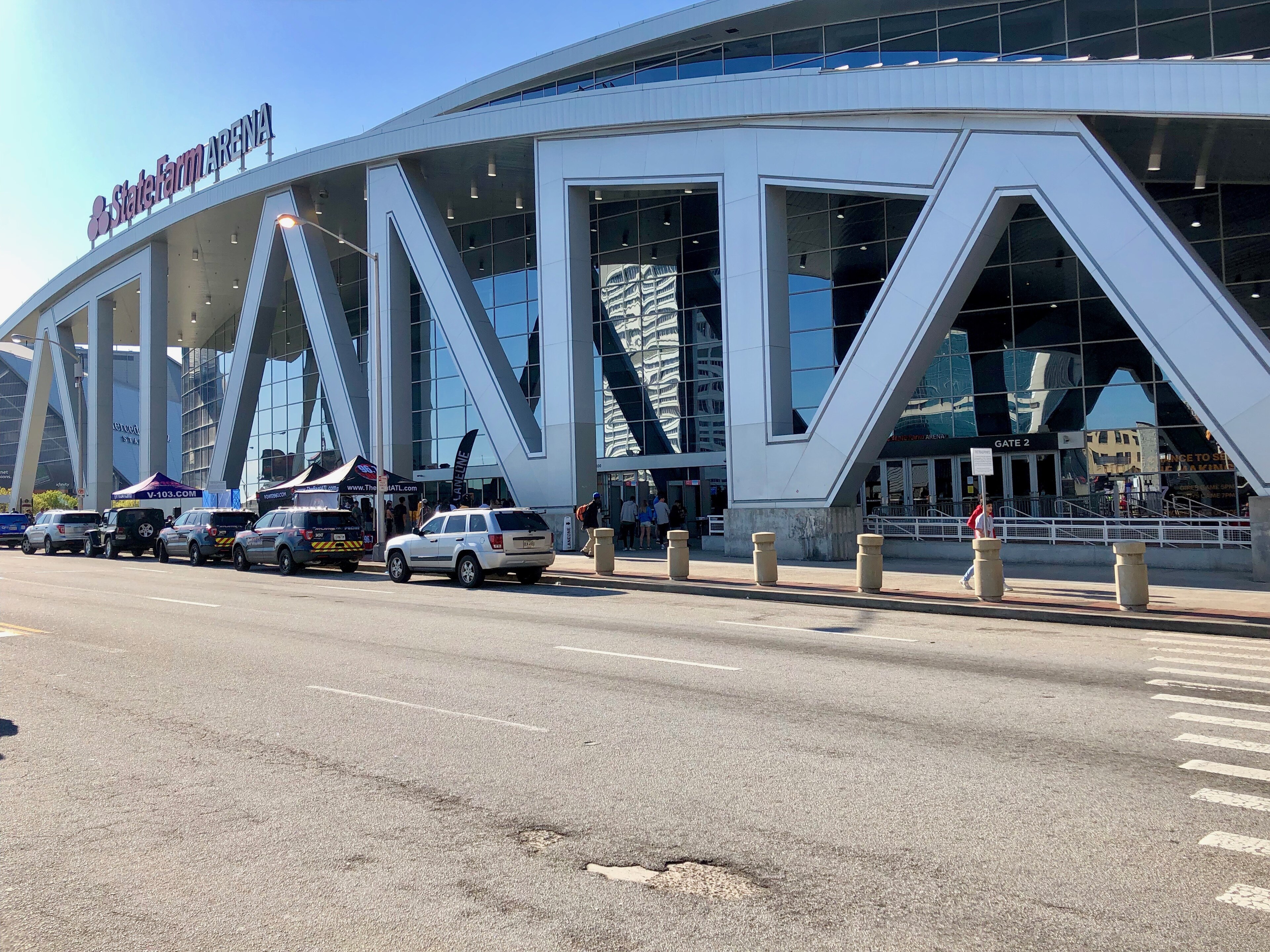
Enes Kanter Freedom ejected from the WNBA Finals is the headline nobody at the league office wanted on the biggest night of its season. The former NBA center was removed from State Farm Arena on Wednesday, October 21, during Game 3 of the Finals between the Atlanta Dream and the Golden State Valkyries, after refusing to watch from a private suite the Dream and the arena had arranged for his protection, according to the Associated Press. Freedom posted a video at halftime saying he had been thrown out. "I just got kicked out of a WNBA game for the second time in a row for supporting WOMEN!" he wrote. "Let that sink in AMERICA!" The arena's position, stated before the game even tipped off, is almost the mirror image: the suite was not a punishment, it was a safety plan — one built, officials say, after Freedom himself contacted federal, state and local authorities about his personal safety at the game.
What happened at the gate
The sequence, pieced together from the Associated Press reporting carried by Bleacher Report and theScore, Freedom's own videos, and the arena's pre-game statement, runs like this. Freedom announced on social media on Monday that he planned to attend Game 3. Before the game, State Farm Arena issued a statement that is unusual in its detail: Freedom, it said, "has contacted federal, state and local authorities, the WNBA, the Atlanta Dream and State Farm Arena officials to express concerns about his personal safety during his planned attendance at Game 3 of the WNBA Finals tonight." After consultations involving the WNBA, Dream ownership, arena leadership and security officials, the arena said it had "directed Mr. Freedom to watch tonight's game from a private luxury suite," with additional security, as his "designated viewing location," and that state police had also assigned an officer to him at his request.
Freedom's own video, posted from the entry area, shows the condition being put to him in plain language: "If you come in you have to agree to go to the suite." His answer was equally plain: "I purchased tickets, right? Just because I purchased tickets, I would like to sit in my seat. That's all I want." An Atlanta police officer in the same video offers the other door: "You're free to go to the city of Atlanta streets. That's another private establishment over there. He just can't be here." A State Farm Arena public relations official summarised the arena's position to the AP in one line: Freedom "was offered the suite for his safety and he rejected it." By halftime, Freedom was posting that he had been kicked out. One detail is worth flagging honestly: the exact minute of the removal has not been independently pinned down — the AP places his ejection post at halftime and his gate video before the game, and the New York Post described the standoff as beginning moments before tip-off. What is not in dispute, from either side, is the core fact: suite or street were the two options, he chose neither quietly, and he did not watch the game from his purchased seat.
Essentially Sports, citing video shared by a Fox News reporter, reported that an arena administrator gave three reasons at the door: Freedom's previously expressed security concerns, his conduct at the August Chicago game, and the "What Is a Woman?" shirt he was wearing. Freedom, in his own words from the scene: "We have seven police officers just surrounding us like I'm a terrorist. All I've done is protect women and support women. And this is what I get in America. Don't forget that. Let that sink in." He called the removal discrimination. The Dream and the arena have not, in the reporting available Wednesday night, addressed the shirt claim directly; their public position remains the safety plan.
The game he missed: Reese and the Dream take control
Inside, in front of a sold-out crowd of more than 17,000 — the Finals had been moved up from the 3,500-seat Gateway Center Arena so Atlanta could actually hold its own championship moment — the basketball was emphatic. The Dream beat the Valkyries 97-71 to take a 2-1 lead in the series, according to the Associated Press game report carried by NBC Sports. (Two USA Today live-blog sub-articles put the score at 95-71; the AP report and the official quarter-by-quarter line both total 97-71, and this article uses the AP figure.) Angel Reese, the Dream's Defensive Player of the Year, had 21 points, 12 rebounds, three assists and three steals — her third straight double-double to open the Finals, a first in WNBA history per USA Today's reporting, and a follow-up to her 30-point, 16-rebound Game 2. Rhyne Howard added 16 points and five steals, Naz Hillmon 15, and Jordin Canada 10 points with eight assists.
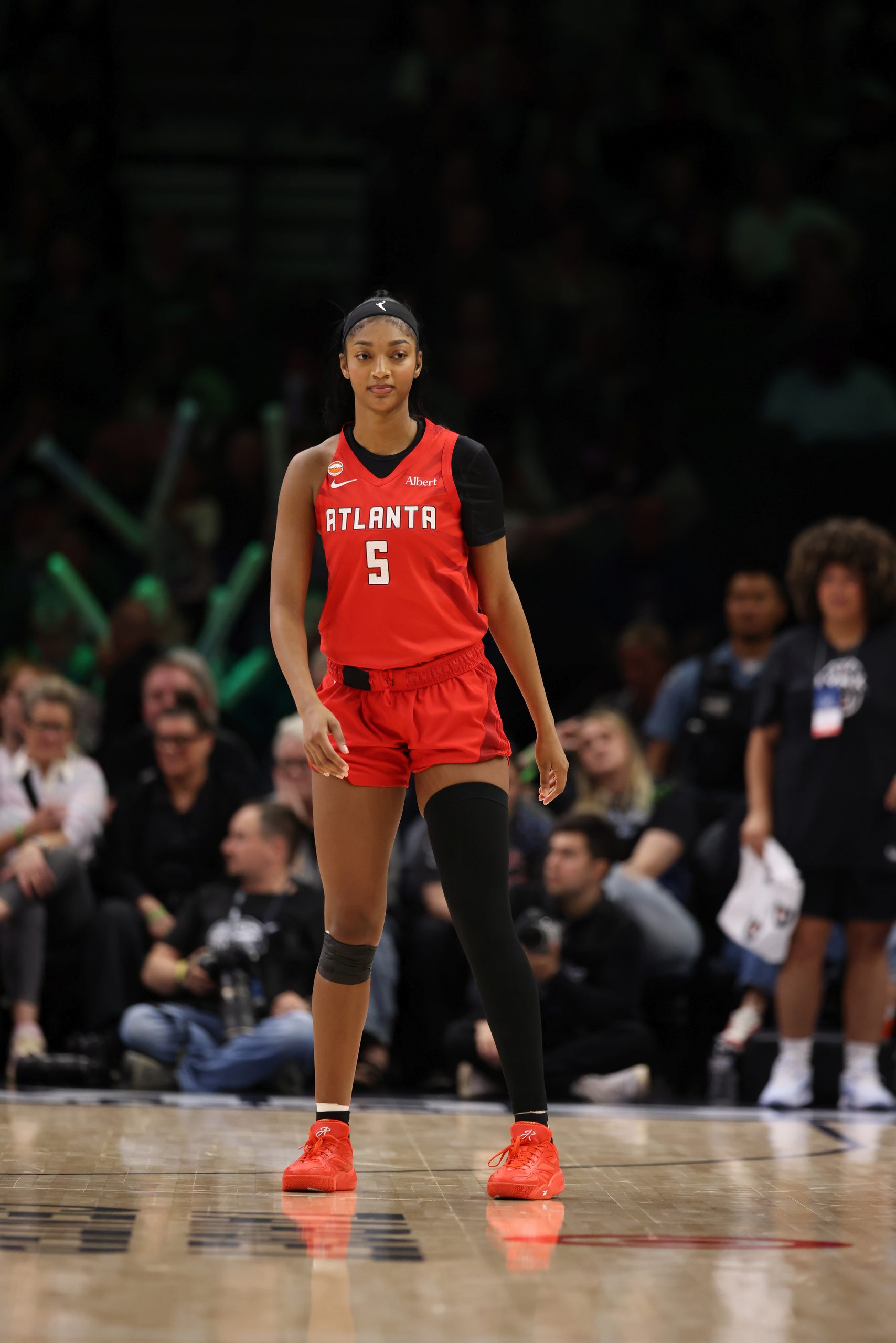
The game turned where this series keeps turning. Tied at 49 in the third quarter, Atlanta scored eight straight, four of them from Reese; Golden State crept back to 59-55 on a Tiffany Hayes layup, and then the Dream closed the quarter with 12 of the final 14 points. Across three games Atlanta has outscored Golden State 63-35 in third quarters — a 28-point cumulative gap in the twelve minutes after halftime, which is where a Finals is quietly being decided. Gabby Williams led the Valkyries with 15 and Hayes added 14, but Golden State shot 35 percent to Atlanta's 49 and did not make a field goal in Game 3 until the 4:38 mark of the first quarter. Game 4 is Saturday, again at State Farm Arena, again sold out. Our earlier Finals coverage is here: the Valkyries' road to this Finals and the Dream's overtime semifinal classic.
Why this matters
Strip away the shouting and Wednesday night posed a genuinely hard question that American sports keeps failing to answer cleanly: what does a venue owe a famous, polarising ticket-holder who says, in advance and in writing to three levels of law enforcement, that he fears for his safety at your event — and then refuses the protection you build for him because he wants the ordinary fan's seat instead? The arena's answer was control: a suite, extra security, an assigned officer, one known location. Freedom's answer was equality: a purchased ticket, a numbered seat, no special handling. Both positions are defensible in the abstract, which is exactly why the collision was inevitable once neither side would bend. A private arena is not a public square, and its legal room to set conditions of entry is broad; a paying fan being told his face and his T-shirt require a guarded room is also, visibly and understandably, going to read to millions of people as something other than hospitality. Both of those things are true at once, and any honest account of this night has to hold them together.
The second reason it matters is the pattern. This was not a first offence in either direction. In late August, at a Chicago Sky home game against Indiana, Freedom — wearing a shirt reading "WOMAN noun. adult human female" — got into a heated courtside exchange with Sky guard Natasha Cloud, was ejected, and was banned from that arena, with the Sky's owner saying publicly that he could return when he could show he would not repeat the behaviour. Freedom has since pursued legal action over that ban, according to reporting on the Chicago case. Wednesday in Atlanta was therefore not an improvisation by surprised security staff; it was the second act of a known play, with both sides arriving pre-scripted — the league and the arena with a containment plan drafted before tip-off, Freedom with cameras rolling from the gate. When both parties arrive expecting the confrontation, the confrontation is the event, and the Finals game becomes the backdrop. That, more than any single quote, is the story the WNBA has to manage: its championship series is sharing a news cycle with a culture-war roadshow that has now stopped at two of its arenas in two months.
The eligibility fight underneath it
Freedom has been explicit about why he came to Atlanta. Golden State's Gabby Williams had said she would have no problem with a transgender athlete playing on or against her team. Freedom, who along with fellow former NBA player Royce White has declared for the WNBA draft while saying he identifies as a woman — a declaration he frames as a protest against the league's eligibility rules — quoted Williams' interview as his motivation: "Her words gave me so much hope and motivation to come out as a woman and officially declare for the WNBA draft." On Wednesday he also posted a copy of a letter from WNBA Commissioner Cathy Engelbert to Indiana Representative Marlin A. Stutzman, answering a congressional question on eligibility: "only women are eligible to play in the WNBA and the individuals you cite in your letter are both men." Freedom's reply: "Apparently the WNBA still can define what a WOMAN is, but they're absolutely certain they know what a MAN is! How convenient!" The league, in other words, has already closed the draft door he is knocking on; the arena door on Wednesday was the one still technically open to him, and it closed too — on stated safety grounds, with the shirt and the Chicago conduct cited at the scene, per the administrator in the shared video. Readers will divide on whether those grounds were the reason or the pretext. The reporting available tonight establishes the sequence and both sides' stated positions; it does not establish motive, and this article does not pretend otherwise.
What happens next
Game 4 is Saturday at the same arena, sold out, with Atlanta one win from a 3-1 grip on the series and Golden State facing the closest thing the Finals offers to a must-win. The basketball questions are real: whether the Valkyries can survive the third quarter, whether anyone in gold can slow Reese, who is averaging a double-double for the series and playing, by her own cheerful admission, exactly the villain-hero role a Finals crowd feeds on. The Freedom questions ride alongside: whether he buys a ticket for Saturday, whether the Dream and the arena publish anything beyond Wednesday's safety statement, and whether Atlanta becomes a second legal front after Chicago. He has shown, twice now, that he will come back and film it. The league has shown, twice now, that it will not let him sit where he likes. Something in that loop eventually changes — a court ruling, a league-wide policy stated in daylight instead of at a gate, or simply a Finals that ends and takes the stage away. Until then, the most honest summary of Wednesday night is the one neither side offered: a man who told authorities he was unsafe was removed in the name of his safety, from a game his hosts won by 26, in a building full of people who mostly came to watch Angel Reese — and did, long after he was gone.
Sources: Associated Press reporting by Charles Odum, carried by Bleacher Report and theScore (arena statement, gate exchange, August Chicago background, Engelbert letter); Associated Press Game 3 report via NBC Sports (97-71, Reese 21/12, third-quarter splits); New York Post (standoff timing and Freedom's pre-game posts); Essentially Sports (administrator's three stated reasons, "seven police officers" quote, Williams context); USA Today Game 3 live coverage (Reese Finals double-double records; two sub-articles' 95-71 figure flagged against the AP total above). Freedom's quotes are from his own posts on X, quoted across the AP and Post reporting.