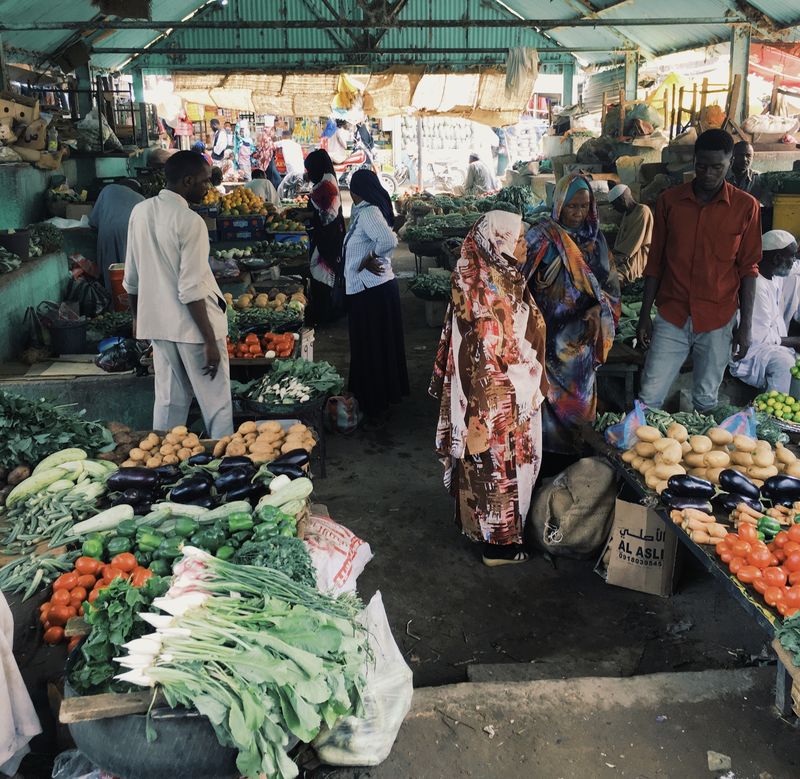
EL OBEID, Sudan — RSF drone strikes El Obeid residents endured through the summer were not, on Amnesty International’s account, near-misses in a battle for the city. In a report published on Wednesday, November 18, the human rights organisation said it had documented nine drone strikes by the paramilitary Rapid Support Forces (RSF) in El Obeid and its surroundings, in North Kordofan state, between June and August 2026, which together killed 37 civilians and injured 10. Amnesty said it found no military objectives in the vicinity of the sites struck. The places hit were the fabric of civilian life in a besieged city: residential areas, the city’s electricity station, fuel stations and the main market. Those are Amnesty’s findings, reached through its own investigation; the RSF, in a written reply to the organisation, denied responsibility for attacks causing civilian casualties in El Obeid and blamed the Sudanese Armed Forces (SAF) instead, without providing evidence. Both positions are set out in full below, and this article keeps them labelled as what they are — one side’s documented findings, the other side’s denial.
Track it live: Africa wars tracker · Live wars tracker
What Amnesty found
El Obeid drone attacks civilians in homes, at the market and at the power station
The core of Wednesday’s report is a target list, and it is the target list that drives Amnesty’s legal conclusion. Across the nine strikes, the organisation said, drones hit residential areas, El Obeid’s electricity station, fuel stations and the city’s main market. In each case, Amnesty said, its researchers found no military objectives in the vicinity of the site struck — the factual finding on which the laws of war turn, because an attack directed at civilians or civilian objects, or launched without distinguishing between them and military targets, is unlawful whether or not the weapon used is sophisticated. Thirty-seven civilians were killed and 10 injured across the nine attacks, an average of just over four deaths per strike: not one mass-casualty event, but a summer-long accumulation of lethal incidents over a single city.
How the findings were built: 29 interviews
Amnesty said its findings rest on 29 interviews conducted between July and September 2026 with victims, relatives of victims, eyewitnesses and other residents of the El Obeid area. That method matters to how the report should be read. Interview-based documentation, gathered close in time to the events, is the standard tool of human rights investigation in places investigators cannot freely reach; it produces testimony that can be cross-checked between witnesses but is not the same as forensic access to strike sites, munition fragments or flight data. Amnesty’s report is therefore best understood as a documented allegation of the most serious kind — specific as to dates, places, targets and toll — which its authors say now requires a criminal investigation with powers they do not have. That is, in fact, exactly what the organisation is demanding.
“Must be investigated as war crimes”
Agnès Callamard, Amnesty International’s Secretary General, said the attacks “must be investigated as war crimes.” In the organisation’s framing, the El Obeid strikes are evidence of a broader turn in Sudan’s war: a conflict moving into a phase in which drones and other advanced weapons are used against civilians and against the lifesaving services — power, fuel, food distribution — that keep a civilian population alive. The electricity station is the clearest example in the report. A city’s power supply is civilian infrastructure; it is also, in a city under siege, the thing that runs water pumping, hospital equipment and refrigeration. Striking it does not need to kill anyone in the blast to harm civilians at scale, which is why Amnesty groups such targets with direct attacks on populated areas rather than treating them as ordinary battlefield damage.
The RSF denial, and the exchange of letters
Amnesty wrote to the RSF on October 8, putting its findings to the force before publication, and the RSF replied on October 24. In that reply, as characterised in Wednesday’s report, the RSF denied responsibility for attacks that caused civilian casualties in El Obeid, blamed the Sudanese Armed Forces for the attacks instead, and did so — Amnesty noted — without providing evidence for the claim. The RSF also said it was considering setting up a specialised investigative committee of its own. Three things about that exchange deserve to be kept distinct. First, the denial is categorical as to RSF responsibility for civilian-casualty attacks in the city; it is not a claim that no strikes occurred. Second, the counter-attribution to the SAF is, on the record published Wednesday, an assertion without supporting evidence attached — which does not make it false, but means it currently carries a different evidentiary weight from Amnesty’s interview-based documentation. Third, the proposed committee is, at this stage, something the RSF said it was considering, not a body that exists; whether it is established, who sits on it and what access it gets will be the test of it. For balance, one further fact belongs in this section: Amnesty is also investigating drone strikes by the SAF that have caused civilian casualties. Wednesday’s report is about the RSF and El Obeid; the organisation’s wider Sudan work is not one-directional, and neither, as the UN figures below show, is the drone war itself.
Why this matters
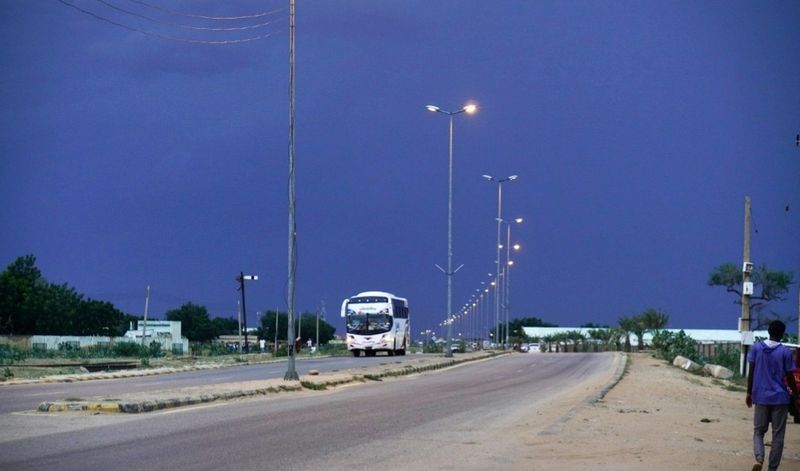
El Obeid is not an anonymous dot on the Kordofan map. It is the capital of North Kordofan, a commercial hub whose markets and roads have served central Sudan for generations, and it has spent nearly two years under a partial RSF siege while remaining under SAF control — a city held by one army, encircled in part by the other, and supplied through contested roads. A siege already weaponises the essentials: food, fuel and power arrive late, at inflated prices, or not at all. Drone strikes on the electricity station, fuel stations and main market of such a city do not add a new hardship so much as they strike directly at the narrowing margin on which civilian life inside the siege continues. That is the practical meaning of Amnesty’s “lifesaving services” language, and it is why the report’s significance runs beyond its casualty count.
The legal meaning runs in parallel. A war-crimes investigation, if one is ever mounted with real powers, would not start from Wednesday’s headlines; it would start from precisely the elements Amnesty says it has assembled — identified strike sites, dates, victim and witness testimony, and an assessment of what military objectives were or were not nearby — and then test them against the evidence only an investigator with access can gather: munition remnants, satellite imagery, communications and command records, and the RSF’s and SAF’s own accounts of who flew what, where, in June, July and August. Amnesty’s report is designed, in other words, as the first file in a case that does not yet have a court. Whether it acquires one depends on actors — Sudanese authorities, the UN system, the African Union, the International Criminal Court’s existing Darfur mandate and states with universal-jurisdiction laws — none of which moved on Wednesday. The report’s demand is that they do.
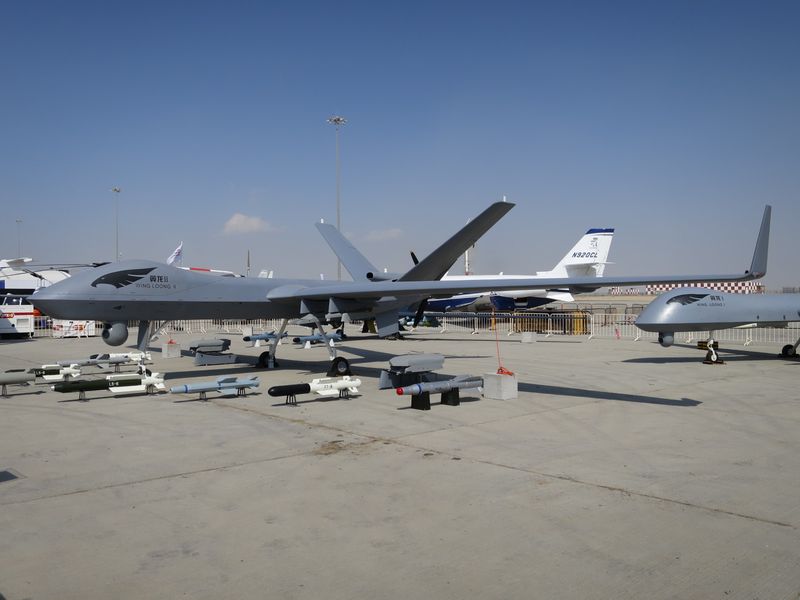
There is also a supply question, and Amnesty has addressed it before. The organisation has previously documented the supply of weapons, vehicles and drones from the United Arab Emirates to the RSF, including Chinese-made Wing Loong II and FeiHong-95 drones — that is Amnesty’s prior documentation, attributed here as such, and Wednesday’s report sits downstream of it: the aircraft types the organisation says were supplied are the class of long-range, precision-capable systems that make strikes on a besieged city’s infrastructure possible from far beyond the front line. The UAE’s role in Sudan has been contested throughout the war, and no new supplier finding was the subject of Wednesday’s El Obeid report itself. But the connection Amnesty draws across its own body of work is plain: accountability, on its account, runs through the operators who launch the strikes and the supply chains that put the aircraft in their hands.
Context: a war since April 2023, and the Kordofan battleground
Sudan’s war began in April 2023, when the alliance between the Sudanese Armed Forces, commanded by General Abdel Fattah al-Burhan, and the RSF, commanded by General Mohamed Hamdan Dagalo, known as Hemedti, collapsed into open fighting in Khartoum and then across the country. In the three and a half years since, the SAF has held the east and much of the centre, the RSF has held most of Darfur in the west, and the Kordofan states between them have become the war’s contested hinge — the territory through which any wider shift in the war’s balance would have to pass. El Obeid sits in the middle of that hinge. Its survival as an SAF-held city inside RSF-contested North Kordofan is precisely what makes it valuable to both sides: to the army, a held state capital and a staging point westward; to the RSF, a prize whose fall would open central Sudan. A city with that geography does not need to be assaulted to be fought over. It can be besieged, squeezed and — as drones have made routine in this war — struck from the air without the attacker holding a single street of it.
North Kordofan RSF strikes in a countrywide drone war
Wednesday’s report landed one day after the UN human rights office put the countrywide frame around it. On Tuesday, November 17, OHCHR said at least 2,230 civilians were killed in Sudan between January and October 2026, and that over 1,630 of them — nearly three-quarters — were killed by drones, figures Signal Post News reported in full in Sudan Drone War Deaths: UN Says Drones Caused Nearly Three-Quarters of Civilian Killings This Year. Set the two publications side by side and the arithmetic is instructive. El Obeid’s 37 dead are roughly one in every sixty of the UN’s verified civilian deaths for the year, and the nine strikes Amnesty documented in one city across one summer average a little over four deaths each — close to the grim national pattern, in which drones kill not in single catastrophes but in a steady, distributed tempo that the UN says accounted for more than 80 per cent of documented killings in the first half of the year. The pattern is not confined to one side’s aircraft, either: this newsroom has also reported an army drone strike on the West Kordofan village of Abu Qalb that killed 15 people, including four children, in Sudan Army Drone Strike in West Kordofan Kills 15, Including Four Children Playing Football, and the UN’s October warning that 306 people were killed by drones in three weeks, in Sudan Drone Strikes: 306 Killed in Three Weeks, UN Says. What Amnesty adds on Wednesday is not a new weapon or a new theatre; it is a named city, a named force, a dated set of nine strikes, and a legal demand attached to them.
Sudan drone war civilian deaths: who gains, who loses, who is believed
The incentives around the report are worth stating plainly, because they will shape what happens to it. The RSF loses most directly: a detailed, interview-based attribution of infrastructure strikes in a city it is besieging undercuts the force’s efforts to present itself as a governing alternative in the territory it holds, and its denial — blaming the SAF without published evidence — will be measured against the specificity of the file it answers. The SAF gains a documented indictment of its enemy, but only at a price: the same investigative machinery Amnesty is applying to RSF strikes is, by the organisation’s own statement, also examining SAF drone strikes that killed civilians, and the UN’s countrywide figures attribute the drone war to the conflict as a whole rather than to one party. Civilians in El Obeid gain a record — testimony taken, sites named, a toll fixed in print while witnesses can still be found — and lose nothing except the illusion that the summer’s strikes went unnoticed. And outside Sudan, governments that supply, finance or diplomatically shelter either side acquire a document they will have to answer in terms: not a rumour of atrocity, but a dated, sourced call for a war-crimes investigation from one of the world’s most established human rights organisations.
What happens next
Amnesty Sudan war crimes investigation: what a real inquiry would require
An investigation worthy of the name would need four things Wednesday’s report cannot itself supply: access to the strike sites in and around El Obeid, which means security guarantees in a besieged, SAF-held city; forensic evidence, above all munition fragments that can tie specific strikes to specific aircraft and operators; records — flight, targeting and command documentation — from both the RSF and the SAF, including the RSF’s evidence, if any exists, for its claim that the army carried out the attacks; and protection for the witnesses whose testimony underpins the case, in a war where reprisals against those who speak are documented. Each requirement points at a different gatekeeper, which is why such investigations in Sudan have historically stalled: the parties control the ground, the records and, too often, the witnesses’ safety.
Three scenarios
The first is that the RSF’s proposed specialised committee becomes the story: established quickly, staffed by the force itself, and producing a finding that competes with Amnesty’s without independent access or powers. The test of that scenario is not the committee’s conclusion but its composition and its evidence — an inquiry that publishes fragments, flight data and named investigators can be judged; one that publishes only a verdict cannot. The second scenario is international uptake: the UN system, which already holds the countrywide drone toll, folds the El Obeid file into its Sudan documentation, and the report becomes part of the evidentiary base for whatever accountability mechanism — a commission of inquiry, an ICC process, or a future Sudanese court — eventually takes up the war’s drone campaign. That path is slow and has no certain end, but it is the path Amnesty’s methodology is built for. The third scenario is the one the residents of El Obeid will experience regardless of the other two: the siege continues, the drones remain available to both sides, and the next summer’s strikes — on whichever city, by whichever force — are documented after the fact by organisations working, as Amnesty’s researchers did, from interviews with the survivors. The distance between the second scenario and the third is the distance between documentation and deterrence, and it is the distance Callamard’s demand is meant to close.
For now, the record of Wednesday is two documents and a denial: a UN count that says drones have killed nearly three-quarters of Sudan’s verified civilian dead this year, and an Amnesty file that says nine of those strikes, over one besieged city, killed 37 civilians at homes, fuel stations, a power station and a market — and should be investigated as war crimes. The RSF says it did not do it and that the army did, and says it may investigate itself. Which of those claims survives evidence is now, formally, a question for investigators. Whether investigators are ever given the access to answer it is a question for everyone else.
Sources
Sources: Amnesty International, “Sudan: Devastating RSF drone strikes on civilians in El Obeid should be investigated as war crimes,” November 18, 2026 (the nine documented strikes in El Obeid and surroundings, June–August 2026; 37 civilians killed and 10 injured; no military objectives found in the vicinity of sites struck, including residential areas, the electricity station, fuel stations and the main market; 29 interviews conducted July–September 2026 with victims, relatives, eyewitnesses and residents; Secretary General Agnès Callamard’s statement that the attacks must be investigated as war crimes; Amnesty’s prior documentation of UAE supply of weapons, vehicles and drones, including Chinese-made Wing Loong II and FeiHong-95 aircraft, to the RSF; Amnesty’s October 8 letter to the RSF and the RSF’s October 24 reply denying responsibility for civilian-casualty attacks in El Obeid, blaming the SAF without evidence and saying it was considering a specialised investigative committee; and Amnesty’s ongoing investigation of SAF drone strikes that caused civilian casualties). Corroboration: Panafrican News Agency (PANA), November 18, 2026; Eastleigh Voice, November 18, 2026. Context: UN Human Rights Office (OHCHR), November 17, 2026 — at least 2,230 civilians killed in Sudan January–October 2026, over 1,630 of them by drones — as reported in Signal Post News, Sudan Drone War Deaths: UN Says Drones Caused Nearly Three-Quarters of Civilian Killings This Year. Photos: shoppers at a market in Sudan, by Shaaiixx via Wikimedia Commons (CC BY-SA 4.0); a Wing Loong II at the Dubai Airshow 2017, by Mztourist via Wikimedia Commons (CC BY-SA 4.0); a main road in El Obeid at dusk, by Matab Hamed via Wikimedia Commons (CC BY-SA 4.0) — each credited in its caption; all are file photographs.