Airman dies rappelling accident Alamodome: a U.S. Air Force service member assigned to the 6th Combat Training Squadron, Detachment 2, has died after falling from the rafters of the Alamodome in San Antonio, Texas, during a pregame rappelling demonstration before the UTSA Roadrunners' Salute to Armed Forces & Veterans game against Navy on Saturday, October 17, 2026. Nellis Air Force Base Public Affairs said the service member was injured at the stadium and died at a local hospital. The Air Force has not released his name, and the incident is under investigation.
San Antonio / A salute-night display, a fall in front of 23,297 fans — and an Air Force investigation
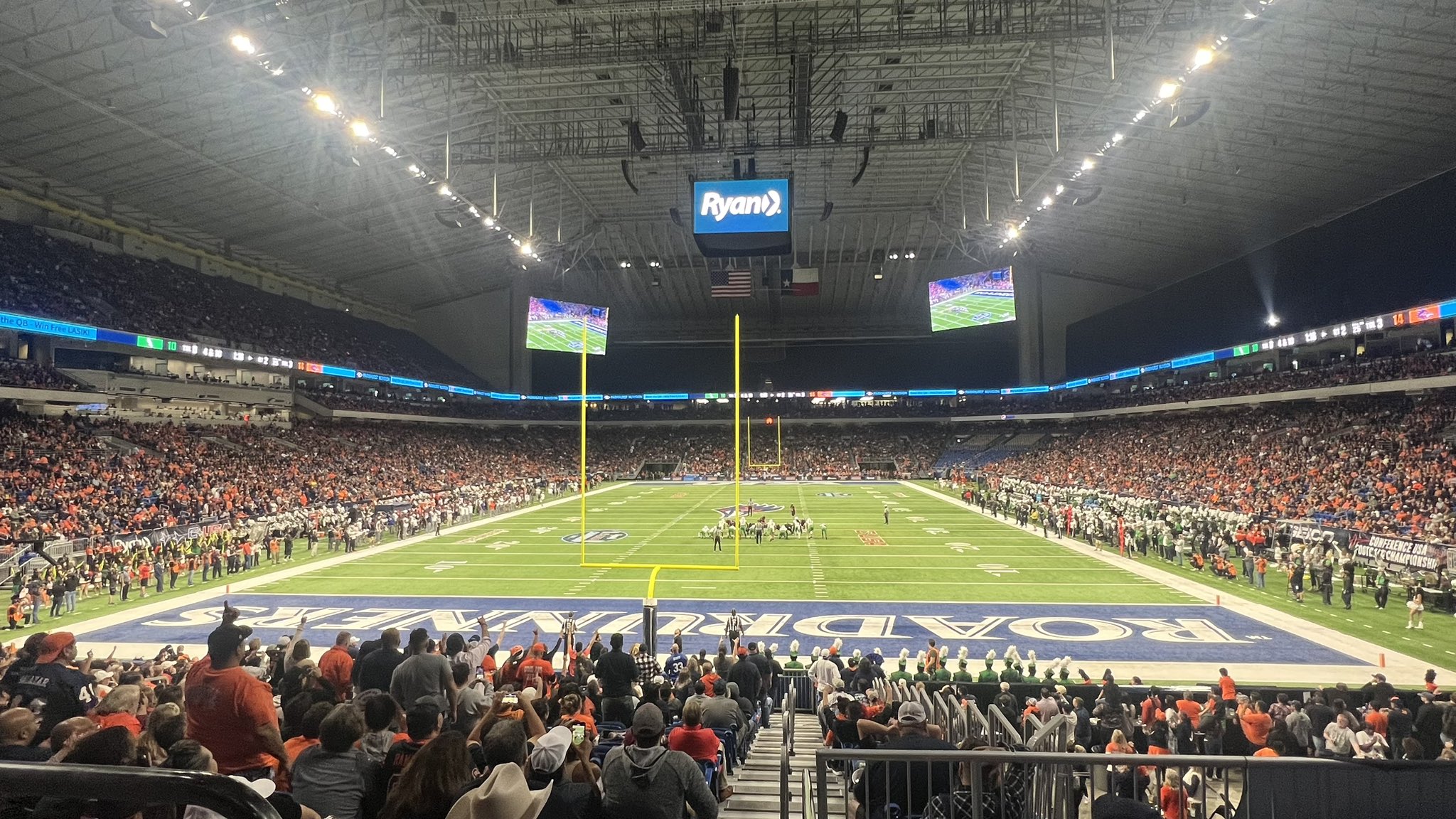
SAN ANTONIO, Texas — A U.S. Air Force service member has died after falling while rappelling from the rafters of the Alamodome during a pregame demonstration before the University of Texas at San Antonio's football game against Navy on Saturday night, the Air Force said, in reporting by ESPN and The Associated Press, Task & Purpose, USA Today and the New York Post.
Nellis Air Force Base Public Affairs said the service member, who was assigned to the 6th Combat Training Squadron, Detachment 2, was injured at the stadium and died at a local hospital, ESPN reported on Sunday, in a report that also drew on information from The Associated Press. Task & Purpose, the military-news outlet that first reported the death, said a spokesperson for Nellis Air Force Base confirmed the service member died from his injuries on Saturday night. "The incident is under investigation. More information will be released as it becomes available," the Nellis spokesperson told the outlet.
The fall happened about fifteen minutes before kickoff, as part of a pregame ceremony for UTSA's annual Salute to Armed Forces & Veterans game. Four service members were set to rappel from the rafters down to the field. According to the San Antonio Express-News, cited by USA Today and Task & Purpose, halfway through the descent one of them slid down the rope much faster than the others — in what the Express-News described as "an uncontrolled manner" — and crashed to the ground.
Medical personnel attended to the airman on the field for roughly ten minutes while UTSA staff formed a semicircle around him, the Express-News reported. He was placed on a stretcher and taken from the stadium. The San Antonio Fire Department told Task & Purpose it had transported a person with a life-threatening injury to a hospital — reported elsewhere as a Priority 1, critical-condition transport. The New York Post reported a crowd of 23,297 was in the Alamodome, whose ceiling is roughly 170 feet high. Kickoff was delayed by about ten minutes, and the game was then played. UTSA went on to win, 38–34, and head coach Jeff Traylor called the accident "heartbreaking," saying the programme's thoughts were with the airman's family and his unit.
Video shared on social media captured the fall, with fans heard screaming in the background. "Everybody was quiet, the band stopped performing. Everybody was dead silent," Adrian Corey, who witnessed the fall, told KSAT, the San Antonio television station, in comments carried by the New York Post.
Late on Saturday night, UTSA posted a statement to its account on X: "We are deeply saddened by the incident that occurred at the start of tonight's football game. Our heartfelt thoughts and prayers are with the soldier who was affected, his family and his military colleagues. We recognize that members of our campus community may be emotionally affected by this incident and are activating wellbeing services to support our faculty, staff and students."
The American Conference, which organises the fixture, said in a statement posted on X that it was "deeply saddened by tonight's pregame incident in at the Alamodome," that its thoughts were with the individual involved, their family and colleagues and everyone who witnessed or was affected by it, and that it had consulted representatives of both schools, Alamodome management, local authorities and a working group, respected the family's privacy, and was working to connect those affected with support resources.
What We Know — and What We Do Not
The confirmed facts come from the Air Force itself and from multiple outlets reporting the same sequence. On Saturday, October 17, four members of a rappel team from Detachment 2 of the 6th Combat Training Squadron were to descend from the Alamodome rafters before the UTSA–Navy game. One of them lost control about halfway down, slid down the line at speed and hit the turf. He was treated on the field for about ten minutes, stretchered off, and transported by the San Antonio Fire Department with a life-threatening injury. Nellis Air Force Base Public Affairs says he died at a local hospital. The incident is under investigation.
What has not been released matters just as much, and this article does not fill it in. The Air Force has not released the airman's name, rank or age — identification in service deaths normally follows notification of next of kin — nor the hospital's name, nor the exact height from which he fell. The Alamodome's ceiling is roughly 170 feet, and one tabloid account estimated the descent at 150 feet, or 45 to 52 metres; neither figure is an official measurement of the fall itself, and both are reported here only as reported estimates. No official source has yet said what failed — equipment, rigging, technique or a medical event are all, at this stage, unexamined possibilities rather than findings — and no official source has described what safety systems were in use on the descent. The investigation, not speculation, is the step that will answer those questions.
One detail in the early reporting differs between outlets and is worth stating plainly rather than smoothing over. The 6th Combat Training Squadron is based at Nellis Air Force Base in Nevada; its Detachment 2 operates from Joint Base San Antonio–Camp Bullis, as Task & Purpose reported. USA Today's initial account described the unit as based at Camp Bullis, and the New York Post described the squadron as based at Nellis. Those descriptions are compatible — parent squadron in Nevada, detachment in San Antonio — but the Air Force has not yet published its own full statement setting out the team's composition, and this article follows the fuller Task & Purpose wording while flagging the difference.
Why This Matters
A service member is dead from a demonstration that was supposed to be the safest kind of military spectacle: rehearsed, ceremonial, and performed by specialists in front of families. That gap — between the controlled image a salute-night display is meant to project and the unforgiving physics of a rope descent from stadium rafters — is why this story reaches beyond one game in San Antonio.
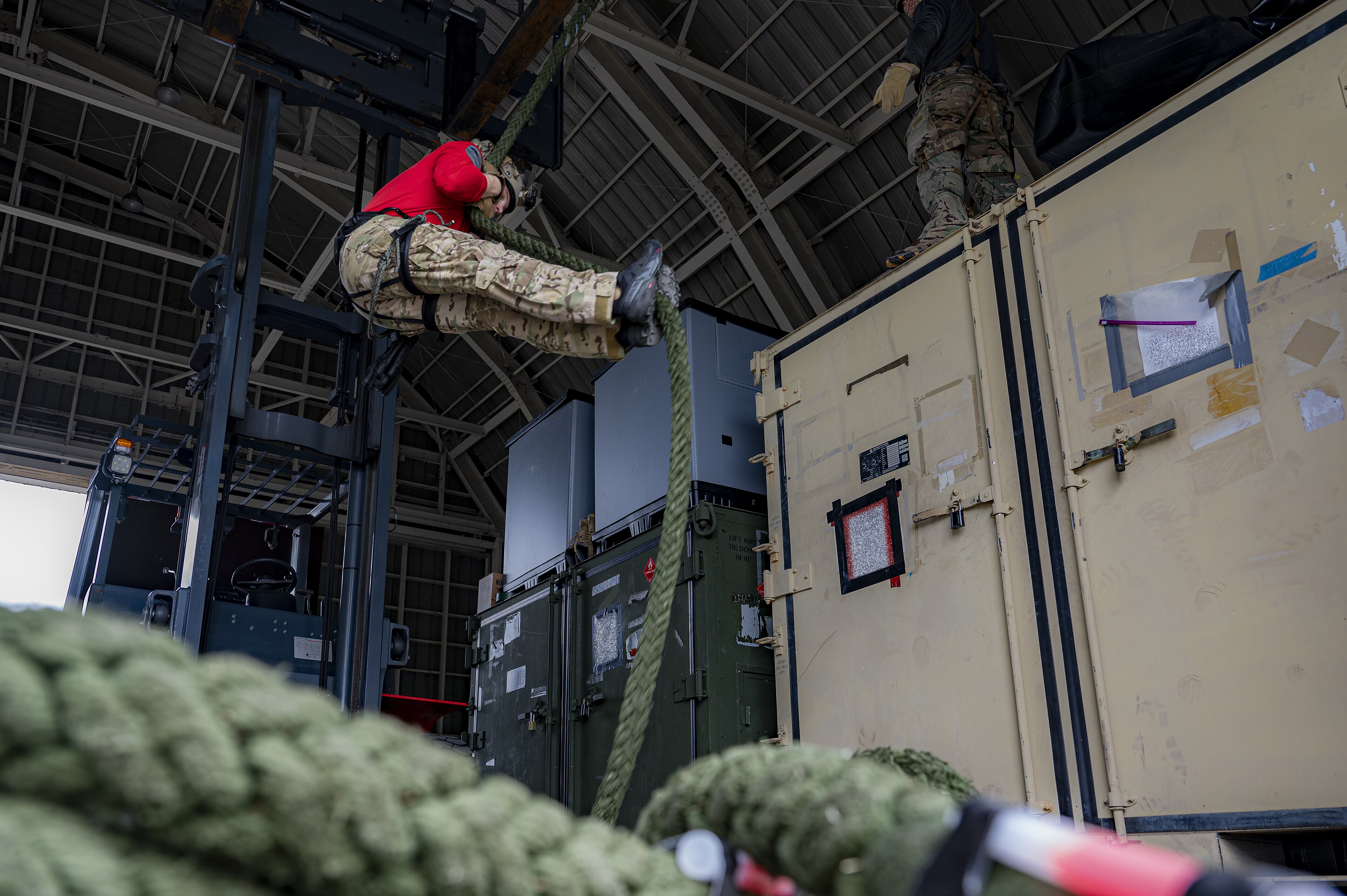
Start with who the team was. Detachment 2 of the 6th Combat Training Squadron trains Tactical Air Control Party personnel — TACP airmen, the specialists who embed with Army and Marine ground units and direct and coordinate airstrikes from the ground. Rappelling and fast-rope work are not party tricks for this community; they are operational skills, used to descend from helicopters at heights exceeding 100 feet, as the New York Post noted in describing the unit's training. In other words, the four men on the ropes on Saturday were demonstrating a real battlefield skill, in a real skill community, in a venue that had converted it into ceremony. When a demonstration uses live skills rather than props, it inherits live risk — and the investigation will have to establish whether the risk controls that govern training descents were the same ones governing a stadium descent in front of 23,297 people.
Then there is the audience. More than twenty-three thousand fans — among them children, students, and the families the salute night exists to honour — watched a man fall and watched medics work on him for ten minutes at midfield. UTSA's decision to activate wellbeing services for its own campus community, and the American Conference's parallel offer of support resources, are an acknowledgement that witnessing a death is itself a harm, even for strangers in the stands. The videos now circulating on social media extend that audience indefinitely, which raises a familiar and unresolved question about how quickly footage of a fatal accident should travel, and who it serves.
And there is the institutional question, which will outlast the news cycle. Military displays at sporting events are a long-standing bridge between the services and the public — flyovers, colour guards, parachute teams and rappel descents all trade on precision as proof of professionalism. A fatal failure inside that format does not just prompt a safety review of one detachment's rigging; it prompts every service that performs in public to re-examine the line between demonstration and operation. The Air Force's investigation will be read, inside the military, as a document about that line.
The Unit, the Venue and the Ceremony
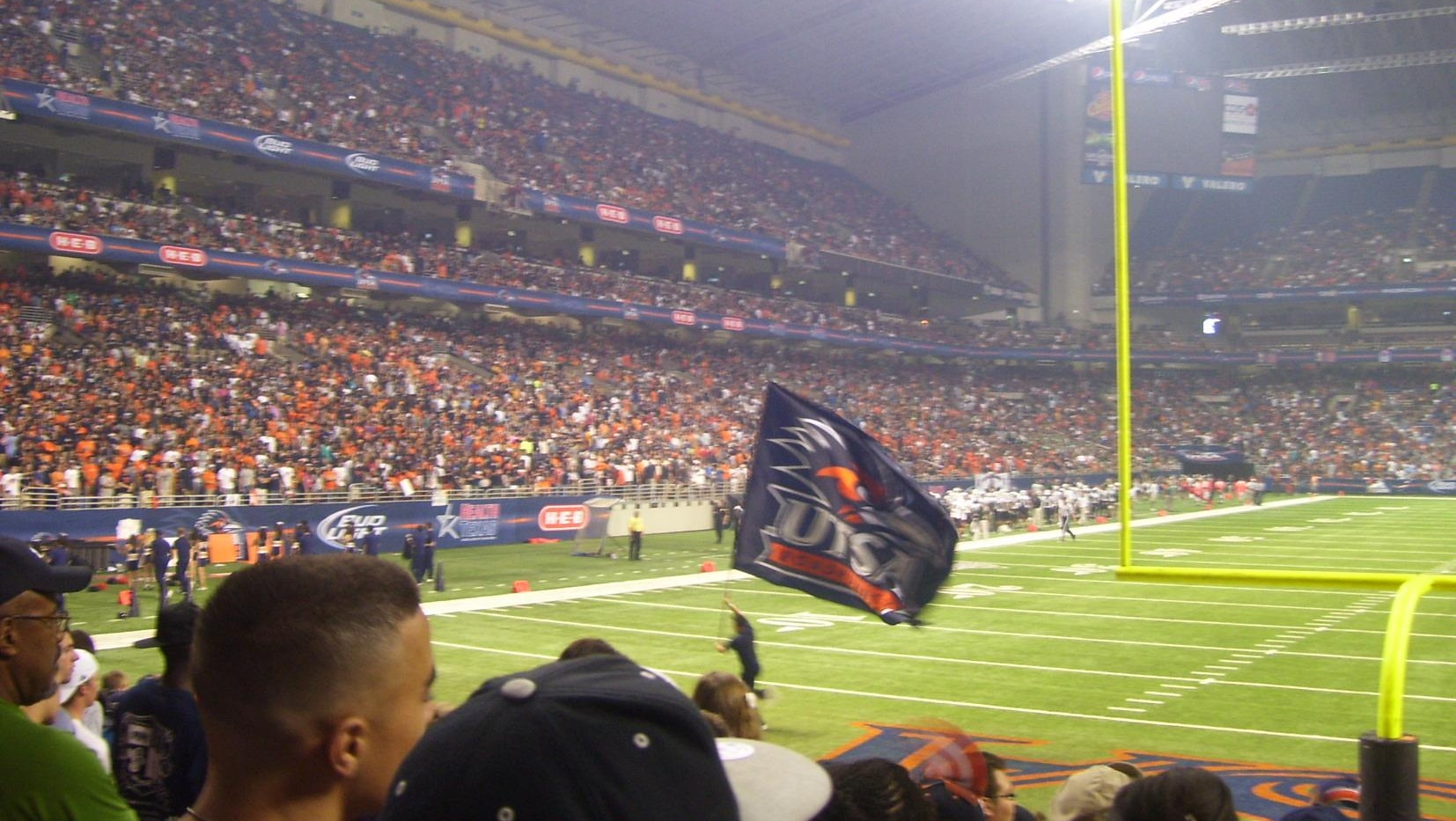
Some background helps explain how Saturday's ceremony came to be. The Alamodome, owned by the City of San Antonio, has been the Roadrunners' home since the programme's inaugural season in 2011 — a cavernous indoor stadium whose roughly 170-foot ceiling makes a rafter descent possible in the first place. San Antonio calls itself Military City USA, home to Joint Base San Antonio, one of the largest joint bases in the U.S. military, and UTSA's Salute to Armed Forces & Veterans game is an annual fixture in a city where a large share of the crowd has a direct connection to service. A rappel team drawn from a locally based detachment of an Air Force training squadron was, in that setting, an obvious centrepiece: local airmen, an operational skill, a stadium built tall enough to show it off.
The skill itself deserves a plain description. In a controlled rappel or fast-rope descent, the descending airman manages friction on the rope to govern speed; the entire technique is a negotiation with gravity conducted through grip, gloves and braking. The Express-News account — a descent that became "uncontrolled" about halfway down — describes the failure of exactly that negotiation. What investigators will examine, in the ordinary pattern of military mishap inquiries, includes the rope and anchor rigging at the rafter, the descent device and gloves in use, any backup or belay arrangement, the rehearsal history of the display, and the medical timeline from field to hospital. None of those findings exists yet, and no outlet has reported any preliminary conclusion.
What Happens Next
The next confirmed fact in this story will almost certainly be a name. The Air Force's practice is to release a fallen service member's identity after next of kin have been notified, and Nellis Air Force Base has said more information will be released as it becomes available. That release will convert an anonymous tragedy into a biography — a hometown, a service record, a family — and it is the point at which Saturday night stops being an incident and becomes a loss with a face. Until it comes, this article will not speculate about who he was.
After that comes the investigation's longer arc. A formal inquiry will reconstruct the descent second by second — rigging, equipment, commands, rehearsal, and the moment control was lost — and its findings will decide whether Saturday was a one-in-a-million equipment failure, a procedural gap in how ceremonial descents are approved, or something else entirely. Three outcomes are plausible from here. In the narrowest, the inquiry finds a discrete mechanical or procedural fault, corrects it, and public demonstrations resume with a tightened checklist. In the middle case, the Air Force pauses or re-certifies stadium and arena descents service-wide while it rewrites the approval process — the usual institutional response when a public display kills a performer. In the widest, the findings feed the standing debate about which operational skills should be performed as spectacle at all. Which of those futures arrives depends on evidence that does not yet exist in public.
For UTSA and the American Conference, the immediate work is the human kind already under way: support for the students, staff and fans who watched, and cooperation with the authorities reviewing the night. For the family of the airman, none of that sequencing matters yet. A man went to a football game to represent his service from the end of a rope, in a city that prides itself on honouring people like him, and he did not come home. The investigation will explain how. It cannot explain it away.
Related coverage: how the services handle the identification of fallen personnel is the subject of our earlier reporting on the Army's identification of a soldier killed in the Iran war.
Sources
ESPN, drawing on Nellis Air Force Base Public Affairs and information from The Associated Press, "Air Force: Service member died from fall before Navy-UTSA game," October 18, 2026 — 10bmnews.com. Task & Purpose, "Airman dies after rappelling accident at UTSA-Navy football game," October 2026, as syndicated — postgoo.com and jfeed.com. USA Today, "Military officer falls from Alamodome rafters before UTSA-Navy game," October 17, 2026 — usatoday.com. New York Post, "Air Force commando crashes to ground while rappelling from 170-foot ceiling at UTSA game," October 18, 2026 — nypost.com. The San Antonio Express-News reporting as cited by USA Today and Task & Purpose; KSAT witness interview as carried by the New York Post; UTSA and American Conference statements posted on X, as quoted by USA Today and the New York Post.