AIPAC ends candidate endorsements, direct PAC contributions and earmarking after five years, telling members the challenges facing pro-Israel politics will keep growing — while its super PAC keeps spending.
Politics / 2026 Midterms — the pro-Israel lobby withdraws its name from the ballot while keeping the biggest weapon in its arsenal, its unlimited super PAC
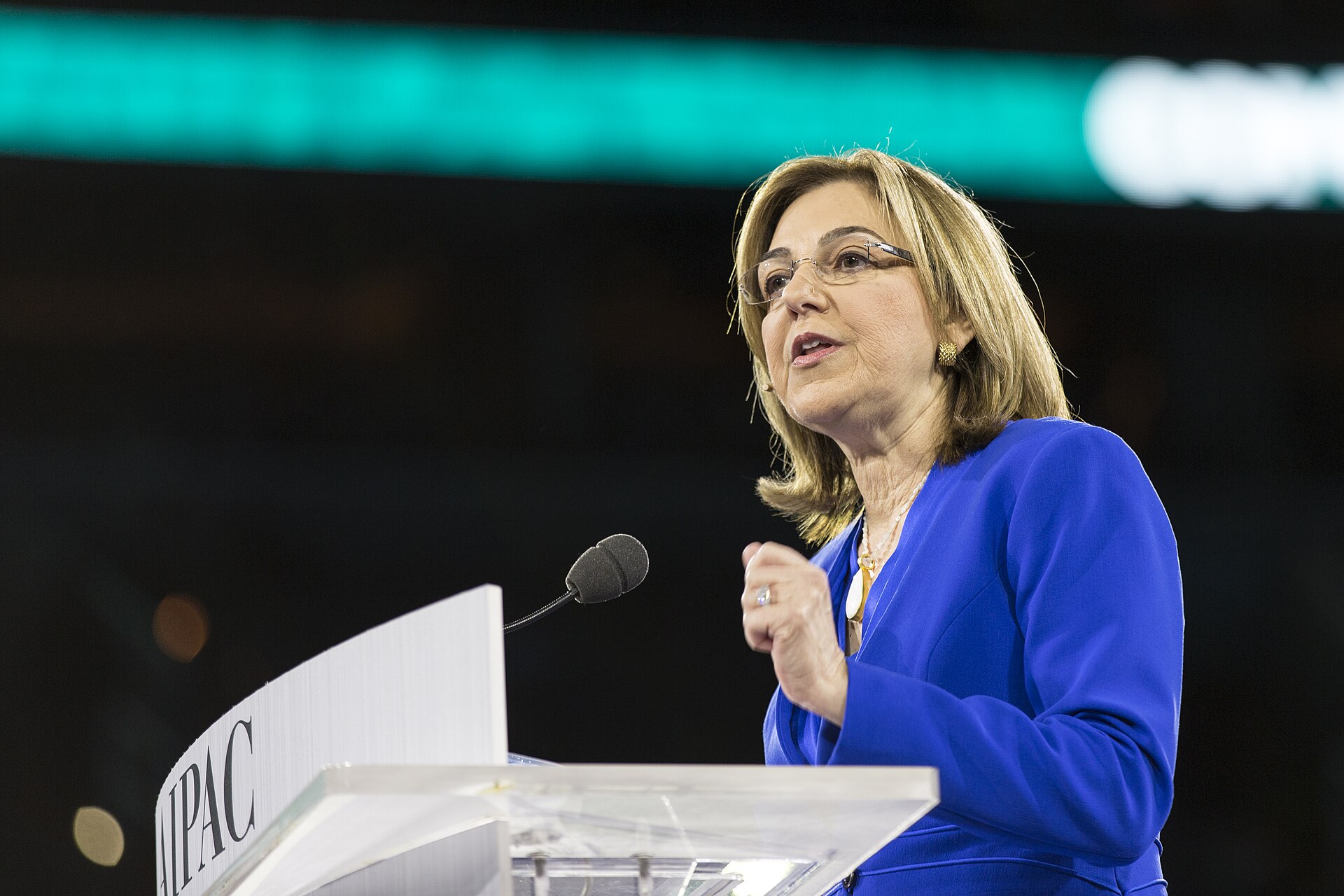
What AIPAC announced, in its own words
The announcement came in a letter to members on Wednesday, two weeks before midterm elections in which AIPAC’s support has become a campaign issue in races across the country. “The challenges we are confronting will continue to grow in the years ahead,” the letter said, according to NPR. It framed the shift as an expansion rather than a retreat: “We will prioritize increasing direct, organized contributions from individual Americans to candidates — expanding upon our current efforts — and maximizing the emerging political fundraising tools.” The letter added that the 2028 cycle will “demand an even stronger commitment by our activists to pro-Israel politics,” and promised increased support “for the Republicans and Democrats who are advancing policies that strengthen America’s alliance with Israel and standing up against anti-Israel legislation.”
AIPAC spokesperson Deryn Sousa told NPR the mission is unchanged: “Our goal is to build support for the U.S.-Israel relationship. AIPAC members gave more than $90 million directly to candidates this cycle, and that organized, direct giving from our members will continue and increase.” The Wall Street Journal reported the practical mechanics: AIPAC’s traditional PAC is not being wound down, but it will stop making direct contributions to candidates — capped by law at $5,000 per candidate per election, or $10,000 across a primary and a general — while continuing to give to leadership PACs and other committees. The PAC’s direct candidate giving this cycle was just over $3 million, the Journal reported, a fraction of what AIPAC members and the super PAC deliver. Recommendations replace endorsements: staff and local leaders will keep “recommending contributions to candidates who are worthy of your support,” in the letter’s words, quoted by the Examiner.
The numbers: what is actually being retired, and what is not
Read the filings and the announcement shrinks to its proper size. NPR, citing Federal Election Commission filings through September 30, reported that AIPAC contributed nearly $25 million to candidates and political committees in 2026, while the United Democracy Project contributed $13 million and spent an additional $53.5 million in independent expenditures — the unattributed attack and support ads that cannot legally be coordinated with campaigns. The Journal put the super PAC’s cycle totals higher still: more than $110 million raised and more than $80 million spent through September 30. However the accounting is sliced, the retired tool — direct PAC checks of at most $10,000 per candidate per cycle — was always the smallest money in the operation. The $90 million-plus that Sousa cited flows from individual members giving in their own names, and the super PAC’s unlimited spending continues at full strength; in recent days, NPR noted, UDP money has been campaigning against Abdul El-Sayed, the Democratic nominee for the U.S. Senate in Michigan, after AIPAC spent heavily for his primary opponent, Representative Haley Stevens, whom El-Sayed defeated.
How we got here: five years that changed the endorsement’s value
For most of its history AIPAC deliberately stayed out of candidate politics, lobbying whoever held office rather than helping to choose them. That changed in 2021, when it launched its PAC and began endorsing candidates directly — a bet that in a polarising era, a lobby that could not reward friends and punish critics at the ballot box would lose its leverage on Capitol Hill. The bet worked mechanically: endorsed candidates overwhelmingly won, and the super PAC, launched alongside, became one of the largest spenders in Democratic primaries.
But the endorsement’s market value inverted. NPR reported that AIPAC has faced mounting resistance this cycle over its stances on the wars in Gaza and Iran, and that endorsed candidates have drawn tough opposition from both the political right and the political left for accepting its support as American public opinion on the U.S. relationship with Israel has shifted. Some endorsed candidates, seeking to tame the criticism, announced they would not accept AIPAC money at all. The Washington Examiner catalogued the pincer: left-wing Democratic candidates vowing to refuse AIPAC money while criticising Israel’s conduct in Gaza, and Republican critics including Representative Thomas Massie and former Representative Marjorie Taylor Greene attacking the group’s influence from the right. In Michigan, El-Sayed made corporate PAC spending — AIPAC’s prominently included — a centrepiece of the primary campaign that beat the AIPAC-backed Stevens. When an endorsement becomes the attack ad against your own candidate, the endorsement is no longer an asset. It is a liability with a logo.
Why this matters
The deeper significance is not that a lobby is spending less — by its own numbers it intends to move more money than ever. It is that the most disciplined political operation in Washington has concluded that its own name now costs its candidates votes. That is a measurement, made by professionals with polling, of how far American politics has moved on Israel since the Gaza war began: an issue that for two generations was among the safest bipartisan positions in Washington is now contested terrain in both parties at once — squeezed by a Democratic base that has turned sharply critical of Israel’s conduct and by a populist right increasingly sceptical of foreign entanglements and of lobbying itself. AIPAC’s letter says the quiet part in its own language: 2026 is, in the Journal’s summary of the letter, one of the most challenging environments in recent memory, and 2028 will be just as tough.
There is also a transparency consequence that cuts against the reform’s presentation. An endorsement is public, attributable and debatable; a direct PAC contribution appears in filings under the group’s name. Individual member giving, organised and recommended but written in thousands of private names, carries no such label, and super PAC independent expenditures are disclosed only as the super PAC’s. Shifting weight from the labelled tools to the unlabelled ones does not reduce AIPAC’s influence — it reduces the visibility of that influence, race by race, to the voters deciding those races. Critics have argued for years that this is how modern campaign finance already works; supporters of the change will answer that members giving their own money in their own names is the most democratic form the system offers. Both claims can be true at once, and the 2028 cycle will test them at scale.
Who gains, who loses
Candidates who want the money without the label gain most. A Republican or Democrat in a competitive seat can now accept organised member contributions and super PAC air support without an endorsement line on their website for an opponent to screenshot. AIPAC’s critics gain a headline but not a disarmament — the group they campaigned against retains its largest weapon, and the Michigan race shows UDP already operating against the very candidate who made AIPAC an issue. El-Sayed and candidates like him lose a foil: it is harder to run against an endorsement that no longer exists, though the super PAC’s ads will keep the argument alive in rougher form. Small-dollar purity pledges lose their clarity too — refusing “AIPAC money” is a clean promise when the money arrives with AIPAC’s name on the check; it is a murkier one when the same dollars arrive as individual contributions AIPAC recommended. And rival operations on every side — progressive groups that organised against AIPAC-backed candidates, and conservative sceptics of the lobby — will read Wednesday’s letter as proof their pressure worked, which guarantees the pressure campaign itself survives whatever form AIPAC’s politics takes next.
What happens next
The change takes effect after the November 3 midterms, per the Journal, so the current cycle finishes under the old rules: endorsements stand, the PAC’s remaining giving proceeds, and UDP’s late spending — Michigan included — runs to election day. The first real test is the 2027–28 fundraising year, when AIPAC must show that recommended, unlabelled member giving can match or exceed the $90 million-plus it reports for this cycle without the endorsement as the organising hook. Watch three things: whether high-profile candidates begin quietly advertising AIPAC’s private recommendations even without a public endorsement; whether UDP’s share of the group’s total electoral footprint grows past the roughly four-fifths the filings already suggest; and whether other legacy lobbies, watching the most successful one conclude its name became a burden, follow it into the same lower-visibility model. The endorsement era of pro-Israel politics in America lasted five years. The money era, by every figure in Wednesday’s announcement, is not ending at all.
Sources
Reporting based on NPR (October 21, 2026, Saige Miller; AIPAC letter to members, FEC figures through September 30, and statement by spokesperson Deryn Sousa), the Wall Street Journal (October 21, 2026; letter first reported by Jewish Insider, PAC caps and super PAC totals, post-midterms effective date), the Washington Examiner (October 21, 2026; letter language and the Michigan primary context), and Times of Israel and Haaretz reporting via Israel.com (October 21, 2026; super PAC continuation and the end of member-donation routing). Figures are attributed to their reporting outlet throughout; AIPAC had not published the letter on a public page at the time of writing, and a spokesperson did not immediately return NPR’s request for comment beyond the statement quoted.
Related coverage: Brad Lander detained during West Bank olive harvest · Trump blocks Netanyahu’s Iran strike plan