Steph Curry Warriors extension
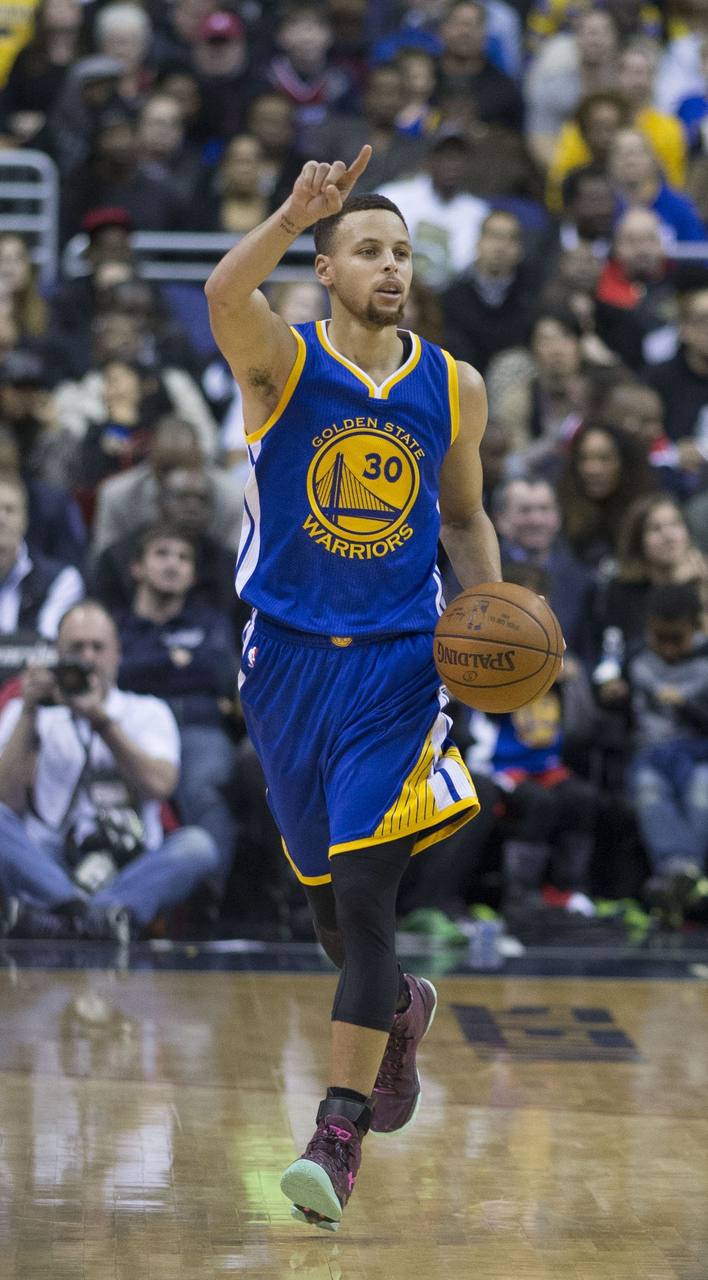
Steph Curry Warriors extension — those four words ended a month of speculation on Friday night, September 25, 2026, when the Golden State Warriors’ two-time MVP agreed to a two-year, $116 million contract extension that binds the greatest shooter in basketball history to the only franchise he has ever known — potentially through his 20th NBA season.
ESPN’s Shams Charania first reported the agreement; the Warriors confirmed it shortly afterward, with general manager Mike Dunleavy Jr. declaring that “there has never been a better face to a franchise in professional sports history, both on and off the court, than Stephen Curry with the Warriors.” The deal includes a player option for the 2028-29 season, leaving the final year in Curry’s hands.
The $116 million deal, in plain numbers
The structure tells its own story. Curry is playing this season — 2026-27 — on an expiring $62.6 million salary, the final year of the four-year, $215.3 million extension he signed in 2022. The new money kicks in after that:
| Season | Salary | Status |
|---|---|---|
| 2026-27 | $62.6 million | Final year of previous extension |
| 2027-28 | $55.7 million | First year of new extension |
| 2028-29 | $60.2 million | Player option |
Here is the number that matters most: $136.7 million. That was the maximum two-year extension Curry became eligible to sign on August 29. He took $116 million instead — roughly $20 million less than the max, a discount of about 15 percent.
Two more numbers frame the scale. At 38 years old, Curry is about to begin his 18th NBA season. And according to ESPN’s Bobby Marks, the extension makes him the first player in league history to earn $600 million in on-court career earnings — a milestone no one else has touched.
Why this matters: the $20 million discount is the real story
Superstars at the end of their careers do not leave $20 million on the table. That is the entire analysis, and everything else is commentary.
The standard playbook for an aging icon entering the final year of a deal is leverage: take the max, or threaten free agency, or wait for more information and let the front office sweat. The Warriors, according to ESPN’s Anthony Slater, laid out exactly those paths for Curry in recent weeks — including the option to simply wait. Curry chose the pay cut and the security instead.
That choice is a competitive statement disguised as a contract. Every dollar Curry surrendered is a dollar of flexibility the Warriors can spend around him. In a league governed by a salary cap and an increasingly punitive second apron, $20 million is not a gesture; it is the difference between shopping in the bargain bin and sitting at the table when the next disgruntled star becomes available. Curry, who has seen championship windows open and close, understands the math better than anyone: his discount is a down payment on one more real roster.
There is a legacy argument too, and it cuts both ways. The romantic reading is the “lifer” narrative Curry himself has fed all offseason — one franchise, two decades, the anti-mercenary. The cold reading is that Golden State just committed $116 million to a guard who will be 40 when the player option comes due, coming off a 43-game season. Both readings are true. That tension is what makes the deal fascinating rather than merely expensive.
How we got here: a month of silence, then a Friday-night signature
Curry became extension-eligible on August 29. What followed was nearly a month of public silence that the NBA rumor mill filled with the usual noise: was 2026-27 a farewell tour? Would the Warriors dare let the face of the franchise reach free agency? Did Curry want to see the roster first?
The backdrop explains the anxiety. Golden State went 37-45 last season and missed the playoffs for the second time in three years. Curry, limited to 43 games by injury, still averaged 26.6 points — elite production in a diminished sample, which is precisely the profile that makes contract talks so delicate. The scoring was still there. The availability was the question.
Through it all, Curry kept repeating the word “lifer.” Friday night made it contractual. The Warriors, for their part, never seriously entertained the alternative; you do not trade or lowball the player who built your modern identity. But the month-long deliberation suggests both sides weighed the max-versus-discount question seriously before landing where they did.
The salary-cap math: what the Warriors’ 2027 cap space buys
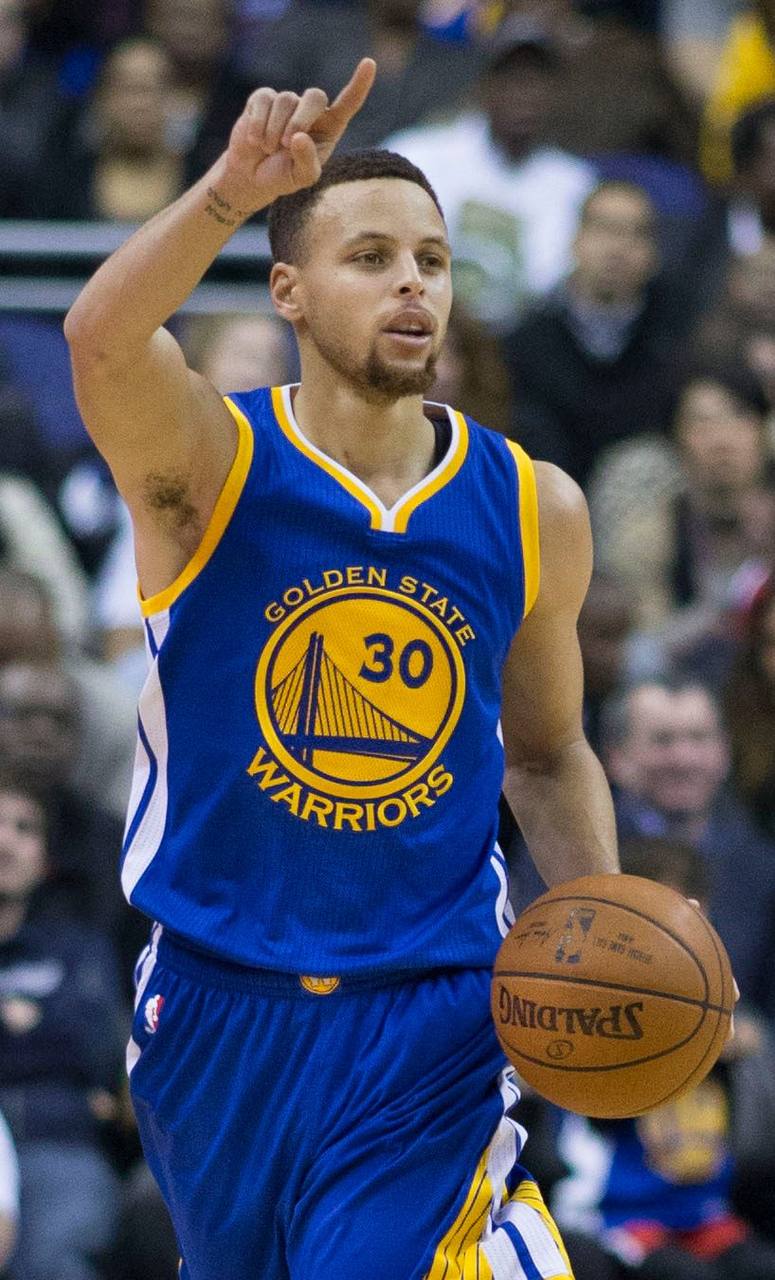
Here is where Curry’s $20 million sacrifice converts into basketball reality. Per ESPN’s Bobby Marks, the discount gives Golden State roughly $10 million in additional projected cap space for the summer of 2027 — and that summer is now the most important offseason of the Curry era.
The books are about to get dramatically cleaner. Jimmy Butler III ($56.8 million) and Draymond Green ($27.6 million) both have expiring contracts coming off next summer. Veteran center Kristaps Porzingis is on the ledger at $20 million, but only $3 million of it is guaranteed. Depending on what the Warriors do with Brandin Podziemski — extension-eligible, not yet extended, carrying a $17 million cap hold — Golden State projects to have somewhere between $38 million and $55 million in cap space, per Marks.
In practical terms, $10 million is the difference between one max slot and one max slot plus a real supporting piece, or between absorbing a star’s contract in trade and having to gut the roster to match salaries. The Warriors whiffed on big-name free agents this past offseason; next summer, armed with Curry’s discount and a cleaned-out cap sheet, they get to be the team other franchises take calls from.
One procedural footnote, via CapSheets’ Yossi Gozlan: the extension likely triggers a six-month trade restriction, meaning Curry stays a Warrior through the February deadline regardless. Not that anyone expected a trade — but the paperwork now says what everyone already knew.
Who wins, who loses — and the expiring contracts caught in between
Winners first. Curry gets security and authorship: $116 million guaranteed deep into his forties, plus a player option that lets him decide how the story ends. The Warriors get flexibility, continuity, and the most bankable brand asset in the sport — Curry’s presence is worth nine figures to Chase Center alone in tickets, sponsorships, and relevance. Fans get the rarest thing in modern sports: the promise, kept in writing, that their icon will never wear another uniform. And every star considering a 2027 move just added Golden State back to the list of teams with both money and a legend to play beside.
The skeptics have a case, and it deserves a fair hearing. Paying a 40-year-old $60.2 million — the player-option year — for a team that just went 37-45 is, on paper, the kind of sentimental overpay that has buried franchises. The Warriors missed the playoffs twice in three years with Curry on a max deal; a discounted max is still a max-shaped commitment. If the injuries that cost him 39 games last season recur, the back half of this contract becomes a very expensive farewell tour, and the 2027 cap space gets spent chasing a window that has already closed.
There is also a quiet subplot for the supporting cast. Butler and Green are now, unmistakably, on expiring bridge deals — their futures will be decided by what the Warriors do with the space their departures create. Podziemski’s extension talks just got more complicated, not less: his $17 million cap hold is now a variable in a much bigger equation.
The honest answer is that both camps are right. This is simultaneously a loyalty premium and a competitive maneuver — and the Warriors are betting, with Curry’s own money, that the two are the same thing.
The $600 million man: Curry’s earnings in historical context
Pause on the milestone, because it is historic in a way that transcends one franchise. No NBA player had ever earned $600 million in salary before Curry — not the icons of the 1990s, not the supermax generation. It is a marker of two things at once: Curry’s unprecedented longevity at the top of the pay scale, and the sheer financial inflation of the modern game, where television money turned the salary cap into a rocket ship.
The symmetry is worth noting. Early in his career, Curry signed one of the most team-friendly deals in league history — the four-year, $44 million extension in 2012, signed when his ankles were a medical question mark — and that bargain funded the dynasty that won four titles. Fourteen years later, he has effectively done it again: a below-max deal designed to fund the next iteration. The numbers are a hundred times bigger. The logic is identical.
What happens next: three scenarios, one 2028-29 player option
Scenario one — the reload. The Warriors weaponize the summer of 2027: $38–55 million in space, Curry’s gravity, and a front office with a track record of bold swings. A second star arrives, the 2027-28 and 2028-29 seasons become genuine contention years, and the discount looks like the smartest $20 million ever left on a table.
Scenario two — the graceful compete. The space buys depth rather than a co-star. Curry, now 39 and 40, remains an elite shooter and cultural centerpiece on a well-built playoff team that is good enough to matter and honest enough about no longer being the favorite. The franchise chooses sustainability over desperation — defensible, watchable, and probably the most likely outcome.
Scenario three — the farewell tour. The body that managed only 43 games last season does not cooperate. The extension becomes a monument rather than a weapon: two seasons of standing ovations, milestone-chasing, and premium pricing for the final chapters of a legend. Even this version is a commercial triumph for the franchise, if a basketball disappointment.
Whichever scenario unfolds, one number will outlast them all: twenty seasons, one franchise. In an era defined by player movement, that might be the most remarkable figure in the entire deal.
Sources
- ESPN, Shams Charania, “Sources: Warriors, Curry reach 2-year extension worth $116 million” (Sept. 26, 2026)
- ESPN, Anthony Slater, on Curry’s month-long contract deliberation and the Warriors’ presented options (Sept. 26, 2026)
- ESPN, Bobby Marks, on the $600 million career-earnings milestone and 2027 salary-cap projections (Sept. 26, 2026)
- New York Post, “Steph Curry’s Warriors contract extension falls short of potential supermax deal” (Sept. 25, 2026)
- theScore, “Curry, Warriors agree to reported 2-year, $116M extension” (Sept. 26, 2026)
- TSN, “Golden State Warriors, Curry reach 2-year extension worth $116 million” (Sept. 26, 2026)
- Hoops Rumors / CapSheets (Yossi Gozlan), “Stephen Curry, Warriors Finalize Two-Year Extension” (Sept. 26, 2026)
- Golden State Warriors, official statement from general manager Mike Dunleavy Jr. (Sept. 25, 2026)