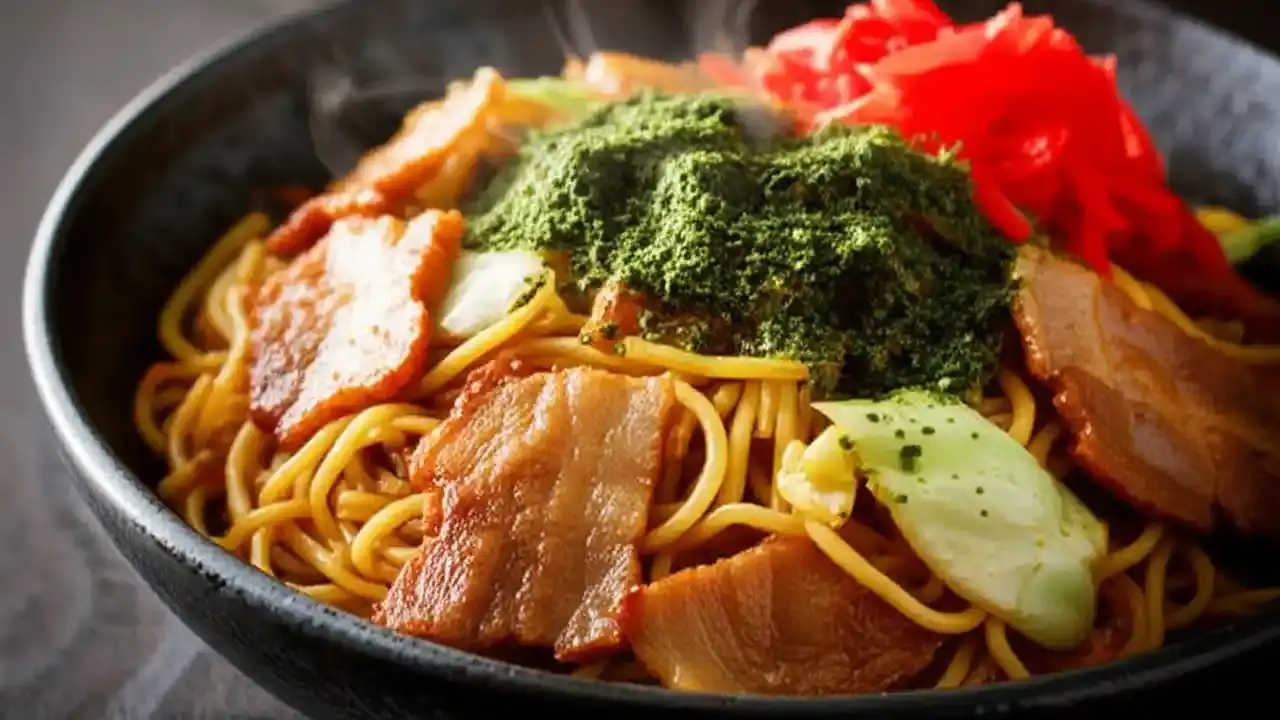
Despite its name, yakisoba is not made with buckwheat soba. It is a Japanese stir-fried noodle dish typically built around Chinese-style wheat noodles, vegetables and a tangy brown sauce. The fastest home version depends on preparation: mix the sauce, cut everything thinly and loosen the noodles before cooking.
Ingredients
- 2 portions pre-cooked yakisoba or Chinese-style wheat noodles
- 1 tablespoon neutral cooking oil
- ½ small onion, thinly sliced
- 2 packed cups shredded green cabbage
- 1 small carrot, cut into fine matchsticks
- 2 scallions, sliced, whites and greens separated
- Optional: 6 ounces thinly sliced pork, chicken, firm tofu or mushrooms
For the sauce
- 1½ tablespoons Worcestershire sauce
- 1 tablespoon oyster sauce, or vegetarian mushroom sauce
- 2 teaspoons soy sauce
- 1 teaspoon ketchup
- 1 teaspoon sugar
- A pinch of black or white pepper
The 15-minute method
- Whisk the sauce ingredients in a small bowl. Loosen the noodles according to the package directions; do not overcook them.
- Heat a wide skillet or wok over medium-high heat. Add the oil and optional protein. Cook until safely done, then move it to a plate.
- Add onion, carrot and scallion whites. Stir-fry for two minutes. Add cabbage and cook until bright and just tender, about two more minutes.
- Add the noodles and toss until hot. Pour the sauce around the edge of the pan, return the protein and toss until evenly coated and lightly caramelized.
- Finish with scallion greens. Serve with pickled ginger, aonori or sesame seeds if you have them.
High heat, a wide pan and a small amount of sauce keep the noodles glossy instead of soggy.
Variations that still taste like dinner
For a vegetarian version, use mushrooms and mushroom sauce. For more heat, add chili crisp at the table rather than to the pan, where it can overwhelm the balance. If refrigerated noodles are unavailable, fresh ramen-style wheat noodles work; cook them just until flexible, rinse briefly and drain very well.
A wok is useful but not essential. A broad skillet gives steam room to escape, which matters more than the shape of the pan. Keep vegetables dry, avoid crowding and have everything ready before you begin.
Understand the sauce balance
Yakisoba sauce works through several kinds of intensity at once. Worcestershire contributes tang and spice, oyster or mushroom sauce adds body and savory depth, soy sauce supplies salt, ketchup brings sweetness and acidity, and sugar helps the glaze cling. Black or white pepper keeps the finish lively.
Taste the mixture before it touches the pan. It should seem slightly stronger than you want because noodles and vegetables will dilute it. If it is too salty, add a little water and ketchup rather than more sugar alone. If it is too sweet, increase Worcestershire by drops. Make adjustments in the bowl, where they are easier to control.
Choose and prepare the noodles
Refrigerated yakisoba noodles are usually steamed and need loosening, not boiling. Follow the package, then separate strands gently. If using fresh ramen-style noodles, cook them briefly, rinse off excess starch and drain thoroughly. Wet noodles cool the pan and turn the stir-fry soft.
Dried spaghetti can produce a tasty stir-fry in an emergency, but it will not have the same texture. Cook it just shy of tender and let surface moisture evaporate. The sauce and technique still matter, yet calling the result a substitute keeps expectations honest.
Control moisture and heat
Cut vegetables thinly and keep them dry. Add dense ingredients first and cabbage later so it remains bright with a little bite. If the pan is small, cook the protein and vegetables separately, then combine. Crowding creates steam before the noodles have a chance to sear.
Let the noodles sit against the hot surface for short intervals before tossing. Those lightly browned edges give yakisoba its character. Pour sauce around the side of the pan so it heats quickly, then toss only until every strand is coated. Too much sauce is harder to correct than too little.
Protein and vegetable variations
Thin pork belly is traditional in many home versions, but chicken thigh, shrimp, tofu and mushrooms all work. Cook animal proteins to a safe internal temperature before returning them to the pan. Press tofu and brown it separately so it keeps its shape.
Cabbage, onion and carrot form a dependable base. Bean sprouts, bell pepper or mushrooms can join, but limit the total volume so the pan remains hot. Use vegetables you already have while preserving the balance of crisp, sweet and savory. Yakisoba is flexible, not limitless.
Troubleshoot the common problems
If noodles clump, they were not loosened enough or cooled after rinsing. If the dish is watery, the pan was crowded, vegetables were wet or sauce was added too early. If it tastes flat, a small splash of Worcestershire or pickled ginger may provide the missing acidity. If it is too salty, add unsauced noodles or cabbage rather than water.
For meal prep, store sauce separately and cut vegetables up to a day ahead. The finished dish is best immediately, but leftovers reheat well in a skillet with a teaspoon of water. Keep garnishes separate so they remain crisp.
Serve it as a complete meal
Two portions of noodles with vegetables and protein can stand alone. Add a cucumber salad, miso soup or simply dressed greens when you want contrast. Pickled ginger, aonori and a small amount of mayonnaise are optional finishes; none should conceal the sauce you balanced.
This yakisoba recipe is fast because the decisions happen before the cooking. Once the pan is hot, there is no time to search for a bottle or chop another carrot. Ten calm minutes of preparation create five minutes of confident movement.
Why this matters
Yakisoba is valuable as a technique, not only a recipe. High heat, staged ingredients and controlled sauce teach the same moisture management used across fast stir-fries. Once the method is understood, a fifteen-minute claim becomes less about speed theater and more about preparation discipline.
How we got here
Japanese yakisoba developed as an adaptable street and home dish, using wheat noodles with vegetables, protein and a savory-sweet sauce. Its flexibility resembles many practical noodle traditions: inexpensive components become satisfying through heat and sequencing. Online recipes can obscure that logic by presenting one ingredient list as the only authentic path.
Who benefits, who loses and what critics say
Busy cooks and households managing leftover vegetables benefit from the format. Specialty-sauce brands benefit when convenience is prioritized, while people with wheat, soy, fish or shellfish allergies need careful labels. Critics may object to substitutions that erase the dish’s identity; the sensible boundary is to preserve technique and flavor structure while naming adaptations honestly.
What the comparison implies
Fifteen minutes is realistic only when ingredients are cut and the pan is large enough to avoid steaming. Doubling a recipe in the same skillet can more than double cooking time because surface area, not ingredient quantity alone, controls browning. The useful metric is active time plus cleanup, compared with ordering or cooking another weeknight meal.
What happens next
Once the base method is reliable, cooks can vary cabbage, mushrooms, protein and garnish without rebuilding the dish. The best scenario is a repeatable household template; the common failure is adding too much sauce or crowding the pan. Future iterations should change one variable at a time so the cook learns cause rather than memorizing correction.
Recipe reference: The dish definition, classic vegetable mix and sauce structure were cross-checked against RecipeTin Japan’s yakisoba guide. Check packaged sauces for wheat, soy, fish and shellfish allergens.